
Most people spend more time picking out shampoo than they do actually thinking about what their hair care needs. That’s a problem, because the average American showers almost every day, yet dermatologists still see the same handful of hair issues walk through their doors on repeat: dryness, breakage, flat roots, and scalp irritation.
The good news is that fixing most of it doesn’t require a 10-step routine or expensive salon visits. It requires knowing what your hair care actually needs and doing a few things consistently.
This guide breaks down the daily habits that matter, the ones that don’t, and how to build a routine that fits your hair type instead of fighting it.
Start With Your Hair Type, Not Your Favorite Influencer’s Routine
Before buying a single product, figure out what you’re working with. Hair care advice that works for someone with fine, straight hair can wreck curly or coily hair, and vice versa. The American Academy of Dermatology groups hair care broadly into straight, wavy, curly, and coily categories, and each behaves differently when it comes to oil production, moisture retention, and breakage risk.
Fine, straight hair tends to get oily fastest because sebum travels down the hair shaft with less resistance. Curly and coily hair, on the other hand, holds onto moisture longer at the root but dries out faster at the ends, since the natural twists and turns make it harder for scalp oil to travel the full length of the strand. Wavy hair care usually sits somewhere in the middle, oily enough at the roots to need regular washing, but prone to frizz if stripped too often.
Texture isn’t the only variable worth considering. Porosity, or how easily hair care absorbs and holds onto moisture, matters just as much. Low-porosity hair has a tightly packed cuticle that resists moisture, so products tend to sit on top of the strand instead of soaking in. High-porosity hair, often the result of heat damage, coloring, or chemical processing, has a more open cuticle that absorbs moisture quickly but loses it just as fast. A simple way to check porosity at home is to drop a clean strand of hair into a glass of water. Hair that floats for a while has low porosity, hair care that sinks quickly has high porosity, and hair that floats briefly before slowly sinking is somewhere in between.
Knowing your type and porosity changes how often you should wash, how much conditioner you need, and which products are worth your money. A one-size-fits-all routine is one of the biggest reasons people feel like nothing works for their hair care.
Washing Frequency Is Not One-Size-Fits-All
The idea that everyone should shampoo daily is outdated. Dermatologists generally recommend washing based on scalp oil production and activity level, not a fixed calendar.
- Oily or fine hair: every day or every other day
- Normal hair: two to three times a week
- Dry, curly, or chemically treated hair: one to two times a week
Overwashing strips natural oils and can trigger the scalp to produce even more oil to compensate, creating a cycle that’s hard to break. Underwashing, especially for oily scalps, can lead to buildup, irritation, and even folliculitis in some cases, an inflammation of the hair follicles that can cause small, itchy bumps along the scalp.
Activity level plays a bigger role than most people realize. Regular exercise increases sweat and oil production at the scalp, so someone who works out five days a week may need to wash more often than the general guidelines suggest, regardless of hair type. A quick rinse with conditioner alone on non-workout days can help manage sweat without fully stripping the hair care.
If you’re not sure where you fall, a simple test helps: if your roots look noticeably greasy by the end of day one, you likely need more frequent washing. If your hair care still looks clean and full on day three, you can stretch it out. It usually takes two to three weeks of consistent washing frequency for the scalp to recalibrate and for you to get an accurate read on what your hair actually needs.
Water Temperature Actually Matters
This one gets overlooked constantly. Hot water feels good in the shower, but it strips moisture from the hair cuticle and can leave the scalp dry and irritated. Cooler water helps seal the cuticle, which means smoother, shinier hair and less frizz.
You don’t need an ice-cold rinse to see benefits. Lukewarm water for washing, followed by a cool rinse at the end, is enough to make a noticeable difference over a few weeks. The cool rinse doesn’t need to last long, even 15 to 20 seconds at the end of your shower is enough to help flatten the cuticle and lock in shine.
This matters more in the winter, when indoor heating and hot showers combine to dry out both skin and scalp. If you notice more flaking or itchiness during colder months, water temperature is often part of the problem, not just the weather.
Shampoo Is for the Scalp, Conditioner Is for the Ends
A common mistake is applying shampoo the same way people apply conditioner, all over, root to tip. Shampoo is designed to clean the scalp, where oil, sweat, and product buildup actually accumulate. Focus it there, and let the lather rinse through the lengths naturally as you wash it out.
Conditioner works the opposite way. It should go on the mid-lengths and ends, where hair is oldest and most prone to dryness and breakage, not on the scalp, where it can weigh down roots and contribute to oiliness. For longer hair, a good rule of thumb is to concentrate conditioner from the ears down, since that’s where the hair has been exposed to the most friction, heat, and sun over time.
This two-zone approach alone fixes a lot of the “my hair is oily at the roots but dry at the ends” complaints dermatologists hear regularly, and it’s one of the simplest changes to make since it doesn’t require buying anything new.
Don’t Skip the Scalp
Hair health starts at the scalp, not the strand. A healthy scalp has balanced oil production, no flaking, and no persistent itchiness. When people focus entirely on the hair itself and ignore the scalp, they often end up chasing symptoms instead of causes.
A few habits support scalp health:
- Gently massage the scalp while shampooing to loosen buildup and improve circulation
- Avoid scratching with nails, which can create micro-tears and irritation
- Exfoliate the scalp once every week or two with a dedicated scalp scrub if you notice buildup from styling products, especially dry shampoo
- If dandruff or flaking is a recurring issue, look for shampoos with zinc pyrithione, selenium sulfide, or ketoconazole, all of which are backed by clinical research for treating seborrheic dermatitis and dandruff
It’s worth distinguishing between a dry scalp and dandruff, since they’re often confused but treated differently. A dry scalp usually produces small, dry flakes and comes with mild itchiness, often improving with a moisturizing shampoo. Dandruff, caused by an overgrowth of a yeast called Malassezia, tends to produce larger, oilier flakes and more persistent itching, and generally responds better to medicated shampoo. Persistent scalp issues that don’t improve with over-the-counter treatment after a few weeks are worth bringing to a dermatologist rather than guessing indefinitely with new products.
Heat Styling: Protect Before You Style, Every Time
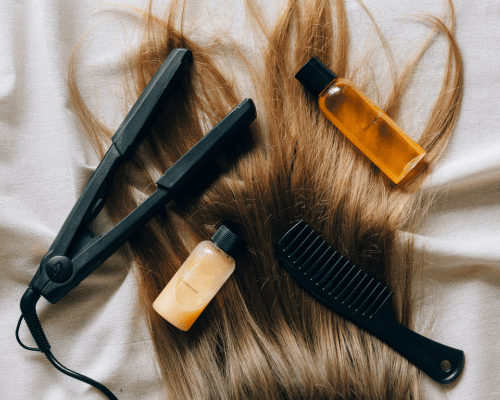
Heat styling is one of the fastest ways to damage hair care, and it’s also one of the most common daily habits in the US, where blow dryers, flat irons, and curling wands are bathroom staples. High heat breaks down the protein structure of hair care, leading to split ends, frizz, and long-term breakage. Once the cuticle is damaged this way, it can’t repair itself, the only real fix is trimming it off.
A few rules make a real difference:
- Always apply a heat protectant before using any hot tool. These products form a barrier that reduces moisture loss and cuticle damage.
- Keep tools under 350°F for fine or damaged hair care, and under 400°F for thicker, more resistant hair care.
- Use the lowest heat setting that still gets the job done. Higher isn’t faster in any way that matters, and most styling tools do their job well below their maximum setting.
- Let hair air dry partially, to about 70 to 80 percent, before blow drying to cut down on total heat exposure.
- Keep the dryer or iron moving rather than holding it in one spot, since concentrated heat on a single section causes the most damage.
If you can build one non-negotiable habit into your routine, this is the one. Heat damage is cumulative and hard to reverse without cutting hair shorter, and it compounds with other stressors like coloring or chemical straightening, so hair care that’s already been processed needs even more protection from daily heat.
Understanding What’s Actually in Your Products
Walking down the hair care aisle in any US drugstore can be overwhelming, with dozens of brands promising repair, volume, or shine. A few ingredient basics help cut through the marketing.
Sulfates, most commonly sodium lauryl sulfate, are the ingredients responsible for a shampoo’s foamy lather. They clean effectively but can be too harsh for dry, curly, or color-treated hair care, stripping both dirt and needed moisture. Sulfate-free formulas clean more gently and have become widely available, though they may require a slightly larger amount to feel as clean.
Silicones, often listed as dimethicone, coat the hair shaft to create smoothness and shine. They work well for taming frizz but can build up over time, especially with frequent use of non-water-soluble silicones, which is why some people alternate with a clarifying shampoo every few weeks to remove residue.
Humectants like glycerin and hyaluronic acid draw moisture into the hair care, which is helpful in humid climates but can actually cause frizz in very dry environments by pulling moisture out of the air that isn’t there. Matching product formulas to your local climate, not just your hair type, can make a meaningful difference.
Protein treatments, containing ingredients like hydrolyzed keratin, temporarily fill in gaps in damaged hair cuticles. They’re useful for chemically treated or heat-damaged hair but can make hair feel stiff or brittle if overused, since hair also needs moisture to stay flexible. Alternating protein treatments with deep conditioning is generally more effective than relying on one or the other exclusively.
What You Eat and Drink Shows Up in Your Hair
Hair care isn’t only about what you put on your head. Hair care is made primarily of keratin, a protein, and its growth cycle depends on adequate nutrition. Diets low in protein, iron, or biotin have been linked to hair thinning and slower growth in clinical studies.
Practical takeaways:
- Aim for enough protein throughout the day, since hair is rebuilding constantly and a deficit shows up in the hair before it shows up almost anywhere else in the body
- Iron deficiency is one of the most common nutritional causes of hair shedding, particularly in women, so it’s worth checking with a doctor if shedding increases suddenly
- Omega-3 fatty acids, found in fish, walnuts, and flaxseed, support scalp health and may help reduce inflammation that contributes to hair thinning
- Staying hydrated supports scalp health, since a dehydrated scalp is more prone to flaking and irritation
None of this means a supplement will fix a bad routine, but a poor diet can undo a good one. Hair growth is also slow to respond to any change, good or bad, so it typically takes two to three months before a dietary shift shows up in visible hair care quality, since that’s roughly how long it takes for new growth to reach the surface.
Nighttime Habits Prevent Daytime Damage
What happens while you sleep affects how your hair looks the next morning, and over time, how healthy it stays. Cotton pillowcases create friction that leads to frizz and breakage, especially for curly and textured hair, since the fibers grip onto hair strands as you move throughout the night. Switching to a silk or satin pillowcase reduces that friction significantly and is one of the easiest low-effort upgrades available.
Other simple nighttime habits:
- Loosely braid or twist longer hair before bed to prevent tangling
- Avoid going to sleep with wet hair, since hair care is weakest and most prone to breakage when wet, and prolonged dampness against a pillow can also encourage bacterial or fungal growth
- If you use a silk or satin bonnet or scarf, it protects styles overnight and reduces the need for daily restyling, which also cuts down on cumulative heat and product exposure
Common Mistakes Worth Dropping
A few habits are worth retiring for good:
- Brushing wet hair with a regular brush, which causes unnecessary breakage. A wide-tooth comb is gentler on wet strands, and starting from the ends and working upward reduces tangling.
- Rubbing hair dry with a towel. Squeezing and gently patting with a microfiber towel or an old cotton t-shirt reduces frizz and cuticle damage.
- Using more product than needed. A quarter-sized amount of shampoo and a similar amount of conditioner is enough for most hair lengths. More product doesn’t mean better results, and buildup can weigh hair down and dull its appearance.
- Skipping regular trims. Hair doesn’t grow faster without trims, but split ends travel up the shaft over time if left uncut, turning a small problem into a bigger one. A trim every eight to twelve weeks keeps damage from spreading.
Quick Answers to Common Questions
Does hair get “used to” a shampoo over time? Not exactly. What often happens is product buildup or a change in scalp condition due to weather or hormones, which can make a shampoo feel less effective even though the formula hasn’t changed.
Is cold water really better than hot water for hair care ? For the hair care shaft, yes, cooler water helps seal the cuticle. Scalp comfort matters too, so a lukewarm wash followed by a cool rinse is a reasonable middle ground.
Can stress cause hair loss? Significant physical or emotional stress can trigger a temporary shedding condition, and it typically shows up two to three months after the stressful event, which is why the connection often isn’t obvious at first.
Building a Routine That Actually Sticks
The best hair care routine is the one you’ll actually follow. Trying to adopt every recommendation at once usually backfires. A more realistic approach:
- Identify your hair type and porosity, and adjust washing frequency accordingly
- Separate shampoo and conditioner application by zone
- Add a heat protectant if you use hot tools regularly
- Switch to a silk or satin pillowcase if breakage or frizz is a recurring issue
- Book a trim every two to three months to stay ahead of split ends
- Reassess after a month, since hair habits take a few weeks to show visible results
Small, consistent changes outperform elaborate routines that get abandoned after two weeks.
The Bottom Line
Healthy hair care isn’t about buying the most expensive products or following every trend. It comes down to understanding your hair type, treating your scalp as the foundation, being smart about heat, reading past the marketing on product labels, and giving your body the nutrition it needs to support growth. Start with one or two changes from this guide, give them a few weeks to work, and build from there. Consistency, not complexity, is what actually changes how your hair looks and feels.

I’m an SEO content writer and product researcher with experience creating well-researched product reviews, comparisons, buying guides, affiliate articles, and helpful website content. At LoookNow, I focus on researching products, comparing features and value, and creating clear, engaging, search-optimized content to help readers make more informed purchasing decisions. My goal is to provide useful, trustworthy, and easy-to-understand information that saves readers time and reduces confusion when choosing products online.