
Introduction.
Did you know the average woman spends over 25,000 hours of her life wearing a bra? That’s more time than she’ll spend on vacation, exercising, or even sleeping in some years. So it’s no surprise that comfort tops the list of what women want most from their bras. Yet so many still settle for straps that dig in, bands that ride up, or wires that poke by mid-afternoon.
The good news is that all-day comfort isn’t a myth or a luxury reserved for loungewear. With the right fit, fabric, and style, you can wear a bra from morning to night and barely notice it’s there.
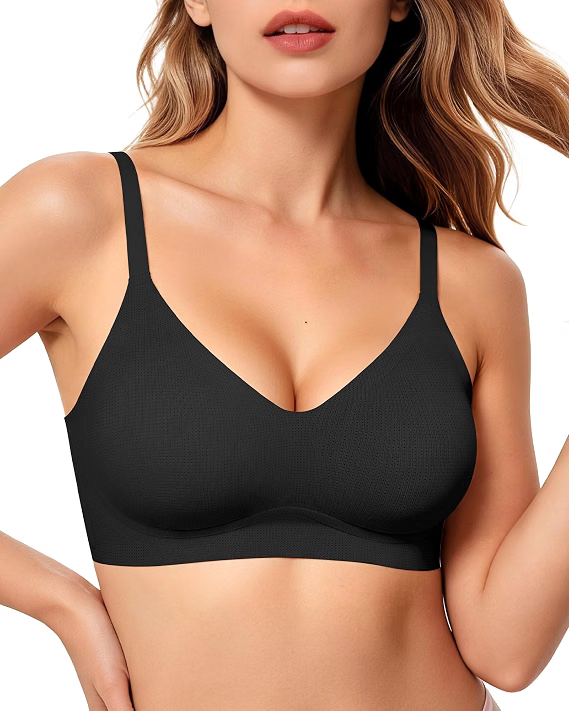
Ubras Seamless Bras for Women Light Support Wireless Bralette Comfortable
This guide breaks down everything you need to know about everyday comfort bras: what makes them different from regular bras, the key features to look for, and how to choose the right style for your body and lifestyle. Whether you’re working long hours at a desk, running after kids, or just want a bra that feels like a second skin, you’ll walk away knowing exactly what to shop for and why it matters.
Why Everyday Comfort Bras Matter
For decades, “supportive” and “comfortable” were treated as opposites in bra design. Underwire meant support. Soft cups meant you gave something up. Padding meant shape, and shape meant restriction. That trade-off is outdated, and the shift away from it has been driven by both consumer demand and genuine advances in fabric engineering.
Sizing research from bra fitting studies and retailers like Nordstrom and Third Love has repeatedly found that a large majority of women are wearing a bra that doesn’t fit them correctly, often in the band or cup size. Some estimates put the number as high as 80 percent. When a bra doesn’t fit, no amount of clever design fixes the discomfort. That’s the starting point for understanding comfort bras: fit comes first, features come second. A perfectly engineered wireless bra in the wrong size will still dig in, gap, or ride up.
Wacoal Awareness Underwire Bra Review 2026
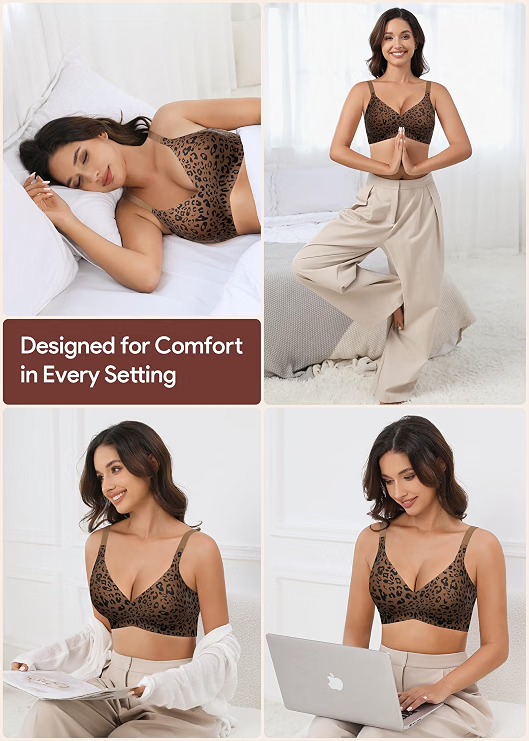
Comfort matters because bras are worn for more hours per day than almost any other piece of clothing. Most people put on their bra before they’ve had coffee and take it off well after dinner. A bra you put on at 7 a.m. and take off at 10 p.m. needs to move with your body through sitting, standing, driving, lifting kids, exercising, and everything in between. A bra designed only to look good in a dressing room mirror often fails at that job the moment you sit down at a desk for six hours.
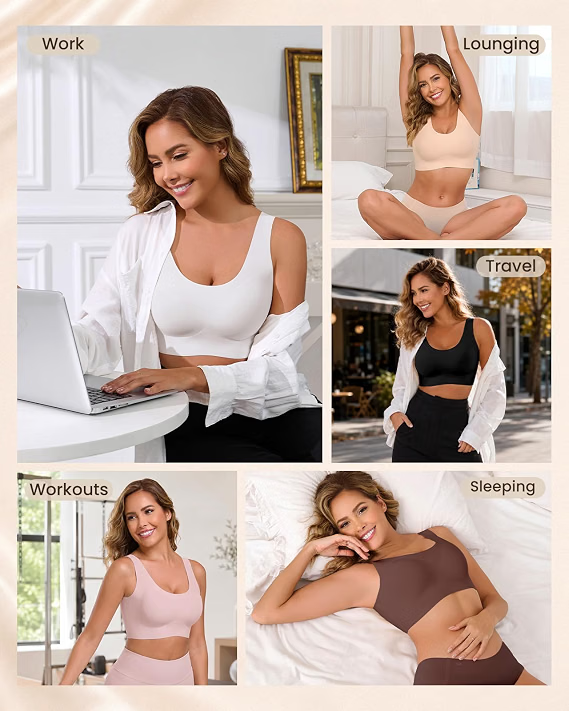
The rise of loungewear and hybrid work schedules only accelerated this shift. Many women now split their day between video calls, errands, and casual outings without changing outfits, which means the bra underneath has to perform in more contexts than ever. A bra that looks polished on a video call but pinches by hour three isn’t actually doing its job, no matter how good it looks under a blazer.
There’s also a quieter, longer-term reason comfort matters: chronic discomfort from ill-fitting bras is one of the most common reasons women avoid wearing a bra altogether, or default to whatever feels least bad rather than what actually fits and supports properly. Getting comfort right isn’t just about avoiding a bad day. It’s about building a relationship with your intimates drawer that doesn’t involve dread.
OEAK Womens Wireless Jelly Bras Comfortable Gel Bra Everyday Tshirt Bras
What Actually Makes a Bra Comfortable
“Comfort” isn’t one feature. It’s the sum of several design choices working together. Understanding each one helps you shop smarter instead of relying on marketing language alone, since terms like “comfort fit” or “second-skin feel” can mean very different things depending on the brand.
Band Fit
The band, not the straps, does most of the supporting work in a well-fitted bra. About 80 percent of a bra’s support should come from the band sitting snugly and level around your ribcage. If your straps are digging into your shoulders, the band is usually too loose, forcing your shoulders to compensate for support they were never designed to provide on their own.
A comfortable band sits parallel to the floor, not riding up in the back, and you should be able to fit two fingers underneath it without much resistance. If you can pinch and pull the band away from your back several inches, it’s too loose. If you can’t comfortably take a full breath, it’s too tight.
Cup Shape and Coverage
Cups that are too small cause spillage at the top or sides, which creates pinching and visible lines under clothing. Cups that are too large leave gaps and wrinkling, which means the fabric isn’t doing its job and can shift throughout the day, sometimes leading you to constantly adjust and re-center the bra. The right cup fully encloses breast tissue without gapping or overflowing, and it should stay that way even after you raise your arms or lean forward.
Fabric
Cotton blends, modal, and moisture-wicking synthetics tend to outperform stiff lace or heavily structured fabrics for all-day wear. Breathable fabric reduces sweating and irritation, especially in warmer climates or during exercise. Modal in particular has become popular in the comfort category because it holds its shape better than pure cotton over repeated washes while still feeling soft against skin.
Blended fabrics that combine a small percentage of spandex or elastane with cotton or modal tend to offer the best of both worlds: the softness of natural fiber with enough stretch recovery to keep the bra’s shape wash after wash.
Wire vs. Wire-Free
Underwire bras can be comfortable when properly fitted, since the wire should sit flat against the ribcage rather than digging into breast tissue or poking out at the sides. Wire-free bras, including bralettes and soft-cup styles, remove that variable entirely and have become a major part of the comfort category, particularly for smaller to medium cup sizes, though engineering advances have made wire-free support viable for fuller busts too.
Strap Design
Wide, cushioned straps distribute weight better than thin straps, especially for fuller busts, since the pressure per square inch on the shoulder is lower. Adjustable straps let you fine-tune fit as fabric stretches over time, which matters because most bra fabric loosens slightly after repeated wear and washing. Straps set too far apart or too close together, relative to shoulder width, are a common and often overlooked cause of slipping.
Seams and Closures
Seamless construction reduces visible lines under fitted clothing and eliminates a common source of chafing, particularly under the arm where skin rubs against fabric with every movement. Back closures with multiple hook rows let you adjust the band as it stretches, extending the useful life of the bra by months, sometimes longer.
Padding and Lining
Light padding or a thin lining can add modesty and shape without adding weight, which is different from thick, structured padding designed to add cup volume. For all-day comfort, thinner linings generally win, since heavier padding traps heat and adds bulk that becomes more noticeable the longer the bra is worn.
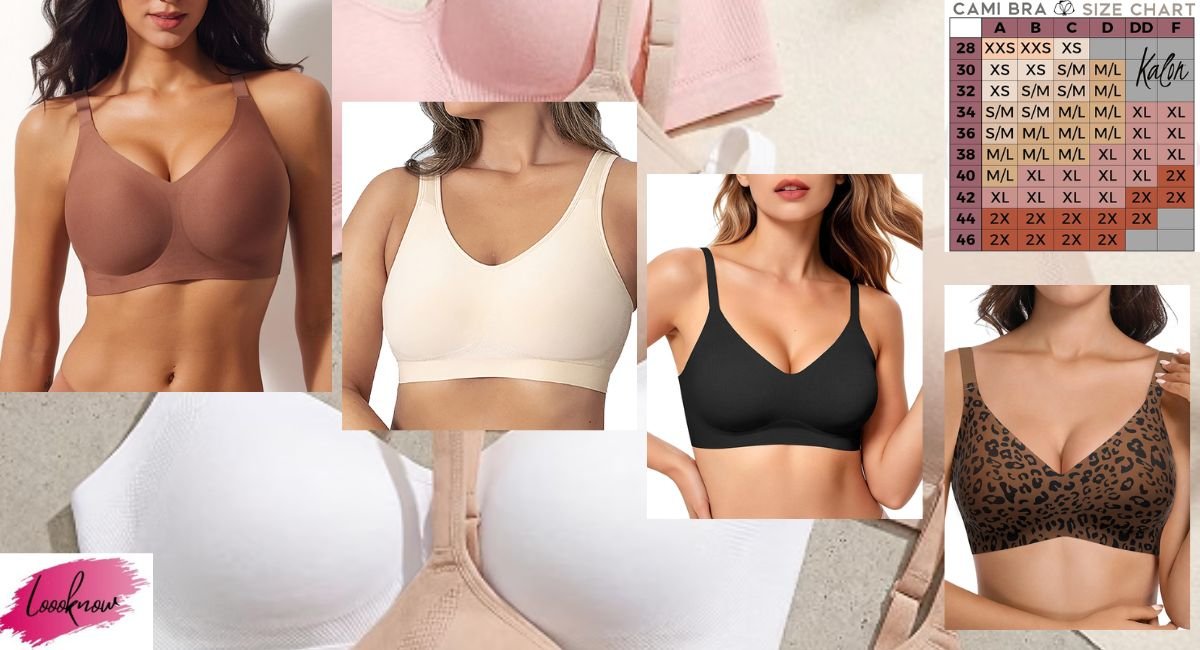
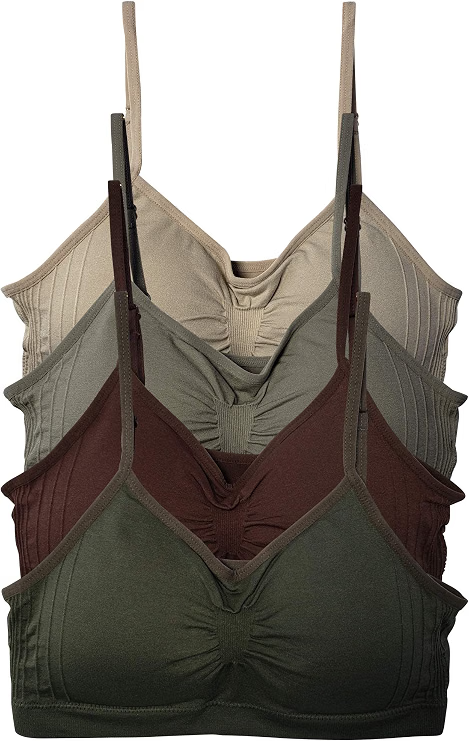
Kalon 4 Pack Women’s Nylon Spandex Removable Pads Comfort Cami Bras Wireless
The Main Types of Everyday Comfort Bras
Not every comfort bra looks the same, and different styles solve different problems. Here’s a breakdown of the categories you’ll see most often when shopping in the U.S. market, along with who each style tends to suit best.
Wireless T-Shirt Bras
These offer a smooth, rounded shape under fitted tops without underwire. They typically use molded or lightly padded cups for shape without the pressure points of wire. This style has become the default “everyday” bra for a lot of women because it works under most tops without printing lines or creating an obviously bra-shaped silhouette.
Bralettes
Soft, often unlined, and typically pull-on rather than clasped. Bralettes work best for smaller to medium busts or for low-impact days like working from home. They prioritize softness over structural support, which makes them a favorite for sleep-adjacent wear, lounging, or under looser tops where visible lines aren’t a concern.
Wireless Full-Coverage Bras
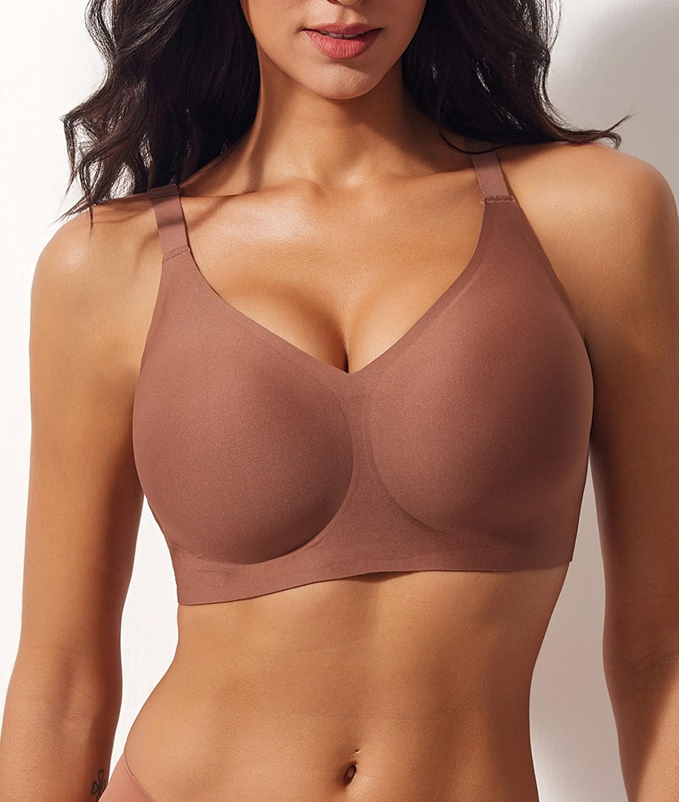
Designed for fuller busts, these use reinforced wide bands and structured cups instead of wire to deliver support. Brands have invested heavily in this category because it solves a real problem: many fuller-busted women assumed wire was mandatory for support, and modern engineering has proven otherwise for many body types. Features like power mesh side panels and multi-layer cups do the structural work that wire used to handle.
Racerback and Sports-Adjacent Comfort Bras
These pull double duty for errands and light activity. The racerback design distributes strap tension across a wider area of the shoulder and back, which reduces the digging-in sensation common with traditional straps, and it also keeps straps from slipping off rounded shoulders during movement.
Seamless Bras
Built as one continuous piece of fabric with minimal stitching, seamless bras are popular under athleisure and fitted knitwear because they disappear visually and reduce friction points. They’re often knitted in a single piece using techniques borrowed from activewear manufacturing, which is part of why they’ve grown so quickly in the everyday category.
Bra-Sized Bralettes and Hybrid Styles
A newer category that blends the structure of a traditional sized bra with the softness of a bralette, often using stretch-lace or ribbed cotton with light molded cups. These have grown quickly because they solve the “sized for support, soft for comfort” tension directly, giving shoppers a true band-and-cup size rather than the one-size-fits-most approach many traditional bralettes use.
Convertible and Multi-Way Comfort Bras
These include detachable or adjustable straps that can be worn traditionally, crisscrossed, or halter-style. While originally designed for outfit versatility, many shoppers have found the adjustability itself adds a comfort benefit, since it lets you shift strap placement throughout the day or across different tops.
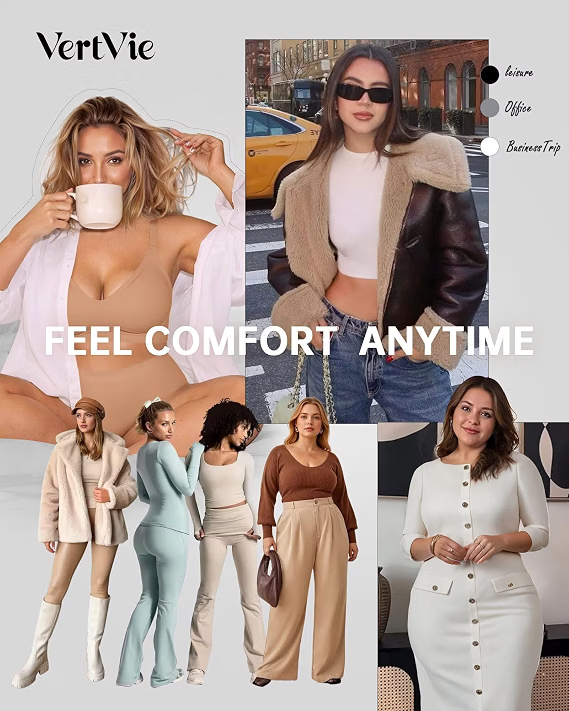
Vertvie Women Seamless Wireless Jelly Bra Comfortable Bralette
How to Find Your Correct Bra Size at Home
You don’t need a professional fitting to get a reliable starting measurement. Here’s a simple, step-by-step method you can do at home in under five minutes, using nothing more than a soft measuring tape.
Step 1: Wear a Well-Fitted, Unpadded Bra
Measure in a bra that isn’t heavily padded so you get an accurate baseline. If you don’t have one, measure without a bra and account for that when you compare to a size chart. Measuring over a heavily padded or push-up bra will throw off both numbers.
Step 2: Measure Your Band Size
Wrap a soft measuring tape around your ribcage, directly under your bust, keeping the tape level and snug but not tight. Round to the nearest whole number. If the number is even, add 4 inches; if odd, add 5 inches. That total is your band size. Many U.S. brands now use “add zero” or “add 2” sizing systems, so check the brand’s specific chart rather than assuming your calculated number matches every label exactly.
Step 3: Measure Your Bust Size
Wrap the tape around the fullest part of your bust, keeping it parallel to the floor and not pulled tight. Round to the nearest whole number. Doing this measurement in front of a mirror helps confirm the tape stays level all the way around, since it’s easy to let it dip in the back without noticing.
Step 4: Calculate Cup Size
Subtract your band measurement from your bust measurement. Each inch of difference corresponds to a cup size: 1 inch equals an A cup, 2 inches equals a B cup, 3 inches equals a C cup, and so on. So if your band measurement is 32 and your bust measurement is 35, the 3-inch difference gives you a 32C.
Step 5: Try It On and Check Three Points
Once you have a starting size, try the bra on and check the band, the center gore, and the straps.
- The band should sit level and snug on the loosest hook.
- The center gore, the fabric between the cups, should lie flat against your sternum rather than floating above it.
- The straps should stay in place without digging in when you raise your arms.
Step 6: Test It in Motion
Don’t just check the fit standing still in front of a mirror. Raise your arms overhead, bend forward slightly, and twist side to side. A well-fitted bra holds its position through all of this. If the band rides up when you raise your arms, or the straps slide down when you twist, that’s useful information even if the bra looked fine standing still.
Step 7: Adjust and Re-Check Over Time
Bra size can shift with weight changes, hormonal cycles, pregnancy, and even the season. It’s worth re-measuring every 6 to 12 months, or any time a bra that used to fit starts to feel off. Keeping a note of your measurements on your phone makes it easy to spot changes over time rather than relying on memory.
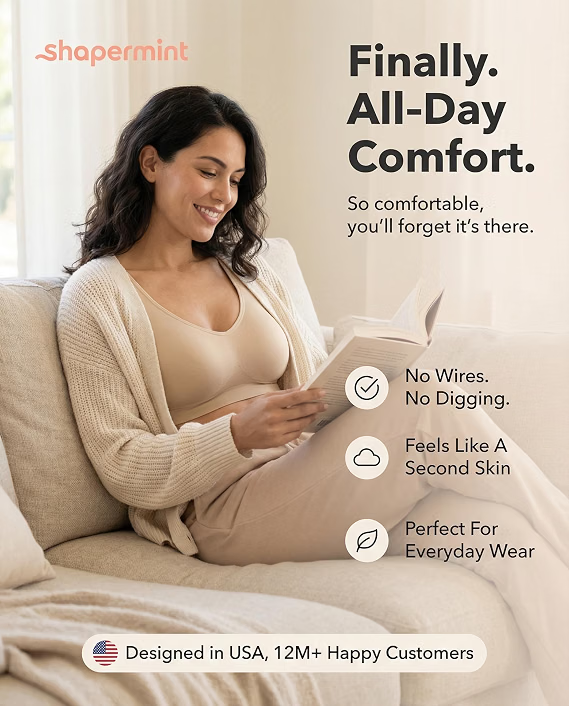
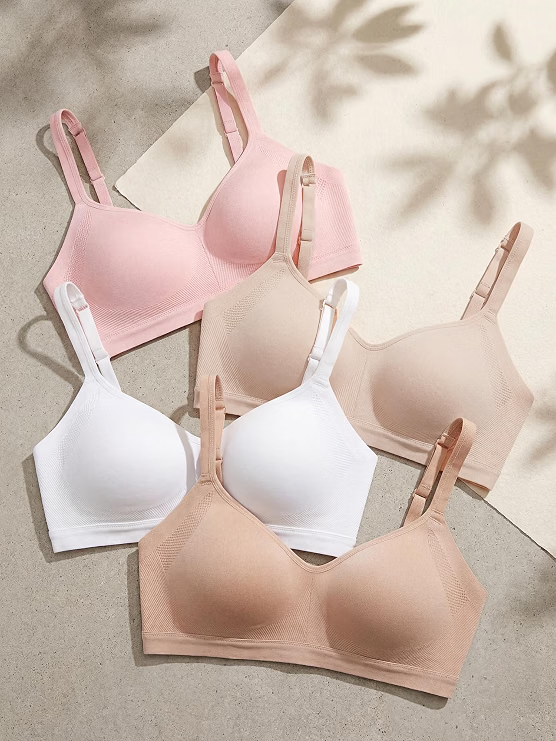
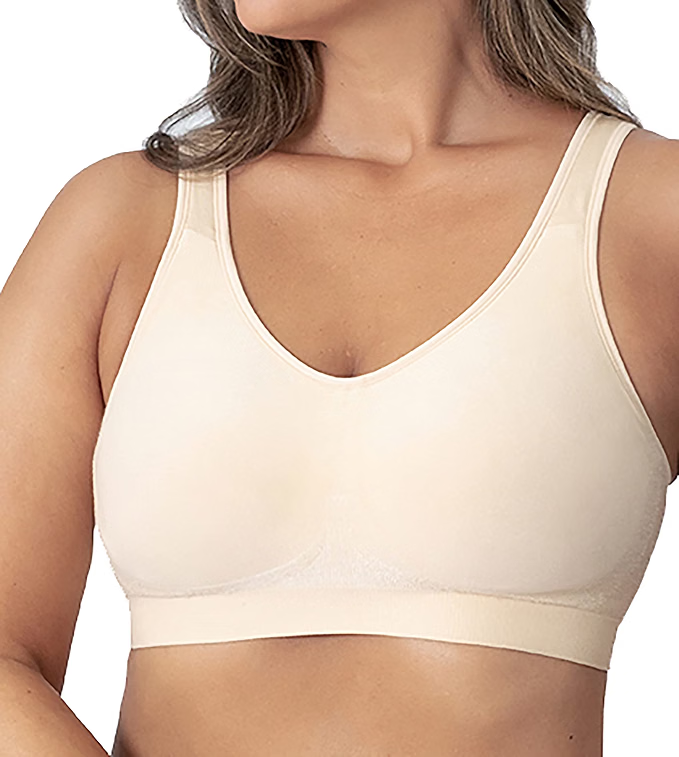
SHAPERMINT Wireless Bras for Women, Seamless Comfort Bra, Everyday Support
Choosing a Comfort Bra by Lifestyle and Body Type
Everyday comfort isn’t one-size-fits-all. Here’s how to match a style to your actual day, since the “best” comfort bra really depends on what you’re asking it to do.
If You Work From Home or Have a Low-Activity Day
A soft bralette or wireless bra without heavy molding is usually enough. Prioritize fabric softness over structure since you’re not moving much or needing shape under tailored clothing. This is also where many women choose to size down in structure, even if not in actual size, opting for the softest option in their drawer.
If You’re On Your Feet or Moving Frequently
Look for wide straps, a firm wireless band, and moisture-wicking fabric. Racerback styles help here because they reduce strap slippage during movement, which becomes noticeable fast if your day involves a lot of reaching, bending, or walking.
If You Have a Fuller Bust (D Cup and Above)
Support becomes more important than for smaller busts. Look specifically for bras labeled “full coverage” or “wireless support,” which use reinforced side panels and wider bands to distribute weight. Skipping wire doesn’t mean skipping support; it means the support comes from structural design instead of a rigid wire. Multi-layer cups, wider set straps, and firmer power mesh panels all contribute to this.
If You Have a Smaller Bust (A to B Cup)
You have the most flexibility here. Unlined bralettes, triangle bras, and lightweight seamless styles all tend to work well since there’s less weight for the fabric to manage. This is also where many women experiment with more minimal styles, since the support requirements are lower overall.
If You’re Pregnant or Postpartum
Comfort bras designed for pregnancy typically skip underwire entirely and use stretch panels that expand with your changing size. Nursing-specific comfort bras add a drop-down or clip-front cup for feeding access while keeping the same soft, wireless base. Sizing during this period can change more frequently than usual, so it’s worth choosing styles with generous stretch and multiple hook rows.
If You Have Sensory Sensitivities or Skin Conditions
Tagless, seamless designs in cotton or modal blends minimize points of irritation. Wide bands reduce pressure compared to narrower styles, which matters if elastic digging in is a specific pain point. Flat-lock seams, where they exist, sit closer to the skin and reduce the raised ridge that traditional seams can leave.
If You Run Warm or Live in a Hot Climate
Moisture-wicking synthetic blends or lightweight mesh panels help manage heat and sweat better than thick cotton, which can hold moisture against the skin. Ventilated or perforated fabric panels, often placed under the arms or along the band, are worth looking for if overheating is a regular issue.
Ubras Seamless Bra Review 2026: The Wireless Bralette That Actually Delivers All-Day Comfort
Common Mistakes That Ruin Bra Comfort
Even well-made bras feel uncomfortable when a few common mistakes are in play, and most of these are easy to fix once you know what to look for.
Wearing the same size for years without re-measuring. Bodies change gradually, and bra fabric stretches with wear. A bra that fit perfectly two years ago may now be a full size off, and most people don’t notice the drift because it happens slowly.
Choosing the band size that “feels right” on the tightest hook. A properly sized band should be comfortable on the loosest hook when new, leaving room to tighten as the fabric loosens over months of wear. Buying a band that only feels right on the tightest hook means you’ll run out of adjustment room within a few months.
Ignoring the straps as an adjustment tool. Many women tighten straps to compensate for a loose band, which creates shoulder pain and does nothing to fix the actual support problem, since straps were never designed to carry the majority of the load.
Washing bras incorrectly. High heat from dryers breaks down elastic fibers quickly, which shortens the lifespan of even a high-quality bra. Hand washing or a gentle cycle in a mesh bag, followed by air drying, preserves elasticity significantly longer.
Buying based on size alone without trying the style. The same size across different brands, and even different styles within the same brand, can fit very differently due to variations in cup shape and band construction. A 34B in one brand’s balconette style can fit completely differently than a 34B in the same brand’s full-coverage style.
Wearing the same bra every day. Elastic needs recovery time between wears to maintain its shape. Rotating between two or three bras extends the life of each one and keeps the elastic from being under constant tension.
Assuming discomfort is normal. Chronic bra discomfort, including red marks, numbness, or persistent pain, is a signal that something about the fit is wrong, not something to push through. Occasional mild marks from a snug band are normal; deep grooves that take a while to fade are not.
Sizing down out of habit rather than measurement. Some women size down by default because they assume a smaller number means a better fit, when in reality a too-small band and too-small cup create the exact spillage and digging-in sensation they’re trying to avoid.
Warners Easy Does It Underarm-Smoothing with Seamless Stretch Wireless Lightly Lined Comfort Bra
Practical Tips for All-Day Comfort
A few small habits make a noticeable difference beyond just picking the right bra.
Rotate at least two to three comfort bras through your week so elastic has time to recover between wears. Hand wash or use a lingerie bag on a gentle cycle, and always air dry to protect the elastic fibers. Refasten the band on the loosest hook when a bra is new, and move to tighter hooks as it stretches over months.
Try bras on later in the day rather than first thing in the morning, since breast tissue can shift slightly throughout the day, and a bra that fits well at 8 a.m. might feel different by 4 p.m. Keep a soft, wireless option on hand specifically for travel, since airport lines and long flights are where wire and rigid structure tend to feel worst.
Pay attention to where irritation happens; underarm rubbing usually points to a band or wing issue, while shoulder marks usually point to a strap or band tension issue. If you’re between two band sizes, sizing down in the band and up in the cup usually gives a more secure, comfortable fit than sizing up in the band.
Store bras flat or hung by the center gore rather than folded in half, since folding cups into each other over time can distort their shape. When trying a new brand for the first time, order two adjacent sizes if the retailer allows free returns, since sizing consistency between brands is still one of the biggest sources of frustration in bra shopping.
How to Shop for Comfort Bras Online Without Guessing
Buying bras online used to mean a coin flip on fit. That’s changed, but only if you know how to read the details brands actually give you.
Read the Product Description, Not Just the Photo
Product photos are often shot on a mannequin or a model whose proportions may not match yours. The written description usually tells you far more: whether the bra is lined or unlined, how much stretch the band has, and whether the fabric is a cotton blend or a synthetic. If a listing doesn’t specify fabric content, that’s worth treating as a small red flag, especially for anyone with sensitive skin.
Check the Brand’s Own Size Chart Every Time
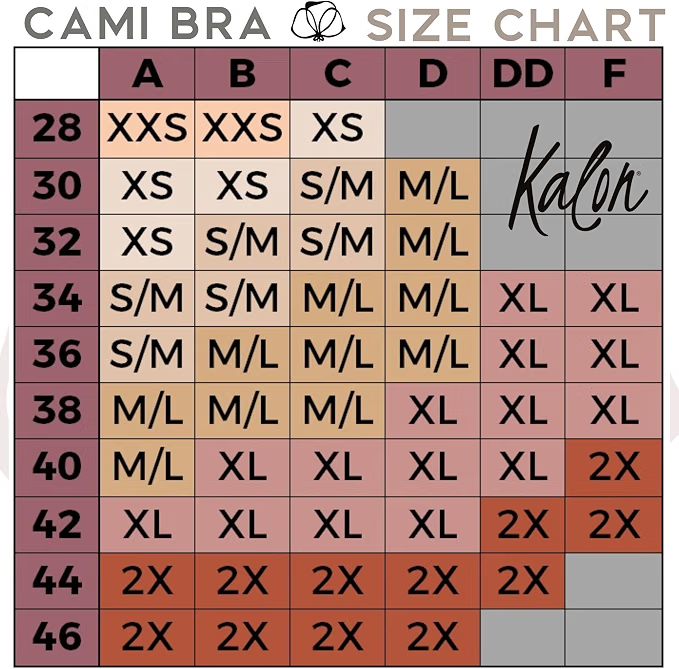
Never assume your size in one brand transfers directly to another. Even within the same retailer, a size can shift between product lines depending on the cut. Always cross-reference the measurements you took at home against the specific chart for the item you’re buying, not a general size chart you remember from a different purchase.
Look at Verified Reviews for Fit Notes
Star ratings alone don’t tell you much. Scan a handful of reviews specifically for comments about whether an item ran small, large, or true to size, and whether reviewers with a similar band and cup size to yours found it comfortable. Reviews that mention how a bra held up after multiple washes are especially useful, since that’s the point where cheaper elastic tends to reveal itself.
Take Advantage of Free Returns
Many U.S. retailers now offer free returns specifically because bra fit is so individual. If a brand allows it, ordering your calculated size along with one size up or down in the band, or one cup size in either direction, removes most of the guesswork. Try everything on the same day you receive it, since return windows can close faster than you expect.
Watch for “True to Size” vs. Brand-Specific Sizing Systems
Some U.S. brands use standard band and cup sizing, while others use their own numbered or lettered system, particularly for bralette-style products marketed as one-size or size-range items. When a brand uses its own system, look for a conversion chart, and don’t assume a small, medium, or large label maps cleanly onto your measured band and cup size.
A Quick Look at How Comfort Bras Have Evolved
It’s worth understanding why this category exists at all. Traditional bra design for much of the twentieth century prioritized shaping the body toward a specific silhouette, often at the cost of comfort. Structured foam cups, rigid wire, and multi-panel construction were treated as the default, not a choice.
The shift began gradually with the rise of activewear as everyday clothing, which introduced stretch fabrics and seamless construction techniques into mainstream apparel. Direct-to-consumer intimates brands then took that momentum further, launching specifically around the idea that support and softness didn’t have to be opposites. That positioning resonated, and larger, longer-established brands followed with their own wireless and seamless lines.
More recently, the comfort bra category has expanded further to address bust sizes and body types that were historically underserved by wireless designs, using reinforced fabric engineering rather than wire to provide structure. The result is a much wider range of genuinely supportive, genuinely comfortable options than existed even five years ago, across a broader range of sizes than the category originally covered.
Comfort Bras Across Price Points
Price is often the first filter people apply when shopping, so it helps to know what you’re actually paying for at different tiers, and where it’s worth spending more.
Budget-Friendly Options
Bras in the lower price range, often found at mass retailers and value-focused brands, can still deliver solid everyday comfort, particularly in simple wireless or bralette styles with minimal construction. Where budget options tend to fall short is elastic longevity. Bands and straps in this tier often stretch out faster, which means more frequent replacement to maintain the same level of support.
Mid-Range Options
This tier, common among specialty intimates retailers and popular direct-to-consumer brands, is where most of the comfort-focused engineering discussed throughout this guide tends to show up: reinforced wireless support panels, moisture-wicking blends, and a wider range of true band and cup sizes. For most people, this is the sweet spot between cost and quality, especially for bras that will see regular weekly wear.
Premium Options
Higher-end bras, whether from established lingerie houses or premium comfort-focused labels, typically use higher-grade elastic that holds its recovery longer, along with more refined construction details like flat-lock seams and multi-panel cup shaping. The comfort difference at this tier is often more noticeable over months of wear than it is on day one, since the fabric holds its shape and support longer before needing replacement.
What’s Worth Paying More For
If you’re deciding where to spend more within a limited budget, prioritize the band and the fabric blend over decorative details like lace trim or embellishment. The band does most of the support work, and fabric quality determines how the bra feels and holds up after repeated washing. A plain, well-constructed band-and-cup bra in a quality blend will usually outperform a decorative, lower-quality one, even at a similar price point.
OEAK Wireless Jelly Bra Review
Frequently Asked Questions
How often should I replace my comfort bras?
Most everyday bras last 6 to 12 months with regular wear and proper care, though frequency of wear and washing habits affect this. Signs it’s time to replace one include a stretched-out band that no longer sits snug on the loosest hook, fraying straps, or fabric that has lost its shape.
Are wireless bras actually supportive for a larger bust?
Yes, when the design uses reinforced bands and structured cups. Support in a bra comes from the combination of band tightness, cup structure, and strap placement, not from wire alone. Many wireless bras built specifically for fuller busts use double-layer fabric and wider bands to compensate for the missing wire.
Why does my bra ride up in the back?
This almost always means the band is too loose. A properly fitted band stays level and snug around your ribcage throughout the day. If it’s riding up, try going down a band size while going up a cup size to maintain the same overall volume.
Can I wear a comfort bra for light exercise?
Racerback and seamless comfort bras can work for walking, yoga, or light stretching, but they aren’t built for high-impact movement like running. For anything with significant bounce, a dedicated sports bra with more structured support is the safer choice.
What’s the difference between a bralette and a regular comfort bra?
Bralettes are typically unlined, pull-on styles without hook closures, best suited to smaller busts or low-support days. Comfort bras can include bralettes but also cover a wider range, including wireless full-coverage styles with hooks, adjustable straps, and structured cups designed for fuller busts.
How do I know if my bra size has changed?
Watch for straps digging in, a band riding up, cups gapping or overflowing, or a bra that used to feel fine suddenly feeling tight or loose. Any of these signs are worth a re-measure, since weight changes, hormonal shifts, and pregnancy can all affect bra size over time.
Is it normal for a new bra to feel snug on the band?
Yes, to a point. A new band should fit snugly on the loosest hook, since elastic naturally loosens with wear and washing over the following weeks. That initial snugness is different from a band that leaves deep marks or makes it hard to take a full breath, which signals the size is genuinely too small rather than simply new.
Do comfort bras work well under structured or tailored clothing?
Many do, particularly seamless and wireless T-shirt bra styles with smooth, molded cups. Heavily textured bralettes with lace trim are more likely to show through fitted or light-colored fabric, so for tailored outfits, look specifically for descriptions like “seamless,” “smooth cup,” or “invisible under clothing.”
Conclusion
Comfort in a bra isn’t a luxury or an afterthought. It comes down to getting the fundamentals right: an accurate band and cup measurement, fabric that breathes, and a style that actually matches how you spend your day. Once those pieces are in place, the rest falls into line.
Women’s Wireless Seamless Bra Ultra-Soft Push Up Full Coverage Bralette Everyday Comfort & Support
Take twenty minutes this week to re-measure yourself using the steps above, then try on one comfort style you haven’t worn before. Small adjustments, like moving down a band size or switching from underwire to a structured wireless style, often make a bigger difference than buying an entirely new wardrobe of bras. Your body will thank you by the end of the day.
Please visit us for more detail # www.LoookNow.com

I’m an SEO content writer and product researcher with experience creating well-researched product reviews, comparisons, buying guides, affiliate articles, and helpful website content. At LoookNow, I focus on researching products, comparing features and value, and creating clear, engaging, search-optimized content to help readers make more informed purchasing decisions. My goal is to provide useful, trustworthy, and easy-to-understand information that saves readers time and reduces confusion when choosing products online.