
Heads up: If you buy through links in this review, I may earn a small commission at no extra cost to you. This doesn’t affect my ratings.
Introduction
Think about the washcloth hanging in your bathroom right now. It’s damp, it’s warm, and it has been used more than once. Tomorrow morning it will go straight onto your face.
For most people, that’s fine. But if you deal with breakouts, redness, or eczema-prone skin, it’s fair to wonder whether a reused cloth is helping or quietly working against you. That question is why disposable face towels have become so popular, and it’s the reason for this Clean Skin Club Clean Towels XL review.
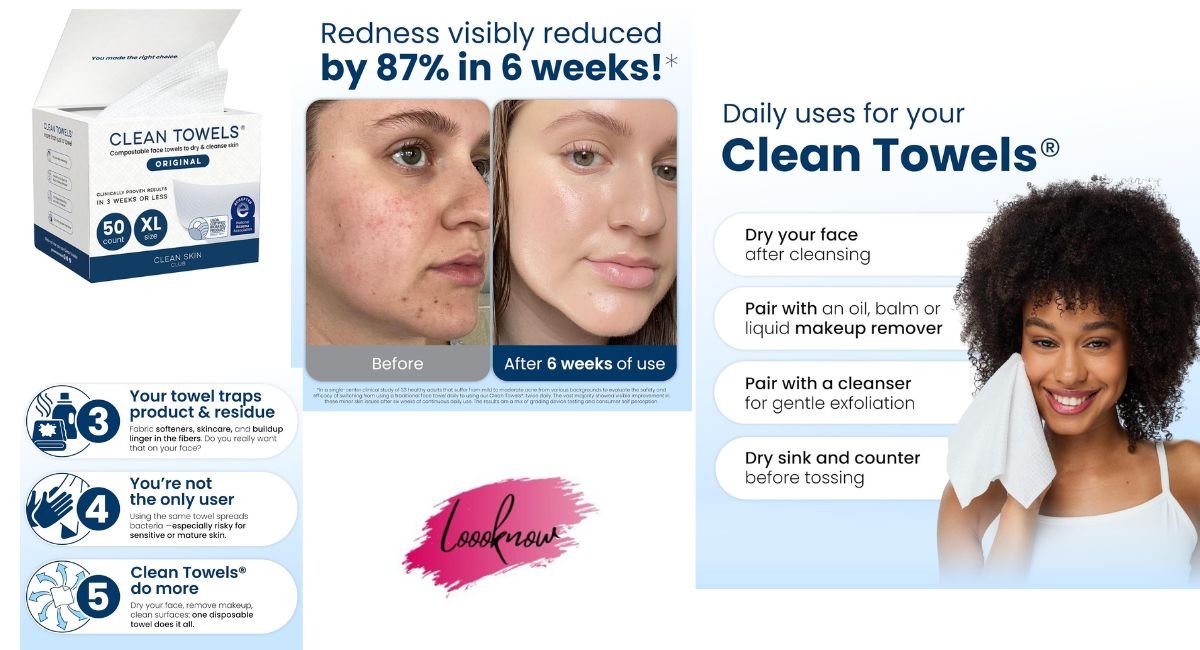
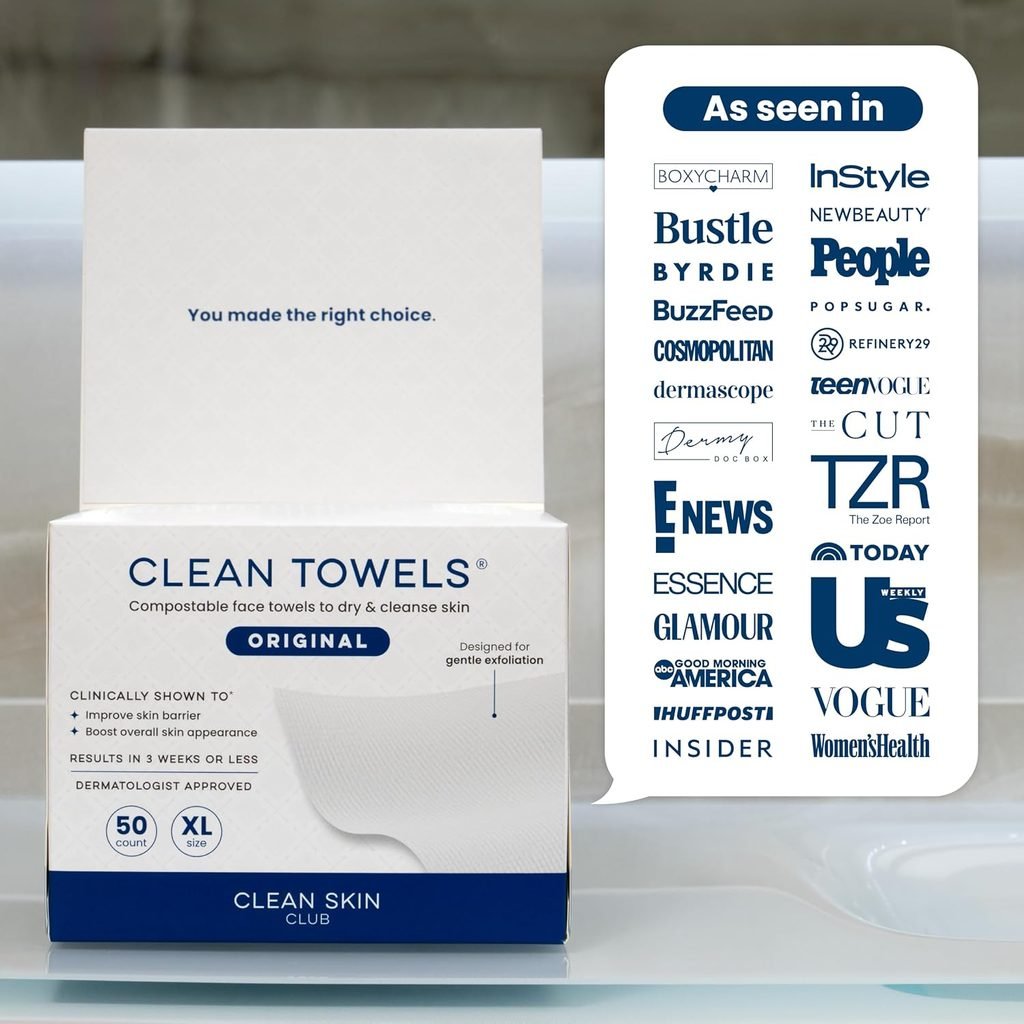
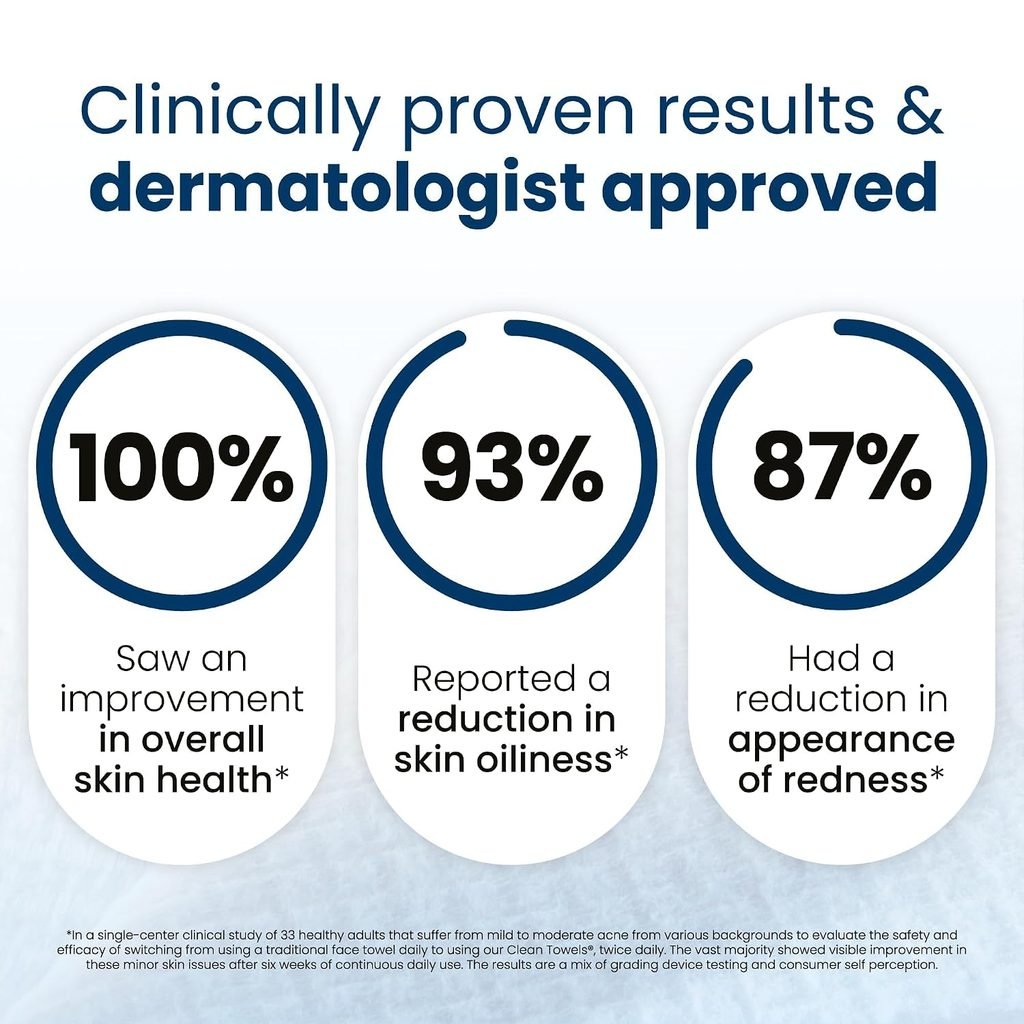
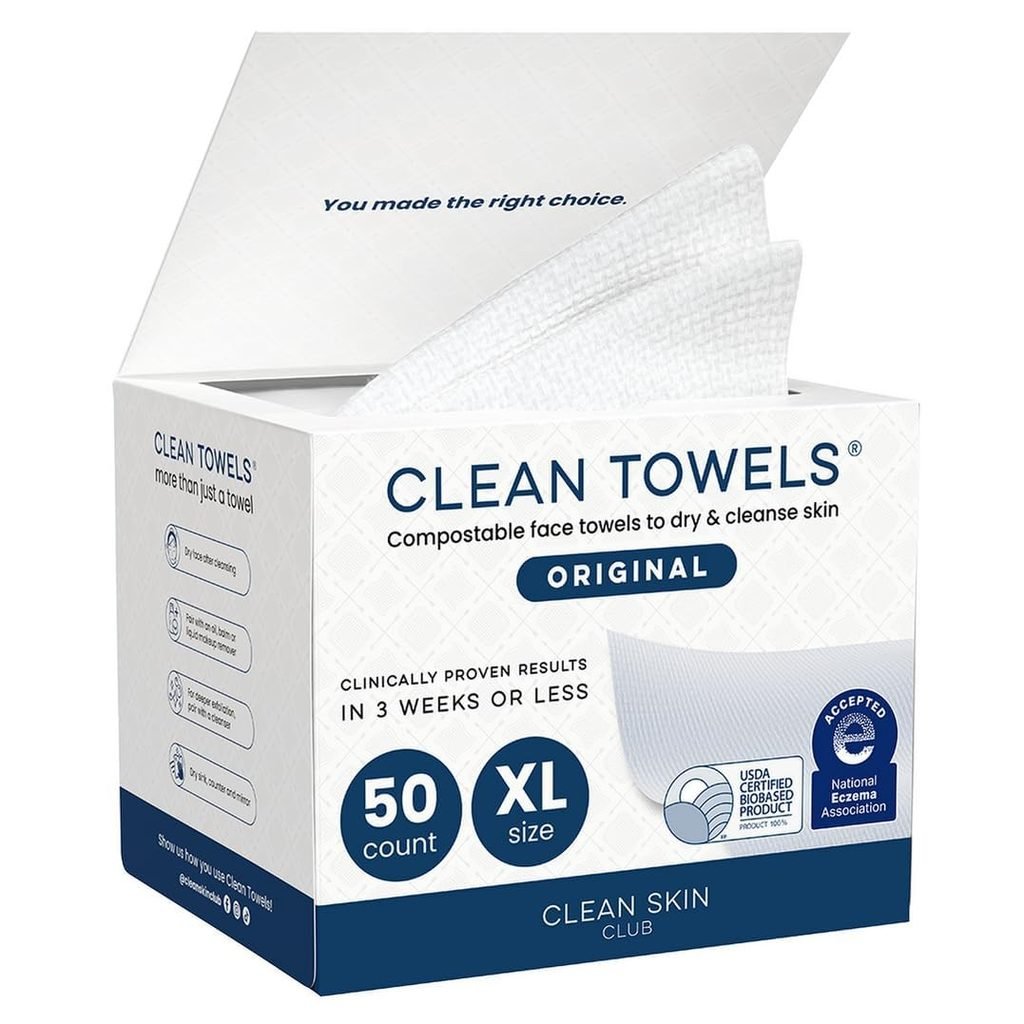
Clean Skin Club Clean Towels XL are dry, single-use face towels. According to the product listing, they are 100% USDA Biobased and Eczema Association Accepted. They are also marketed for several jobs: washing, drying, and removing makeup when paired with your own remover. You pull out a fresh towel, use it once, and throw it away. There’s no laundry and no damp cloth left behind.
That sounds convenient. But convenience isn’t the same as value, so I wanted to look at the details before recommending anything.
A quick word on how this review was built. It’s based on the product specifications, the listing details, available user feedback, and comparisons with competing products. I haven’t tested these towels myself, and I won’t pretend otherwise. Where I describe daily use, I’m drawing on what the specs suggest and what buyers of similar disposable towels commonly report. That way, you know exactly what you’re reading.
Here are the questions this article answers:
- Are the towels soft and strong enough for daily face care?
- What do “USDA Biobased” and “Eczema Association Accepted” actually mean?
- Are they a good pick for sensitive or eczema-prone skin?
- How do Clean Skin Club towels compare with regular face towels?
- Is the ongoing cost worth it compared with a washable cloth?
- Where does it make sense to buy them, Amazon or Walmart?
You’ll also find the real downsides. Disposable products cost more over time and create waste, even when they’re plant-based. A dry towel also won’t dissolve stubborn waterproof makeup on its own. I’ll cover those limits plainly, so you can decide with clear eyes.
If you’re short on time, jump to the Quick Verdict right after this introduction. If you want the full picture, keep reading. We’ll go through the features, the materials, how the towels feel, and who they suit best. We’ll also cover who should skip them, and what to look for in any disposable face towel before you buy.
👉 Check Price on Amazon “See how we review products”
Quick Verdict
Overall rating: 4 out of 5, for the right buyer.
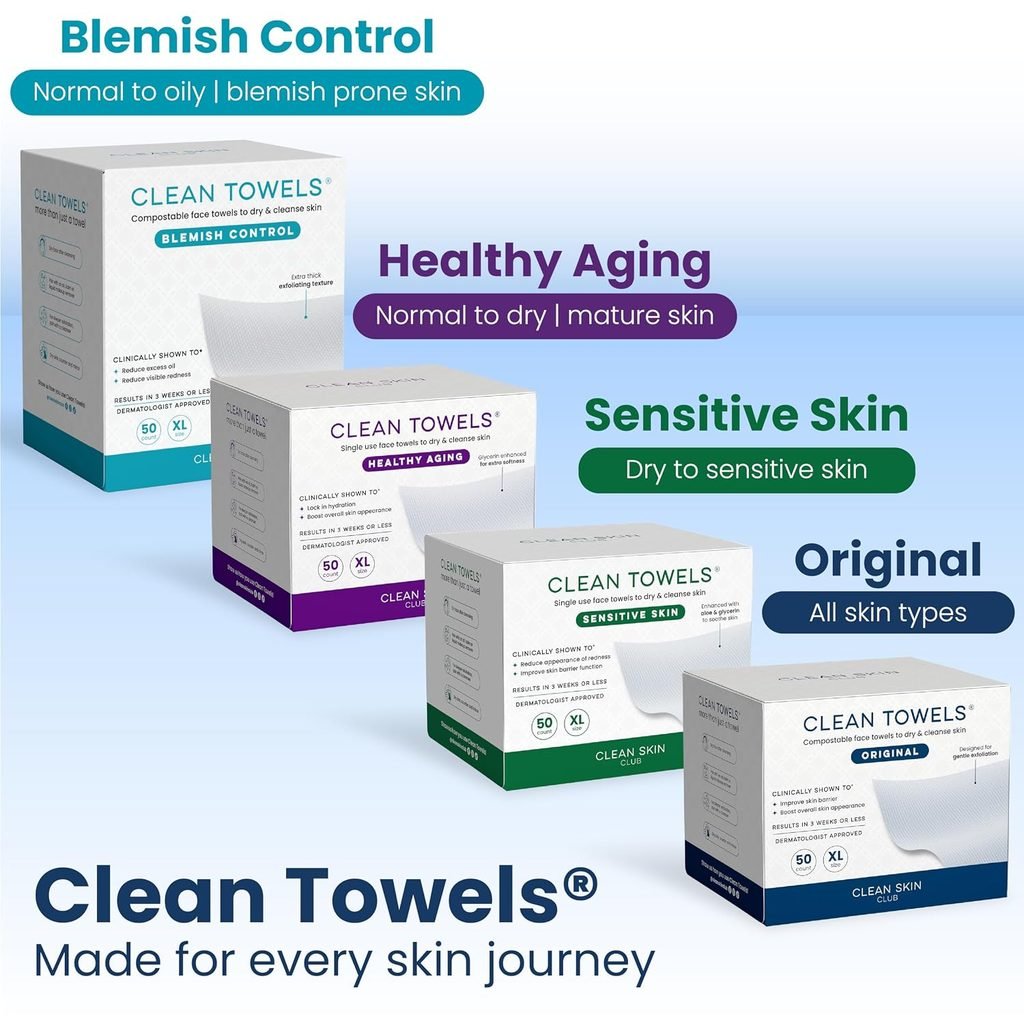
Clean Skin Club Clean Towels XL are a solid choice if you want a clean, single-use alternative to a washcloth. They suit people who have sensitive skin, who deal with breakouts, or who simply don’t like reusing damp fabric on their face. The “Eczema Association Accepted” label is a real plus for people with reactive skin.
What stands out:
- Large (XL) size that covers the whole face without folding
- Plant-based, USDA Biobased positioning
- Dry format, so there is no built-in lotion, fragrance, or wipe solution described on the listing
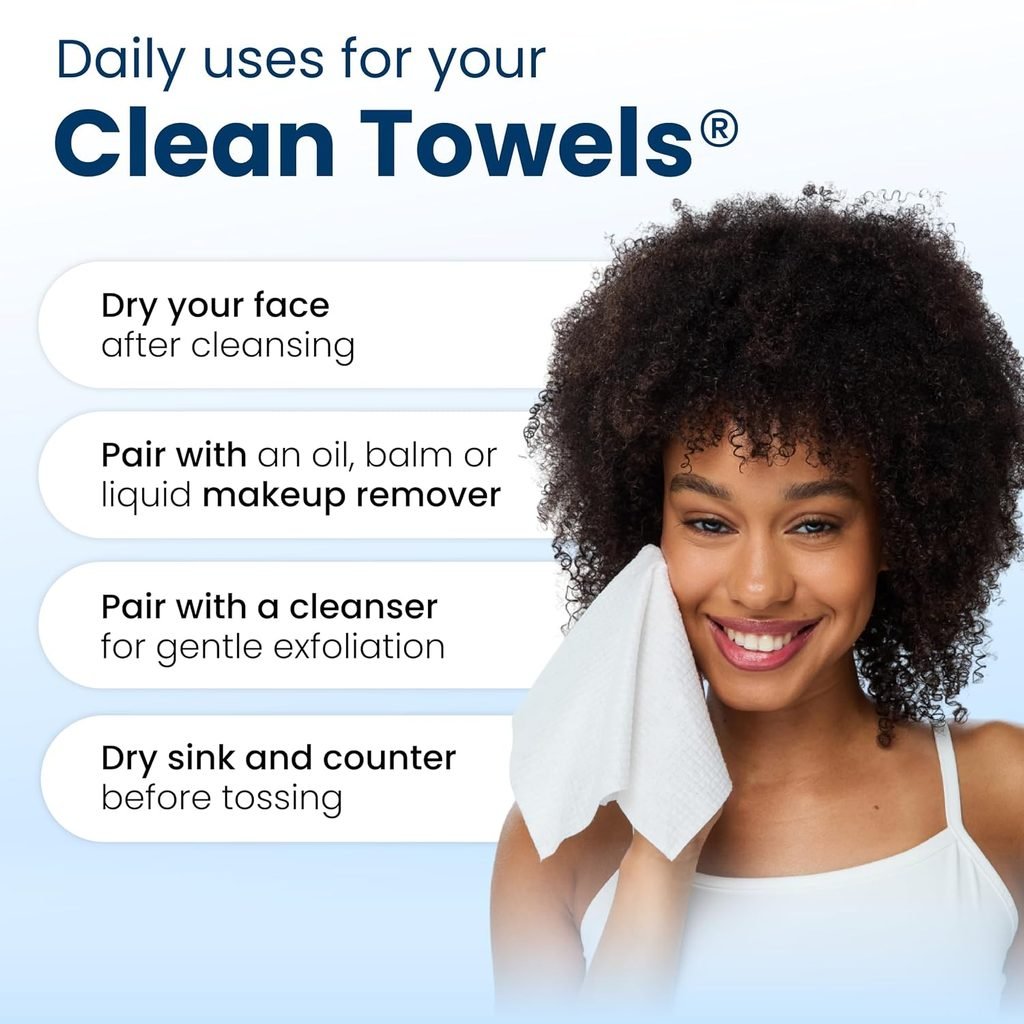
- Works for several jobs: cleansing, makeup removal with your own remover, drying, and more
What holds it back:
- Ongoing cost. You keep buying them, unlike a washcloth that lasts for years.
- Waste. Even with a plant-based material, a single-use product creates trash.
- Stubborn waterproof makeup may need a dedicated remover.
- Pack sizes and prices can change, so check the current listing.
Bottom line: If a gentle, hygienic, disposable towel fits your routine and budget, these are worth a close look. If you only want the cheapest way to wipe your face, a stack of clean cotton cloths still wins on cost.
Quick answer for voice search: Are Clean Skin Club Clean Towels XL worth it? Yes, for people with sensitive or reactive skin who want a fresh, soft, single-use towel. They cost more over time than washable cloths.
What Is Clean Skin Club Clean Towels XL?
Clean Skin Club Clean Towels XL are dry, disposable face towels made from plant-based material and marketed for gentle cleansing, makeup removal, and drying. They come in a pack or roll, and you pull off one towel at a time.
The brand positions them as a cleaner alternative to the standard bathroom washcloth. Per the listing, the key claims are:
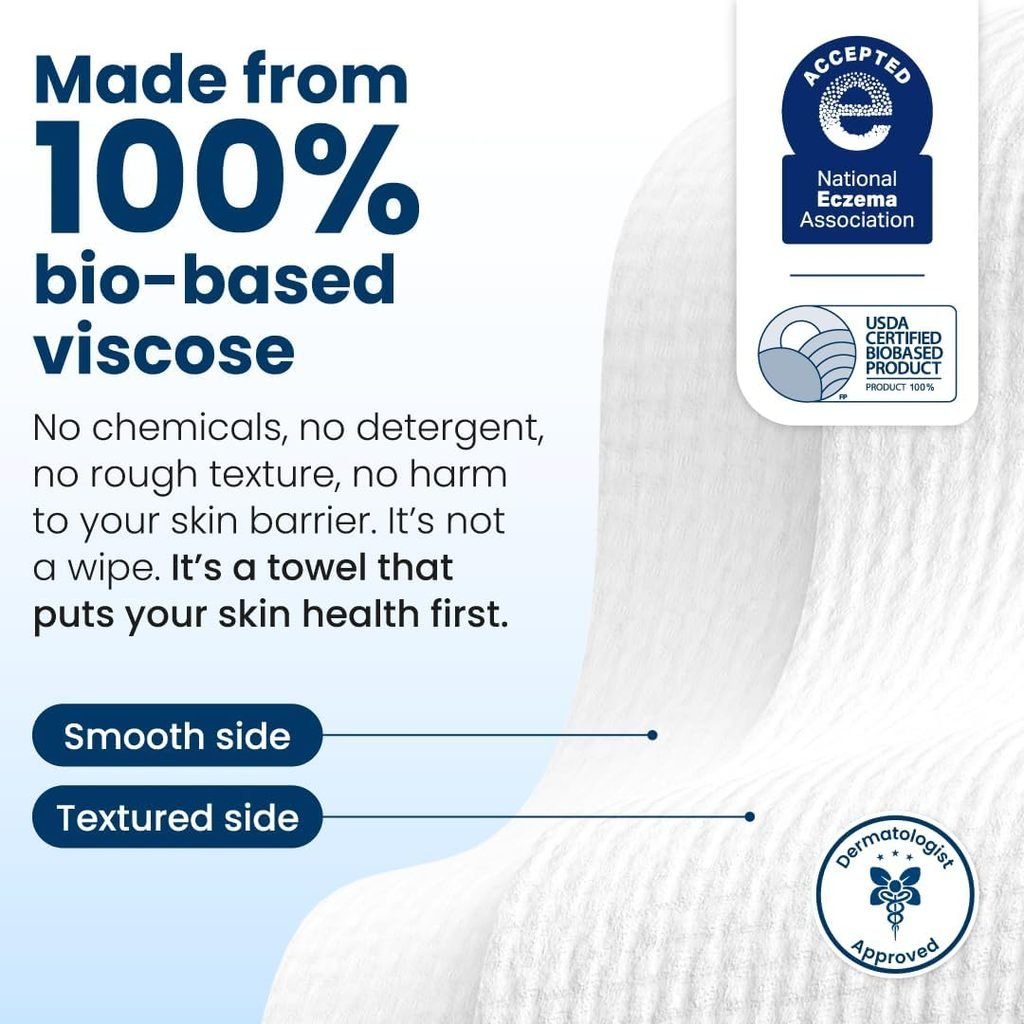
- 100% USDA Biobased
- Eczema Association Accepted
- Disposable and single-use
- XL size
- Dry wipes that work with water, cleanser, or makeup remover
How they’re different from a regular washcloth
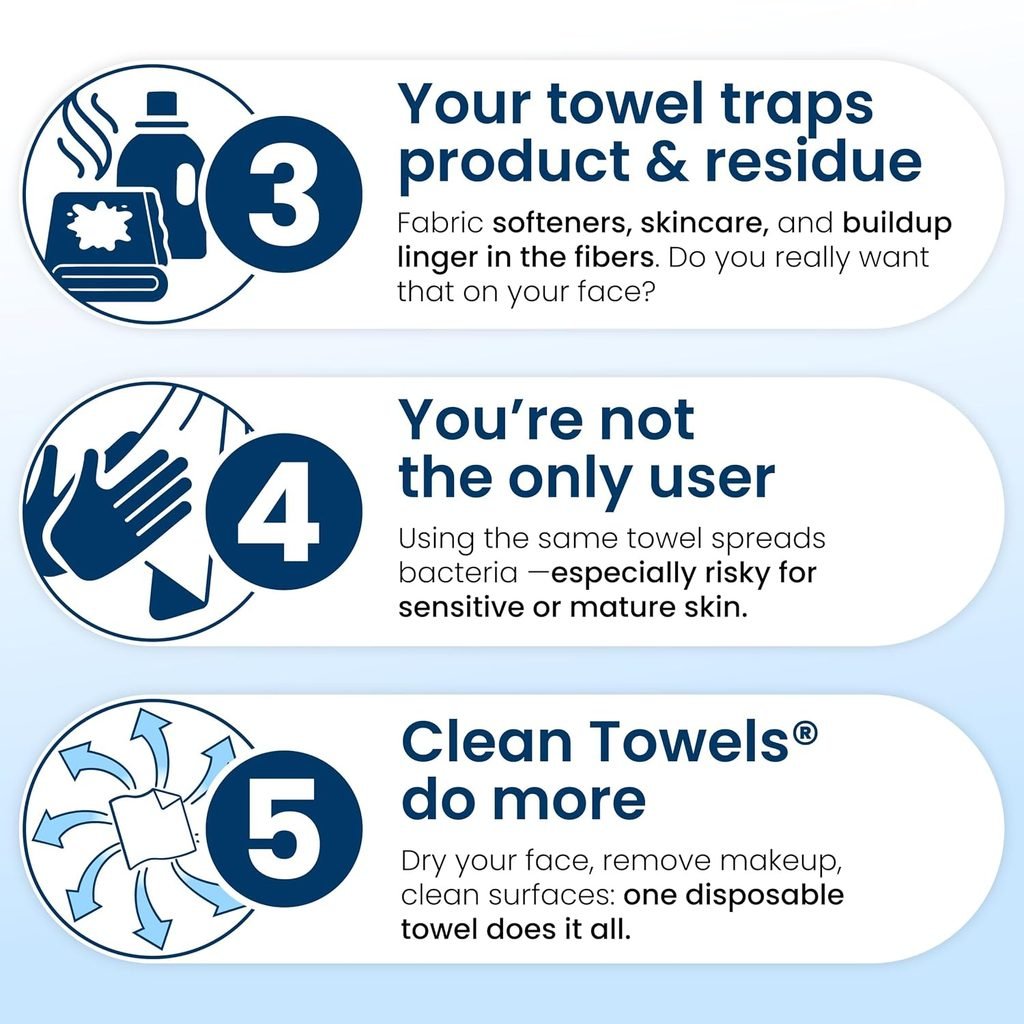
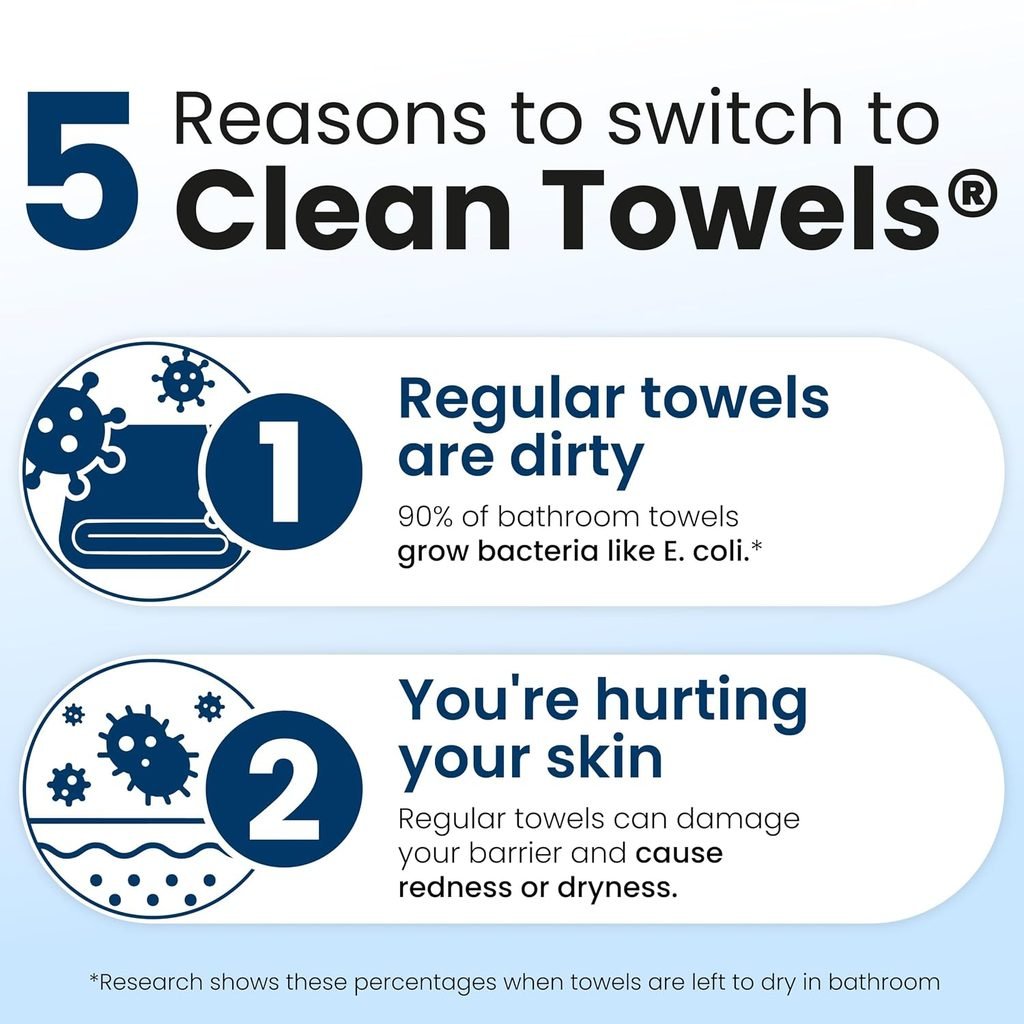
A cotton washcloth is reusable. That is good for your wallet, but it means you must wash it often. Many dermatology sources suggest using a clean cloth each time, which is a lot of laundry.
A disposable towel skips that step. You use it once and toss it. There is nothing to wash, dry, or store.
How they’re different from “wet wipes”
Most makeup remover wipes come pre-soaked. They often contain cleansers, preservatives, and sometimes fragrance. A dry towel is different. It has no built-in liquid, so you decide what goes on it.
This matters for sensitive skin. A dry towel lets you pair it with your own gentle cleanser or just plain water. That can cut down on unknown ingredients touching your skin.
Where it fits in a routine
Think of it as a tool, not a skincare product. It doesn’t treat acne or fix dryness. It’s a clean, soft surface for the things you already do: washing, removing makeup, patting dry.
Key Features Breakdown
Here is a closer look at the features that matter most for this kind of product.
100% USDA Biobased
“USDA Biobased” comes from the USDA BioPreferred program. A biobased product is made, at least in part, from renewable biological sources such as plants rather than petroleum.
Two cautions are worth knowing:
- Biobased does not automatically mean compostable. These are different claims. Check the packaging for disposal guidance.
- Biobased does not automatically mean gentler on skin. It describes where the material comes from, not how it feels.
Still, for shoppers who want to cut down on petroleum-based plastic fibers, this label is a meaningful starting point.
Eczema Association Accepted
This refers to the National Eczema Association’s Seal of Acceptance. According to the association, products with the seal have been reviewed to make sure they are suitable for people with eczema and sensitive skin.
What this does not mean: it is not a cure, and it doesn’t guarantee that no one will react. Skin is individual. If you have eczema, a patch test and a conversation with your dermatologist are still smart steps.
XL size
Many disposable towels are small, about the size of a standard wipe. An XL towel gives more coverage. In practice, that can mean:
- One towel for the whole face and neck
- Room to fold into a pad for makeup removal
- Less tearing when used damp
Check the listing for exact dimensions, since sizes can vary by pack.
Dry format
Because these are dry, they do double duty. You can:
- Wet one under the tap for a quick wash
- Add your own micellar water or cleanser
- Pat your face dry after washing
- Use it to blot excess oil
Material and texture
The listing describes a soft, plant-based nonwoven material. Nonwoven towels are made by bonding fibers rather than weaving them. The main trade-off in this category is how soft the towel feels versus how well it holds together when wet.
Pack size and value
Pack counts and prices change, so I won’t quote a number that may be out of date. When you compare, divide the price by the number of towels to get a cost per towel. That is the fairest way to compare against other brands.
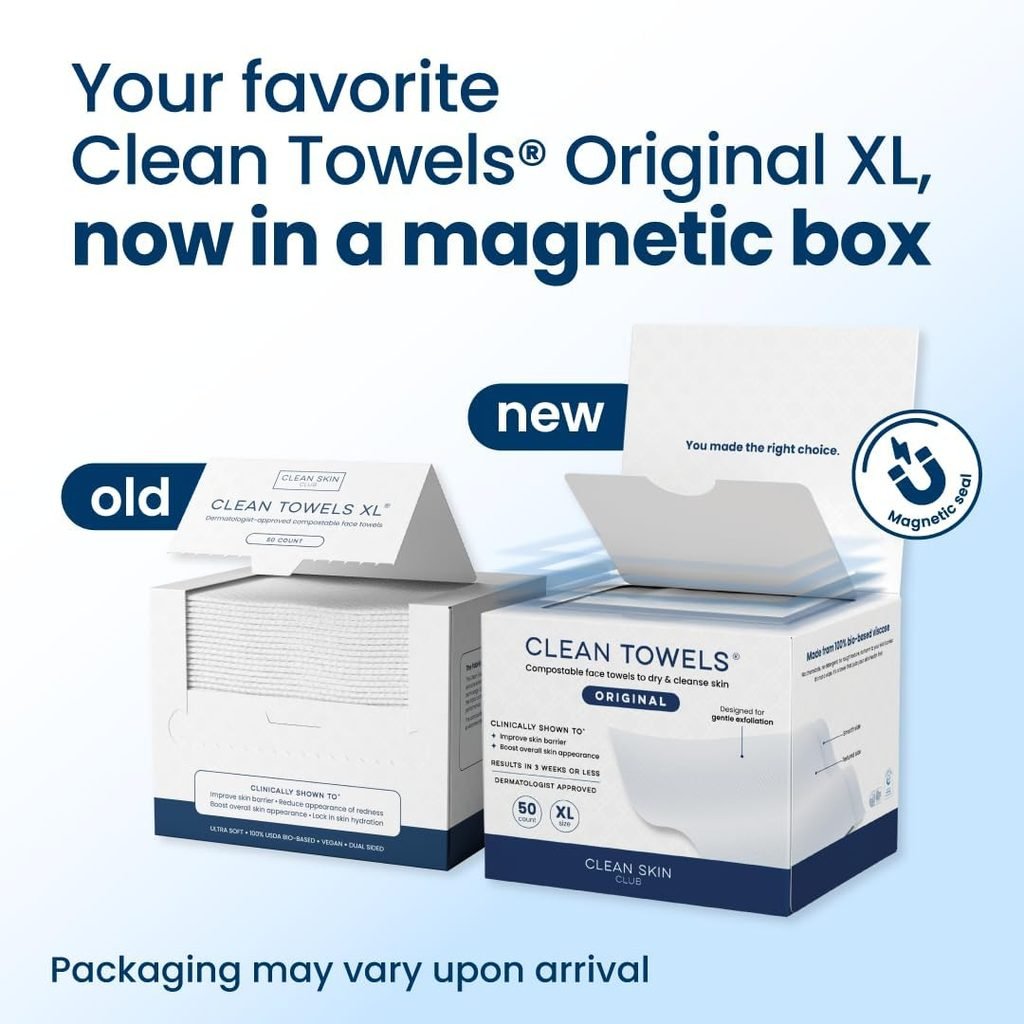
Packaging
Disposable towels usually come in a box or pouch designed for one-at-a-time dispensing. Look at recent buyer comments for any note about how easy the packaging is to open and reseal.
Feature summary
| Feature | What it means for you |
|---|---|
| 100% USDA Biobased | Plant-based sourcing, not a compostable guarantee |
| Eczema Association Accepted | Reviewed for sensitive skin suitability, not a cure |
| XL size | More coverage per towel |
| Dry format | Add water or your own products |
| Single-use | Hygienic, but an ongoing cost |
Ingredients & Formulation Analysis
A dry towel doesn’t have an “ingredients list” the way a cleanser does. What matters is the material, and what is not in the product.
What the towel is made of
Based on the listing, the towel is built from plant-based, USDA Biobased fibers. Manufacturers often use cellulose-based fibers such as those from wood pulp or similar plant sources for products in this category. For the exact fiber blend, check the product page or package.
What’s reportedly missing
Because it’s a dry product, the listing doesn’t describe any added lotion, cleanser, preservative system, or fragrance solution. Pre-moistened wipes need preservatives to stay fresh in the package. Dry towels generally don’t. That is a quiet advantage for people who react to preservatives.
Why that matters for sensitive skin
Common irritants in wet wipes include:
- Added fragrance
- Certain preservatives
- Alcohol-based cleansing agents
A dry towel avoids most of these by design. You still bring your own products to it, so you control the ingredient list.
Things to double check
- Fiber type: Confirm it on the package.
- Binders or processing aids: Manufacturers rarely list these in detail. If you have extreme sensitivities, contact the brand.
- Your own cleanser: The towel can be gentle while a harsh cleanser undoes the benefit.
The honest limits of this analysis
I can’t verify a lab-level material breakdown from here. What I can say is that the specs point to a simple, plant-based, fragrance-free-by-design product, and the National Eczema Association’s acceptance adds a layer of third-party review.
Scent Profile & Sensory Experience
Scent
Per the listing and brand positioning, the towels are meant to be free of added fragrance. A dry, plant-based nonwoven towel typically has little to no noticeable smell. Some buyers of similar products mention a faint “paper” or “fresh-cut” note straight out of the package, which fades quickly.
If you are scent-sensitive, that matters more than any flowery claim. Unscented here means no added perfume, not necessarily zero smell.
Feel in the hand
The feel of a disposable towel comes down to three things:
- Softness: how it feels sliding across your skin
- Thickness: how much cushion it gives
- Texture: smooth, ribbed, or slightly textured
Plant-based nonwoven towels often feel soft and slightly dense. Buyers of this style of product often compare the feel to a soft paper towel or a thin cloth. Whether it feels premium or “papery” depends on your own sensitivity.
Feel on the face
Dry, the towel can feel a bit crisp. Dampened, it usually softens and drapes better. A common tip in this category is to wet it lightly first. That helps it glide instead of tug.
How it handles water
Disposable towels vary in how they hold up wet. A well-made one stays intact through a face wash. A weaker one can pill or shred if you rub hard. Based on feedback patterns for XL biobased towels, a gentle patting motion works better than scrubbing.
Absorbency
Because the towel is XL and dry, it can pat the face dry after washing. It should absorb a fair amount, though a thick cotton towel will absorb more per pass. For face drying, you generally need less absorbency than for body drying.
Overall sensory read
Expect a plain, neutral, low-fragrance experience. If you love the luxury of a plush spa towel, this won’t feel the same. If you value neutral and clean, it fits.
Usage Experience
A note on method: I haven’t tested these towels myself. What follows is based on the specifications, available user feedback, and what is typical for plant-based disposable towels. Think of it as an informed expectation of daily use, not a personal diary.
Morning face wash
For a morning wash, the typical routine is simple. Wet the face, apply a gentle cleanser, rinse, then pat dry with a fresh towel. The XL size means one towel is enough for face and neck.
Users of similar towels often like that there is no “is this cloth clean?” question. You pull one out, use it, and move on. For people who break out, that peace of mind is a big part of the appeal.
Evening makeup removal
For makeup, the dry towel works best as a partner for another product. Common approaches:
- Micellar water: Dampen the towel and press it over the eyes and lips for a few seconds before wiping.
- Cleansing balm or oil: Massage it in, then wipe away with a damp towel.
- Water only: Works for light makeup, less well for long-wear or waterproof formulas.
This is where the “makeup remover dry wipes” label on the listing makes sense. The towel is the tool, not the remover. Heavy eye makeup usually needs a dedicated remover first, no matter the towel brand.
Handling mascara and eyeliner
Rubbing is the enemy near the eyes. A common recommendation in this category is to hold a dampened towel against the lash line, let the product soften, and wipe in one direction. The XL size gives you room to fold a clean section for each pass.
After sweat or exercise
A disposable towel is useful in a gym bag. It’s light, there’s no damp cloth to carry home, and you can toss it. Buyers of similar products often mention this as a practical use case.
Travel
For travel, disposable towels solve the washcloth problem. Hotels don’t always supply washcloths, and packing a wet one is awkward. A small stack of towels takes little room. This is a quiet strength of the format.
Skincare steps
Some people use a damp towel to apply or remove masks, or to gently wipe off a cleansing balm. The XL size gives a bit more room for those jobs.
Pat vs. rub
This is the big practical lesson for disposable towels. Patting keeps the towel intact and is kinder to skin. Rubbing can shed fibers or tear it. If you have eczema-prone skin, patting also reduces friction.
How many towels per use?
One towel per face wash is typical. For makeup removal you might use one for the first pass and a second for the final wipe. That affects your cost per day, so factor it into your budget.
Storage and dispensing
Keep the pack dry and closed. Moisture in the box can affect the towels. If the packaging has a resealable feature, use it.
What buyers of this type of product often like
- No laundry
- The “fresh every time” feeling
- Gentle on skin
- Good for sensitive or acne-prone skin routines
What they often flag
- Cost over time
- Waste
- Mixed softness opinions
- Some find the towels thin when soaked
My honest take
For a single-use towel, the idea is sound. The XL size and plant-based material fit the “gentle and clean” promise. The main question is whether the ongoing cost and waste fit your life.
Benefits
1. A fresh surface every time
The biggest benefit is hygiene by design. A towel you use once can’t carry yesterday’s bacteria or leftover product to your face. If you struggle with breakouts or irritation, removing that variable can help. It isn’t a guaranteed fix, but it removes one possible trigger.
2. A reviewed option for sensitive skin
The National Eczema Association’s acceptance means the product has been reviewed for people with sensitive, eczema-prone skin. That is a more useful signal than a generic “gentle” claim on the front of the box.
3. Plant-based sourcing
USDA Biobased positioning means the product draws on renewable plant materials. If reducing petroleum-based fibers matters to you, that is a plus. Remember that it doesn’t automatically make the towel compostable.
4. XL size
A larger towel means better coverage. You can fold it, use a fresh section, and finish the job with one towel in many cases.
5. Fewer unknown ingredients
Because the towel is dry, you choose what touches your skin. That is useful if you react to fragrance or preservatives in pre-moistened wipes.
6. Convenience
No laundry. No wet cloth to dry out. Great for travel, gyms, dorms, and shared bathrooms.
7. Flexible uses
You can use the towels for:
- Face washing and drying
- Makeup removal with a separate remover
- Applying or wiping off masks
- Blotting oil
- Cleaning up after skincare steps
8. Easy to share without worry
In a household, sharing a washcloth is awkward. Single-use towels let guests or family members each use a fresh one.
9. Good for post-treatment care
After certain skin treatments, some people prefer soft disposable surfaces. If your dermatologist advises a specific routine, follow their guidance first.
Benefit summary
The strongest benefits are hygiene, suitability for sensitive skin, and convenience. The weakest side is long-term cost. That is the trade-off at the heart of this product.
Downsides & Limitations
An honest review needs to cover where the product falls short.
1. Ongoing cost
A cotton washcloth costs very little and lasts for years with washing. Disposable towels are a recurring expense. Over a year of daily use, the cost adds up. Do the math before you commit.
2. Environmental impact
Plant-based material is a step forward, but single-use products still create waste. If sustainability is a priority, ask yourself whether the biobased label outweighs the trash. For some people it will. For others, reusable cloths remain the greener choice.
3. Not a replacement for a makeup remover
These are dry towels. They don’t dissolve waterproof mascara on their own. Expect to use a separate remover for stubborn makeup.
4. Softness is subjective
Some buyers of disposable towels find them a little crisp or paper-like. If you’re used to plush cotton, the difference can be noticeable.
5. Possible tearing when scrubbed
Disposable towels vary in wet strength. Scrubbing hard can shred some products. Gentle patting is the safer technique.
6. Pack sizes and pricing change
Listings change. A deal today may not be there next month. Always check the current price per towel.
7. Not a treatment
The towel doesn’t treat eczema, acne, or dryness. It is a gentle tool. If you have a skin condition, your dermatologist’s guidance comes first.
8. Individual skin differences
Even Eczema Association Accepted products can bother some people. A patch test on a small area is a sensible first step.
9. Limited long-term data
Because this is a specific product with limited independent testing available, I can’t claim long-term results. Treat expectations as informed estimates.
Who Should Buy This?
These towels are a good fit if you:
- Have sensitive or reactive skin and want a reviewed, fragrance-free-by-design option
- Are prone to breakouts and want a fresh surface each time
- Travel often and don’t want to pack a damp cloth
- Share a bathroom with family, roommates, or guests
- Value convenience and don’t mind the recurring cost
- Want a plant-based option over typical synthetic disposable towels
- Work out and want something light to carry in a gym bag
They are also a decent fit if you want to test a “no washcloth” routine for a month to see if your skin behaves differently. Just keep expectations realistic.
Who Should Avoid This?
These may not be the best choice if you:
- Are on a tight budget. Reusable cloths are far cheaper long term.
- Want the most eco-friendly option. Washable cloths produce less waste.
- Need a heavy-duty makeup remover. You’ll still need a separate product.
- Prefer plush, spa-like softness. Nonwoven towels feel different from thick cotton.
- Have a diagnosed skin condition and haven’t checked with your doctor. Ask first.
- Are allergic to plant-derived materials. Check the material details first.
How to Use for Best Results
Here is a simple routine based on common best practices for disposable face towels.
- Start with clean hands. This keeps the towel clean before it touches your face.
- Pull out one towel. Avoid touching the others in the pack.
- Dampen it lightly. A damp towel glides better than a dry one.
- Use gentle pressure. Pat and press instead of scrubbing.
- Fold for fresh sections. The XL size gives you several clean zones per towel.
- For makeup, add a remover. Use micellar water or a balm first, then wipe.
- Pat dry. Use a new towel or a dry section for drying.
- Discard after use. Check the package for disposal guidance.
- Store the pack dry. Keep it closed and away from damp spots.
Extra tips:
- Patch test on a small area if you have very sensitive skin.
- Don’t reuse a towel, even if it looks clean.
- For eyes, hold the towel in place for a few seconds before wiping.
Pros & Cons
Pros
- Fresh towel every use
- Eczema Association Accepted per the listing
- 100% USDA Biobased positioning
- XL size for better coverage
- Dry format keeps you in control of ingredients
- Handy for travel, gyms, and shared spaces
- No laundry
Cons
- Ongoing cost compared with washable cloths
- Single-use waste
- Needs a separate remover for stubborn makeup
- Softness is a matter of taste
- May tear if scrubbed hard
- Prices and pack sizes change
Product Comparisons
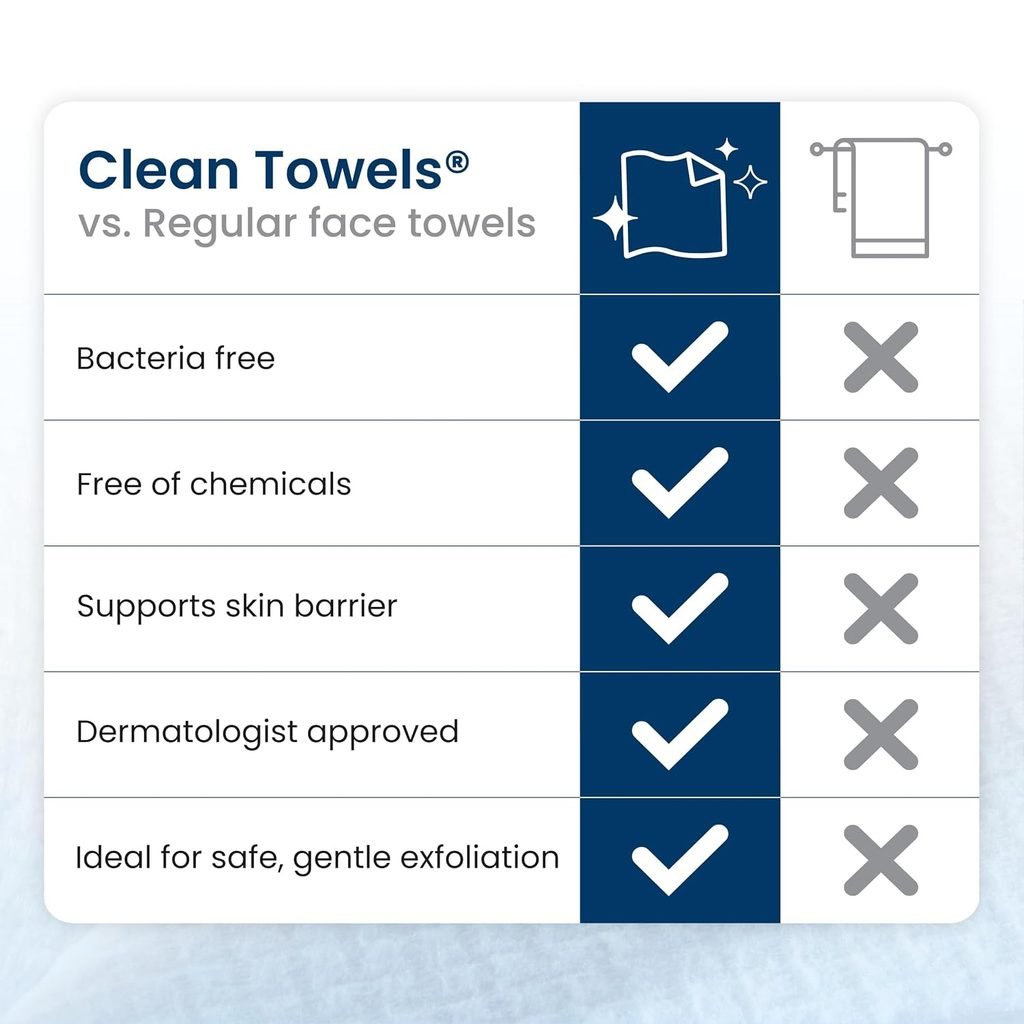
Clean Skin Club towels vs regular face towels
The most common question is how Clean Skin Club towels vs regular face towels stack up. Here’s a side-by-side.
| Factor | Clean Skin Club Clean Towels XL | Regular cotton washcloth |
|---|---|---|
| Use | Single-use | Reusable |
| Hygiene | Fresh each time | Depends on washing habits |
| Laundry | None | Frequent |
| Upfront cost | Low per pack | Low |
| Long-term cost | Higher, ongoing | Much lower |
| Softness | Soft, nonwoven feel | Plush, varies by cloth |
| Travel | Easy and light | Bulky when damp |
| Waste | Disposable | Minimal |
| Sensitive skin label | Eczema Association Accepted | Not applicable |
Takeaway: Regular towels win on cost and waste. Clean Skin Club towels win on convenience and fresh-use hygiene.
Comparing Walmart and Amazon
You’ll likely find disposable face towels at both retailers. Here is how to think about each. Because prices and stock change, treat this as a decision guide, not a price quote.
| Factor | Amazon | Walmart |
|---|---|---|
| Selection | Often broader range of pack sizes | Often a narrower range |
| Listing detail | Typically more buyer reviews and photos | Varies by product |
| Delivery | Fast shipping on many items, with Prime where eligible | In-store pickup and delivery options |
| Pricing | Can change often, check price per towel | Can change often, check price per towel |
| Returns | Policies vary by seller | In-store returns possible for many items |
| Best for | Comparing options and reading feedback | Picking up quickly or comparing in person |
What to check at either store:
- Seller: Make sure the product is sold by the brand or an authorized seller.
- Pack count: Compare cost per towel, not just total price.
- Listing details: Confirm size, material, and claims such as USDA Biobased and Eczema Association Accepted.
- Recent reviews: Look at the most recent feedback, since quality can change.
How it stacks up against other disposable options
You’ll also see other kinds of disposable products:
- Pre-moistened makeup wipes: Faster for makeup removal, but often contain fragrance, preservatives, or cleansers. Not ideal for very sensitive skin.
- Cotton rounds: Cheap and great for toner or small tasks, but too small for the full face.
- Standard dry face towels from other brands: Similar idea. Compare size, material, and sensitive-skin claims.
- Paper towels or tissues: Cheap, but rougher and not designed for face skin.
Where Clean Skin Club fits
This towel sits in the middle: more skin-conscious than a paper towel, more flexible than a pre-moistened wipe, and more convenient than a washcloth. It isn’t the cheapest, but it aims at a specific need.
Buying Guide
If you’re shopping for a disposable face towel, here are the criteria that matter most.
1. Material
Look for a clearly stated material. Plant-based options like USDA Biobased are a plus if sourcing matters to you. Check for any added ingredients.
2. Skin-friendly labels
Third-party seals are more useful than vague phrases like “gentle.” The National Eczema Association’s Seal of Acceptance is one example. Remember that labels help, but they aren’t guarantees.
3. Size
Larger towels cover more area and give you more fold options. Smaller ones can feel skimpy for face and neck.
4. Wet strength
A towel that tears when damp is frustrating. Check recent buyer feedback for comments on strength.
5. Softness
Soft is subjective. If you’re sensitive to texture, look for buyer comments on feel.
6. Fragrance
If you’re scent-sensitive, look for “fragrance-free” or “unscented” in the listing. Understand that unscented doesn’t always mean zero smell.
7. Dry vs. pre-moistened
- Dry: More control over ingredients. Better for sensitive skin.
- Pre-moistened: More convenient for quick wipes, but with added ingredients.
8. Cost per towel
Divide the price by the number of towels. This is the fairest comparison across brands and pack sizes.
9. Packaging
Look for easy dispensing and some way to keep the towels dry. Clunky packaging gets annoying fast.
10. Environmental claims
Read these carefully. “Biobased,” “biodegradable,” and “compostable” mean different things. Check the packaging for disposal instructions.
11. Return policy
If you have very sensitive skin, a store with a clear return policy gives you a safety net.
Quick checklist
- Clear material and claims
- Sensitive-skin seal or testing
- Good size
- Fair cost per towel
- Recent reviews that mention strength and softness
Results After Use: Moisture, Dry Patches, Texture, Brightness & Odor Control
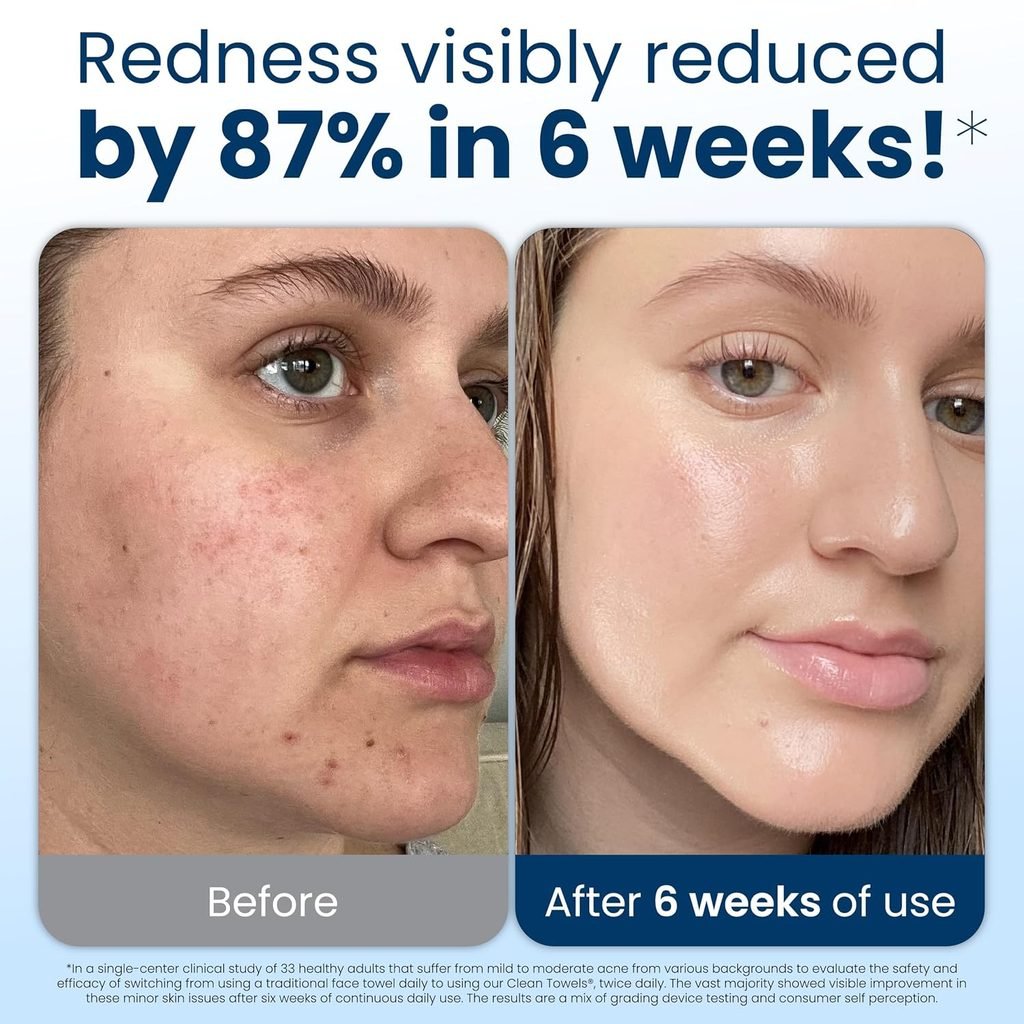
Important note: A towel doesn’t treat skin. The effects below describe what a gentle, clean towel can support, based on specs and typical feedback for this product type. These aren’t clinical results.
Moisture
A dry towel doesn’t add moisture. What it can do is avoid stripping moisture. Gentle patting instead of rubbing helps preserve your skin barrier. Pair it with a moisturizer applied soon after cleansing for best effect.
Dry patches
If you have dry or eczema-prone patches, friction can make them worse. A soft, single-use towel used with a patting motion may reduce irritation compared with a rough or dirty cloth. It won’t clear dry patches by itself. Your dermatologist’s advice matters most.
Texture
Skin texture depends on your whole routine, including cleanser, moisturizer, sun protection, and active ingredients. A towel can support a gentle routine, but it won’t smooth texture on its own.
Brightness
Some buyers feel their skin looks fresher when they switch to a cleaner routine. That’s often about removing makeup fully and reducing irritation, not about the towel adding brightness. Treat any “glow” as a bonus, not a promise.
Odor control
Reusable cloths can develop a musty smell if they stay damp. Single-use towels avoid that problem. That’s a real practical advantage of the format, and it’s one of the clearer benefits of the disposable approach.
Bottom line on results
Expect small, practical improvements in comfort and hygiene, not dramatic changes. If a product claims big skin transformations from a towel alone, be skeptical.
FAQ
1. Are Clean Skin Club Clean Towels XL worth it?
For many sensitive-skin or convenience-focused buyers, yes. They offer a fresh surface every time. They cost more over time than washable cloths.
2. Are Clean Skin Club towels good for eczema-prone skin?
The listing states the towels are Eczema Association Accepted, which means they were reviewed for suitability for sensitive skin. That is a helpful sign. It isn’t a guarantee for everyone, so patch test and ask your dermatologist if you have a diagnosed condition.
3. What does “USDA Biobased” mean?
It means the product contains renewable biological ingredients, such as plant materials, according to the USDA BioPreferred program. It doesn’t automatically mean compostable or biodegradable.
4. What does “Eczema Association Accepted” mean?
It refers to the National Eczema Association’s Seal of Acceptance. The seal indicates the product was reviewed as suitable for people with eczema or sensitive skin. It isn’t a cure or a medical treatment.
5. Can I use them for makeup removal?
Yes, but they work best with a separate remover such as micellar water or a cleansing balm. They are dry towels, not pre-soaked wipes.
6. What are the best disposable face towels for sensitive skin?
Look for a clear material, a sensitive-skin seal, no added fragrance, and good wet strength. Clean Skin Club Clean Towels XL fit that profile on paper. Compare cost per towel and read recent feedback before you buy.
7. Are they better than a regular washcloth?
It depends on your priorities. They win on convenience and fresh-use hygiene. Regular washcloths win on cost and waste.
8. Are disposable face towels bad for the environment?
Single-use products create waste. Plant-based material is a step forward, but reusable cloths usually have a smaller footprint. Check the packaging for disposal guidance.
9. Are biobased disposable face towelettes worth it?
They can be, if you value plant-based sourcing and the convenience of single-use. If cost or waste matters more, reusable cloths are the better fit.
10. Can I use them wet?
Yes. Dampening them helps them glide and soften. Pat rather than scrub to avoid tearing.
11. How many towels do I need per day?
Most people use one per face wash. For makeup removal, you might use one or two. Plan for that when you work out your monthly cost.
12. Do they have a scent?
The towels are marketed as having no added fragrance. A faint material smell can be present straight out of the package.
13. Are they safe for the eye area?
They are marketed for gentle use, but be careful near the eyes. Use light pressure and avoid rubbing. Stop if you feel irritation.
14. Where can I buy them?
They are commonly available at major retailers, including Amazon and Walmart. Check seller, pack size, and cost per towel before you buy.
15. Do they help with acne?
A fresh towel removes one potential source of bacteria and irritation. It doesn’t treat acne. Talk with a dermatologist about treatment.
Final Verdict
After weighing the specifications, available user feedback, and comparisons with other products, here is where this Clean Skin Club Clean Towels XL review lands.
Clean Skin Club Clean Towels XL are a thoughtful, practical option for people who want a clean, gentle, single-use face towel. The USDA Biobased positioning, the Eczema Association acceptance, and the XL size all point in the right direction for sensitive-skin routines. The dry format keeps you in control of what touches your face.
The trade-offs are real:
- You pay as you go, and that cost adds up
- Single-use products create waste, even when plant-based
- Stubborn makeup still needs a dedicated remover
- Softness is personal, and some people will want something plusher
My rating
| Category | Score |
|---|---|
| Hygiene and convenience | 4.5 / 5 |
| Suitability for sensitive skin | 4 / 5 |
| Value over time | 3 / 5 |
| Sustainability | 3.5 / 5 |
| Overall | 4 / 5 |
Who wins
If you have reactive skin, travel often, or hate reusing damp cloths, these towels are worth trying. If you are watching your budget or want the lowest-waste option, stick with clean washable cloths and a regular laundry routine.
If you decide to try them, start with a smaller pack to test softness and strength before you commit to a bulk order. Patch test first if your skin is very reactive.
You can check the current price and pack options here: Check Price on Amazon

Who Is Behind Loooknow
Loooknow is founded, written, and managed by Muhammad Owais Khan. I am the founder, author, and site administrator, so every review, guide, and comparison you read here goes through me personally.You can reach me at [owaisu99sony@gmail.com] or through the Contact page. And Review Methodology