
Heads up: If you buy through links in this review, I may earn a small commission at no extra cost to you. This doesn’t affect my ratings.
Introduction.
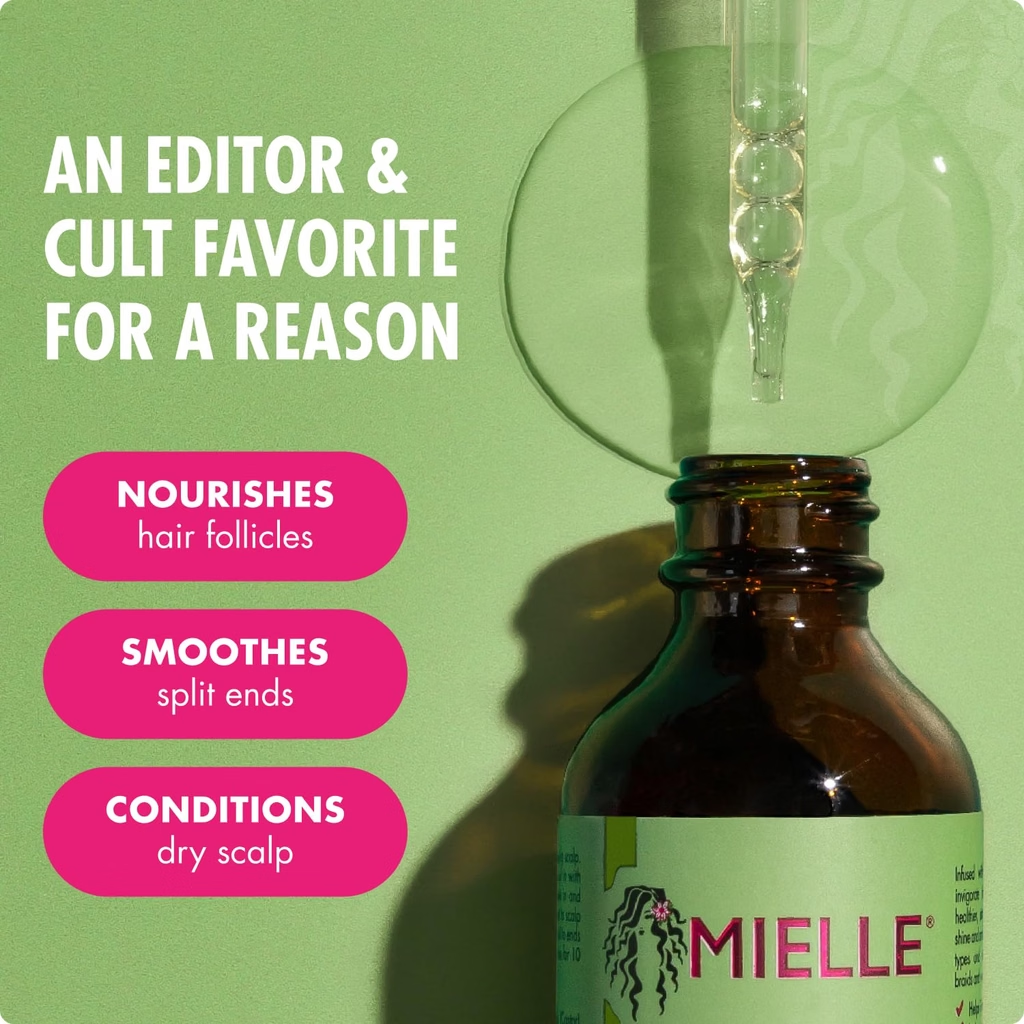
The little brown bottle with the green rosemary sprig has become nearly impossible to avoid if you spend any time in curly, coily, or natural hair spaces online. Mielle Organics Rosemary Mint Hair Oil with Biotin regularly sells out during viral moments, gets recommended in nearly every “hair growth routine” video, and has built a reputation as a near-mandatory step in protective styling and scalp care.
But going viral and actually working aren’t the same thing, and a lot of the buzz around this product leans harder on marketing language — “growth,” “strengthening” — than most shoppers realize. Before you add another bottle to your routine, it’s worth understanding exactly what’s in the formula, what it’s realistically capable of doing for your scalp and hair, and where the hype outpaces the evidence.
This Mielle Organics Rosemary Mint Hair Oil with Biotin review breaks all of that down. Based on the published ingredient list, product specifications, and available user feedback from major retailers, we’ll cover:
- What’s actually in the bottle, and what each key ingredient is doing
- How it performs across different hair types and scalp sensitivities
- The scent, texture, and rinse experience people consistently report
- Honest benefits and downsides — including the direct answer to does Mielle Rosemary Mint oil help hair growth
- How it compares to the brand’s other Rosemary Mint formulas, and pricing across Walmart and Amazon
- Who this oil is genuinely worth buying for, and who should look elsewhere
- Nutrafol Women’s Balance Hair Growth Supplements, Age 45+
One thing worth setting straight from the start: no topical oil — biotin-infused or not — can regrow hair the way a clinical treatment can. What a well-formulated scalp oil can do is create better conditions for your existing hair to stay healthy, retain length, and break less. That distinction shapes everything else in this review, so keep it in mind as you read on.
Want me to drop this into the file in place of the current introduction, or keep both as options?
Quick Verdict
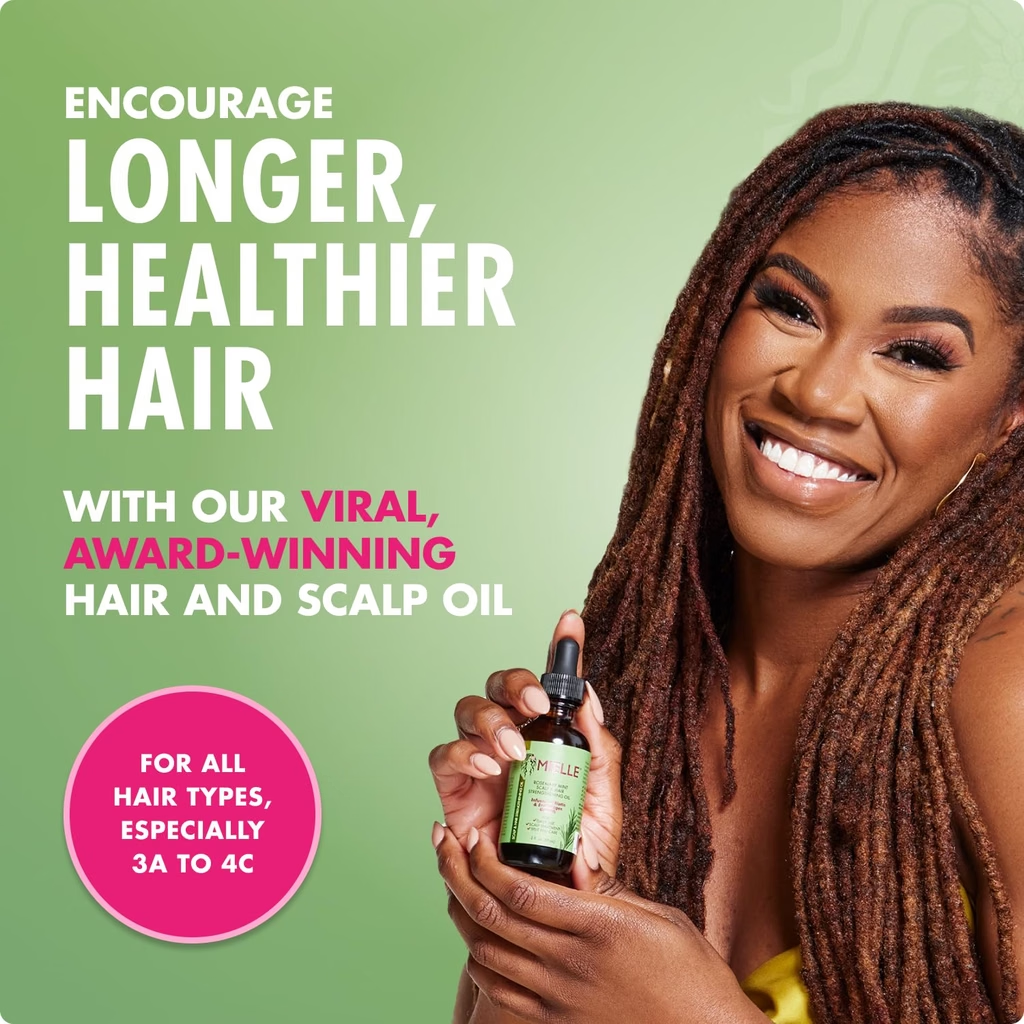
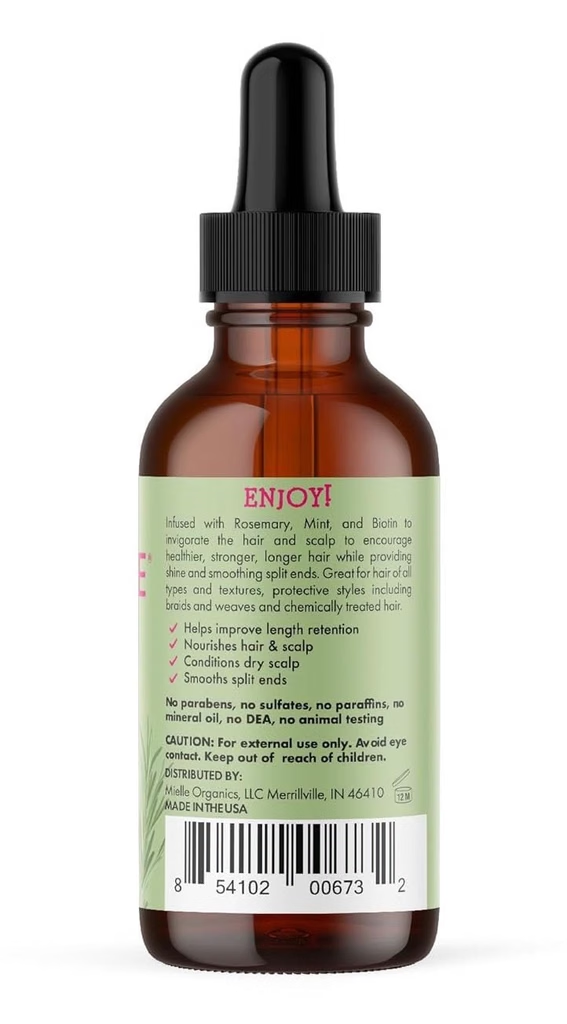
Mielle Organics Rosemary Mint Hair Oil with Biotin is a lightweight, essential-oil-forward scalp treatment built around castor oil, soybean oil, biotin, and a blend of over 30 botanical extracts and oils. It’s formulated without parabens, sulfates, paraffins, mineral oil, or DEA, and it’s marketed as safe for all Rosemary hair types and textures, including color-treated and chemically processed hair.
What it does well: The rosemary and peppermint combination delivers a genuinely refreshing, tingly scalp sensation that a lot of users associate with improved circulation and relief from dryness or itchiness. It layers easily under other products, doesn’t leave heavy residue on most hair types when used in small amounts, and it’s priced low enough to try without much financial risk.
Where it falls short: The essential oil blend — particularly the menthol and mint — can be genuinely irritating for people with sensitive or eczema-prone scalps. There’s no clinical trial data behind the Rosemary biotin-for-hair-growth claim specific to this product, and the “growth” positioning on the label leans harder into marketing language than the ingredient list can fully back up. Bottle size (2 oz) is also small relative to how quickly some users go through it with daily scalp application.
Bottom line: For most people looking for an affordable, pleasant-smelling scalp conditioning oil with a cooling sensation, this is a reasonable buy. If you’re specifically chasing measurable hair growth or you have a reactive, sensitive scalp, temper your expectations or patch-test first.
rosemary-minoxidil-hair-growth-spray-review
What Is Mielle Organics Rosemary Mint Hair Oil?
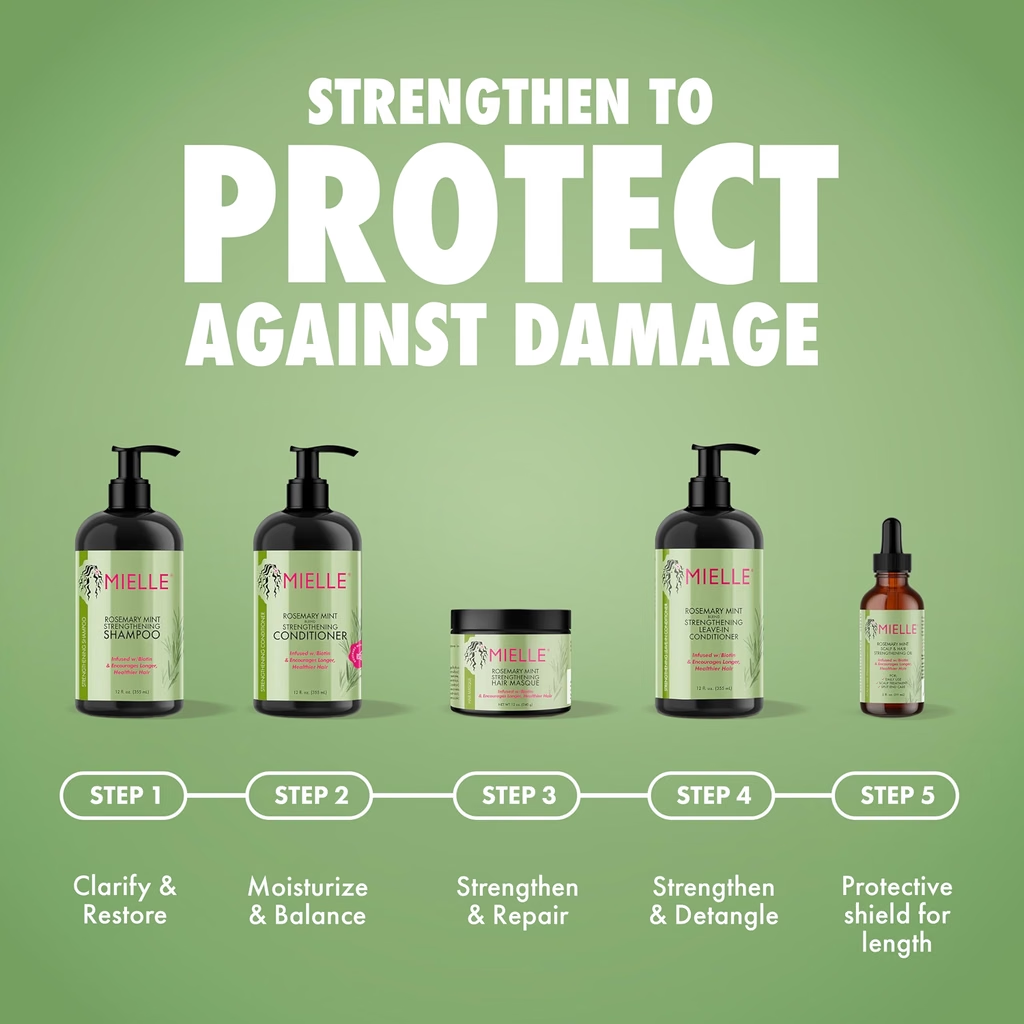
Mielle Organics is a hair and skin care brand founded by Monique Rodriguez, a registered nurse who started the company after struggling to find products for her own natural hair. The Rosemary Mint line is the brand’s flagship collection, spanning shampoo, conditioner, leave-in, and this Rosemary hair oil — all built around the same rosemary-and-peppermint scent profile and marketed toward strengthening and length retention.
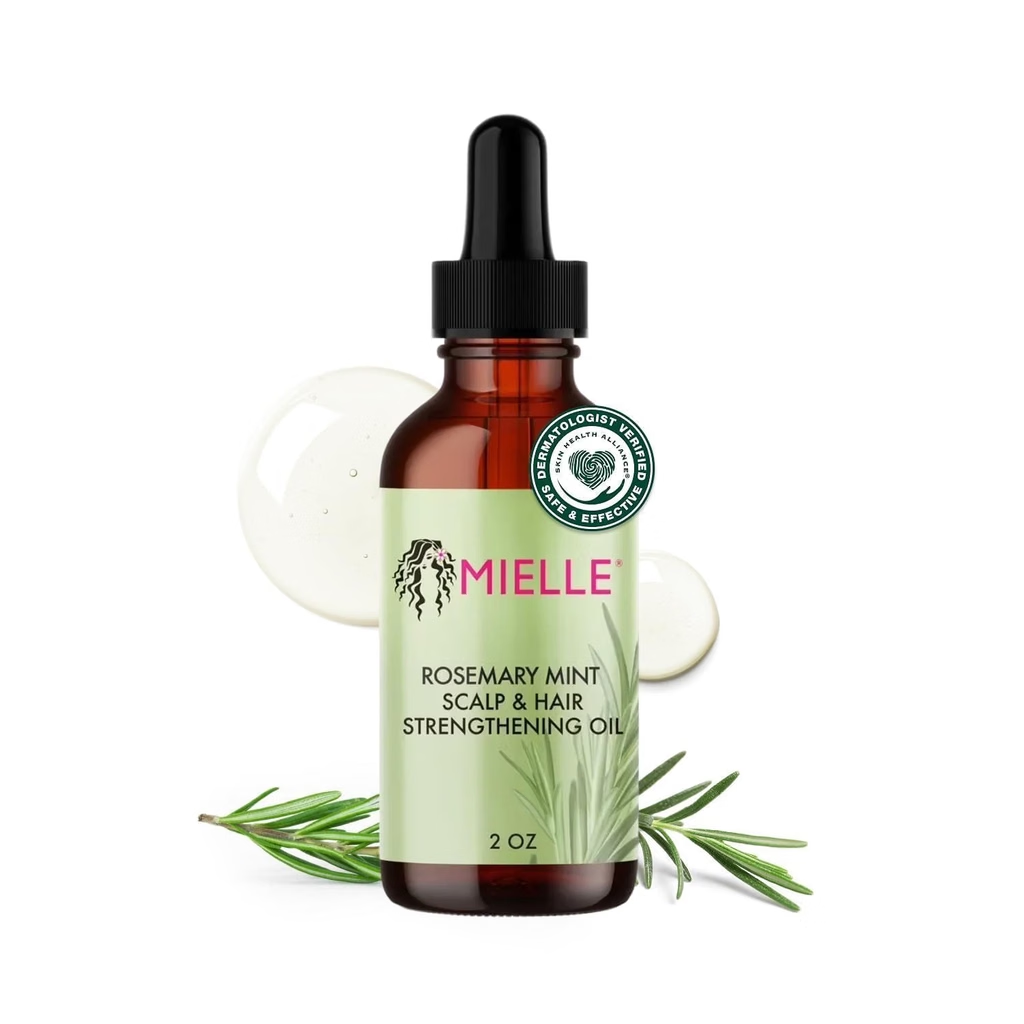
The full product name shoppers will see across retailers is typically Mielle Rosemary Mint Scalp and Hair Strengthening Oil, sold in a 2 oz bottle with a twist cap. It’s positioned as a multi-use product: a daily scalp treatment, a sealing oil to lock in moisture over a leave-in conditioner, and a hot-oil treatment when warmed slightly before application.
Where it differs from a lot of “hair growth oils” on the shelf is scope. This isn’t a single-ingredient oil like plain castor oil or rosemary oil — it’s a blended formula with dozens of oils and extracts working together, biotin included as an active ingredient rather than the headline ingredient. That blended approach is both the appeal and, as covered in the downsides section, part of what makes it harder to isolate what’s actually doing the work.
It’s worth noting there’s also a “Mielle Rosemary Mint Light Scalp & Hair Strengthening Oil” in the lineup, aimed at low-porosity hair and straightened styles that need a thinner, less heavy formula. The standard version reviewed here is the original, slightly richer formula.
Vital Proteins Collagen Peptides Powder, Unflavored, 9.33oz
Key Features Breakdown
The Core Ingredient List
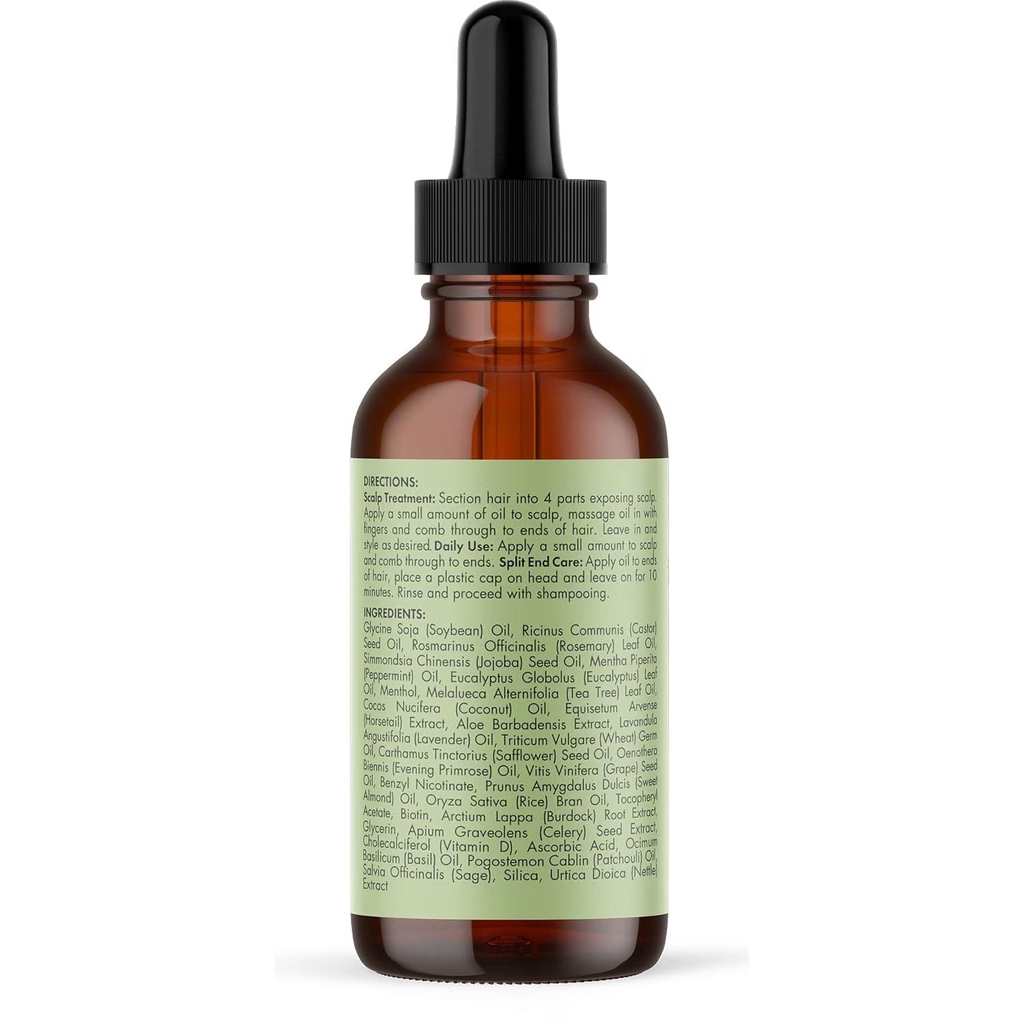
According to the published ingredient list, the formula centers on:
- Glycine Soja (Soybean) Oil and Ricinus Communis (Castor) Seed Oil — the two primary carrier oils, providing the bulk of the moisturizing and sealing effect
- Biotin — the headline “active,” included to support the strength and appearance of existing hair
- Rosmarinus Officinalis (Rosemary) Leaf Oil — widely used in scalp care for its scent and its reputation (more on the evidence below) as a circulation-supporting botanical
- Mentha Piperita (Peppermint) Oil and Menthol — responsible for the signature cooling, tingling sensation on the scalp
- Melaleuca Alternifolia (Tea Tree) Leaf Oil — included for its scalp-clarifying, antimicrobial reputation
- Aloe Barbadensis Leaf Extract — a soothing, hydrating addition
- A supporting cast of botanical oils including safflower seed oil, jojoba seed oil, sweet almond oil, rice bran oil, wheat germ oil, and grapeseed oil, plus lavender and clary sage oils for fragrance and skin-conditioning purposes
- Tocopheryl Acetate (Vitamin E) and Retinyl Palmitate (Vitamin A) as antioxidant and skin-conditioning agents
Free-From Claims
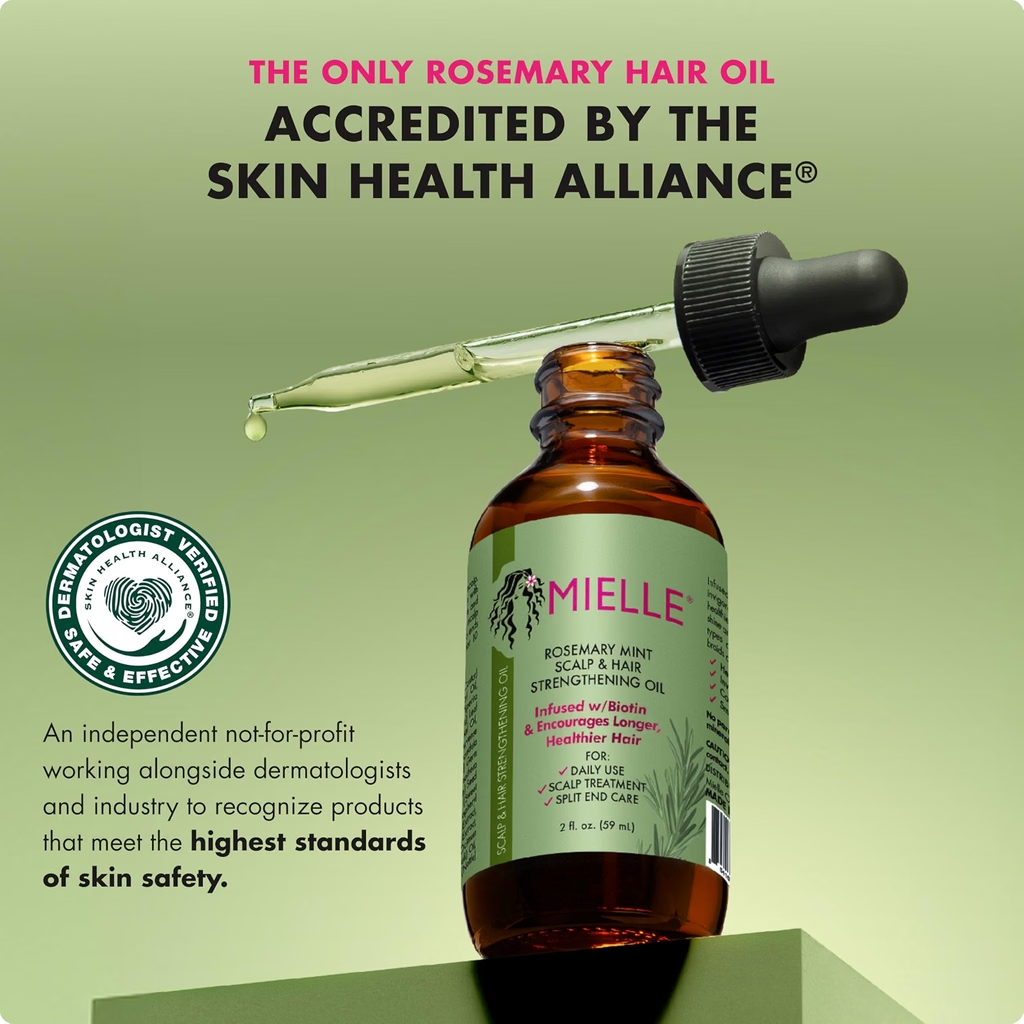
The brand markets this oil as free of parabens, sulfates, paraffins, mineral oil, and DEA, and states it hasn’t been tested on animals. For shoppers avoiding heavier, pore-clogging oils like mineral oil and petrolatum, that’s a meaningful differentiator from some budget hair oil competitors.
Multi-Texture Positioning
Mielle markets this as suitable for “hair of all types and textures,” including protective styles like braids and weaves, and chemically treated hair. In practice, how it performs varies quite a bit by Rosemary hair type and porosity — a topic covered in more depth in the next section.
Packaging and Format
The oil comes in a 2 fl oz bottle with a flip-top or twist cap, depending on the retailer batch. There’s no dropper or applicator nozzle included on the standard version, which some users find makes precise scalp application (versus pouring into hands first) a little less controlled than dropper-style competitors.
Marc Anthony Grow Long, Detangling Leave-In Hair Conditioner Spray
Ingredients & Hair Type Compatibility Analysis
Not every hair type responds to a rosemary-mint essential oil blend the same way, and this section is where a lot of buyers should actually spend the most time before checking out.
Curly, coily, and textured hair (3A–4C): This is the demographic the product is most heavily marketed toward, and it tends to be a reasonably good match. Curly and coily hair is typically drier by nature because sebum has a harder time traveling down the hair shaft, so a sealing oil layered over water-based leave-in products can help lock in moisture. The castor and soybean oil base is heavy enough to coat strands without being as thick as straight castor oil alone.
Fine or low-porosity hair: This is where caution is warranted. Fine, low-porosity strands can get weighed down or look greasy faster with rich oil blends, especially if used generously at the roots daily. Based on the ingredient profile and available user feedback, people with fine hair tend to do better limiting use to the scalp only, in small amounts, or opting for the brand’s “Light” version instead.
Color-treated and chemically processed hair: The brand markets the oil as safe for chemically treated hair, and the formula doesn’t contain harsh sulfates or drying alcohols that would typically strip color. That said, essential oil concentration and any at-home color service interactions are always worth discussing with a colorist if you’re using multiple new products around a fresh color treatment.
Sensitive or eczema-prone scalps: This is the biggest compatibility flag. Peppermint oil, menthol, tea tree oil, and rosemary oil are all common triggers for contact dermatitis in people with reactive skin. The tingling sensation that many users describe as satisfying is, physiologically, a mild irritant response — pleasant for most people, genuinely uncomfortable or even inflammatory for a smaller subset with conditions like seborrheic dermatitis or eczema.
Bottom line on compatibility: Medium-to-thick, textured Rosemary hair on a non-sensitive scalp is the strongest match. Very fine hair, very sensitive skin, or scalps already dealing with active irritation are the profiles most likely to be disappointed or uncomfortable.
Nature’s Bounty Biotin Hair Skin and Nails Vitamins, 120 Softgels
Scent, Texture & Rinse Experience
Scent
The rosemary-mint scent is central to this product’s identity, and it’s a genuinely well-executed fragrance profile — herbal and slightly medicinal from the rosemary, brightened by peppermint, without tipping into the artificial, candy-like mint smell some drugstore products lean on. Based on available user feedback across retailers, scent is consistently one of the most-praised attributes, though it fades over the course of the day rather than lingering strongly.
Texture on Application
The oil itself is a medium-weight, fast-absorbing liquid — noticeably lighter than straight castor oil, which is notoriously thick and sticky, but richer than a dry oil like argan or grapeseed used alone. On first application, most users report a light, non-greasy feel, with the peppermint/menthol tingle kicking in within seconds to a minute.
Rinse-Out vs. Leave-In Use
This is a leave-in product by design — it’s not meant to be rinsed out, which is part of why application amount matters so much. A little goes a long way. Users who apply it generously and skip a wash for a day or two commonly report a heavier, sometimes greasy feel building up, particularly along the hairline and part.
For those using it as a pre-shampoo hot-oil treatment, a small amount warmed between the palms and worked through dry hair before a wash tends to rinse out cleanly with a standard sulfate-free shampoo, without the waxy residue that plain castor oil can leave behind.
Absorption Speed
Compared to heavier growth oils on the market, absorption is one of this product’s stronger points. Within roughly 15–20 minutes of scalp application, most of the initial slickness settles down, which makes it more practical for daytime or pre-styling use than thicker, straight-oil competitors.
Usage Experience
As a Daily Scalp Treatment
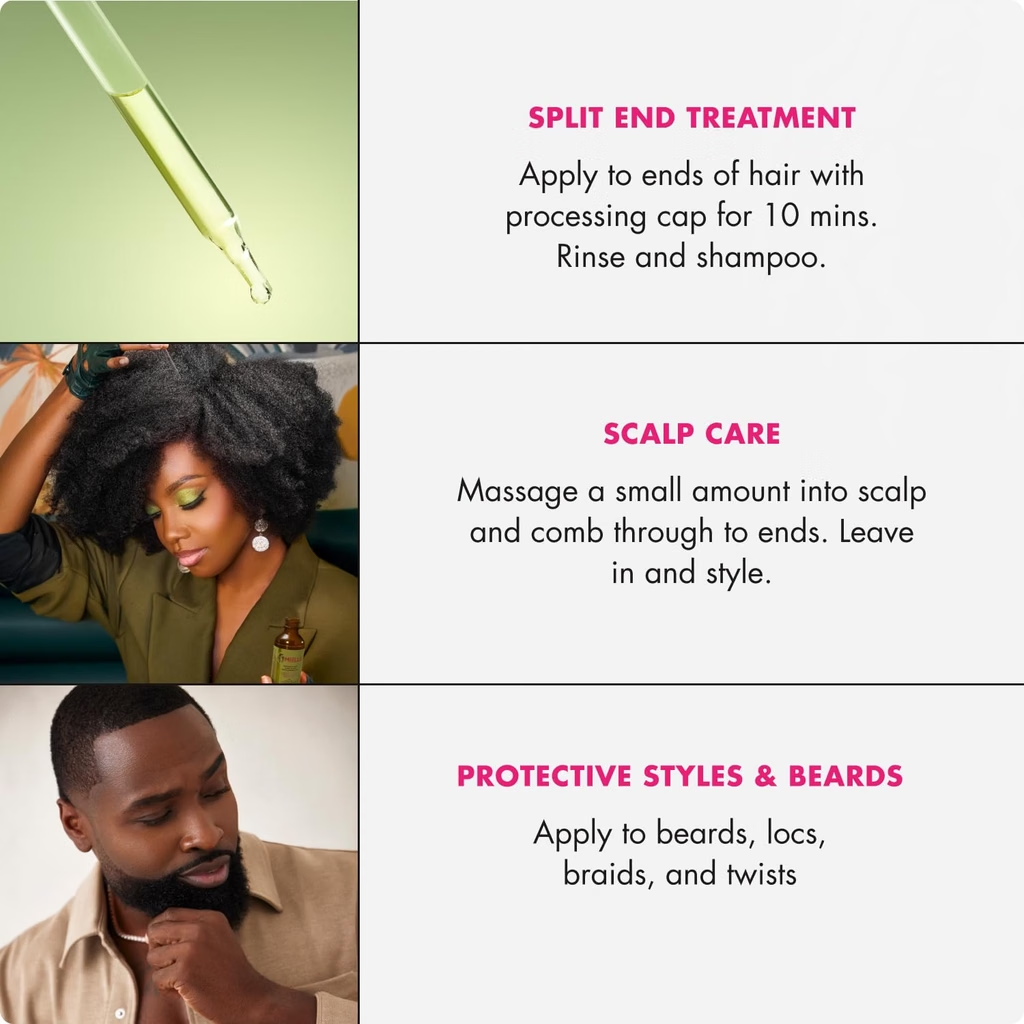
The most common way this product gets used is as a daily or near-daily scalp treatment. The brand’s directions call for sectioning hair into four parts to expose the scalp, applying a small amount of oil directly to the scalp, massaging it in with fingertips, and combing through to the ends.
In practice, the massage step matters more than people expect. Scalp massage on its own has some supporting research for temporarily improving local blood flow, and combining that motion with the peppermint’s cooling sensation is likely a meaningful part of why users report the product “feels” effective, independent of any specific ingredient’s biological activity. The oil becomes the vehicle for a beneficial habit — a two-to-three-minute daily scalp massage — as much as it is an active treatment on its own.
As a Sealing Oil
Layered over a water-based leave-in conditioner on damp hair, the oil is commonly used to “seal” moisture into the strand, a standard step in curly and Rosemary coily hair routines (the LOC or LCO method — liquid, oil/leave-in, cream/oil). Based on available feedback, a light layer works well here without the heaviness some users experience with thicker oils like pure castor or shea-based blends.
As a Split-End Treatment
A small amount worked into just the ends can temporarily smooth the look of split ends and reduce frizz, though — like virtually every product marketed this way — it’s a cosmetic smoothing effect rather than an actual repair of the split hair shaft. Split ends can’t be structurally repaired by any topical product; they can only be trimmed off or visually minimized between trims.
As a Hot Oil Treatment
Users looking for a deeper conditioning session often warm a small amount (typically by rubbing between palms or briefly warming the bottle in warm water — not the microwave, given the plastic packaging) and apply it to dry or damp hair before covering with a shower cap for 15–30 minutes prior to shampooing. This tends to get some of the most positive usage feedback, likely because the extended contact time lets the carrier oils do more conditioning work than a quick daily application allows.
On Protective Styles
For braids, twists, or weaves, a small amount applied to the scalp (not saturating the braids themselves) is a common maintenance step to manage itchiness and dryness, which are common complaints during longer-term protective styling. The cooling sensation is frequently cited as a relief factor specifically in this context, since protective styles can trap heat and product buildup against the scalp.
Frequency and Amount Notes
Across usage reports, the most consistent piece of practical advice is: less is more. A dime-to-nickel-sized amount for the scalp, and even less for the ends, tends to produce better results than generous daily application, which several users associate with buildup, a dull-looking scalp, or the need for more frequent washing. MARYRUTH’S Liquid Multivitamin + Hair Growth, Clinically Thicker Hair, 15oz
Benefits
Refreshing, cooling scalp sensation. The peppermint-and-menthol combination delivers an immediate, noticeable tingle that many users associate with a “working” product, and which can genuinely feel soothing on an itchy or overheated scalp.
Pleasant, well-balanced fragrance. Among rosemary-mint category products, this one is frequently singled out for smelling clean and herbal rather than artificial, and for not overpowering other styling products layered on top.
Lightweight enough for daily use. Compared to single-ingredient heavy oils like straight castor oil, the blended carrier oil base absorbs faster and layers more easily under styling products.
Multi-purpose formulation. One bottle reasonably covers scalp treatment, sealing, split-end smoothing, and hot-oil treatment use cases, which adds practical value relative to buying separate specialized products.
Clean-leaning ingredient positioning. No parabens, sulfates, paraffins, mineral oil, or DEA is a real differentiator against some budget-tier Rosemary hair oils that lean heavily on mineral oil as a filler.
Reasonably priced entry point. At roughly $9–10 for a 2 oz bottle at full price (with the price per ounce dropping further during sales — more in the comparison section), it’s an accessible way to try a scalp-oil routine without a big financial commitment.
Works well as a habit-builder. Because the application method encourages scalp massage, regular use tends to reinforce a beneficial routine — improved circulation from massage and a moment of scalp care — independent of the specific ingredients involved.
Broad hair-type marketing with real applicability. While not a perfect fit for every hair type (see the compatibility section), it genuinely does work across a wider range of textures than many oils formulated for a single hair type.
nutrafol-womens-balance-review
Downsides & Limitations
No clinical hair-growth data specific to this exact formula. The word “growth” appears prominently in the product’s marketing, but there’s no published clinical trial on this specific blended product demonstrating measurable hair growth. Some individual ingredients — rosemary oil in particular — have limited small-scale research suggesting a possible effect on Rosemary hair density when used in more concentrated, consistent applications than a leave-in blend typically provides. That’s a meaningfully different claim than “this product grows hair.”
Essential oil sensitivity risk. Peppermint, menthol, tea tree, rosemary, and lavender oils are all recognized potential irritants for sensitive skin. Reports of scalp tingling that crosses over into burning or discomfort, especially on broken or irritated skin, aren’t uncommon.
Small bottle size relative to daily use. At 2 oz, users applying the oil daily to a full scalp — particularly those with longer or thicker hair — often go through a bottle in four to six weeks, which changes the effective cost-per-month compared to what the shelf price suggests.
No applicator nozzle on the standard bottle. Precise scalp application generally means pouring into your palm first rather than applying directly, which some users find messier or less precise than dropper-top competitors.
Can build up with overuse. Especially on fine or low-porosity Rosemary hair, generous daily application without adequate washing can lead to a weighed-down, dull appearance at the roots.
Fragrance intensity won’t suit everyone. While most feedback on scent is positive, the strength of the mint and rosemary notes is polarizing for anyone sensitive to strong fragrances or fragrance-related headaches.
Marketing language outpaces the science in places. “Strengthening” and “growth” claims on the label lean into standard Rosemary hair-care marketing conventions that are common across the category, not unique overclaiming by this brand — but it’s still worth reading with realistic expectations rather than taking the label at face value.
Who Should Buy This?
This oil is a solid fit if you:
- Have medium-to-thick curly, coily, or textured hair looking for a sealing oil in a moisture-retention routine
- Want an affordable way to add a scalp-care step to your routine without committing to a premium price point
- Enjoy a strong, herbal-mint scent and the cooling sensation associated with peppermint and menthol
- Are maintaining a protective style and want relief from scalp dryness or itchiness during that stretch
- Are looking for a multi-purpose product that can double as a hot-oil treatment, sealing oil, and daily scalp treatment
Who Should Avoid This?
This is probably not the right pick if you:
- Have a sensitive, eczema-prone, or actively irritated scalp — the essential oil concentration is a real risk factor for reactive skin
- Have very fine or low-porosity hair prone to looking weighed down by oil-based products (the “Light” version in the same line may be a better starting point)
- Are specifically buying a hair oil because you expect clinically meaningful hair regrowth — this product’s evidence base doesn’t support that expectation, and a dermatologist consultation is a more appropriate route for diagnosed Rosemary hair loss
- Dislike strong essential oil fragrances, particularly mint
How to Use for Best Results
- Start small. Use a dime-sized amount for your first several applications to gauge how your scalp reacts to the peppermint and menthol before scaling up.
- Apply to a sectioned, exposed scalp. Part hair into four sections, apply the oil directly to the scalp rather than saturating lengths, and massage in with fingertips for one to two minutes.
- Use it as a sealant on damp hair. After a water-based leave-in, smooth a small amount over lengths and ends to help lock in moisture, focusing more product on drier areas like the ends.
- Reserve heavier applications for hot-oil treatments. For a deeper conditioning session, warm a slightly larger amount between your palms, apply through dry or damp hair, and leave it under a shower cap for 15–30 minutes before shampooing.
- Patch test if you have sensitive skin. Apply a small amount to a small patch of scalp and wait 24 hours before full application if you have a history of reacting to essential oils.
- Don’t overdo frequency on fine hair. Every other day, rather than daily, tends to keep buildup in check for finer or lower-porosity hair types.
- Store away from direct heat and sunlight. Like most botanical oil blends, prolonged heat exposure can degrade some of the lighter essential oil components faster.
- Bare Anatomy Nature x Science Rosemary Water Spray for Hair Growth & Hair Thickness with Rice Water |100% Natural Extract | Soft & Smooth Hair| Controls Hairfall| Non-Greasy & Fast Absorbing | 200ml
Pros & Cons
Pros
- Pleasant, well-balanced rosemary-mint scent
- Cooling, tingling sensation many users find satisfying
- Lightweight relative to single-ingredient heavy oils
- Multi-purpose: scalp treatment, sealant, split-end smoother, hot-oil treatment
- Free of parabens, sulfates, paraffins, mineral oil, and DEA
- Affordable entry price point, especially on sale
- Broad hair-type marketing with reasonably wide real-world applicability
Cons
- No clinical trial data supporting hair-growth claims for this specific product
- Essential oil blend carries real irritation risk for sensitive scalps
- Small 2 oz bottle depletes quickly with daily full-scalp use
- No applicator nozzle for precise dosing
- Can build up and weigh down fine or low-porosity hair
- “Growth” and “strengthening” language on packaging leans more marketing than clinical
- Nature’s Bounty Advanced Hair, Skin & Nails, 150 Rapid Release Softgels
Product Comparisons: Where to Buy Mielle Rosemary Mint Hair Oil
Pricing on this product fluctuates fairly often between retailers and promotional periods, so treat the numbers below as a general guide rather than a locked-in figure — always check the live price before checkout.
| Feature | Walmart | Amazon |
|---|---|---|
| Typical price (2 oz) | Around $8.97–$9.97, often on rollback | Around $9.99 list, frequently discounted with on-page coupons and Subscribe & Save |
| Subscribe & Save / auto-restock option | Available through Walmart+ subscription options | Available via Amazon Subscribe & Save, often with an added discount |
| Shipping | Free with qualifying order minimum or Walmart+ | Free with Prime or qualifying order minimum |
| Customer rating (approximate, varies by listing) | Around 4.7 out of 5 across tens of thousands of ratings | Around 4.5 out of 5 across well over 100,000 ratings |
| Return policy | Typically 90-day return window | Standard Amazon return window, varies by seller |
| Multi-pack availability | 2-packs commonly available | Multi-packs and bundle sizes commonly available |
Mielle Rosemary Mint hair oil vs. Rosemary Mint Strengthening Oil: These are generally the same product — “Rosemary Mint Scalp and Hair Strengthening Oil” is the full official name, and “Rosemary Mint Hair Oil” is simply the shorthand most shoppers search for. Where confusion tends to arise is with the separate Light version in the same collection, which uses a thinner oil base aimed at low-porosity and fine hair. If a listing doesn’t specify “Light,” it’s almost always the standard, richer formula reviewed here.
Best biotin hair oil for thinning hair — how this fits the broader category: Against other biotin-infused hair oils on the market, this product’s main advantages are price and brand recognition; its main disadvantage is the lack of a standalone clinical claim. Premium competitors with dedicated growth-serum positioning (rather than a multi-purpose oil) sometimes include higher concentrations of actives like caffeine, peptides, or minoxidil-adjacent ingredients, which come with their own cost and side-effect tradeoffs. For general scalp maintenance and moisture sealing on a budget, this product remains a reasonable, low-risk starting point.
[Check Price on Amazon]
Buying Guide: What to Look for in a Scalp & Hair Strengthening Oil
Carrier oil weight. Heavier oils like castor oil seal moisture well but can weigh down fine hair; lighter oils like grapeseed or argan absorb faster but seal less. Blended formulas like this one aim for a middle ground — check where a product sits on that spectrum relative to your hair’s actual thickness and porosity.
Essential oil concentration. A strong cooling or tingling sensation isn’t inherently better — it’s a sign of a more concentrated essential oil blend, which raises both the perceived “effectiveness” and the irritation risk simultaneously. If you have sensitive skin, look for lower concentrations or fragrance-free alternatives.
Realistic claims versus clinical evidence. Be skeptical of any hair oil — this one included — that implies dramatic, fast hair growth. The most reliable indicator of a well-formulated scalp oil is consistent conditioning and scalp comfort over months of use, not a specific inches-per-month promise.
Ingredient transparency. Favor brands that publish a full ingredient list rather than proprietary “blend” labeling that obscures concentrations, since this makes it easier to identify potential irritants before you buy.
Price per ounce, not just sticker price. A cheaper bottle that runs out in three weeks of daily use can end up costing more per month than a pricier bottle that lasts twice as long. Factor in your intended application frequency when comparing options.
Free-from claims relevant to your priorities. If avoiding sulfates, parabens, or mineral oil matters to you, verify the current ingredient list directly on the package, since formulas do occasionally get reformulated over a product’s lifecycle.
Return policy and trial size availability. Because reaction to essential oil blends is genuinely individual, buying from a retailer with an easy return policy — or starting with a smaller size if one is offered — reduces the financial risk of a product that doesn’t agree with your scalp.
Biotin, Collagen, Hyaluronic Acid & Keratin – Hair Growth Support – 60 Caps
Immediate & Cumulative Hair Results: What to Realistically Expect
In the first use: Expect an immediate cooling, tingling sensation and a pleasant scent. Hair may look slightly shinier immediately after application if used on the lengths, though this is a surface, cosmetic effect from the oil coating the hair cuticle rather than any structural change.
Within the first one to two weeks: Consistent scalp application tends to reduce the appearance of dryness and flaking for users dealing with a dry (not medically diagnosed) scalp, and many report the scalp feeling less tight or itchy, particularly during protective styling.
At the one-to-three month mark: This is roughly the window where users report noticing whether new hair growth along the hairline or part looks slightly fuller — though it’s worth noting that natural hair growth cycles, not any single product, are the dominant factor over this timeframe, and separating a product’s contribution from normal growth is genuinely difficult without a controlled comparison.
Cumulative use over several months: For hair that’s regularly sealed with the oil as part of a broader moisture routine (not the oil in isolation), the more consistent reported benefit is reduced breakage from better-retained moisture, which shows up as hair appearing to “grow” simply because less length is being lost to snapping and split ends — an important distinction from the oil actively accelerating follicle-level growth.
The honest takeaway: this product is better understood as a moisture-retention and scalp-comfort tool that indirectly supports length retention, rather than a growth-accelerating treatment in the way the packaging language sometimes implies.
Frequently Asked Questions
Does Mielle Rosemary Mint oil help hair growth? There’s no clinical trial specific to this exact blended formula demonstrating accelerated hair growth. What it can reasonably support is scalp comfort, moisture retention, and reduced breakage — factors that contribute to visible length retention over time, even without directly speeding up follicle-level growth.
Is this the same as the Mielle Rosemary Mint Scalp and Hair Strengthening Oil? Yes — “Rosemary Mint Hair Oil” is shorthand for the full product name, Mielle Rosemary Mint Scalp and Hair Strengthening Oil. The separate “Light” version in the same line uses a thinner oil base for fine or low-porosity hair.
How often should I use it? Daily use on the scalp is common and within the brand’s directions, but every-other-day application is a reasonable starting point for fine, low-porosity, or sensitive scalps to avoid buildup or irritation.
Can I use this on color-treated hair? The formula doesn’t contain sulfates or harsh stripping agents, and it’s marketed as safe for chemically treated hair. If you’re newly color-treated, it’s still worth checking with your colorist about introducing new products.
Will it make my scalp tingle or burn? A mild cooling or tingling sensation from the peppermint and menthol is normal and expected. Burning, redness, or lasting discomfort is not — discontinue use and consider a patch test with future essential oil products if that happens.
Is it good for low-porosity hair? It can work, but low-porosity hair is more prone to product buildup from oil-based formulas. Smaller amounts, scalp-focused application, and the brand’s “Light” version are worth considering for this hair type.
Does it have a strong smell? Yes — the rosemary-mint scent is fairly pronounced, though most feedback describes it as pleasant and herbal rather than overpowering. It fades over the course of the day.
Can I use it as a leave-in oil on wet hair? Yes, it’s commonly used as a sealing oil over a water-based leave-in on damp hair as part of a moisture-retention routine.
Is Mielle Organics cruelty-free? The brand states its products, including this oil, are not tested on animals, based on the product labeling.
How long does one bottle last? This depends heavily on hair length, thickness, and application frequency, but daily full-scalp application commonly depletes a 2 oz bottle within four to six weeks.
Does it clog pores or cause scalp acne (folliculitis)? The formula avoids heavy pore-clogging ingredients like mineral oil, but any oil-based product used excessively or without adequate washing can contribute to buildup around hair follicles. Moderate application and regular cleansing help minimize this risk.
Is it safe for kids? Essential oil concentration (particularly menthol and peppermint) makes it worth exercising caution with young children; consulting a pediatrician before use on kids’ scalps is a reasonable precaution.
What’s the difference between this and the Mielle Rosemary Mint Light oil? The Light version uses a thinner, less heavy oil base intended for low-porosity hair and straightened styles, while the standard version reviewed here has a slightly richer carrier oil blend.
Does it help with dandruff? Tea tree oil and rosemary oil in the formula have a reputation for scalp-clarifying properties, and some users report relief from mild flaking. It isn’t marketed or evidenced as a treatment for medically diagnosed dandruff or seborrheic dermatitis, which are better addressed with a dermatologist.
Where can I buy it for the best price? Pricing fluctuates between Walmart and Amazon, with both retailers periodically running rollbacks, coupons, or Subscribe & Save discounts — checking both at the time of purchase is the most reliable way to get the lowest price.
Final Verdict
Mielle Organics Rosemary Mint Hair Oil with Biotin earns its popularity fairly honestly: it’s an affordable, pleasant-smelling, multi-purpose scalp oil that fits well into an existing curly or coily hair routine as a sealant, scalp treatment, and occasional hot-oil treatment. The blended carrier oil base is lighter than single-ingredient heavy oils like straight castor oil, and the free-from formulation (no parabens, sulfates, paraffins, mineral oil, or DEA) is a genuine point in its favor. Rosemary Oil for Hair Growth, 100% Pure Unrefined with Aloe Strengthening Oil for Dry Damaged Hair, Lightweight Consistency, Repairs Scalp, Thickening Product, Hair Loss Treatments for Women Men.
Where this Mielle Organics Rosemary Mint Hair Oil with Biotin review lands on the “growth” question matters most for setting expectations correctly: there’s no clinical evidence specific to this product supporting dramatic hair growth, and the essential oil concentration is a real consideration for anyone with a sensitive or reactive scalp. Approached as a moisture-retention and scalp-comfort product rather than a growth serum, it performs reliably and is priced low enough to make trying it a low-risk decision.
Hair Regrowth System 1 Fl.Oz, Hair Growth and Thickening Products for Women
If you have medium-to-thick, textured hair and a scalp that tolerates mint and rosemary well, this is a solid, budget-friendly addition to a hair care routine. If you have a sensitive scalp, very fine hair, or are specifically shopping for evidence-backed hair loss treatment, it’s worth looking at either a lower-concentration essential oil formula or speaking with a dermatologist about options with more direct clinical support.

I’m an SEO content writer and product researcher with experience creating well-researched product reviews, comparisons, buying guides, affiliate articles, and helpful website content. At LoookNow, I focus on researching products, comparing features and value, and creating clear, engaging, search-optimized content to help readers make more informed purchasing decisions. My goal is to provide useful, trustworthy, and easy-to-understand information that saves readers time and reduces confusion when choosing products online.