

Heads up: If you buy through links in this review, I may earn a small commission at no extra cost to you. This doesn’t affect my ratings.
Introduction
You know you should wear sunscreen every day. The hard part is finding one you will actually put on. Many formulas feel heavy, leave a white cast, or ball up under makeup, so the bottle ends up in a drawer.
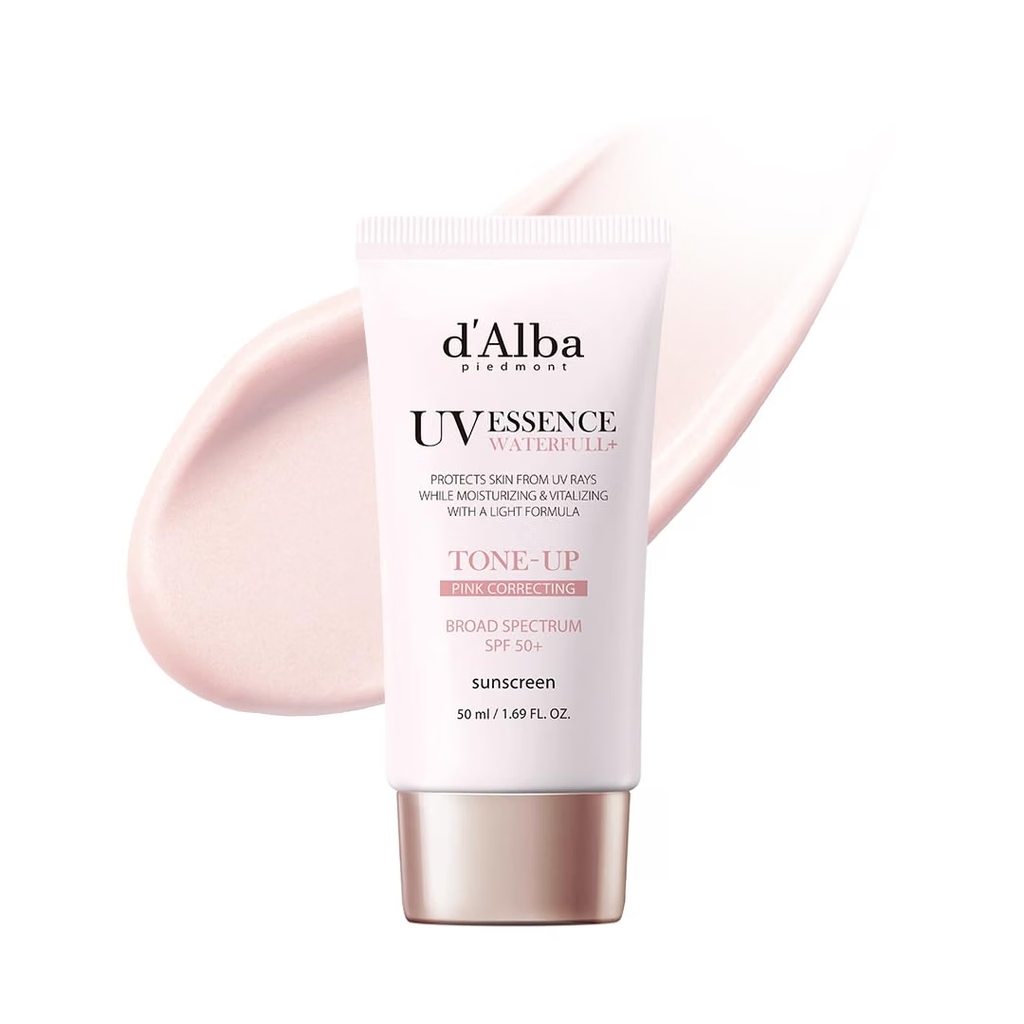
That is the gap Korean sunscreens try to fill, and it is why the d’Alba Piedmont Waterfull Tone-Up Sunscreen Serum keeps showing up in US searches. It is a 1.69 fl oz bottle with SPF 50+ and broad spectrum protection. It has a light, watery, serum-style feel. It is also sold as a makeup base and a foundation-free option that softly evens out skin tone. One product, three jobs.
That sounds great on a product page. The real question is whether it holds up. This d’alba waterfull tone-up sunscreen serum review looks at that question honestly, without hype.
How this review was put together
This review is based on the product specifications, the ingredient and label information available, patterns in customer feedback, and comparisons with competing sunscreens. It is not a claim of long-term personal testing. Where results depend on your skin type, skin tone, or the exact batch, I say so.
What you will learn
- How the tone-up effect works, and what it cannot do
- What the texture and finish are likely to feel like on different tone-up skin types
- Whether it works as a makeup base or a foundation replacement
- The downsides, including possible cast, shine, and the small bottle size
- Who should buy it, who should skip it, and what to buy instead
- How it compares with other Korean tone-up sunscreens, and what to check on Amazon and Walmart
The short answer
If you are asking is the d’alba waterfull tone-up sunscreen serum worth it, the honest answer is: it can be, for the right person. It suits people with light to medium skin tones and normal, dry, or combination tone-up skin who want a comfortable daily SPF with a soft glow. It is a weaker fit if you want full coverage, have very oily or very sensitive skin, or have a deeper skin tone and dislike any brightening cast.
Sunscreen only works when you wear it, so comfort matters as much as the SPF number. Let’s start with a quick verdict, then look at the details.

👉 Check Price on Amazon “See how we review products”
Quick Verdict
Overall rating: 4 out of 5 for people who want a lightweight, tone-brightening daily sunscreen. 3 out of 5 if you expect full foundation coverage or have very oily or very sensitive tone-up skin.
This is a rating-style summary based on specs, user feedback patterns, and category comparisons.
What works well:
- A serum-like, watery feel that tends to sit lighter than classic cream sunscreens
- A visible but soft tone-up effect that brightens dull or uneven-looking skin
- SPF 50+ with broad spectrum labeling for daily UV protection
- Works as a makeup base for people who like a light, glowy finish
- Convenient for people who want to simplify their morning routine
What to watch for:
- A tone-up effect is not the same as coverage. It will not hide acne marks, redness, or deep dark spots
- Some people may see a slight pale or gray tint, especially on deeper skin tones
- The glowy finish may look shiny on very oily skin without powder
- Fragrance or essential oil content may bother very sensitive tone-up skin, so always check the current label
- A small bottle means you need to apply enough and reapply, which uses it up faster
Best for: Light to medium skin tones, normal to dry or combination skin, and people who like a natural glow and minimal makeup.
Skip it if: You need full coverage, you have a deeper skin tone and dislike any brightening cast, or your skin reacts to chemical UV filters.
The rest of this review explains why, so you can decide for yourself.

What Is the d’Alba Piedmont Waterfull Tone-Up Sunscreen Serum?
The d’Alba Piedmont Waterfull Tone-Up Sunscreen Serum is a Korean-style daily sunscreen with SPF 50+ that has a lightweight, watery serum texture and a subtle tone-up skin-brightening effect. It can be worn alone or under makeup.
That is the definition in one sentence. Let’s unpack the parts.
Sunscreen first, skincare second
The core job is UV protection. The label lists SPF 50+ and broad spectrum protection, which means it is designed to help protect against both UVB (the rays that burn) and UVA (the rays linked to aging and long-term damage).
The skincare-style extras, such as hydration and a smoother feel, are a bonus. They do not replace a moisturizer for everyone, especially if your skin is very dry.
What “tone-up” means
In Korean beauty, a tone-up sunscreen is made to brighten the look of your tone-up skin right after you apply it. It usually does this with light-reflecting or lightly tinted ingredients. The result is a softer, more even-looking complexion, a bit like a gentle filter.
It is not a foundation. It will not cover pores or acne marks the way a full-coverage product does. Think of it as “your skin, but a little more even and bright.”
The d’Alba brand angle
d’Alba is a Korean skincare brand that is widely known for its Piedmont line, which is inspired by white truffle from the Piedmont region of Italy. The brand is also known for its popular facial mist and serums. This sunscreen sits in the “Waterfull” part of the range, which focuses on a lighter, water-based feel.
How it differs from regular sunscreens
Most US drugstore sunscreens are built around strong protection and water resistance. Many Korean sunscreens are built around daily wear: light texture, quick absorption, and a good feel under makeup.
That difference is why this product is popular as a makeup base and as a foundation-free option. It is also why it may need more careful reapplication on long outdoor days, which I cover later.
Key Features Breakdown
This section covers what the product listing and label highlight, and what each feature means in real life.
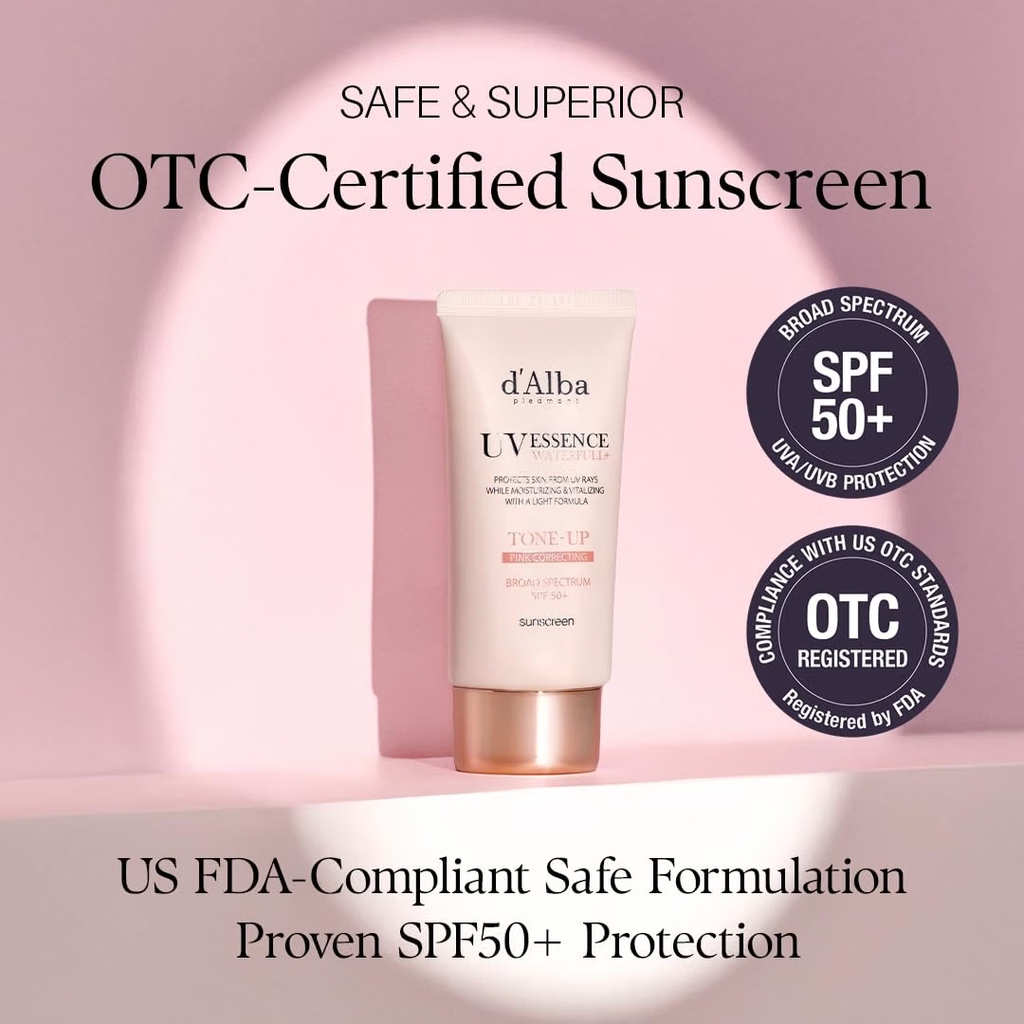
SPF 50+ and broad spectrum protection
SPF 50+ is the top tier on US labels. Broad spectrum means the product has been tested to protect against both UVA and UVB rays.
A few honest points here:
- SPF only works if you apply enough. Most people use far less than the amount used in lab testing
- No sunscreen blocks everything, and none lasts all day without reapplication
- Always check the current label on the bottle you receive, because formulas and packaging can change
Serum-style, lightweight texture
The “serum” in the name is about feel, not about treating skin like a medical serum. The formula is described as watery and light. People who dislike thick, creamy sunscreens tend to like this style.
The trade-off is that very light textures can be harder to apply evenly. You may need to work in sections.
Tone-up effect
This is the feature that sets the product apart. The tone-up effect brightens the look of the skin and softens uneven tone. It works best on light to medium skin that looks dull or slightly sallow.
It tends to be less flattering when:
- You apply too thickly, which can create a pale, ashy look
- You skip applying it to the neck, which creates a visible line
- Your tone-up skin tone is deep and the brightening shade is too light
Makeup base use
The product is marketed as a makeup base. That means it should sit smoothly under foundation, BB cream, or powder without balling up. In practice, results depend on:
- How long you wait before applying makeup
- Whether your other skincare layers are silicone-heavy or oily
- How much sunscreen you use
Foundation-free wear
If you like a bare-skin look, this product can replace foundation on low-makeup days. Again, it evens tone but does not cover. If your goal is a clear, polished look, you may still want concealer on spots.
Packaging and size
The bottle is 1.69 fl oz. That is a compact size that fits easily in a bag. It is also a small amount if you apply a proper face-and-neck dose every day.
Quick feature table
| Feature | What it means for you |
|---|---|
| SPF 50+ | High daily UV protection when applied generously |
| Broad spectrum | Covers UVA and UVB |
| Serum-like texture | Light feel, often less greasy |
| Tone-up effect | Soft brightening, not coverage |
| Makeup base | Can sit under foundation if layered well |
| 1.69 fl oz size | Portable, but may run out faster |

d’Alba Waterfull Tone-Up Sunscreen Serum Ingredient Profile & Scientific Evidence
Ingredient lists can change between batches and regions. Before buying or using it, compare the list on your actual bottle or the current retailer listing. What follows explains the common building blocks of Korean tone-up sunscreens and how to read the label.
UV filters: the part that protects you
Sunscreens use two broad types of filters:
- Mineral filters such as zinc oxide and titanium dioxide, which sit on top of the skin and reflect UV rays
- Chemical filters such as avobenzone or other organic filters, which absorb UV and convert it to heat
Many Korean tone-up sunscreens use a hybrid approach, mixing both. A mineral component can add a natural brightening effect, which is part of why tone-up products exist.
Check your label to see which filters are used. This matters if you have sensitive skin or prefer mineral-only products.
Tone-up ingredients
The visible brightening effect often comes from:
- Light-reflecting mineral particles
- Mild pigments or powders
- Silicones or film-formers that smooth the surface
These ingredients are safe for most people. They mainly change how your skin looks in the moment. They are not permanent skin-lightening agents.
Hydrating and soothing ingredients
Serum-style sunscreens often include humectants like glycerin or hyaluronic acid, and plant-based or soothing ingredients. These help the product feel less drying. The evidence that these ingredients help skin hydration is reasonable, but the amount in a sunscreen is usually modest.
In other words, they make the sunscreen more comfortable. They do not turn it into a full moisturizer or treatment.
What the science says
The key facts supported by dermatology guidance are:
- Daily sunscreen use helps reduce the risk of sunburn and supports long-term skin health
- Broad spectrum protection is important because UVA contributes to visible aging
- Reapplication matters, usually every two hours in direct sun
- Sunscreen works best as part of sun protection, which also includes shade and clothing
The brand’s marketing claims about brightening or hydration should be read as short-term cosmetic effects, not medical results.
Ingredient watch-list
If you have sensitive or reactive skin, scan the label for:
- Added fragrance or essential oils
- Alcohol high on the list
- Specific chemical filters you know you react to
A patch test on your inner arm or behind the ear for a day or two is a smart step with any new sunscreen.

Texture, Absorption & Sensory Experience
Texture decides whether people actually wear sunscreen every day. This is where serum-style Korean formulas try to win.
First impression
Based on the product description and user feedback patterns, the texture is light and watery rather than thick. It is the kind of formula that spreads easily and does not feel like a heavy lotion.
Absorption and finish
Most reviewers of products in this style describe a quick, smooth absorption with a slightly dewy or satin finish. That fits the “Waterfull” name. You should expect:
- A cooling, light feel on application
- A faint glow rather than a flat matte look
- A short settling time before it feels comfortable
If you have oily skin, that dewy finish can read as shiny by midday. A light dusting of powder in the T-zone helps.
Scent
Fragrance varies by product and batch. Some Korean sunscreens have a mild, clean scent. Others are fragrance-free. Check the current listing if scent matters to you, especially if you are sensitive to fragrance.
Stickiness and pilling
Watery sunscreens can sometimes feel slightly tacky as they dry. They can also pill if you layer too many products or rub the skin while applying.
To reduce pilling:
- Let each skincare layer dry before the next
- Pat or press the sunscreen in rather than rubbing
- Use thin layers and build up
Under makeup
When it works well as a makeup base, foundation glides over it. When it does not, the usual culprits are a heavy moisturizer underneath or applying foundation too soon. Give it a few minutes.
Skin type notes
- Dry skin: Usually comfortable, may still need a moisturizer underneath
- Combination skin: Often a good fit, with powder on the T-zone if needed
- Oily skin: May feel dewy, so test it before committing
- Sensitive skin: Patch test first and check the ingredient list

Usage Experience: What to Expect Day to Day
This section describes what to expect based on the product specifications, how this style of product behaves, and common themes in user feedback. It is not a record of personal long-term testing.
Morning routine fit
This sunscreen is designed as the last skincare step before makeup. A simple order looks like this:
- Cleanser
- Toner or essence (optional)
- Serum or moisturizer
- Sunscreen
- Makeup (optional)
Because it already has a serum-like feel, some people skip a separate moisturizer in warm weather. In cold, dry months, most people will want one.
Application
The common advice for facial sunscreen is about two finger lengths of product for the face and neck. With a 1.69 fl oz bottle, that means you will use it up faster than you might expect.
A practical approach is:
- Apply in two layers instead of one thick layer
- Cover the neck and ears
- Blend at the hairline and jawline to avoid visible edges
The tone-up effect in real life
The brightening effect is usually visible right away. On light to medium skin, it looks like a soft, even glow. In daylight, it can look more natural than in a bathroom mirror.
Where people run into trouble:
- Too much product: Creates a pale or ashy look
- Uneven application: Shows as patchy brightness
- Deeper skin tones: The brightening shade may be too light, leaving a gray cast
If you are unsure, try it first on a day when you do not need to look polished, and check it in natural light.
Wear throughout the day
Expect a comfortable feel for the first few hours. By afternoon, combination and oily skin may look shinier. Dry skin often stays comfortable.
Sunscreen needs reapplication. Many people find that reapplying a watery serum sunscreen over makeup is awkward. Common solutions include:
- Using a powder sunscreen or spray over makeup
- Applying a second layer before makeup in the morning
- Reapplying during a break when you can touch up your face
Indoor vs outdoor use
For a normal day at a desk or running errands, this style of sunscreen is convenient and comfortable. For a beach day, a long hike, or sweaty exercise, you may prefer a sunscreen labeled water-resistant for a stated time, and you should check this product’s label for that information.
Removal
Because it is made to sit under makeup and last through the day, wash it off at night. A gentle cleanser may be enough, but if you wear it with makeup or sweat a lot, a double cleanse (cleansing balm or oil first, then a gentle cleanser) is a safer approach.
Skin reactions
As with any sunscreen, some people may feel stinging near the eyes, notice breakouts if the formula doesn’t suit their skin, or have irritation from fragrance or filters. If that happens, stop using it. Patch testing helps, and talking to a dermatologist is wise if you have a skin condition.
Batch and seller differences
One of the most important things to check when buying skincare online is that you are getting a real, current product. Look at the seller, the expiration or manufacturing information, and the ingredient list. Differences between regional versions are common, so the bottle you receive should match the listing you read.
Realistic expectations
Here is a fair summary of the day-to-day experience based on the product’s design and the way similar products tend to perform:
- Very easy to wear on a normal day
- Brightens the look of tone-up skin without heavy coverage
- Good for people who dislike thick sunscreens
- Needs careful application to avoid a pale cast
- Needs a reapplication plan
Benefits of the d’Alba Waterfull Tone-Up Sunscreen Serum
Here are the main benefits, with notes on how much each one matters.
1. Daily UV protection
The biggest benefit is also the most important. A sunscreen you enjoy wearing is a sunscreen you will actually use. SPF 50+ with broad spectrum labeling gives a high level of daily protection when you use enough and reapply.
2. A lightweight feel
If you have avoided sunscreen because it feels heavy, a serum-style formula can change that. This is a real, practical benefit, especially in humid weather or for people with combination skin.
3. A natural brightening effect
The tone-up effect gives skin a softer, more even look. It can make tired skin look fresher without feeling like makeup. This is helpful if you want a quick polish for a casual day.
4. A makeup-friendly base
For many people, the product acts as a smooth layer before foundation or BB cream. A good base can help makeup look more even and last a bit longer, as long as you layer products with care.
5. A simpler routine
Combining sun protection, light hydration, and a mild tone correction in one step saves time. This is useful for busy mornings, travel, and minimal routines.
6. A dewy, healthy-looking finish
The light glow is flattering on many skin types. It is a pleasant alternative to a flat matte look, as long as your skin is not very oily.
7. Fits the K-beauty approach
If you enjoy Korean skincare routines, this fits right in. It layers well with essences, serums, and lightweight moisturizers.
Keep it in perspective
These benefits are real, but modest. A sunscreen cannot fix acne, remove dark spots, or change your skin tone permanently. Its main job is to protect your skin from UV damage and make your skin look a bit better while it does so.
Downsides & Limitations
Every product has trade-offs. Here are the main ones to weigh before you buy.
1. Tone-up is not coverage
If you expect it to hide redness, marks, or dark circles, you may be disappointed. It evens tone slightly but leaves most imperfections visible.
2. A pale or gray cast is possible
Tone-up products can look chalky if they do not match your skin. People with medium-deep to deep skin tones should be cautious and check user photos on similar skin tones before buying.
3. Not ideal for very oily skin
The dewy finish can look greasy on oily skin by the afternoon. You may need a mattifying powder.
4. Possible sensitivity
Any sunscreen can irritate some skin. Fragrance, certain chemical filters, or other ingredients can be a problem for sensitive or eczema-prone skin. Check the label and patch test.
5. The small size
At 1.69 fl oz, it can run out quickly if you apply the recommended amount to your face and neck every day. Cost per use may be higher than a larger sunscreen.
6. Reapplication is awkward over makeup
Like most facial sunscreens worn under makeup, reapplying through the day is a hassle. You need a plan for it.
7. Water resistance may be limited
Many Korean daily sunscreens are not rated as water resistant. Check the label if you plan to swim or sweat heavily.
8. Availability and authenticity
The product is widely sold online, but quality can vary by seller. Buying from the official brand storefront or a well-reviewed seller lowers the risk of old stock or imitations.
Are these deal-breakers?
For most people, no. They are things to be aware of. If your main goal is a comfortable daily sunscreen with a soft glow, these limitations are manageable.
Who Should Buy This?
The d’Alba Waterfull Tone-Up Sunscreen Serum is a good fit if you:
- Want a lightweight daily sunscreen that does not feel heavy
- Like a soft, dewy finish
- Have light to medium skin that looks dull or uneven
- Want a makeup base that works with minimal-makeup looks
- Enjoy Korean skincare routines
- Have normal, dry, or combination skin
- Prefer one step instead of sunscreen plus primer plus tinted base
- Want an easy-to-pack sunscreen for travel
Best use cases
- Everyday commuting and office days
- Light outdoor errands
- Foundation-free days
- Layering under a light base
If this sounds like you, it is worth considering. The tone-up sunscreen category is a good match for your habits.
Who Should Avoid This?
You may want to skip it, or at least be cautious, if you:
- Need full coverage or want to hide blemishes
- Have a deep skin tone and dislike any brightening cast
- Have very oily skin and dislike shine
- Have fragrance-sensitive, eczema-prone, or reactive skin
- Prefer a strictly mineral sunscreen
- Need heavy water resistance for swimming or sports
- Want a large, budget-friendly bottle for the whole family
Safer alternatives
- For sensitive skin: a fragrance-free mineral sunscreen
- For sports: a sunscreen with a clear water-resistance rating
- For deeper skin tones: a sheer sunscreen made to avoid a white or gray cast
- For oily skin: a matte-finish sunscreen
How to Use for Best Results
Good technique makes a big difference with any sunscreen, and especially with a tone-up formula.
Step-by-step
- Cleanse and prep. Start with clean skin and your usual toner, essence, or serum.
- Moisturize if needed. Dry skin benefits from a light moisturizer. Let it absorb for a minute.
- Check the bottle for directions. Follow any shake or mix instructions.
- Apply in thin layers. Use about two finger lengths for the face and neck, in two thinner layers.
- Cover everything. Include the neck, ears, and hairline.
- Pat, don’t rub. This reduces pilling and gives a smoother finish.
- Wait a few minutes. Give it time to settle before makeup.
- Add makeup if you like. Use a light touch with sponges or brushes to avoid lifting the sunscreen.
- Reapply. In direct sun, reapply about every two hours.
- Remove at night. Cleanse well, and double cleanse if you wear makeup.
Tips to avoid a pale cast
- Use thin layers
- Blend into the neck
- Check your look in natural light
- Try a small area first
Tips for oily skin
- Skip heavy moisturizer underneath
- Use a light powder in the T-zone
- Blot rather than adding more product
Tips for reapplication
- Use a powder or spray sunscreen over makeup
- Carry blotting paper to reduce shine first
- Reapply to bare areas like the neck and hands

Pros & Cons
Pros
- Lightweight, serum-style texture
- SPF 50+ with broad spectrum labeling
- Soft, natural tone-up effect
- Works as a makeup base for many users
- Convenient for foundation-free days
- Compact bottle for travel
- Fits easily into Korean skincare routines
- Dewy, healthy-looking finish
Cons
- Brightening is not coverage
- May leave a pale or gray cast on some skin tones
- Dewy finish may look shiny on oily skin
- May irritate sensitive skin
- Small bottle runs out faster with proper use
- Reapplying over makeup is awkward
- Water resistance may be limited
- Quality can vary by seller
d’Alba Waterfull Tone-Up Sunscreen vs Other Korean Tone-Up Sunscreens
If you are comparing options, this section covers how the d’Alba formula stacks up against similar Korean and K-beauty-style sunscreens. This is a general comparison based on product positioning and common user feedback. Always check current listings for the latest details.
Comparison table
| Feature | d’Alba Waterfull Tone-Up Sunscreen Serum | Typical Korean tone-up sunscreen (cream type) | Typical Korean daily sun serum (no tone-up) | Typical US drugstore sunscreen |
|---|---|---|---|---|
| Texture | Light, watery, serum-like | Creamier, thicker | Light, watery | Often thicker or greasier |
| Tone-up effect | Yes, soft | Yes, often stronger | Usually none | Usually none |
| Finish | Dewy to satin | Satin to semi-matte | Dewy | Varies |
| Makeup base use | Marketed for it | Often marketed for it | Sometimes | Rarely designed for it |
| Risk of pale cast | Moderate on deeper tones | Moderate to high | Low | Varies, often higher with mineral |
| Water resistance | Check the label | Often limited | Often limited | Often clearly rated |
| Best for | Daily wear, light makeup | Strong brightening | Invisible daily wear | Outdoor and sport use |
Versus other tone-up sunscreens
Cream-type tone-up sunscreens often give a stronger brightening effect, which some people love and others find too obvious. The d’Alba serum style tends to feel lighter and more skincare-like. If you want a noticeable “filter,” a cream type may do more. If you want a subtle glow, this style is a better match.
Versus sun serums without tone-up
If you do not want any brightening, a clear-finish sun serum is a simpler choice. It is better for deeper skin tones or anyone who dislikes a pale cast. The trade-off is that you lose the foundation-free benefit.
Versus US drugstore sunscreens
US drugstore sunscreens are usually more affordable per ounce and often have clear water-resistance ratings. They tend to be less elegant under makeup. If you plan to swim, sweat, or spend long hours outdoors, a rated water-resistant formula is the safer pick. For daily city wear and makeup layering, a Korean-style formula is often more pleasant.
Comparing Amazon and Walmart
Both retailers can be good places to shop, and the best choice depends on what is listed at the time you search.
| Factor | Amazon | Walmart |
|---|---|---|
| Selection | Often wider, including brand storefronts | May have fewer K-beauty options |
| Pricing | Can vary by seller and size | Can vary, sometimes through marketplace sellers |
| Delivery | Fast options for many items | Pickup and delivery options |
| Authenticity risk | Check seller and storefront | Check whether it is sold by Walmart or a third party |
| Returns | Depends on seller | Depends on seller |
| Best for | Easy comparison and reviews | Pickup convenience |
Tip: On either site, check who sells and ships the product. Choose the brand’s official store or a well-reviewed seller, and compare the ingredient list and size on the listing with what you expect. Prices and availability change often, so check the current listing instead of relying on an old price.
Buying Guide: How to Choose a Korean Tone-Up Sunscreen
If you are shopping in this category, these are the main criteria to consider.
1. Know your skin type
- Dry: Look for hydrating, dewy formulas
- Oily: Look for lightweight or matte finishes
- Combination: Serum-style or satin finishes often work well
- Sensitive: Look for fragrance-free formulas and consider mineral filters
2. Check the filter type
Mineral, chemical, and hybrid formulas feel and behave differently. Hybrid formulas often feel lighter. Mineral formulas can be gentler for some people but may leave more of a cast. Pick based on your comfort, not marketing.
3. Look at SPF and broad spectrum labeling
SPF 30 or higher with broad spectrum labeling is the usual dermatology recommendation. SPF 50+ offers a higher level of protection but does not replace reapplication.
4. Think about your skin tone
This is the most important point for tone-up products. A formula that looks fresh on light skin can look gray on deeper skin. Check customer photos on similar skin tones and look for shade or tone notes.
5. Consider your makeup habits
If you wear foundation daily, you need a formula that layers well. If you go bare, you want a natural finish and an even tone.
6. Check water resistance
If you swim, sweat, or spend long hours outside, look for a rating on the label.
7. Compare size and value
Divide the price by the amount of product to see the real cost. Remember that you need to use a generous amount.
8. Read the ingredient list
Watch for fragrance, alcohol, and any ingredient that has bothered your skin before.
9. Buy from a trustworthy seller
Choose official stores or well-reviewed sellers. Check the expiration or manufacturing details when the product arrives.
10. Patch test
Try a small area first, especially if you have sensitive skin.
A quick checklist
- Matches your skin type
- Clear SPF and broad spectrum label
- Fits your skin tone
- Works with your makeup routine
- Reasonable value per use
- Comes from a trusted seller
Glow, Hydration & Long-Term Skin Results
It is easy to expect too much from a sunscreen, so let’s be clear about what it can and cannot do over time.
The immediate glow
The tone-up effect and dewy finish give an instant glow. This is a cosmetic effect that appears when you apply it and fades as you wash it off.
Hydration
The watery texture and humectants can make skin feel comfortable and less tight during the day. This is helpful for normal and combination skin. Dry skin should still use a moisturizer.
Long-term benefits
The real long-term benefit of any sunscreen is protection from UV damage. Using it daily and reapplying correctly helps reduce the risk of sunburn and supports healthier skin over the years. It can help keep new sun-related dark spots from getting worse, but it does not remove existing ones.
What not to expect
- Permanent brightening or lightening
- Treatment of acne or scars
- Anti-aging results beyond protection
- Hydration equal to a rich moisturizer
How to judge results
Give any new sunscreen a couple of weeks of consistent use. Watch for comfort, breakouts, irritation, and how your makeup behaves. If it suits you, you will likely notice that you are more consistent with sun protection, and that is the result that matters most.
FAQ: d’Alba Waterfull Tone-Up Sunscreen Serum
1. Is the d’Alba Waterfull Tone-Up Sunscreen Serum worth it?
It can be worth it if you want a lightweight, SPF 50+ sunscreen with a soft brightening effect and a makeup-friendly finish. It may not be worth it if you need full coverage, have very oily or very sensitive skin, or have a deeper skin tone and dislike any cast.
2. What does tone-up sunscreen mean?
A tone-up sunscreen brightens the look of your skin and evens out tone right after you apply it. It usually does this with light-reflecting or lightly tinted ingredients. It is not the same as foundation.
3. Can I use it instead of foundation?
Yes, on low-makeup days many people use it alone for an even, natural look. It does not cover blemishes or redness, so you may still want concealer.
4. Does it work as a makeup base?
It is marketed as one. It usually works best when you apply thin layers, let it settle for a few minutes, and avoid piling heavy moisturizers underneath.
5. Is it good for oily skin?
It depends. The finish is described as dewy, which can look shiny on very oily skin. A light powder in the T-zone often helps. Test it before relying on it daily.
6. Is it good for dry skin?
It tends to be comfortable on normal to dry skin, but very dry skin may still need a moisturizer underneath.
7. Will it leave a white or gray cast?
It can, especially if you apply too much or if your skin tone is deeper than the brightening shade. Thin layers and checking in natural light help.
8. Is it safe for sensitive skin?
No sunscreen is guaranteed to suit every sensitive skin type. Check the ingredient list for fragrance and filters you react to, and patch test first. Talk to a dermatologist if you have a skin condition.
9. How much should I apply?
A common guideline is about two finger lengths for the face and neck. Applying two thin layers helps with coverage and finish.
10. How often should I reapply?
In direct sun, about every two hours. On indoor days, reapplication needs are lower, but you should still follow the label.
11. Is it water resistant?
Check the label on your bottle. Many Korean daily sunscreens are not rated for swimming or heavy sweating.
12. How do I remove it?
Wash it off at night. If you wear makeup or sweat a lot, use a cleansing balm or oil first, then a gentle cleanser.
13. How does it compare to other Korean tone-up sunscreens?
It is lighter and more serum-like than many cream-type tone-up sunscreens. Cream types may give a stronger brightening effect. The best choice depends on your skin type and the finish you want.
14. Where can I buy it in the US?
It is commonly sold on Amazon, and sometimes on Walmart through marketplace sellers or brand storefronts. Check the seller, ingredient list, and size before you buy.
Final Verdict: Is the d’alba Waterfull Tone-Up Sunscreen Serum Review Worth Acting On?
After weighing the product specifications, available user feedback, and comparisons with similar products, the d’Alba Piedmont Waterfull Tone-Up Sunscreen Serum is a solid choice for a specific kind of shopper.
It is best for people who want a lightweight, comfortable SPF 50+ sunscreen with a soft, natural brightening effect. It suits normal, dry, and combination skin, light to medium skin tones, and anyone who likes a simple routine or a minimal-makeup look.
It is a less ideal fit if you need real coverage, have very oily or very sensitive skin, have a deeper skin tone and worry about a pale cast, or need strong water resistance.
To sum up the main points of this d’alba waterfull tone-up sunscreen serum review:
- Protection: SPF 50+ with broad spectrum labeling, as long as you apply enough and reapply
- Feel: Light, watery, and pleasant for daily wear
- Look: A soft tone-up and dewy finish, not full coverage
- Makeup use: Often works as a base with thin layers and patience
- Trade-offs: Possible cast on deeper tones, shine on oily skin, small bottle size
- Value: Reasonable if it matches your skin type and you actually use it daily
The best sunscreen is the one you will wear every day. If the texture and finish suit you, this one may help you do that. If you are unsure, compare the ingredient list, check customer photos on skin tones like yours, and patch test before committing.
One last reminder: sunscreen works best alongside shade, clothing, and sensible sun habits. Product details and prices change, so always confirm the current label and listing before you buy.
Ready to compare prices?
If this sunscreen sounds like a match, you can Check Price on Amazon to see the current price, size options, and seller details. It also helps to look at the same product on Walmart, so you can pick the seller and price that suit you best.
This review is for informational purposes only and is not medical advice. If you have a skin condition or concerns about sun protection, talk to a dermatologist.

Who Is Behind Loooknow
Loooknow is founded, written, and managed by Muhammad Owais Khan. I am the founder, author, and site administrator, so every review, guide, and comparison you read here goes through me personally.You can reach me at [owaisu99sony@gmail.com] or through the Contact page. And Review Methodology