
Heads up: If you buy through links in this review, I may earn a small commission at no extra cost to you. This doesn’t affect my ratings.
Introduction.
Bad breath has a way of undermining your confidence at the worst possible moments, whether you’re leaning in for a conversation or grabbing a coffee with a friend. Most people reach for whatever mouthwash is on the drugstore shelf, but the burn of alcohol-based rinses can make the whole ritual feel more like a punishment than a fix. That’s where TheraBreath Icy Mint Mouthwash comes in.
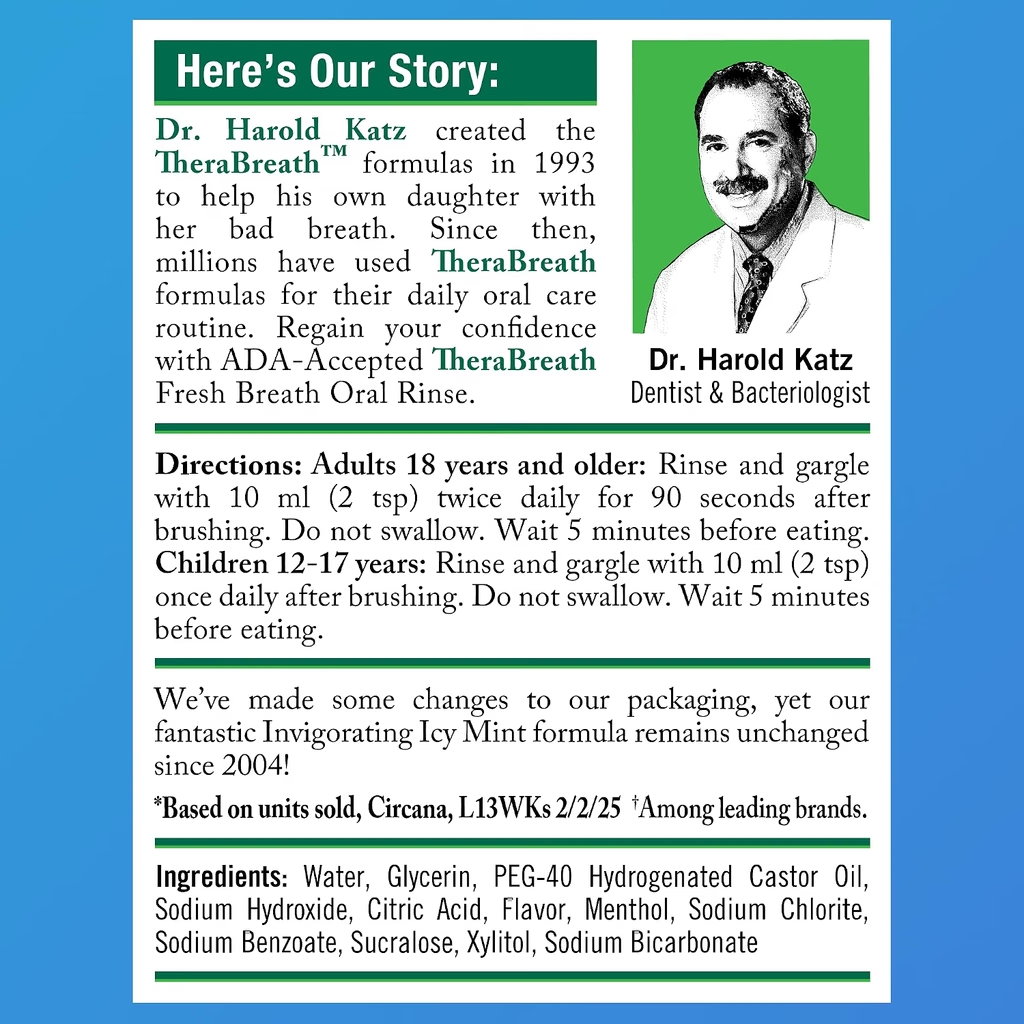
Created by Dr. Harold Katz in 1993 to help his own daughter with her bad breath, TheraBreath built its reputation on tackling the problem at the source instead of just masking it with mint. The Icy Mint formula is alcohol-free, non-burning, and pH-balanced, and it claims to start working instantly to fight bad breath for 12 hours. It’s also powered by oxygen and ADA-accepted, which is a step up from the average rinse promising fresh breath with little to back it up.
In this review, we’ll break down what’s actually in the bottle, how it performs against everyday bad breath triggers, who it’s best suited for, and whether it’s worth adding to your daily routine. If you’ve been burned (literally) by alcohol-based mouthwashes before, this alcohol-free pick might be exactly what you’re looking for.
Quick Verdict
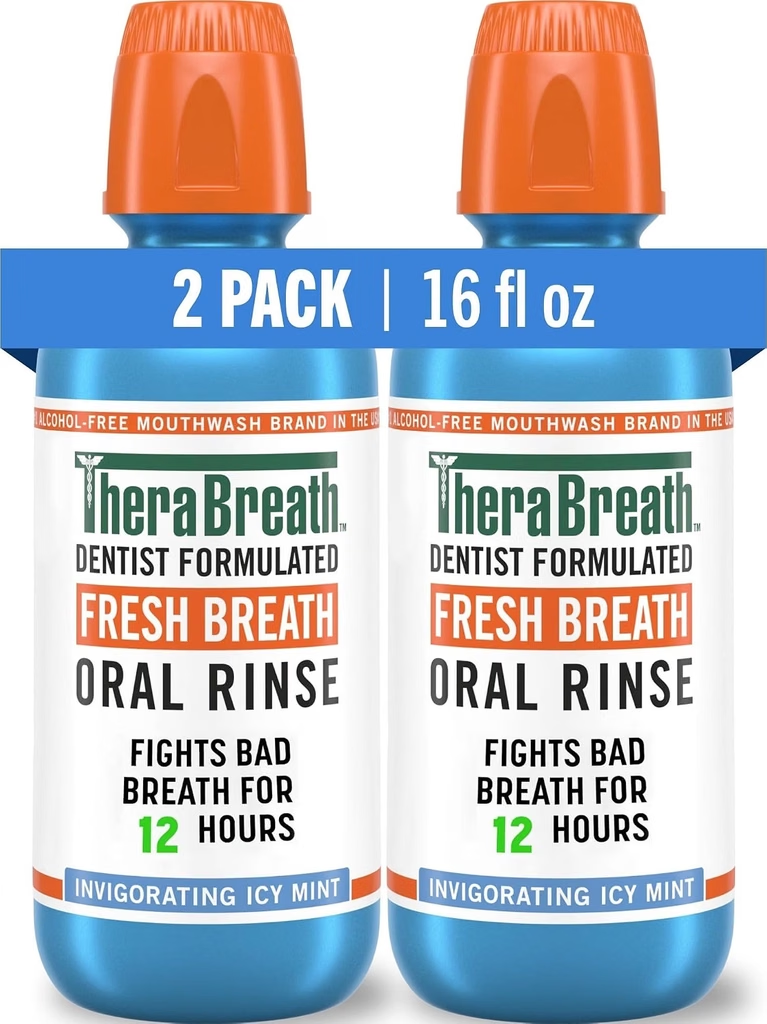
Bottom line: TheraBreath Fresh Breath Icy Mint is a solid, dentist-formulated, alcohol-free mouthwash built specifically for chronic bad breath rather than general freshening. It’s not going to feel like a “minty explosion” the way Listerine Cool Mint does, and that’s intentional — the brand prioritizes odor neutralization over sensory intensity.
What it does well:
- Alcohol-free formula that doesn’t burn or dry out the mouth
- Targets odor-causing bacteria directly rather than just masking mouthwash smell with fragrance
- Gentle enough for people with sensitive gums, dry mouth, or a history of canker sores
- ADA-accepted formulation backed by a dentist-founded brand
Where it falls short:
- Icy Mint flavor reads as mild to people used to Listerine’s intensity
- Doesn’t whiten teeth or address gum disease directly
- Premium price per ounce compared to mass-market rinses
- Results depend heavily on consistent twice-daily use
Who it’s for: Anyone dealing with recurring bad breath, dry mouth, or mouth sensitivity who has already found alcohol-based rinses too harsh. Who should skip it: People who want an intense, medicinal-tasting rinse or who are specifically shopping for a whitening or gum-disease-focused product.
If you’re deciding between retailers, jump to the Product Comparisons section below — the pack-of-2 pricing swings noticeably between Walmart and Amazon depending on promotions.
What Is TheraBreath Fresh Breath Mouthwash?
TheraBreath is a California-based oral care brand founded in 1993 by Dr. Harold Katz, a dentist who developed the formula while trying to solve his own family’s chronic bad breath problem. That origin story matters because it explains the brand’s whole positioning: TheraBreath isn’t trying to be a general-purpose mint rinse. It’s built around treating halitosis at the source — the bacteria that produce sulfur compounds on the tongue and in the throat — rather than just covering the smell with fragrance.
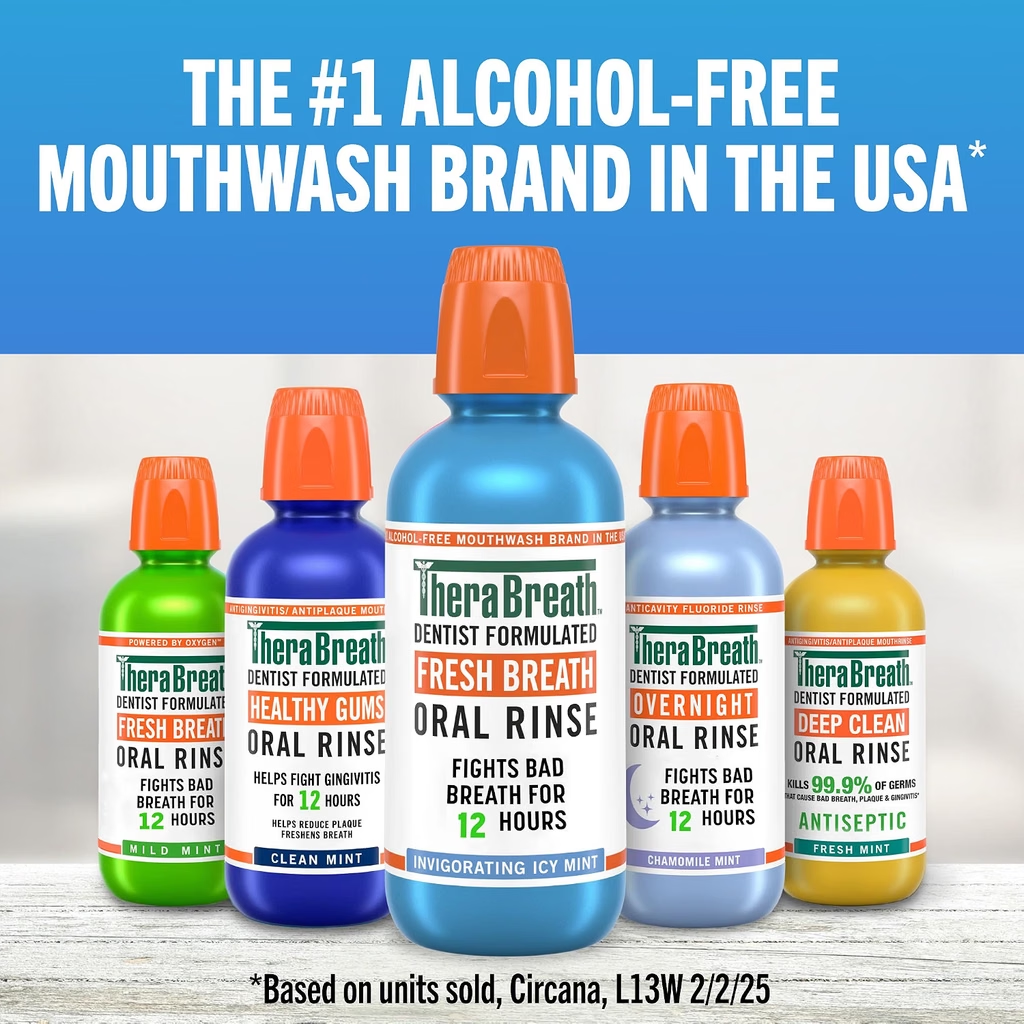
The Fresh Breath Icy Mint variant sits in the brand’s core, everyday-use lineup. It’s marketed as the number one alcohol-free mouthwash brand in the U.S. by units sold, which tells you the company has leaned hard into the alcohol-free niche rather than competing head-on with Listerine’s traditional burn-equals-effective marketing.
What sets it apart from a typical supermarket mouthwash:
- No alcohol. Most “clinical strength” mouthwashes use alcohol as an antiseptic, which is effective but also dries out the mouth — and dry mouth is itself a major cause of bad breath, so alcohol-based rinses can work against you over time.
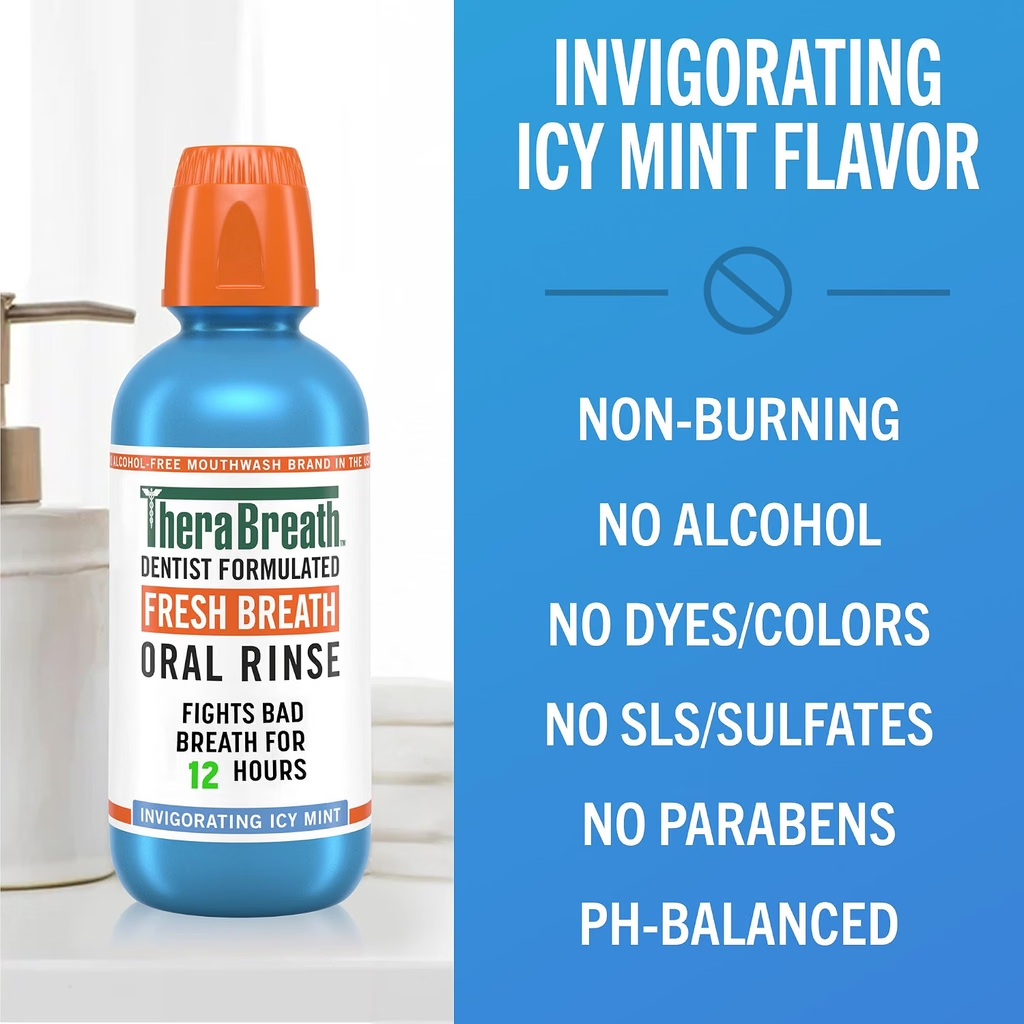
- pH-balanced formula. The rinse is pH-balanced and non-burning, and it’s designed to start working immediately to kill odor-causing bacteria.
- Xylitol-based. Xylitol is included to help reduce plaque buildup, giving it a secondary benefit beyond breath freshening.
- Dentist-formulated positioning. The product is described as dentist formulated and accepted by the American Dental Association.
In short, TheraBreath is positioning itself as a treatment-oriented mouthwash for people with an actual bad breath problem, not just a rinse for after lunch.
Key Features Breakdown
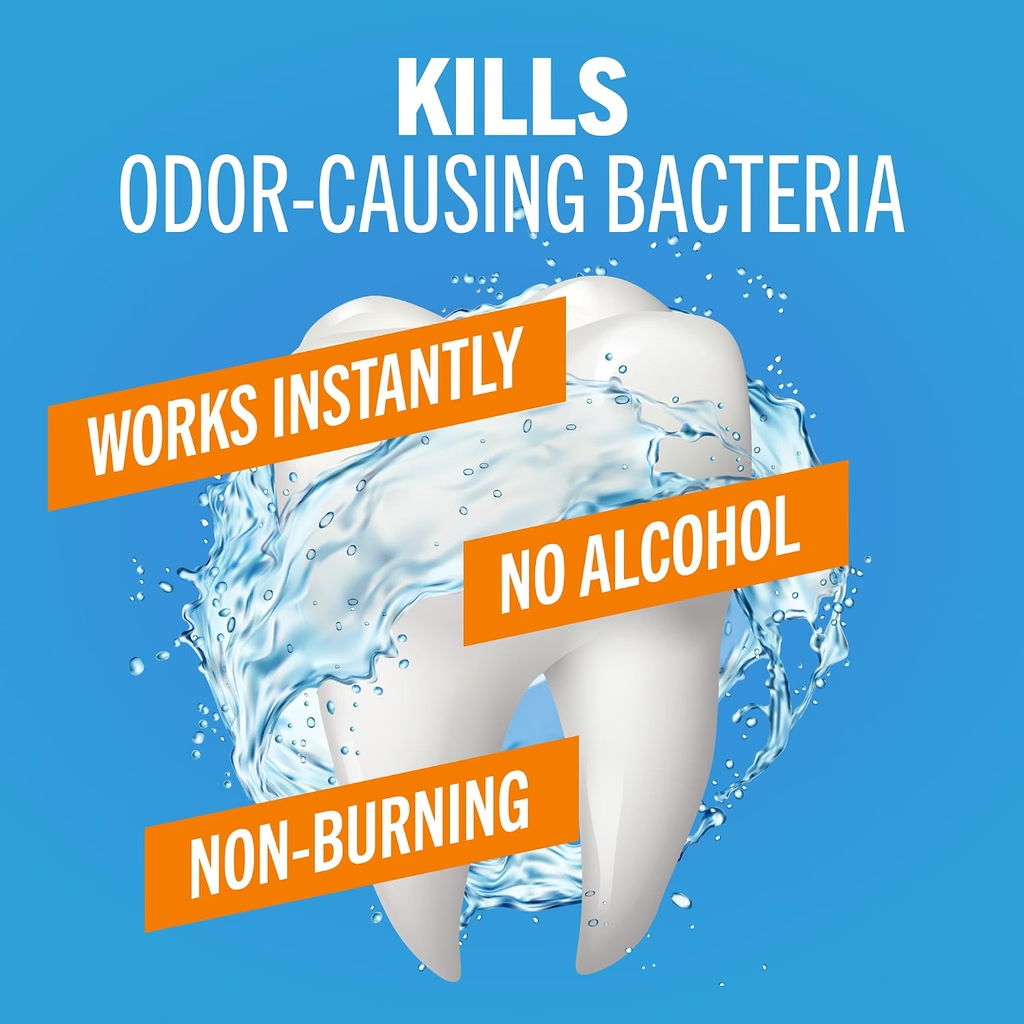
Alcohol-Free, Non-Burning Formula
This is the headline feature, and it’s the reason most people search for this product in the first place. Traditional mouthwashes like classic Listerine use alcohol concentrations that can sting sensitive tissue, worsen canker sores, and — counterintuitively — contribute to dry mouth, which feeds the exact bacteria that cause bad odor. TheraBreath’s non-burning formula is built to sidestep that entirely.
12-Hour Odor Protection Claim
The product is described as fighting bad breath for 12 hours per use. That’s a meaningful distinction from mouthwashes that only claim to mask odor for an hour or two after use. Whether it holds up for a full 12 hours depends heavily on diet, hydration, and individual mouth chemistry — more on that in the Usage Experience section.
Dye-Free, Sulfate-Free Composition
The formula contains no dyes, no colors, no SLS/sulfates, and no parabens. Sodium lauryl sulfate (SLS) is a common foaming agent in oral care products that some people find irritating, particularly those prone to canker sores, so removing it is a genuine plus for a sensitive-mouth audience.
Vegan and Allergen-Conscious Certification
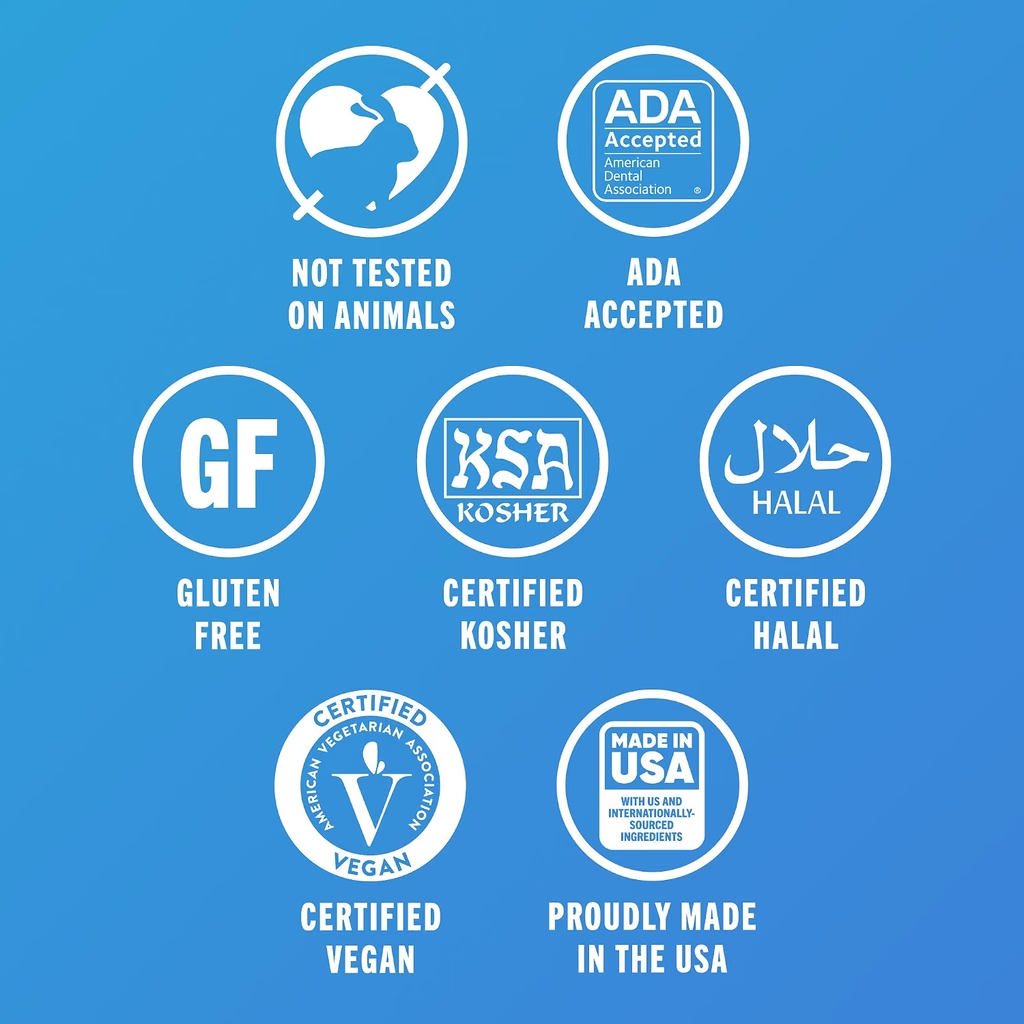
The mouthwash is certified vegan, gluten-free, halal, and kosher, and carries paraben-free, phthalate-free, and formaldehyde-free labeling. For a product this widely distributed, that’s a fairly thorough ingredient-transparency package.
Value-Size Packaging
At 16 fl oz per bottle mouthwash, sold as a pack of two, this is positioned as a stock-up size rather than a trial size — which matters for the cost-per-use math we’ll walk through in the Buying Guide.
Not Tested on Animals
The brand states the product is not tested on animals, which is relevant if cruelty-free sourcing factors into your buying decision.
Ingredients & Formulation Analysis
Based on the mouthwash product’s listed ingredient panel, the Icy Mint formula includes: water, glycerin, PEG-40 hydrogenated castor oil, sodium hydroxide, citric acid, flavor, menthol, sodium chlorite, sodium benzoate, sucralose, xylitol, and sodium bicarbonate. It does not contain alcohol, saccharin, sodium lauryl sulfate, or benzalkonium chloride — the last of which is a known allergen in some rinses.
Here’s what the key players actually do:
- Sodium chlorite is the active odor-fighting ingredient. It’s an oxidizing compound that helps neutralize the volatile sulfur compounds bacteria produce in the mouth — this is the ingredient doing most of the heavy lifting against bad breath, rather than menthol simply masking it.
- Glycerin is a humectant that helps keep the mouth’s tissue moist, which works in favor of the alcohol-free positioning since dryness is a known trigger for odor-causing bacteria.
- Xylitol has a mild antibacterial effect on plaque-forming bacteria and doubles as a sweetener, which is part of why the flavor comes across as gentler than a menthol-heavy rinse.
- Sodium bicarbonate (baking soda) helps neutralize acid in the mouth, another small assist against the conditions that let odor-causing bacteria thrive.
- PEG-40 hydrogenated castor oil is an emulsifier that helps the flavor oils and menthol disperse evenly in the water-based formula rather than separating.
One label detail worth flagging: the primary active ingredient field on several retail listings is marked as “no active ingredient,” which means this product is regulated as a cosmetic rinse rather than an FDA-monographed antiseptic drug. That’s standard for this category of alcohol-free rinse, but it’s a meaningful distinction if you’re specifically shopping for an ADA drug-facts-labeled antimicrobial mouthwash for a diagnosed condition like gingivitis.
Warnings on the label note it should be kept out of reach of children under 12, used only as directed, and not combined with other chlorite-containing mouthwash products — a reasonable precaution given the sodium chlorite content, and one worth actually reading rather than skimming past.
Scent Profile & Sensory Experience
“Icy Mint” is the operative word here, and it’s worth setting expectations before you buy. This isn’t the eye-watering, sinus-clearing intensity of Listerine Cool Mint or a cinnamon-forward rinse. Based on the mouthwash product description and available user feedback, the Icy Mint flavor is described as an “invigorating icy mint” formula that has remained unchanged since 2004 — a stable, familiar profile rather than a reformulated trend flavor.
What that tends to mean in practice, based on how the formula is built:
- Cooling sensation without burn. Menthol provides the “icy” cooling effect, but without alcohol driving it, the sensation is milder and shorter-lived than what you’d get from an alcohol-based rinse.
- Mild sweetness. With xylitol and sucralose as sweeteners rather than a straight menthol-and-alcohol base, the aftertaste leans slightly sweet rather than medicinal.
- Shorter “kick,” longer comfort. People coming from alcohol-based rinses sometimes report that TheraBreath feels “too gentle” in the first ten seconds, then appreciate that their mouth doesn’t feel raw afterward.
If you associate mouthwash effectiveness with an intense burn, this flavor profile may initially read as underwhelming. If you’ve been avoiding mouthwash altogether because of that burn, this is likely the more comfortable long-term option. It’s genuinely a trade-off, not a strict upgrade in either direction — which is worth internalizing before you commit to a two-bottle pack.
Usage Experience
Since this review is built on mouthwash product specifications and aggregated user feedback rather than a single first-hand trial, here’s what a realistic day-to-day experience looks like based on how the product is designed to be used and what reviewers commonly report.
Directions as labeled: swish for one minute after brushing with toothpaste, then spit out, and avoid eating or drinking for 30 minutes afterward. Adult dosing is listed as two teaspoons (10 mL) twice a day after brushing for the broader Fresh Breath line.
First impressions. The texture is thinner and more watery than some competing mouthwashes, which some users find makes it easier to swish for the full minute without the jaw fatigue that thicker, more viscous rinses can cause. The lack of burn is usually the first thing people notice, especially if they’re switching over from a Listerine-style product — several users describe genuine relief at being able to use mouthwash again after avoiding it due to canker sores or mouth sensitivity.
The first week. Consistency appears to matter more with this product than with masking-style rinses. Because sodium chlorite and xylitol are working on the bacteria population rather than instantly overpowering odor with fragrance, the effect tends to build with regular twice-daily use rather than delivering an immediate, dramatic before-and-after on day one.
Weeks two through four. This is where the bulk of positive feedback clusters. Users managing chronic bad breath, post-nasal drip-related odor, or dry-mouth-related halitosis frequently report noticeable improvement in the confidence-check department — less concern about breath during close conversations — by the two-to-three-week mark of daily use. That said, individual results vary considerably depending on the underlying cause of the bad breath; a rinse alone won’t fix odor caused by, say, untreated gum disease or a sinus infection.
Taste fatigue. A handful of long-term users report that the Icy Mint flavor, while pleasant, becomes slightly monotonous over months of daily use, and switching between Icy Mint and the brand’s Mild Mint or other flavor variants helps keep the routine from feeling stale.
Morning breath specifically. Several reviewers single out the nighttime rinse as the more noticeable use case — using it right before bed appears to meaningfully reduce the intensity of morning breath compared to skipping a nighttime rinse, which tracks with how saliva production (and its odor-fighting effect) drops overnight.
Bottle mechanics. The cap and pour spout are functional but unremarkable — no measuring cap included on most versions, so if you want to hit the exact 2-teaspoon dosing, you’ll want to eyeball it or use a separate measuring cup at first until you get a feel for the right amount.
Benefits
Genuinely alcohol-free, not just “reduced alcohol.” Some brands market mouthwash products as “gentle” while still containing trace alcohol. TheraBreath’s formula is fully alcohol-free, which matters for anyone managing dry mouth from medication, aging, or medical conditions — a group for whom alcohol-based rinses can actively make bad breath worse over time.
Addresses the bacterial cause, not just the smell. The sodium chlorite and xylitol combination is working on the bacteria responsible for volatile sulfur compounds, rather than simply layering fragrance over existing odor. This is the core differentiator that separates a “breath treatment” mouthwash from a “breath freshener” mouthwash.
Comfortable for sensitive mouths. With no SLS, no dyes, and no benzalkonium chloride, it’s a reasonable option for people managing canker sores, mild gum sensitivity, or a general aversion to the sting of traditional rinses.
Dietary and religious certifications built in. Vegan, gluten-free, halal, and kosher certification removes a layer of research that a lot of buyers otherwise have to do product by product.
Dentist-founded credibility. The mouthwash brand’s origin as a dentist’s personal solution to his family’s bad breath gives it a more specific, credible story than a generic “clinical strength” marketing claim.
Value-size packaging reduces per-use cost. Buying the pack of two, especially on a discount cycle, brings the effective cost per bottle down meaningfully compared to buying single bottles repeatedly.
Long-standing, unchanged formula. The Icy Mint formula has been stable since 2004, which means you’re not dealing with a product that’s been quietly reformulated — a reasonable predictor of what you’ll get bottle after bottle.
Downsides & Limitations
Mild flavor intensity may disappoint some users. If your mental benchmark for “working” mouthwash is a strong burn or intense mint blast, the Icy Mint formula may initially feel like it’s not doing enough, even though the odor-fighting mechanism is working independently of that sensory cue.
Not a whitening or cosmetic product. This formula is built around bad breath, not stain removal or tooth whitening. If that’s your primary goal, this isn’t the right product line within the TheraBreath catalog.
No active-ingredient drug classification. Because this specific formula isn’t registered as an FDA drug-facts antiseptic rinse, it’s not positioned to make the same medical claims as some antiseptic mouthwashes for conditions like gingivitis — worth knowing if you’re treating a diagnosed gum condition and need a product with that specific classification.
Doesn’t include a measuring cap on most listings. Small, but a genuine inconvenience if you care about precise 2-teaspoon dosing rather than eyeballing it.
Price per ounce runs higher than mass-market rinses. Even accounting for the pack-of-two value sizing, TheraBreath sits at a premium relative to bargain-brand alcohol-free mouthwashes.
Requires consistency to see the full benefit. Because it’s treating bacterial buildup rather than instantly masking odor, sporadic or missed use tends to blunt the results reviewers report from twice-daily consistency.
Warning label restrictions. The product warns against use with other chlorite-containing products and restricts use for children under 12, which narrows the household use case slightly compared to a more universally marketed rinse.
Who Should Buy This?
TheraBreath Icy Mint is a strong fit if you recognize yourself in any of these:
- You’ve tried alcohol-based mouthwash before and found it too harsh, drying, or irritating to your gums or the inside of your cheeks.
- You deal with chronic or recurring bad breath rather than just wanting a quick post-meal refresh.
- You have dry mouth from medication, age, or a medical condition, and you know alcohol-based rinses tend to make that worse.
- You’re prone to canker sores and need a formula without SLS or dyes.
- You want a mouthwash with vegan, gluten-free, kosher, or halal certification without having to dig through an ingredient list to confirm it yourself.
- You’d rather buy a 2-pack of a stable, unchanged formula than experiment with a new rinse every few months.
If several of these apply, the primary keyword question — does TheraBreath mouthwash really work — tends to resolve in the product’s favor for this specific use case: gentle, consistent bad-breath management rather than a one-time freshness hit.
Who Should Avoid This?
This product is probably not the right pick if:
- You want maximum minty intensity. If a mouthwash “not working” to you means “I didn’t feel the burn,” you’ll likely find Icy Mint underwhelming compared to something like Listerine Cool Mint.
- You’re treating diagnosed gum disease and need an FDA-monographed antiseptic rinse with a specific active-ingredient drug facts panel — talk to your dentist about a product classified accordingly.
- You’re shopping specifically for whitening. This formula doesn’t target surface stains; you’d want a dedicated whitening rinse instead.
- Budget is the main deciding factor and you don’t mind alcohol-based formulas. Mass-market rinses will beat this on straight price per ounce if sensitivity isn’t a concern for you.
- You have a known sensitivity to any of the listed ingredients, including menthol or PEG-40 hydrogenated castor oil — check the full label against your own allergy history before switching.
How to Use for Best Results
- Brush first, then rinse. The label directions specifically call for using this after brushing with toothpaste, not as a substitute for brushing.
- Use the full amount. Two teaspoons (10 mL), twice daily is the labeled adult dose — under-dosing to stretch the bottle will likely blunt results.
- Swish for the full minute. The label specifies a full minute of swishing — cutting it short reduces contact time with the bacteria the formula is designed to target.
- Hold off on food and drink. Avoid eating or drinking for 30 minutes after rinsing to let the formula keep working rather than getting rinsed away immediately.
- Prioritize the nighttime rinse if you can only do one. Based on user-reported patterns, an evening rinse appears to have an outsized effect on morning breath specifically.
- Give it two to three weeks before judging results. Because the mechanism is bacterial rather than purely cosmetic, don’t expect a same-day transformation the way you might with a strong-mint masking rinse.
- Don’t combine with other chlorite-based oral products without checking with a dentist first, per the label warning.
- Store the second bottle properly. If you buy the 2-pack, keep the spare sealed and away from heat until you’re ready to open it — this is a standard shelf-stability precaution for any oral rinse.
Pros & Cons
Pros:
- Genuinely alcohol-free and non-burning
- Targets bacteria that cause odor, not just the smell itself
- Free of SLS, dyes, and parabens
- Vegan, gluten-free, halal, and kosher certified
- Dentist-founded brand with a specific bad-breath focus
- Stable formula unchanged for two decades
- Value-size 2-pack lowers cost per use
Cons:
- Mild flavor compared to alcohol-based competitors
- No measuring cap included on most listings
- Not designed for whitening or gum-disease treatment
- Premium price per ounce vs. mass-market rinses
- Requires consistent twice-daily use to see full benefit
- Not registered as an FDA drug-facts antiseptic product
Product Comparisons
TheraBreath Fresh Breath Icy Mint vs. Listerine
The most common comparison shoppers make — and one baked directly into the TheraBreath Fresh Breath vs Listerine search — comes down to alcohol content and intended use case. Listerine’s classic formulas rely on alcohol as the active antiseptic, which produces a strong burn and a very identifiable “working” sensation, but can also dry out the mouth over repeated use. TheraBreath skips alcohol entirely and leans on sodium chlorite and xylitol instead, trading sensory intensity for gentleness and a more targeted mouthwash bad-breath focus.
Listerine’s broader product range also covers gum health and whitening more directly, while TheraBreath’s Fresh Breath line stays narrowly focused on halitosis. If you’re managing sensitivity or dry mouth, TheraBreath tends to be the more comfortable daily option. If you want gum-health claims backed by an antiseptic drug-facts panel, a Listerine antiseptic variant may be the better fit.
Where to Buy: Walmart vs. Amazon
Pricing on this product fluctuates fairly often due to promotions and Subscribe & Save-style discounts, so it’s worth checking current pricing before buying rather than assuming list price. As a baseline: the 16 fl oz Icy Mint alcohol-free mouthwash is listed on Walmart, and the pack-of-2 has also been tracked at a list price around $15.34 on Amazon, with recurring subscription and coupon discounts frequently bringing it down into the $7–$11 range.
| Feature | Walmart | Amazon |
|---|---|---|
| Typical list price (2-pack, 16 oz) | Comparable to single-bottle Target/retail pricing, varies by store | ~$15.34 list, often discounted via coupon + Subscribe & Save |
| Shipping | Free on qualifying orders / in-store pickup available | Free with Prime or on $35+ orders |
| Subscription discount | Not standard | Yes — Subscribe & Save typically stacks with coupons |
| Return policy | Standard Walmart return window | Amazon standard return window |
| Customer review volume | Moderate | High — tens of thousands of ratings on the ASIN |
| Best for | In-store pickup, no account needed | Recurring subscription savings, largest review base |
Bottom line on price: if you already know you’ll use this long-term, Amazon’s Subscribe & Save option combined with an on-page coupon tends to bring the effective price meaningfully below Walmart’s standard shelf pricing — but that’s contingent on active promotions, so compare current prices at checkout rather than relying on either platform’s list price alone.
Buying Guide: How to Choose an Alcohol-Free Mouthwash for Bad Breath
If TheraBreath Icy Mint isn’t a perfect fit, or you’re comparing it against other options in the category, here’s what actually matters when shopping for alcohol-free mouthwash for sensitive mouth or chronic bad breath needs:
1. Check what’s doing the actual odor-fighting work. Look past the marketing copy and check the ingredient list for an active agent like sodium chlorite, chlorine dioxide, or zinc compounds — these target bacteria directly, rather than relying on mouthwash fragrance alone.
2. Confirm it’s genuinely alcohol-free, not just “reduced.” Some products market themselves as gentle while still containing a small percentage of alcohol. Check the ingredient panel, not just the front label.
3. Match the formula to your actual problem. Chronic bad breath, dry mouth, gum sensitivity, and cosmetic whitening are different problems with different ideal formulas — don’t buy a whitening rinse expecting it to fix halitosis, or vice versa.
4. Consider flavor intensity preferences honestly. If you know you associate “working” with a strong burn, factor that into your expectations before buying a gentle formula, so you’re not disappointed by something that’s actually functioning as intended.
5. Calculate cost per ounce, not just sticker price. A 2-pack that looks more expensive up front is often cheaper per use than repeatedly buying single bottles, especially when factoring in subscription discounts.
6. Look for third-party certifications if they matter to you. Vegan, kosher, halal, or gluten-free labeling isn’t universal across this category, so check explicitly if any of those apply to your household.
7. Read the actual directions for use. Dosing, swish time, and post-rinse waiting periods vary by product, and skipping them is one of the most common reasons people feel a mouthwash “isn’t working” when they simply aren’t using it as directed.
Results After Use: Moisture, Freshness Duration & Odor Control
Based on the product’s formulation and aggregated user feedback rather than a controlled clinical trial, here’s a realistic picture of what to expect across the areas that matter most for a bad-breath-focused rinse:
Mouth moisture: Because the formula skips alcohol and includes glycerin, most users report the mouth feels less dry after rinsing compared to alcohol-based products — a meaningful factor since dry mouth is itself a driver of bad breath.
Freshness duration: The product is marketed to fight bad breath for 12 hours per use. In practice, feedback suggests that figure holds up reasonably well for a resting mouth, but strong foods (garlic, onions, coffee) will shorten the window regardless of which mouthwash you use — no rinse fully overrides diet.
Odor control specifically: This is where the formula’s design shows up most clearly in user reports — people managing chronic halitosis, rather than occasional bad breath, tend to report the most noticeable improvement, since the sodium chlorite and xylitol combination is working on the bacterial root cause rather than just the smell in the moment.
Aftertaste: Generally described as mild and slightly sweet rather than medicinal, a byproduct of the sucralose and xylitol sweetening rather than a straight menthol base.
Frequently Asked Questions
Does TheraBreath Icy Mint mouthwash contain alcohol? No. It’s formulated as a fully alcohol-free, non-burning rinse.
Is TheraBreath Fresh Breath Icy Mint safe for sensitive teeth or gums? The formula contains no SLS/sulfates, dyes, or parabens, which generally makes it a gentler option for sensitive mouths, though anyone with a specific allergy should check the full ingredient list first.
How long does the freshness from TheraBreath last? It’s marketed to fight bad breath for up to 12 hours, though strong foods and drinks can shorten that window.
Is TheraBreath better than Listerine for bad breath? It depends on your priority. TheraBreath is gentler and alcohol-free, targeting bacteria without the burn; Listerine’s alcohol-based formulas deliver a stronger sensory “working” feeling and broader gum-health claims. Neither is universally “better” — it comes down to sensitivity and preference.
Can I use TheraBreath Icy Mint every day? Yes — it’s designed for twice-daily use as part of a regular oral care routine, following brushing.
Is this mouthwash vegan? Yes, it’s certified vegan, along with gluten-free, halal, and kosher certification.
Does TheraBreath whiten teeth? No. This particular formula is focused on bad breath, not cosmetic whitening.
Is TheraBreath ADA accepted? Yes, it’s described as accepted by the American Dental Association.
What’s the difference between TheraBreath Icy Mint and Mild Mint? Both use the same core bad-breath-fighting formula; the difference is flavor intensity, with Icy Mint offering a stronger cooling menthol sensation than Mild Mint.
Can children use this mouthwash? The label warns to keep it out of reach of children under 12 years of age, so check with a pediatric dentist before use in younger kids.
Will this mouthwash sting canker sores? Because it’s alcohol-free and SLS-free, it’s generally reported as more comfortable around canker sores than traditional rinses, though individual sensitivity varies.
How much should I use per rinse? The labeled adult dose is two teaspoons (10 mL), used twice daily after brushing.
Is the 16 oz pack of 2 a better deal than buying single bottles? Generally yes on a cost-per-ounce basis, especially when purchased during a sale or via a subscription discount, though it’s worth comparing current per-bottle pricing before buying.
Does TheraBreath need to be diluted with water? No, it’s formulated to be used directly as a ready-to-use rinse, not a concentrate.
Is this product tested on animals? No, the brand states it is not tested on animals.
Final Verdict
After weighing the ingredient profile, the certifications, and the pattern of user feedback, this TheraBreath Icy Mint mouthwash review lands on a clear takeaway: it’s a genuinely well-formulated, alcohol-free option for anyone whose bad breath problem is chronic rather than occasional, and whose mouth doesn’t tolerate the sting of traditional rinses.
It’s not the right pick if you’re chasing an intense mint sensation or shopping for whitening, and it carries a higher price per ounce than bargain rinses. But for the specific job it’s designed to do — reducing bad breath at the bacterial source without alcohol, dyes, or SLS — the formulation backs up the brand’s claims reasonably well, and the consistent, unchanged recipe since 2004 suggests a product that knows exactly what it’s trying to be rather than chasing trends.
If gentle, consistent, twice-daily use fits your routine, the 16 oz pack of two is a practical way to stock up, particularly if you catch it during a Subscribe & Save promotion on Amazon or a sale cycle at Walmart.
Where to Buy

I’m an SEO content writer and product researcher with experience creating well-researched product reviews, comparisons, buying guides, affiliate articles, and helpful website content. At LoookNow, I focus on researching products, comparing features and value, and creating clear, engaging, search-optimized content to help readers make more informed purchasing decisions. My goal is to provide useful, trustworthy, and easy-to-understand information that saves readers time and reduces confusion when choosing products online.