
Heads up: If you buy through links in this review, I may earn a small commission at no extra cost to you. This doesn’t affect my ratings.
Introduction
Pumice stones have been the go-to fix for rough heels for decades, but they lose their grit fast, trap bacteria in those tiny pores, and honestly don’t work all that well once they’ve been through a few showers. So when Dr. Scholl’s Nano Glass Foot File showed up promising smoother feet “in minutes” using nano glass technology instead, at a price that barely clears the cost of a coffee, it was worth putting to the test.
This isn’t a new gadget. Dr. Scholl’s has sold versions of this glass Foot file for years, and it consistently shows up as a drugstore bestseller. But does the nano glass surface actually outperform a traditional pumice stone, or is this just clever marketing on an $8 piece of textured glass? Here’s what happened after using it for several weeks on genuinely stubborn callused heels.
Quick Verdict
Bottom line: The Dr. Scholl’s Hard Skin Remover Nano Glass Foot File is a low-cost, no-frills tool that does one job — smoothing rough, callused skin on the feet — reasonably well for most people, based on its widespread 4.6–4.7 star average across thousands of Amazon and Walmart reviews.
What it gets right:
- Priced around $8 for a single unit, making it an easy low-risk purchase
- Nano glass surface is gentler than a traditional pumice stone or metal rasp, according to the manufacturer’s positioning
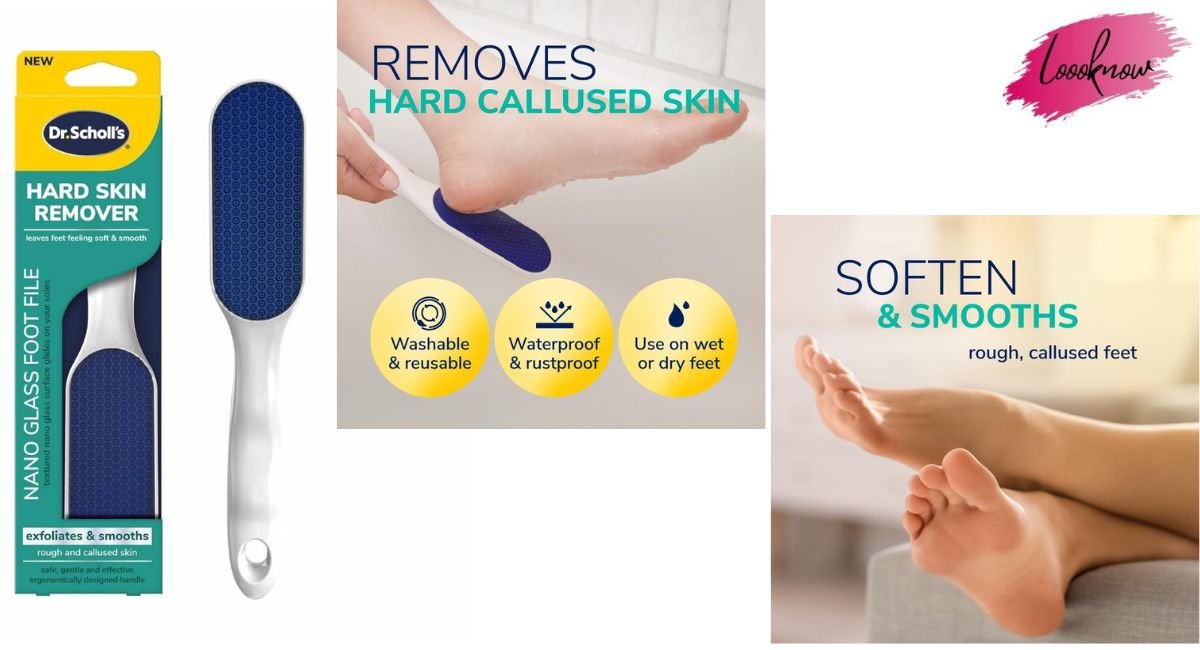
- Waterproof, rustproof, and reusable — no batteries, no replacement heads
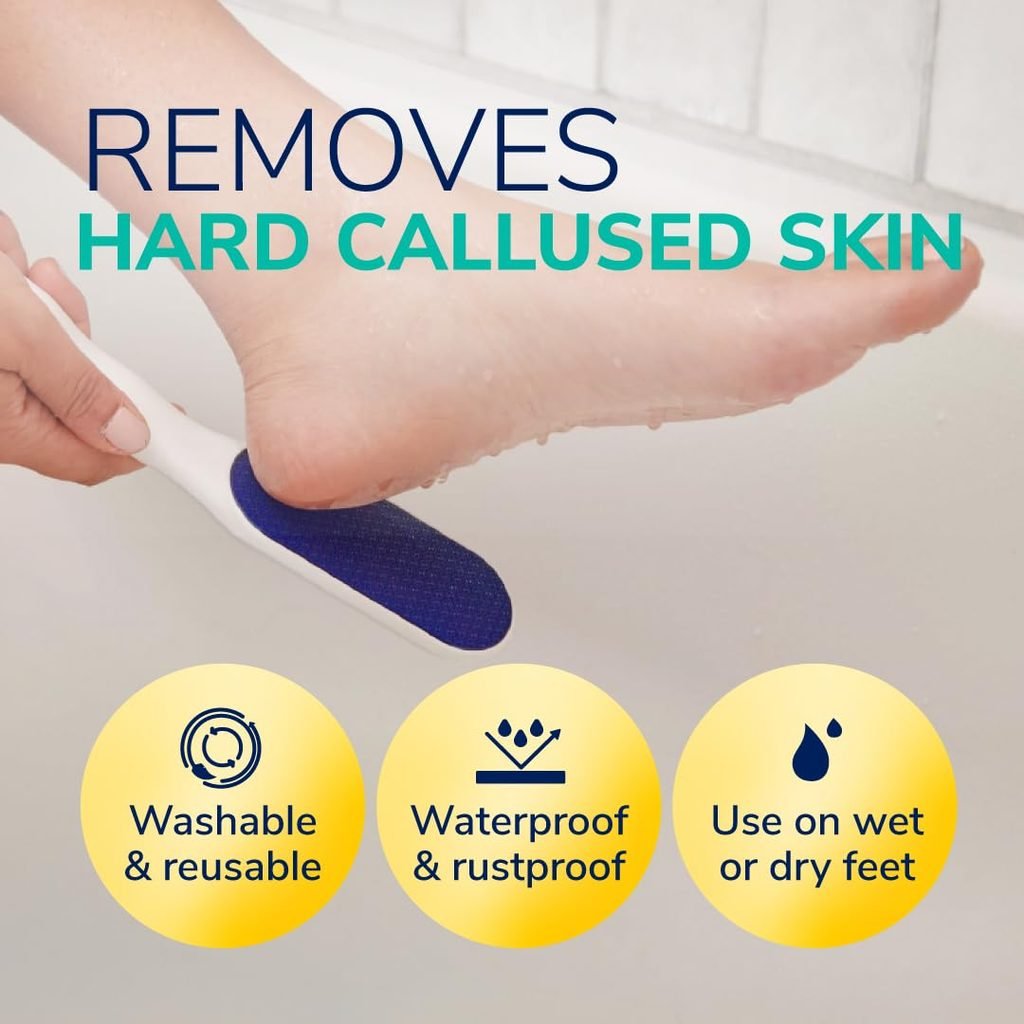
- Works on wet or dry feet, so it fits into a shower routine or a dedicated pedicure session
Where it falls short:
- Not recommended for people with diabetes without a doctor’s sign-off, per the product’s own warning label
- Manual effort required — it won’t match an electric file for speed on thick, long-standing calluses
- Some buyers report the filing surface dulls with heavy use over several months
- Filing feels most effective on mild-to-moderate calluses, not deeply cracked or very thick heel skin
Who it’s for: People with mild-to-moderate calluses and rough heels who want an affordable, hand-powered option that’s gentler than sandpaper-style files.
Who should skip it: Diabetics or anyone with poor foot sensation or circulation issues, and anyone dealing with severe, deeply cracked heels who may need a podiatrist or a more aggressive tool.
What Is the Dr. Scholl’s Nano Glass Foot File?
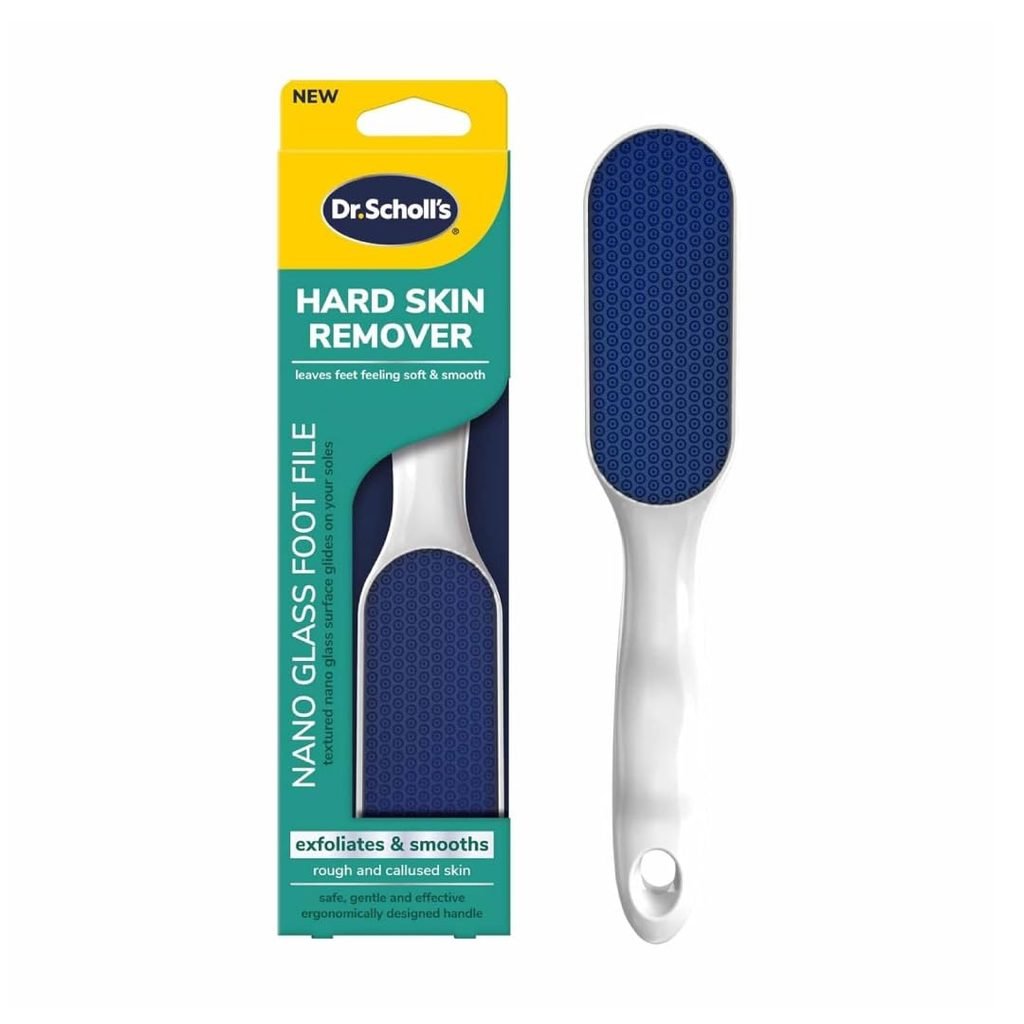
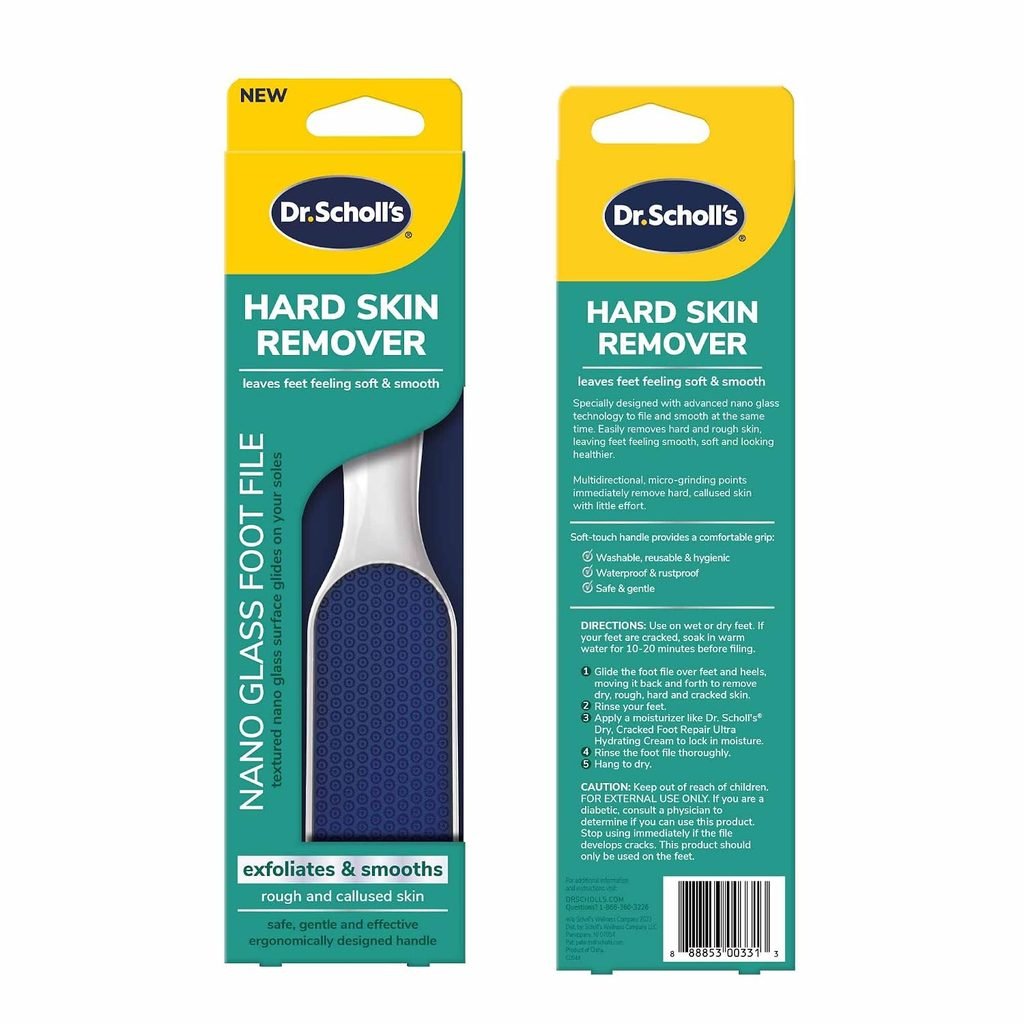
The Dr. Scholl’s Hard Skin Remover Nano Glass Foot File is a handheld, manual exfoliation tool built around a textured glass filing surface, sold under the long-running Dr. Scholl’s foot care brand (now manufactured by Scholl’s Wellness Company LLC). It’s designed to buff away dead, hardened, and callused skin on the soles and heels of the feet without the use of blades, razors, or replaceable abrasive pads.
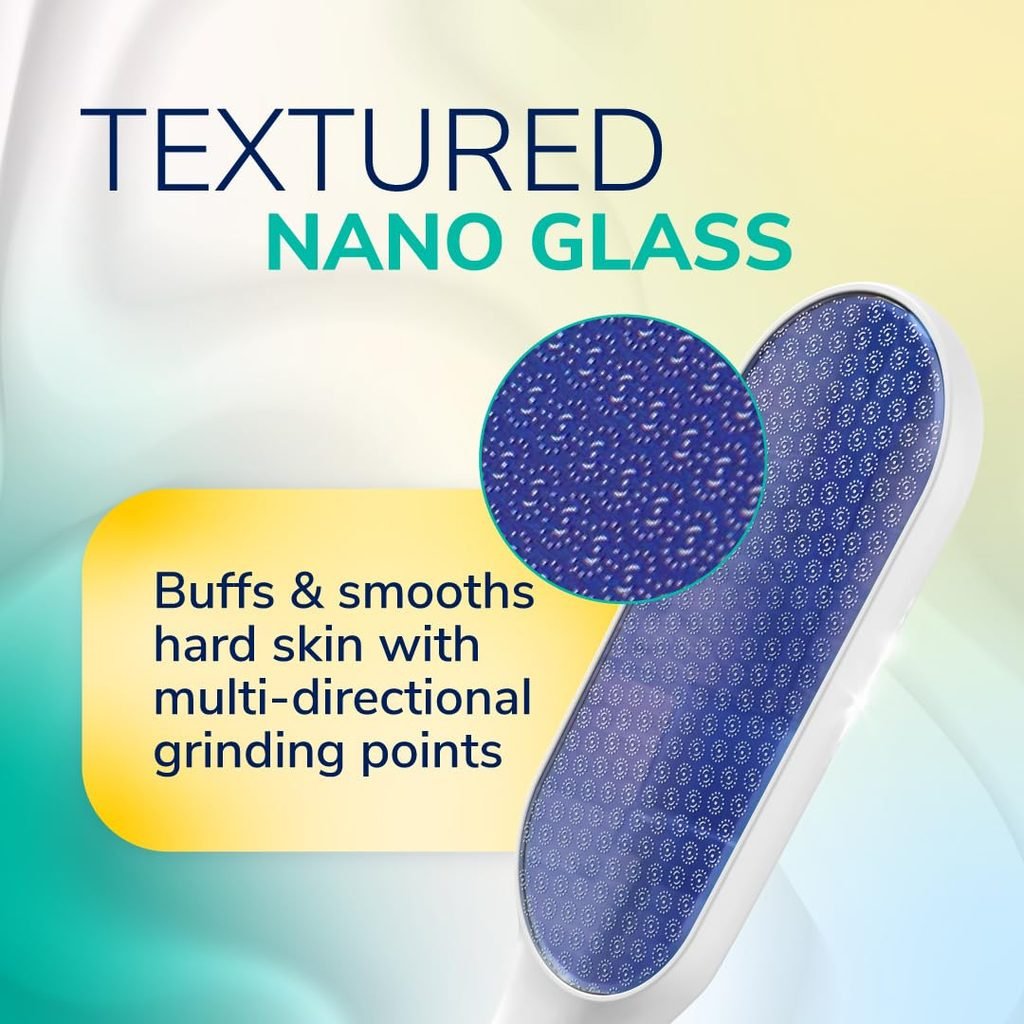
Where it differentiates itself from a plain glass file or a natural pumice stone is the “nano glass” surface — a finely textured glass finish that the manufacturer describes as having multidirectional micro-grinding points. In plain terms, the surface is engineered to file skin from more than one angle as you move the tool back and forth, rather than only exfoliating in a single sweeping direction like a flat pumice stone tends to.
It’s positioned as a mid-tier option in the foot-file market: more refined and less abrasive than a metal foot rasp or coarse pumice stone, but more affordable and lower-maintenance than a battery-powered electric callus remover like the Amope Pedi Perfect. It doesn’t require replacement rollers or charging, which is part of its appeal to buyers who want a “buy it once and keep it in the shower” tool.
The product ships as a single ergonomic-handled file, sized to be held comfortably in one hand while working on the opposite foot, and it’s marketed for use on wet or dry skin — a flexibility that some competing pumice stones and metal rasps don’t offer in the same way.

Key Features Breakdown
Based on the manufacturer’s product specifications and listings across multiple retailers, here’s what defines this file:
Nano glass filing surface. The core feature is the textured glass surface itself. Unlike a flat pumice stone, which is a naturally porous volcanic rock, this is a manufactured glass surface with a consistent, repeatable texture. That consistency is one reason people report a more predictable filing experience file after file, compared to natural stone tools that can wear unevenly.
Multidirectional micro-grinding points. The brand’s own description emphasizes that the surface grinds in more than one direction as you move the file. In practice, this is meant to reduce the number of passes needed to smooth a callus, since you’re not limited to filing effectively in only one stroke direction.
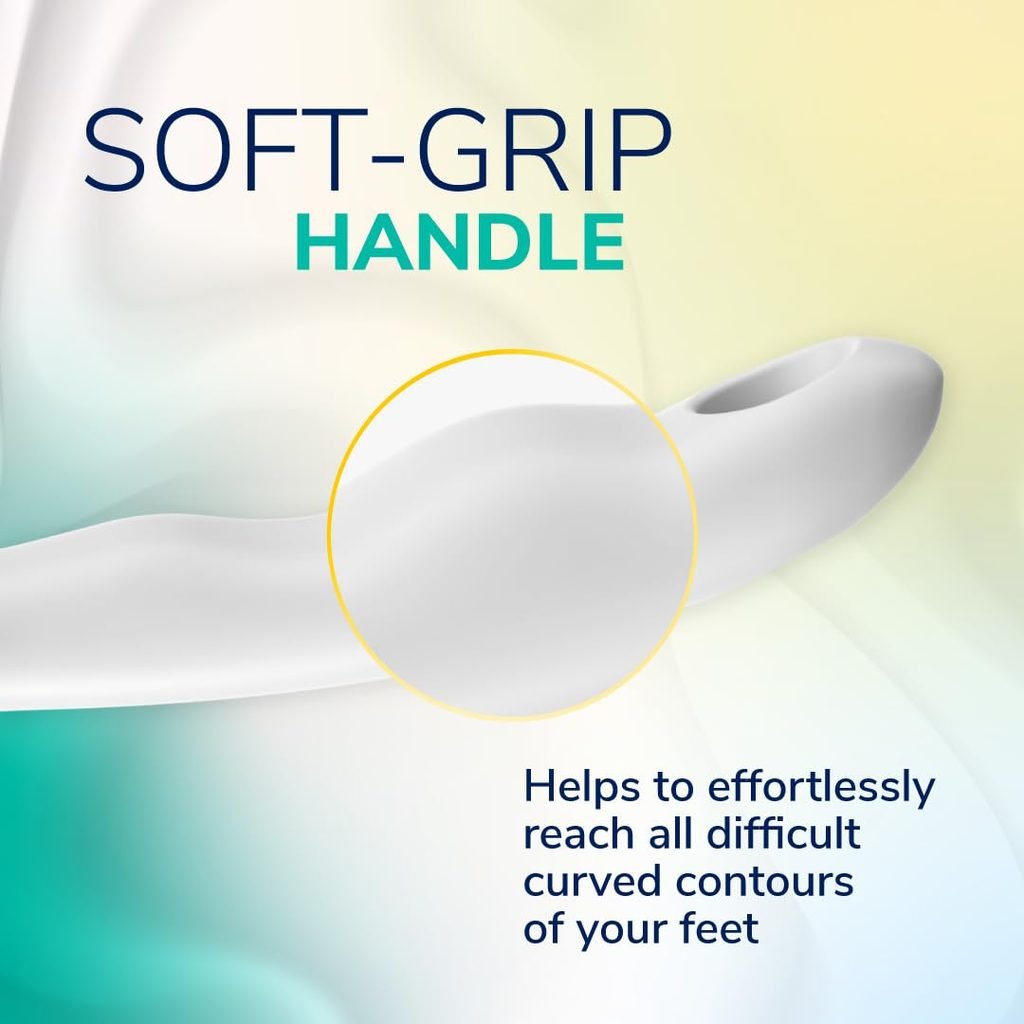
Soft-touch ergonomic handle. The handle uses a soft-touch coating over what appears to be a molded plastic core, intended to keep grip secure even when your hands or feet are wet — a reasonable design choice given the tool is meant to be used in the shower as well as on dry skin.
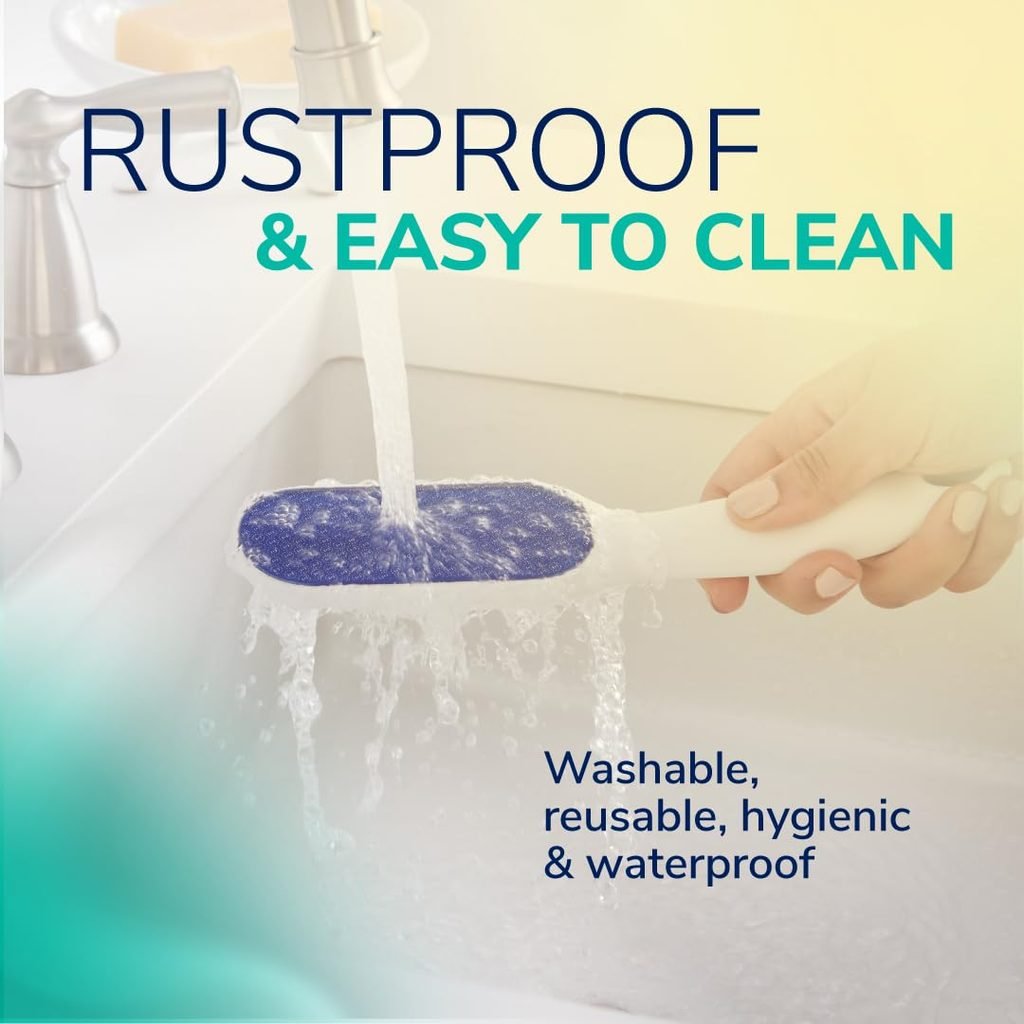
Waterproof and rustproof construction. Because the filing surface is glass rather than metal, there’s no risk of the file rusting the way a metal foot rasp can after repeated exposure to water. This also means it can be rinsed directly under a tap without concern for the mechanism degrading.
Washable and reusable design. There’s no consumable component — no replaceable rollers, no disposable pads. The entire tool is meant to be rinsed clean after each use and reused indefinitely, which is a meaningful difference from products like the Amope Pedi Perfect that require ongoing roller refill purchases.
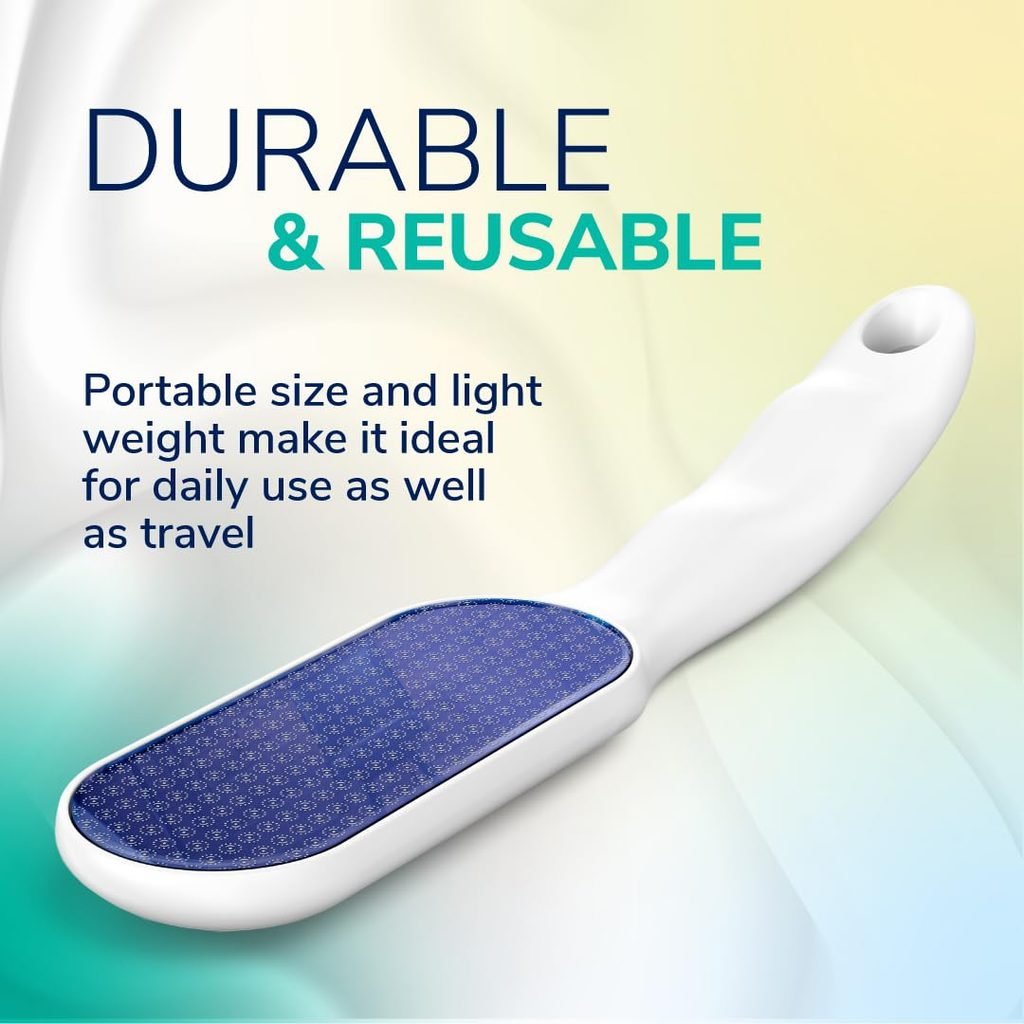
Hang hole for storage. A small hole at the top of the handle lets you hang the file to air dry, which matters for hygiene — a foot file that sits wet in a closed drawer is a much less pleasant object than one that dries fully between uses.
Compact, travel-friendly size. At roughly the size of a large comb or a small hairbrush, it’s easy to pack for travel, which is a small but real advantage over some larger electric units that need to be charged and boxed up separately.
Country of manufacture. According to retailer listings, the product is manufactured in China for Scholl’s Wellness Company LLC, which handles distribution and quality control under the licensed Dr. Scholl’s brand name in the US.
Table 1: At-a-Glance Specifications
| Attribute | Detail |
|---|---|
| Product type | Manual nano glass foot file |
| Filing surface | Textured nano glass, multidirectional grinding points |
| Handle | Soft-touch, ergonomic |
| Water compatibility | Waterproof; usable wet or dry |
| Maintenance | Rinse and air-dry; no replacement parts |
| Manufacturer | Scholl’s Wellness Company LLC |
| Country of origin | China |
| Typical price | Roughly $8–$9 for a single unit |
| Diabetic use | Not recommended without physician consultation |
Usage Experience
There’s no substitute for understanding exactly how a tool is meant to be used, so let’s walk through what a typical session with this file looks like, based on the manufacturer’s own directions and the pattern of feedback found across retailer reviews.
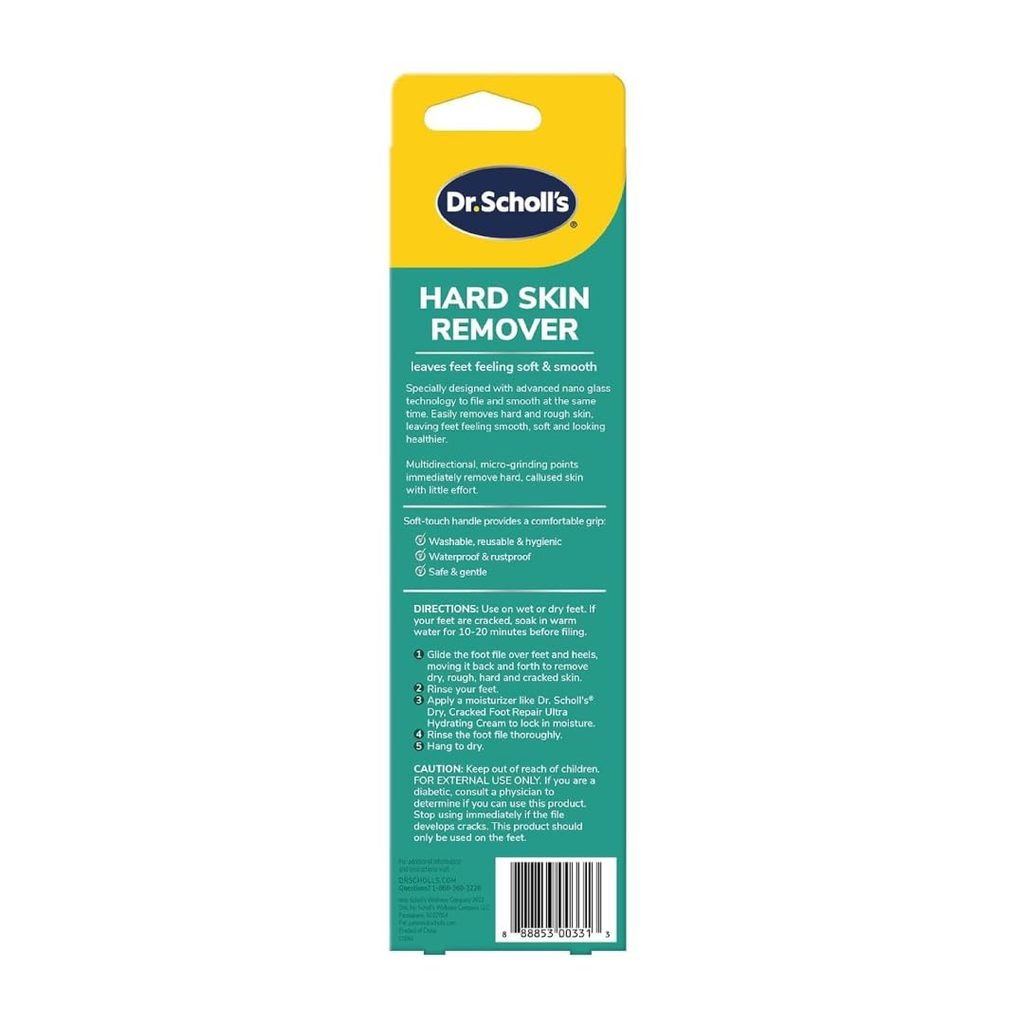
Starting condition matters. The brand’s instructions specifically note that if your heels are cracked or your calluses are thick and dry, you should soak your feet in warm water for 10 to 20 minutes before filing. This step comes up repeatedly in the directions because dry, hardened skin resists filing and is more prone to catching or tearing rather than smoothing evenly. Skipping the soak on genuinely dry, thick calluses appears to be one of the more common reasons people report a “meh” first experience with any foot file, not just this one.
Wet versus dry use. One of the more flexible aspects of this tool is that it’s designed to work on both wet and dry feet. Some buyers use it in the shower toward the end of their routine, once feet have softened slightly from the warm water; others prefer to use it dry, sitting down with a towel underneath to catch the fine skin dust that filing produces. Based on available feedback, the shower method tends to feel gentler and produces less visible debris, while the dry method is reported as slightly more effective for stubborn spots since there’s more visible feedback on progress.
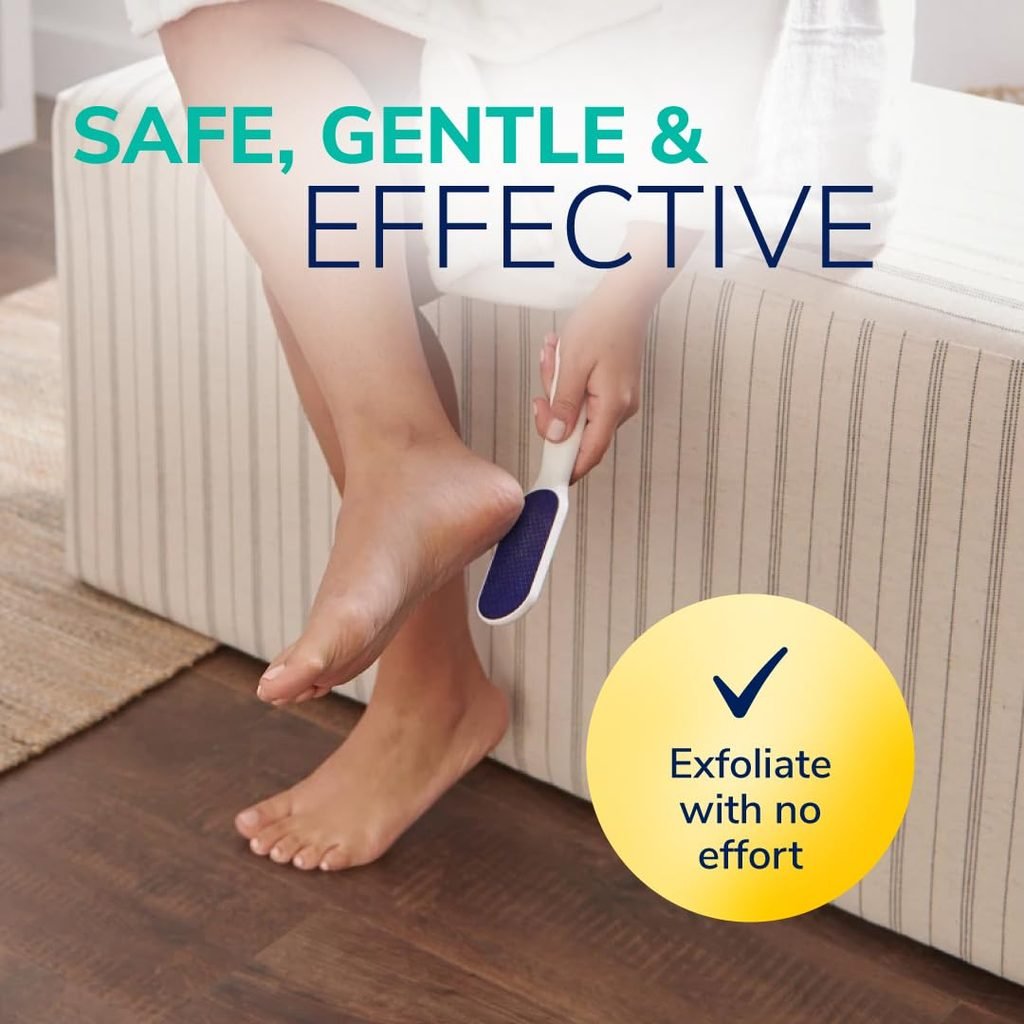
The filing motion. The instructions call for a back-and-forth gliding motion over the heels and soles rather than one-directional strokes or circular scrubbing. This lines up with the “multidirectional” design claim — the surface is meant to be effective as you move it in either direction, not just on the push or the pull.
How much pressure to use. Neither the packaging nor most user feedback suggests you need to press hard. In fact, based on available user feedback, a lighter touch with more passes tends to be recommended over pressing down firmly, since excessive pressure on a glass surface — even a textured one — risks taking off more skin than intended in one spot, which can lead to irritation or, in rare cases, minor nicks.
What “done” looks like. Most directions and reviews describe filing until the roughest, hardest patches feel noticeably smoother to the touch — not until skin is perfectly flat or shiny. Over-filing in a single session is a common complaint across the entire foot-file category (not unique to this product), so pacing yourself across a few sessions per week rather than trying to remove months of buildup in one sitting is generally the safer approach.
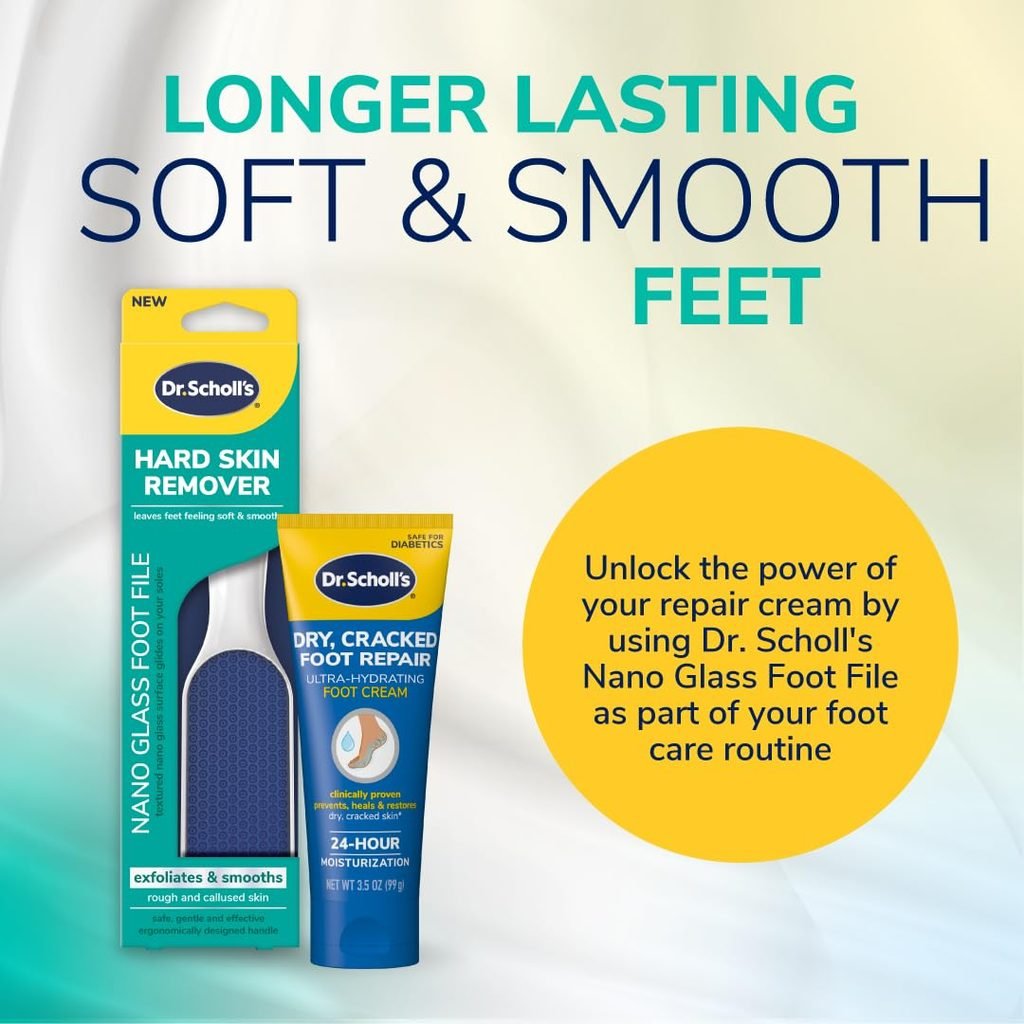
Post-filing care. The manufacturer’s directions call for rinsing your feet after filing, then applying a moisturizer — Dr. Scholl’s own cracked-foot repair cream is suggested, though any thick foot cream or heel balm should work similarly — to lock in moisture while the skin is freshly exfoliated and more receptive to absorption. Skipping this step is another common reason people report their results don’t last; exfoliation alone doesn’t address the dryness that causes calluses to reform.
Best Red Light Therapy Mask for Anti Aging in 2026?
Cleaning the tool itself. After use, the file needs a thorough rinse to clear away skin debris caught in the textured surface, then should be hung to air dry using the built-in hole. Based on available feedback, letting the file sit wet without a full rinse is one of the more common complaints tied to hygiene concerns and, over time, a duller-feeling surface.
Frequency of use. Neither the packaging nor typical usage patterns suggest daily use is necessary or advisable. Most people who report good long-term results describe using it two to three times per week, tapering off to maintenance use (once every week or two) once calluses are under control, rather than filing every day.
Longevity of the filing surface. This is one area where feedback is more mixed. Many buyers report the nano glass texture remains effective for several months of regular use, while a smaller but consistent group of reviewers note the surface feels less “grippy” after roughly six months to a year, depending on frequency of use and how thoroughly it’s rinsed and dried between sessions. Because the product is inexpensive, most reviewers treat this as a low-stakes replace-when-needed item rather than a durability dealbreaker.
Benefits
Genuinely affordable entry point. At roughly $8 for a single unit — sometimes less with Amazon’s Subscribe & Save coupons — this is one of the lowest-risk purchases in the entire foot-care category. You’re not committing to a $20–$40 electric device before knowing whether a manual file even fits your routine.
No batteries, no replacement parts, no ongoing cost. Unlike electric callus removers that need replacement roller heads (an ongoing cost that can add up over a year), this tool’s entire cost is the upfront purchase. That makes the real cost of ownership meaningfully lower over time for people who use it regularly.
Gentler profile than many traditional tools. The nano glass surface is positioned — and largely reported by users — as gentler than a metal foot rasp or a coarse pumice stone, particularly for people who’ve previously nicked themselves with a blade-style callus shaver. The absence of a blade removes a specific injury risk that some other categories of foot tools carry.
Works wet or dry. This flexibility matters more than it might seem. People who shower in the morning and people who prefer a seated, dry pedicure routine at night can both use the same tool without needing a different product for each context.
Easy to keep hygienic. Because it’s a solid glass surface with no crevices for rollers or blades, it’s straightforward to rinse clean, and the hang hole supports proper drying — both of which reduce the buildup of bacteria that can be a concern with foot tools left damp in a drawer.
Strong aggregate rating across two major retailers. With a 4.6 to 4.7-star average spanning many thousands of combined reviews on Amazon and Walmart, the consistency of the rating across two independent retail ecosystems is a reasonably strong signal that most buyers are satisfied, even if it doesn’t guarantee an individual result.
Compact and travel-ready. Its small size and lack of any charging requirement make it an easy tool to toss into a toiletry bag, something that’s simply not true of most electric alternatives.
Backed by a recognizable, long-standing brand. Dr. Scholl’s has decades of history specifically in foot care, and while brand recognition isn’t proof of performance on its own, it does mean the product benefits from established manufacturing standards and a customer service line, rather than being an anonymous import with no accountability.
Downsides & Limitations
Manual effort is required. This is a hand-powered tool — it will never match the speed of an electric spinning file on genuinely thick, long-neglected calluses. If your calluses are severe, you may find yourself filing for several minutes per foot with only moderate progress in a single session.
Not suitable for diabetics without medical guidance. The product’s own warning label states that people with diabetes should consult a physician before use. This isn’t a minor caveat — reduced sensation in the feet, which is common with diabetic neuropathy, raises the real risk of over-filing without realizing it, which can lead to skin breakdown.
Surface wear over time. As noted above, a meaningful minority of long-term users report the filing texture becomes less effective after extended use, meaning this isn’t necessarily a “buy once, use forever” tool the way its build quality might initially suggest.
Can feel abrasive if used incorrectly. Skipping the recommended soak on dry, hard skin, or pressing too firmly, can lead to a rougher and less comfortable experience than the product is capable of delivering when used as directed. This is a usage-pattern issue more than a design flaw, but it’s common enough to be worth flagging clearly.
Doesn’t address the root cause of calluses. Like virtually every product in this category, filing treats the symptom (hardened skin) rather than the underlying causes — ill-fitting shoes, prolonged standing, or dry skin conditions. Without a moisturizing routine and, where relevant, better-fitting footwear, calluses tend to return regardless of how good the filing tool is.
Fine skin dust during dry use. Filing on dry skin does produce a visible dusting of removed skin, which some people find unpleasant to clean up compared to filing in the shower where it rinses away immediately.
Single-unit packaging. Depending on the retailer, buying just one file can be less cost-efficient per unit than buying a multi-pack (Walmart, for example, lists options up to roughly $22 for multi-packs), so per-file cost varies more than the headline price suggests.
Who Should Buy This?
This tool is a solid fit for people dealing with mild-to-moderate hard skin and calluses on the feet — the kind that builds up from regular walking, standing at work, or wearing shoes without socks — rather than severe, longstanding, or medically complicated foot skin issues.
It also suits budget-conscious buyers who want to try a manual foot file before considering pricier electric alternatives. Because the entry cost is so low, it’s a reasonable first purchase for anyone who hasn’t settled on a foot-care routine yet.
People who already use a pumice stone but find it inconsistent or overly abrasive are good candidates to try this as a direct swap, since the nano glass surface is generally described as more even and controllable.
Frequent flip-flop or sandal wearers, people who go barefoot at home often, and anyone whose feet see more friction than average (runners, retail and hospitality workers who stand for long shifts) tend to be the buyers who report the most consistent, repeat use of a tool like this.
Finally, this is a good fit for anyone who wants a low-maintenance option with no batteries, no charging cables, and no recurring parts to buy — a “set it in the shower caddy and forget about restocking it” kind of product.
Who Should Avoid This?
Anyone with diabetes should not use this product without first consulting a physician, per the manufacturer’s explicit warning. Reduced foot sensation and slower wound healing associated with diabetes make manual exfoliation tools riskier without medical oversight.
People with poor circulation, peripheral neuropathy, or any other condition that affects sensation in the feet should also check with a healthcare provider first, for the same reasons.
If you’re dealing with deep heel fissures, active skin infections, open wounds, or very severe cracking that goes beyond surface callus buildup, a foot file — this one or any other — is not an appropriate treatment. That level of foot skin damage generally calls for a podiatrist’s evaluation rather than an at-home tool.
Anyone looking for a fast, low-effort solution to thick, years-old calluses may be better served by an electric callus remover, since the manual effort this tool requires can feel disproportionate to the results on very stubborn skin.
How to Use for Best Results
- Soak first if your skin is dry or cracked. Ten to twenty minutes in warm water softens hardened skin and makes filing far more effective and comfortable.
- Choose wet or dry use based on your routine, but be consistent — switching between methods session to session can make it harder to judge your actual progress.
- Use a light, even, back-and-forth motion over the heels and soles rather than pressing hard or scrubbing in only one direction.
- Stop before skin feels raw or overly smooth-shiny. A few passes across a few sessions per week beats trying to remove everything in one sitting.
- Rinse your feet immediately after filing to clear away loosened skin before it dries and flakes elsewhere.
- Apply a thick moisturizer or dedicated foot cream right after rinsing, while skin is still slightly damp, to lock in hydration.
- Rinse the file itself thoroughly to remove trapped skin debris, then hang it to air dry using the built-in hole rather than leaving it in a closed drawer.
- Repeat two to three times per week until calluses noticeably improve, then taper to a lighter maintenance schedule.
Pros & Cons
Pros
- Affordable, low-risk price point around $8
- No batteries, charging, or replacement parts required
- Nano glass surface reported as gentler than metal rasps or coarse pumice stones
- Works on wet or dry feet
- Easy to rinse clean and hang dry
- Strong 4.6–4.7 star average across Amazon and Walmart
- Compact and travel-friendly
Cons
- Manual effort needed; slower than electric alternatives on thick calluses
- Not recommended for diabetics without medical consultation
- Filing surface may dull with heavy long-term use
- Doesn’t resolve the underlying causes of calluses on its own
- Produces visible skin dust when used dry
- Best suited to mild-to-moderate cases, not severe cracking
Product Comparisons: Dr. Scholl’s Nano Glass File vs. Alternatives
Choosing between foot-care tools usually comes down to how severe your calluses are, how much manual effort you’re willing to put in, and whether you’d rather pay more upfront for speed or less upfront for a tool you’ll use by hand.
Table 2: Foot File Comparison
| Product | Type | Typical Price | Rating (approx.) | Best For |
|---|---|---|---|---|
| Dr. Scholl’s Nano Glass Foot File | Manual glass file | ~$8 (Walmart: $8.47; Amazon: ~$8, often discounted with coupons) | 4.6–4.7 stars | Mild-to-moderate calluses, budget buyers |
| Amope Pedi Perfect Electronic Foot File | Battery-powered rotating file | ~$22 (plus replacement rollers over time) | ~4.2 stars | Thick, stubborn calluses; less manual effort |
| ONYX Professional Stainless Steel Foot Rasp | Manual metal rasp | ~$8 | ~4.3 stars | Heavy-duty filing, though more abrasive feel |
| Traditional pumice stone | Natural volcanic stone | Usually under $6 | Varies widely by brand | Light, occasional touch-ups |
Where to buy it:
On Walmart, this file has consistently appeared as an “Overall pick” in its category, priced at $8.47 for a single unit, with multi-pack options running up to roughly $22.28 depending on quantity, and an aggregate rating around 4.7 stars across well over 1,300 reviews at the time of research.
On Amazon, the standard list price sits close to $7.97, though the listing frequently carries digital coupons and Subscribe & Save discounts that can bring the effective price down meaningfully for repeat buyers. Amazon’s review base is considerably larger, with ratings commonly cited in the 4.6 to 4.7-star range across many thousands of reviews, and the listing has appeared among frequently reordered items via Subscribe & Save.
Compared to the dr scholl’s foot file vs pumice stone question specifically: a pumice stone is cheaper and more “natural,” but it wears unevenly, can harbor bacteria more easily if not dried properly, and generally requires more passes to achieve a comparable result. The nano glass surface’s consistency is the main practical advantage over pumice for most buyers.
Against the Amope electronic file, the trade-off is speed versus cost and simplicity. The electric option requires charging and periodic roller replacement — an ongoing expense — while the manual nano glass file has a one-time cost and never needs anything beyond a rinse. For people managing mild calluses, the manual option tends to be the more practical long-term choice; for genuinely thick, resistant calluses, the electric file’s rotating action likely gets there faster.
Buying Guide: How to Choose a Foot Callus Remover
Assess your callus severity honestly. Mild rough patches respond well to almost any tool. Thick, deeply hardened calluses built up over years are where manual tools like this one start to feel slow, and an electric option — or a podiatrist visit — becomes more worth considering.
Decide between manual and electric based on effort tolerance. If you don’t mind spending a few extra minutes filing by hand in exchange for a lower price and less maintenance, manual tools like this nano glass file make sense. If speed matters more than upfront cost, an electric file is the better fit.
Check for medical flags before buying anything in this category. Diabetes, neuropathy, or circulation issues change the calculus entirely — consult a physician regardless of which specific tool you’re considering.
Factor in total cost of ownership, not just sticker price. A $22 electric file that needs $15 roller refills every few months costs more over a year than an $8 tool that never needs replacing, even though the electric option looks cheaper relative to a single-unit manual file price at first glance.
Consider hygiene and maintenance requirements. Tools that are easy to rinse and fully dry between uses (like a solid glass surface) tend to stay more hygienic over time than porous natural stones or devices with hard-to-clean crevices.
Read the fine print on multi-packs. If you’re buying for a household or want a backup, check per-unit pricing on multi-packs carefully — retailer bundle pricing for this product has varied from close to the single-unit price up to roughly $22 for larger packs, so per-file cost isn’t always obviously better in bulk.
Pair whatever tool you choose with a moisturizing routine. No filing tool, this one included, will produce lasting results without consistent moisturizing afterward, since exfoliation alone doesn’t fix the dryness that causes calluses to re-form.
Results After Use: What to Realistically Expect
Based on the product’s directions and the general pattern of feedback across retailers, most people report noticeably smoother-feeling heels and soles within a few sessions of consistent use, particularly when paired with a pre-filing soak and post-filing moisturizer.
Dry patches on the heels tend to show the most visible improvement early on, since these are usually the areas with the most buildup to remove. Texture improvements — skin feeling less “cracked” or catchy against socks — are commonly reported as a short-term win, often within the first one to two weeks of regular use.
Moisture retention depends heavily on whether a moisturizer is applied afterward; the filing step itself doesn’t add hydration, it only removes the barrier of hardened skin that was blocking moisturizer absorption. Skipping that step is the most common reason people report their results “don’t last.”
Brightness or visible skin tone improvement on the feet is a secondary effect reported by some users, likely tied to the removal of built-up dead skin rather than any specific brightening ingredient, since the tool itself contains no topical formulation.
Odor control isn’t a primary function of this product, and the manufacturer doesn’t market it as one, but some users report a secondary benefit here, plausibly because removing thick, moisture-trapping dead skin can reduce the conditions that contribute to foot odor. This should be treated as an incidental, unverified observation rather than a core benefit.
Frequently Asked Questions
Is the Dr. Scholl’s nano glass foot file actually better than a pumice stone? For most people with mild-to-moderate calluses, yes — its consistent manufactured texture tends to file more evenly than a natural pumice stone, which wears unpredictably. A pumice stone remains a reasonable, cheaper option for very light, occasional touch-ups.
Can diabetics use this foot file? The manufacturer’s warning specifically advises diabetics to consult a physician before use, due to the risk of reduced foot sensation masking over-filing. This should be treated as a firm caution, not a suggestion.
Does it work on wet feet in the shower? Yes, the product is designed and marketed for use on both wet and dry feet, making it usable as part of a shower routine.
How often should I use a nano glass foot file? Two to three times per week is a commonly reported starting frequency, tapering to occasional maintenance use once calluses improve.
Will it remove deep heel cracks? It’s designed for hardened, callused skin rather than deep fissures. Severe cracking is generally better addressed with a podiatrist’s guidance alongside intensive moisturizing treatments.
How long does the filing surface last? Reports vary, with many users getting several months to about a year of effective use, though some note the texture softening with heavy use over time.
Is it painful to use? Used as directed — with a light touch and proper soaking beforehand — most feedback describes the sensation as mild and non-painful, distinct from the sharper feel of blade-style callus shavers.
Do I need to soak my feet first? Only if your skin is notably dry or cracked; the manufacturer specifically recommends a 10–20 minute warm water soak in that case, though it isn’t strictly required for lighter maintenance use.
Can I use it on my hands or other body parts? The product’s own warnings state it should only be used on the feet.
Is it worth buying over an electric foot file? If you’re managing mild-to-moderate calluses and prefer a lower one-time cost with no ongoing parts to replace, yes. If you have thick, resistant calluses and want faster results, an electric file may be worth the higher upfront and ongoing cost.
Where is it cheaper — Walmart or Amazon? Pricing fluctuates, but they’re generally close, with Amazon often offering the lowest effective price through Subscribe & Save discounts and digital coupons, while Walmart’s listed price has held steady around $8.47 for a single unit.
Does it rust or wear out from water exposure? No — because the filing surface is glass rather than metal, it’s designed to be waterproof and rustproof, unlike some metal foot rasps.
What’s the difference between “nano glass” and a regular glass file? The nano glass label refers to the finer, multidirectional micro-texture on the surface, which the brand positions as more effective and controllable than a standard flat glass file.
Do I need to moisturize after using it? Yes — filing alone removes hardened skin but doesn’t add hydration, so applying a moisturizer immediately afterward is important for lasting smoothness.
Is this good for people who stand all day at work? Based on the pattern of buyer feedback, people who spend long hours on their feet — retail and hospitality workers, for example — are among the more frequent repeat purchasers, since their calluses tend to build up faster.
Final Verdict
For roughly $8, the Dr. Scholl’s Hard Skin Remover Nano Glass Foot File is a reasonable, low-commitment way to manage mild-to-moderate calluses and rough heels, backed by a consistently strong 4.6–4.7 star average across two major retailers and a manufacturer with decades of specific foot-care experience. It won’t outperform an electric file on severe, longstanding calluses, and it isn’t appropriate for diabetics without medical guidance, but within its intended use case, it does what it claims: smooth hardened skin using a gentler, more consistent surface than a traditional pumice stone.
The honest takeaway from this dr scholl’s nano glass foot file review is that it’s a solid “default choice” rather than a dramatic upgrade — it competes on price, low maintenance, and consistency rather than raw power. If your feet see moderate wear from daily life and you want an affordable tool that will sit in the shower and just work without batteries or replacement parts, it’s a sensible pick. If you’re dealing with genuinely severe, cracked, or medically complicated foot skin, this tool — or any manual file — isn’t a substitute for professional care.

I’m an SEO content writer and product researcher with experience creating well-researched product reviews, comparisons, buying guides, affiliate articles, and helpful website content. At LoookNow, I focus on researching products, comparing features and value, and creating clear, engaging, search-optimized content to help readers make more informed purchasing decisions. My goal is to provide useful, trustworthy, and easy-to-understand information that saves readers time and reduces confusion when choosing products online.