
Heads up: If you buy through links in this review, I may earn a small commission at no extra cost to you. This doesn’t affect my ratings.
Introduction
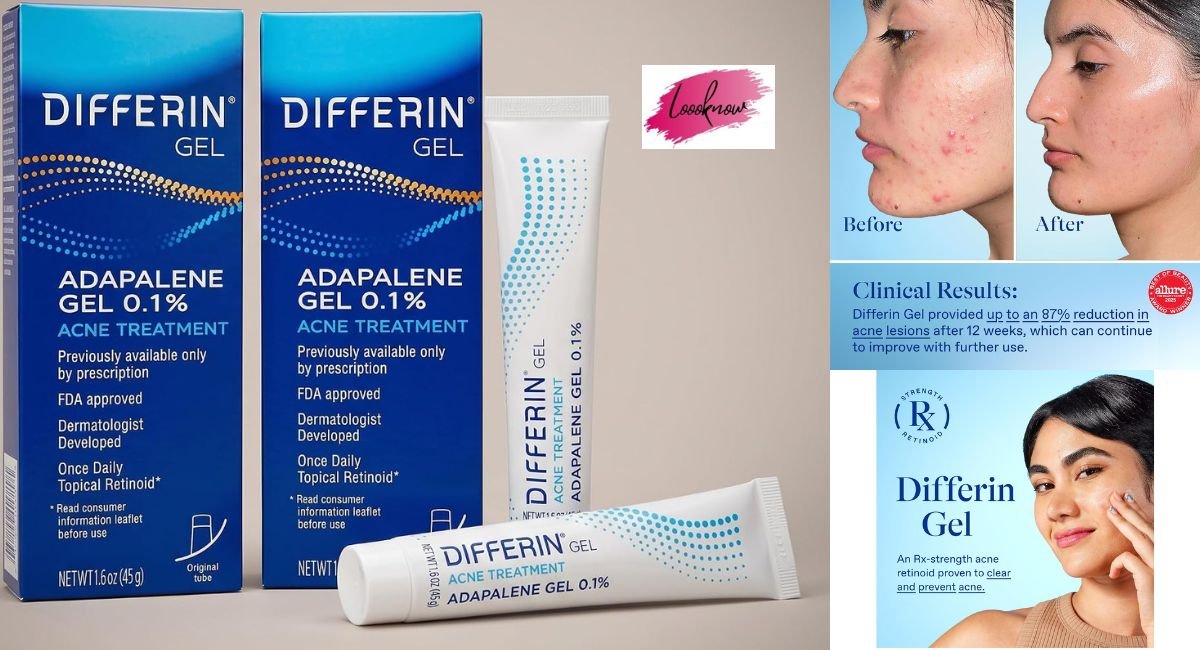
Most acne products work fast and fade fast. They dry out a pimple, calm the redness for a day or two, and leave you right back where you started when the next breakout arrives. Differin Acne Treatment Gel takes the opposite approach. It works slowly, but it targets the reason breakouts keep coming back.
The secret is Differin adapalene 0.1%, a retinoid that was once available only through a doctor’s prescription. Since it moved to over-the-counter status in the United States, it has become one of the most recommended acne ingredients online, and Differin is the name most shoppers see first.
That popularity raises a fair question. Is the hype justified, or is this just another product riding a trend?
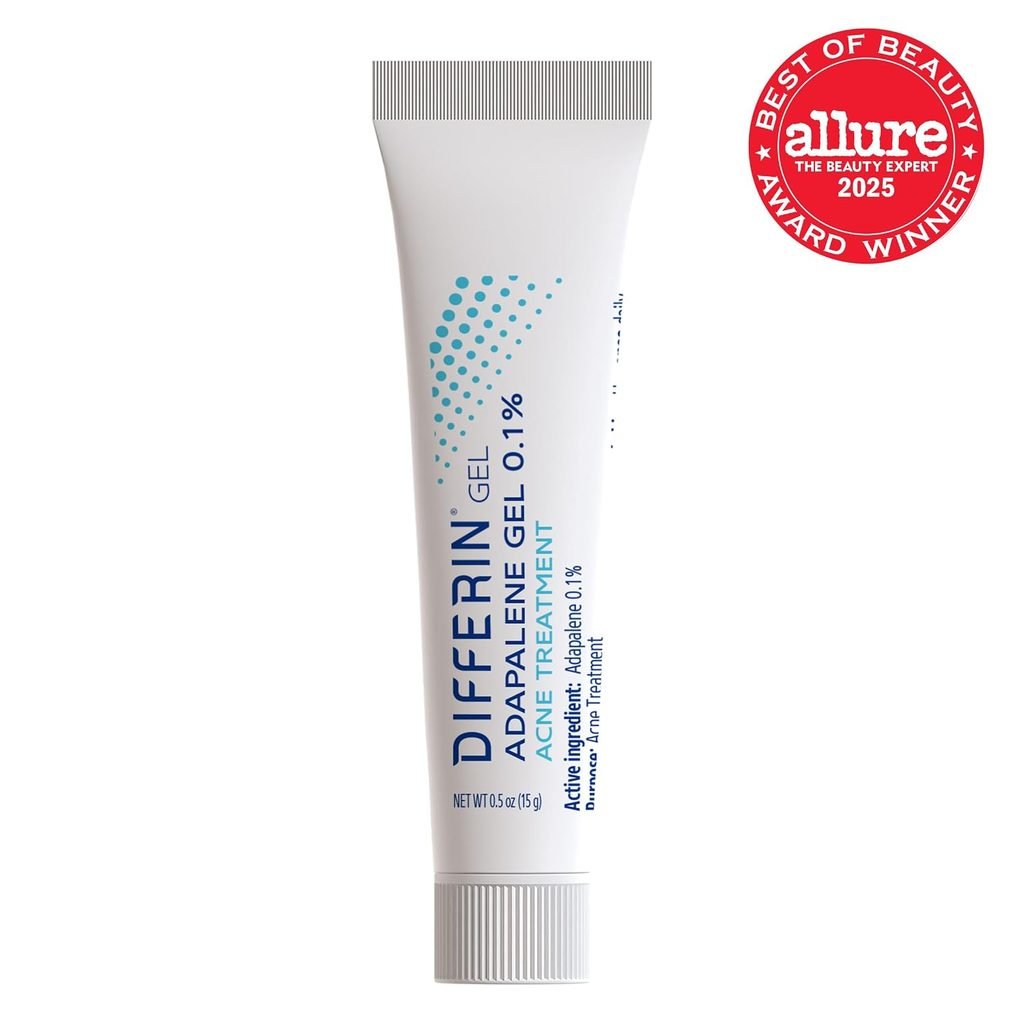
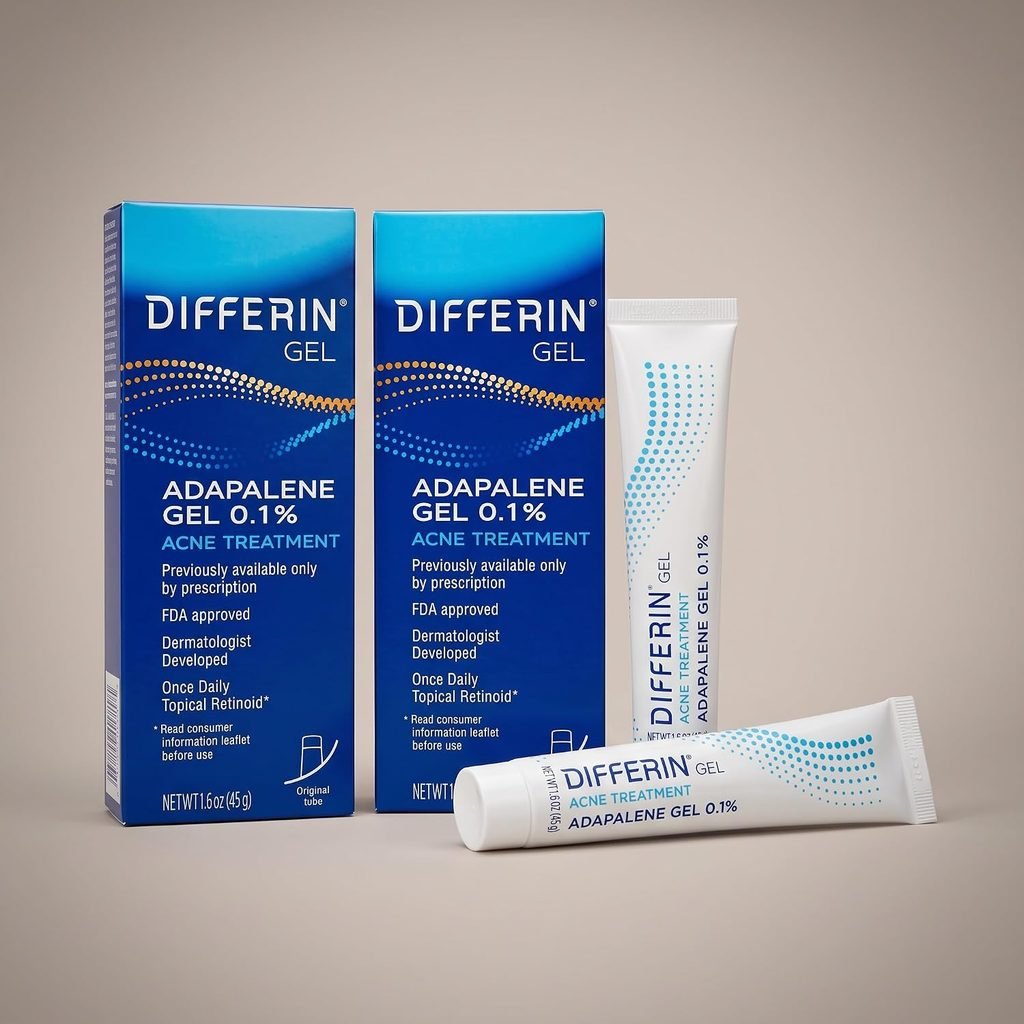
This differin adapalene gel review for acne is built to answer that honestly. It focuses on the 60 day supply, the 15 gram tube you’ll find on Amazon and Walmart. Everything here is based on the product specifications, the labeling, available user feedback, and comparisons with competing products. It is not based on first-hand personal testing, and I’ll be clear about that whenever it matters.
What this review covers
You’ll find a clear breakdown of:
- How adapalene works and what the clinical evidence generally shows
- What the texture feels like and how it fits into a daily routine
- What most people report during the first 12 weeks, including the dry, flaky phase that catches many users off guard
- The real downsides, not just the highlights
- How Differin stacks up against retinol, tretinoin, and benzoyl peroxide
- Who should buy it, who should skip it, and where to get it
The question most shoppers are really asking
If you’re searching is Differin gel 0.1% adapalene worth it, you probably want a straight answer without a sales pitch. Here it is: for mild to moderate acne, it’s a well-studied and reasonably priced option. A pea-sized amount covers your whole face, so a small tube lasts about two months.
The catch is time. Full results take around 12 weeks, and many people see their skin look worse before it looks better. If you want a pimple gone by tomorrow, this isn’t the right tool. If you’re willing to stay consistent, it may be one of the more effective things you can buy without a prescription.
A quick note on expectations
Acne is a medical condition, and skin responds differently from person to person. Adapalene can cause dryness, redness, and sun sensitivity, and it isn’t suitable for everyone, including people who are pregnant. If your acne is painful, scarring, or severe, a dermatologist can offer options that over-the-counter products can’t match.
With that in mind, let’s start with a quick verdict, then move into the details so you can decide whether Differin deserves a spot in your routine.
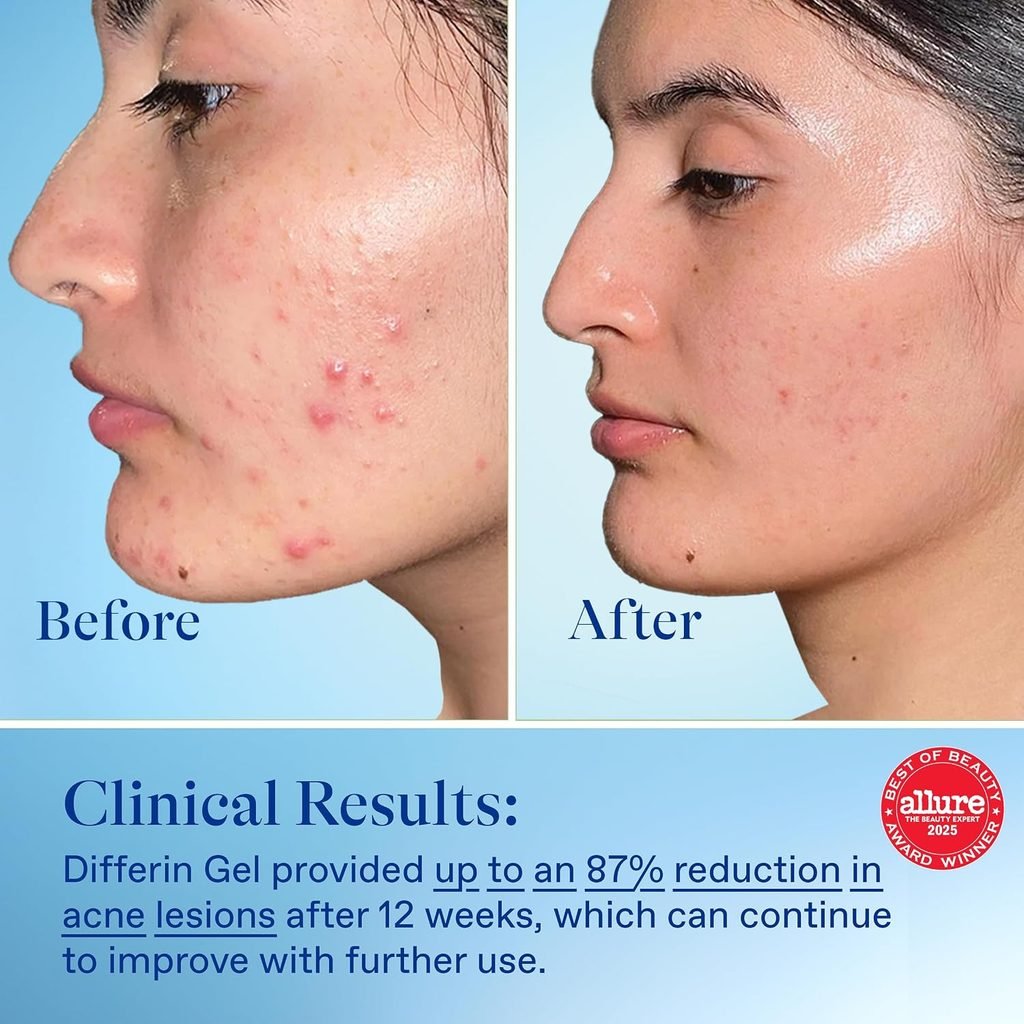
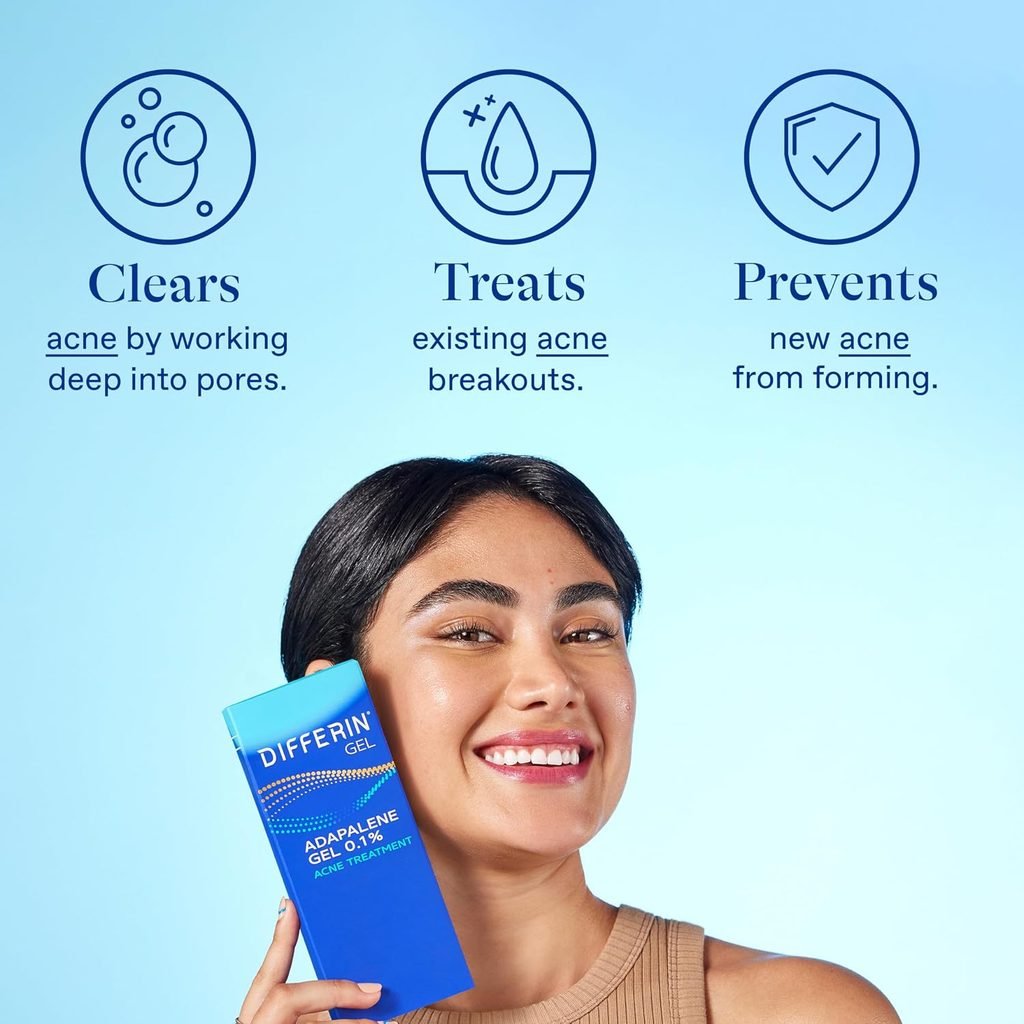
👉 Check Price on Amazon “See how we review products”
Quick Verdict
Overall rating: 4.2 out of 5 for mild to moderate acne and clogged pores.
Differin Gel is one of the few over-the-counter acne products built around a clinically studied retinoid. Adapalene works on the cause of many breakouts, which is clogged pores and abnormal skin cell turnover, rather than just drying out the surface.
What it does well:
- Contains 0.1% adapalene, the same strength long sold by prescription
- Targets existing breakouts and helps prevent new ones
- Lightweight Differin gel texture that is generally easy to layer under moisturizer
- A tube that lasts a long time because you only need a pea-sized amount
- Marketed for acne-prone and sensitive skin
Where it falls short:
- Results take about 12 weeks, and many people see a rough patch first
- Dryness, redness, and peeling are common early on
- Needs daily sunscreen
- Not suited to pregnancy or very reactive skin
- Won’t do much for deep cystic acne
Bottom line: If you have mild to moderate acne and can commit to a few months of steady use, Differin Gel is a sensible first retinoid. If you want fast spot-treatment results, this isn’t that product. You can check current pricing on Amazon in the buying section at the end of this review.
What Is Differin Acne Treatment Gel?
Differin Acne Treatment Gel is an over-the-counter topical retinoid containing 0.1% adapalene, used to treat and prevent acne breakouts. It comes as a clear Differin gel and is applied to clean, dry skin once a day.
Adapalene belongs to the retinoid family, which is derived from vitamin A. Unlike many acne products that simply dry the skin or kill surface bacteria, retinoids change how skin cells behave inside the pore.
How adapalene differs from other acne ingredients
Think of a clogged pore like a traffic jam. Dead skin cells and oil pile up inside the pore opening, and bacteria thrive in that trapped environment. Benzoyl peroxide and salicylic acid mostly deal with the jam after it forms. Adapalene helps keep traffic moving in the first place by normalizing how skin cells shed.
What the “60 Day Supply” means
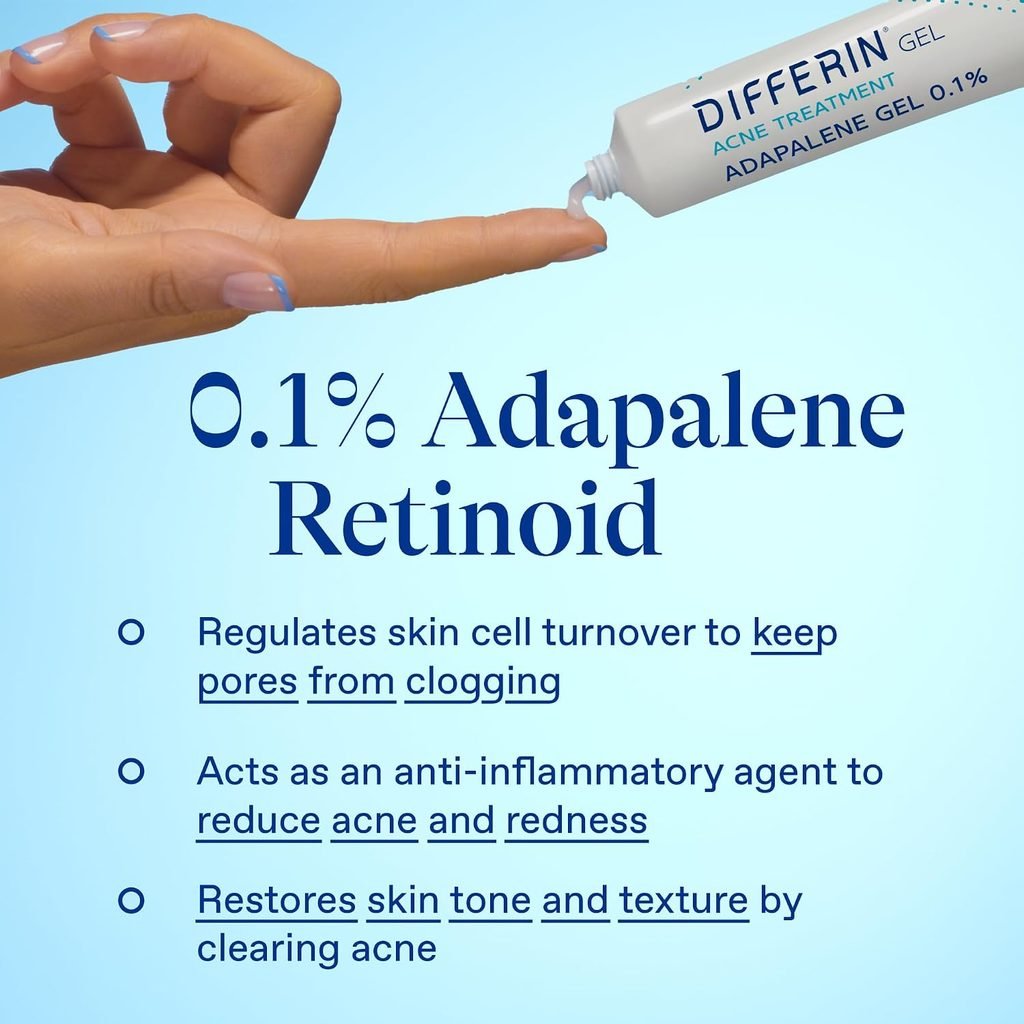
The listing describes the 15 gram tube as a 60 day supply. That estimate assumes you apply a pea-sized amount to the whole face once daily. Your actual timeline depends on how much you use and how much skin you treat. Using more than needed won’t speed up results and will likely raise irritation.
Where it sits in the market
Differin is made by Galderma, a dermatology-focused company, and it was among the first adapalene products to reach drugstore shelves. Its main competitors are generic adapalene gels, retinol serums, and prescription options like tretinoin. Its biggest selling point is the combination of a proven active ingredient and wide availability.
Key Features Breakdown
Here’s a closer look at the features that matter for an Differin acne treatment.
0.1% Adapalene
This is the headline feature. The 0.1% strength is the standard concentration for the over-the-counter Differin gel. Per the product labeling, it’s intended for acne on the face, and some people also use it on other areas as directed by a doctor.
Adapalene is considered a third-generation retinoid. It’s more targeted and often better tolerated than some older retinoids, although “better tolerated” doesn’t mean irritation-free.
Treats and prevents breakouts
The labeling positions the Differin gel as both a treatment and a preventive. Based on how retinoids work, that makes sense. Existing pimples may improve over time, and the process that creates new clogged pores is slowed.
This is also why results are gradual. Preventing future breakouts takes longer than drying out a current one.
Gentle formula for sensitive, acne-prone skin
Differin markets this Differin gel as gentle for acne-prone, sensitive skin. That’s a relative claim. Compared with many acne treatments, the formula is simple and free of added fragrance. But adapalene itself can still irritate skin, especially in the first few weeks.
Gel texture
A clear, water-based Differin Differin gel is a practical choice for oily and combination skin. It doesn’t leave a heavy film and generally layers well with moisturizer and sunscreen. More on this in the sensory section below.
15 gram tube and long-lasting value
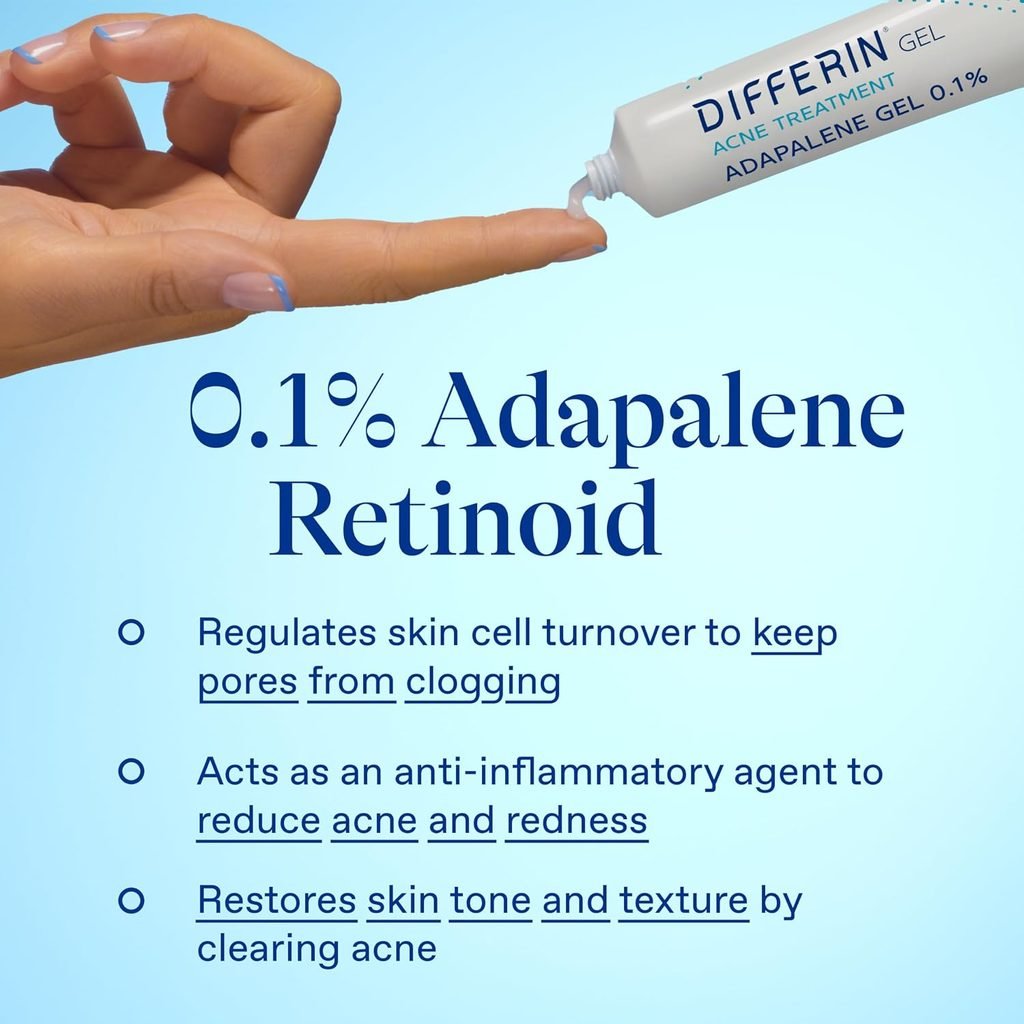
A pea-sized amount covers the entire face, which is why a small tube can last about two months. For anyone comparing cost per week of use, this is a real advantage over products you apply generously.
Once-daily routine
The label directs use once daily, typically in the evening. A simple routine matters because the biggest reason people fail with retinoids is inconsistency, not the product itself.
Dermatologist-developed brand
Galderma is a well-known dermatology company, and that background gives the product some credibility. Still, a brand name isn’t proof the gel will work for you. The clinical evidence for adapalene itself carries more weight, and we’ll cover that next.
Quick specs at a glance
| Feature | Detail |
|---|---|
| Active ingredient | Adapalene 0.1% |
| Type | Topical retinoid gel |
| Use | Acne treatment and prevention |
| Size | 15 g tube |
| Typical use | Once daily, pea-sized amount |
| Skin focus | Acne-prone, including sensitive |
| Estimated supply | About 60 days |
Ingredient Profile & Scientific Evidence
The active ingredient: adapalene
Adapalene binds to specific retinoic acid receptors in skin cells. In plain language, it tells skin cells to mature and shed in a more normal way. That reduces the buildup that clogs pores. It also has anti-inflammatory properties, which helps explain why red, swollen pimples often calm down over time.
What the research generally shows
Differin Adapalene has been studied for decades. Clinical trials have generally found that Differin adapalene gel reduces both inflamed pimples and non-inflamed blackheads and whiteheads compared with a placebo gel. Improvement is usually measured over about 12 weeks, which matches the timeline on the product label.
The FDA approved adapalene 0.1% for over-the-counter use in 2016, after earlier use as a prescription treatment. That history gives it a longer track record than many newer acne ingredients.
A fair caveat: study participants tend to follow instructions closely. Real-world results can differ if someone skips days or stops after a few weeks.
Inactive ingredients
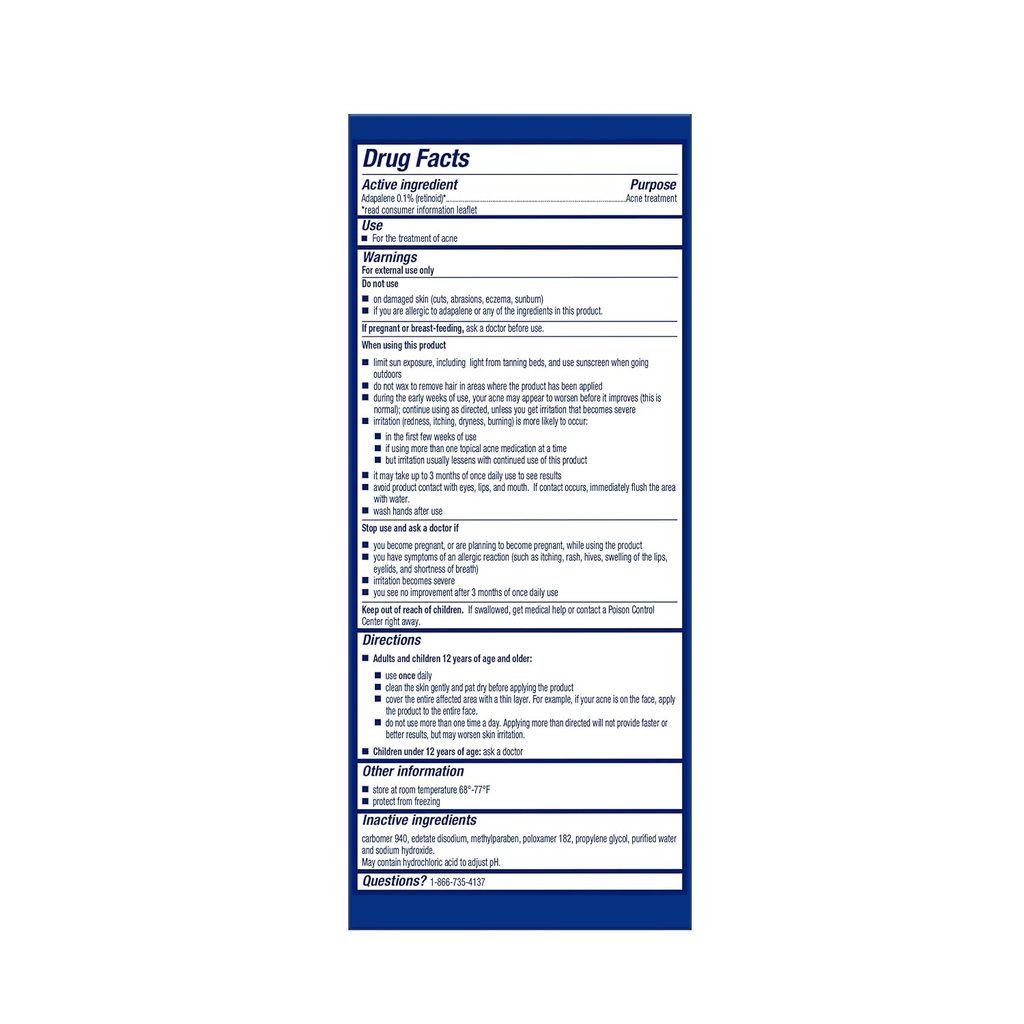
Based on the labeling, the gel base includes ingredients such as carbomer, poloxamer, propylene glycol, and purified water, plus a preservative system and pH adjusters. Always check the current label on your tube, because formulas can change.
Two things worth noting:
- Propylene glycol is a common humectant. It’s fine for most people but can bother a small number with sensitivities.
- Preservatives like methylparaben are standard in water-based gels, though some people prefer to avoid them.
What isn’t in it
The formula is generally described as free of added fragrance and dyes. That’s helpful for sensitive skin, although “sensitive” is not the same as “won’t react.”
Safety information worth knowing
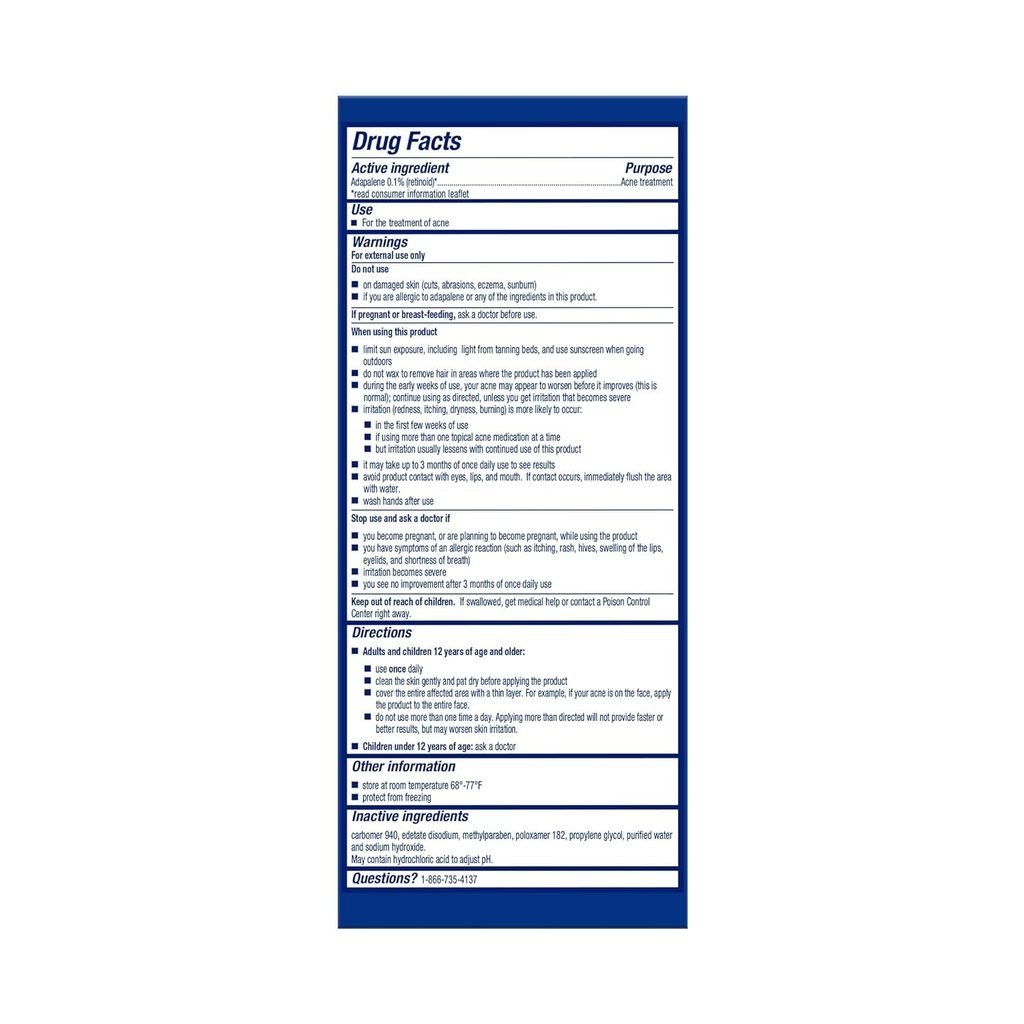
- The label advises people who are pregnant or breastfeeding to ask a doctor before use.
- Avoid applying to cuts, sunburned, or eczema-affected skin.
- Keep away from eyes, lips, and mucous membranes.
- Daily sunscreen is strongly advised, because retinoids can make skin more sun-sensitive.
If any of these apply to you, check with a pharmacist or dermatologist first.
Texture, Absorption & Sensory Experience
Texture matters more than people expect. If a product feels bad, you stop using it, and with retinoids, stopping early means you never see results.
Consistency
Differin Gel is a clear, lightweight gel. Based on the product description and user feedback, it spreads easily and doesn’t feel greasy or thick. A pea-sized amount goes surprisingly far across the face.
Absorption
Users generally report that the gel absorbs fairly quickly into the skin and leaves a light, slightly tacky feeling for a short time. It’s usually described as comfortable under moisturizer once it dries.
Applying to fully dry skin matters. Damp skin absorbs more product and tends to increase irritation. Many people wait 10 to 20 minutes after washing before applying.
Scent
The gel is generally described as having little to no noticeable scent. That’s a plus for anyone who dislikes fragranced skincare.
The tingle factor
A mild tingling or warm sensation shortly after application is commonly mentioned in user feedback, especially in the first couple of weeks. A light tingle can be normal. Strong burning or stinging that lingers is a sign to scale back and consider asking a professional.
Layering with other products
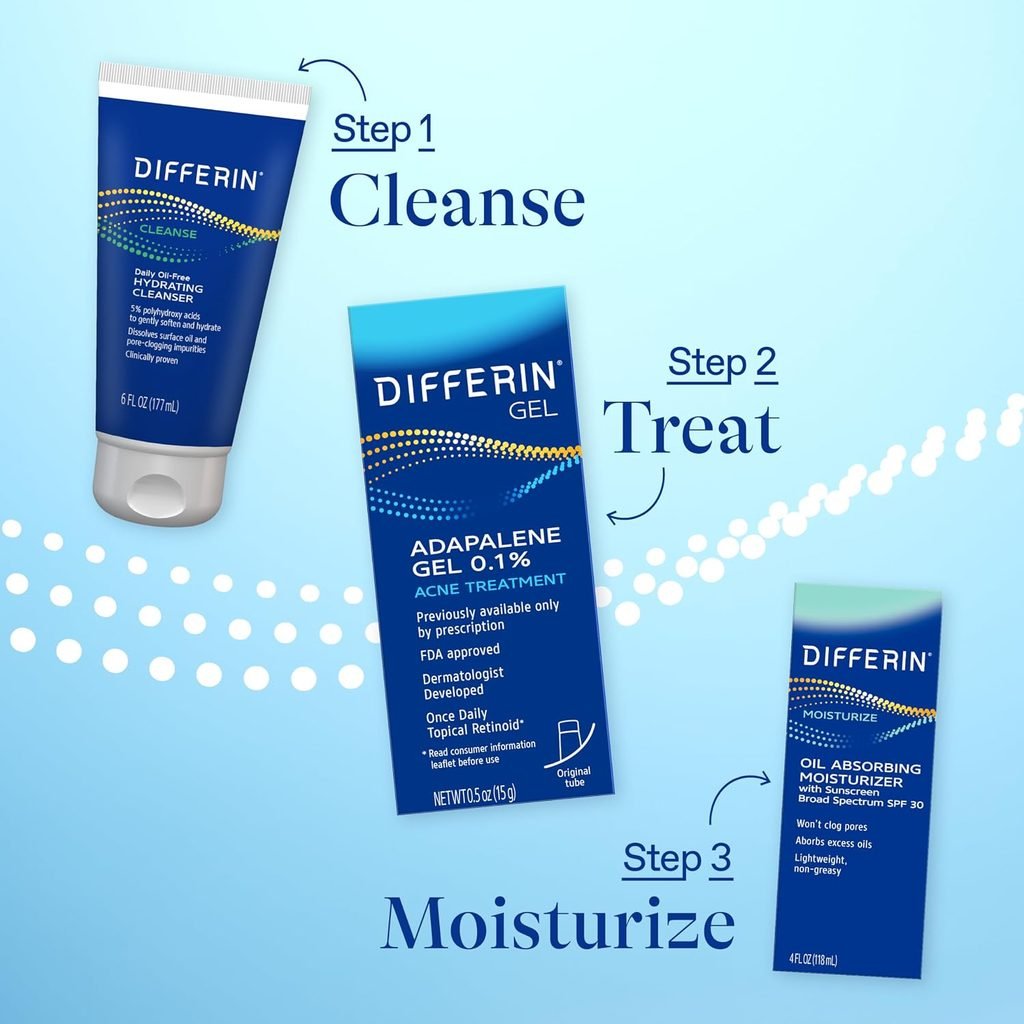
The gel texture tends to work well in a simple routine:
- Gentle cleanser
- Wait for skin to dry
- Pea-sized amount of Differin
- Fragrance-free moisturizer
- Sunscreen the next morning
Mixing it with strong exfoliating acids or high-percentage benzoyl peroxide in the same session often increases dryness. Many people alternate or separate products by time of day.
Who may find the texture less ideal
People with very dry skin sometimes find the gel base less comfortable than a cream-based retinoid. If you already struggle with tightness, a richer moisturizer or the “sandwich method” (moisturizer, then gel, then moisturizer) can help.
Usage Experience
Since this review draws on specs, labeling, and reported user experience rather than my own testing, this section describes the typical pattern people report with adapalene. Your experience may differ.
Weeks 1 to 2: Getting started
Most users start with a pea-sized amount every other night or every night, depending on skin tolerance. Early on, many report minimal change. Some feel a mild tingle. Skin may look slightly drier than usual.
A common recommendation is to ease in. Starting two or three nights a week and building up reduces the chance of a rough adjustment.
Weeks 2 to 6: The adjustment period
This is where most people struggle. User feedback frequently describes:
- Dryness and flaking, especially around the nose and mouth
- Mild redness
- Occasional stinging
- A temporary flare-up of breakouts, sometimes called “purging”
Purging happens because adapalene speeds up cell turnover, pushing existing clogged pores to the surface. It’s often described as lasting about two to six weeks, and it tends to appear in areas where you usually break out.
Tip: If new pimples appear in places you don’t normally get them, or irritation is severe, that may point to irritation rather than purging. Reducing frequency or pausing is reasonable.
Weeks 6 to 12: Turning a corner
Users commonly report that irritation settles as the skin adapts. Active breakouts often begin to decrease, and blackheads and whiteheads may look smaller. Skin texture may start to feel smoother.
Progress is rarely a straight line. Some weeks look better than others.
Week 12 and beyond
The label points to about 12 weeks for full results, and clinical studies generally measure outcomes around that mark. Many people continue using adapalene long term because stopping can allow clogged pores to return.
Dark marks and scarring
Post-inflammatory hyperpigmentation, the flat dark spots left after pimples, tends to fade slowly. Retinoids may help speed that up over months, but sun protection is essential to prevent marks from darkening.
Deep, pitted acne scars are a different matter. Adapalene is not designed to repair those, and a dermatologist can discuss other options.
Daily routine realities
Practical points that come up repeatedly:
- Use at night, since light can degrade some retinoids and skin is more sun-sensitive
- Apply sunscreen every morning, even on cloudy days
- Moisturize consistently
- Skip application if skin is raw or peeling heavily
- Be patient
Common mistakes
- Using too much. More gel doesn’t mean faster results.
- Applying to wet skin. This tends to increase irritation.
- Quitting at week four. The adjustment period is often when people give up, right before things improve.
- Skipping sunscreen. This is the most avoidable mistake.
- Layering too many actives. Retinoid plus strong acids plus benzoyl peroxide can overwhelm skin.
A realistic expectation
Based on available feedback, people with mild to moderate acne often report meaningful improvement over a few months. People with severe or cystic acne often need prescription treatment. Differin can be part of that plan, but it’s rarely the whole answer.
Benefits
Treats the cause of many breakouts
Adapalene addresses clogged pores at the source by normalizing skin cell turnover. That’s different from products that only dry out surface oil.
Works on both pimples and clogged pores
Clinical evidence generally supports improvement in both inflamed pimples (red bumps) and non-inflamed lesions (blackheads and whiteheads). Few single over-the-counter products can claim both.
Helps prevent new breakouts
Because it works on how pores form, regular use may reduce the number of new breakouts over time. That preventive effect is a big reason dermatologists often recommend retinoids as a foundation for acne care.
Over-the-counter access
You don’t need an appointment or prescription. For many people, that removes cost and access barriers.
Strong value per tube
A pea-sized amount covers the whole face, so a small tube lasts about two months at the intended use rate. For the price of many single-use treatments, that’s competitive.
Can support smoother skin texture
Many people report that rough texture and clogged pores improve with consistent retinoid use. This is a secondary benefit rather than the main purpose.
May help fade post-acne marks over time
Retinoids can support gradual fading of dark spots left by breakouts. The effect is slow, and sunscreen is necessary to avoid undoing progress.
Easy to fit into a routine
One application per day, a lightweight gel, and a short routine make it manageable. The simpler the plan, the more likely you are to stick with it.
Backed by a long track record
Adapalene has been used and studied for many years. That history gives you more safety and efficacy information than you’d get with newer trend-driven ingredients.
Downsides & Limitations
No product suits everyone, and retinoids come with real trade-offs.
Slow results
The 12 week timeline frustrates many people. If you want a pimple gone by Friday, a spot treatment or pimple patch makes more sense. Adapalene is a long-game product.
The adjustment period can be rough
Dryness, redness, peeling, and temporary flare-ups are common. For some, this phase is manageable. For others, it’s discouraging enough to quit. Starting slowly and moisturizing consistently reduces the risk but doesn’t remove it.
Sun sensitivity
Retinoids can make skin more sensitive to UV exposure. That means daily sunscreen is not optional. If you spend a lot of time outdoors or dislike wearing sunscreen, this is a real drawback.
Not suitable for everyone
Adapalene isn’t recommended for people who are pregnant or planning pregnancy unless a doctor says otherwise, and the label advises asking a doctor if breastfeeding. It’s also a poor fit for skin with active eczema, open wounds, or sunburn.
May be too irritating for very sensitive skin
“Gentle for sensitive skin” is marketing language. Some people with rosacea, eczema, or very reactive skin find any retinoid difficult. A dermatologist can help decide whether it’s appropriate.
Won’t treat severe or cystic acne alone
Deep, painful nodules often need prescription care, sometimes including oral medication. Relying only on over-the-counter adapalene may delay effective treatment.
Doesn’t fix deep scarring
Pitted scars generally need professional procedures. Adapalene may help with surface marks but not structural scarring.
Results require consistency
Missing days, switching products often, or stopping early can undermine results. That makes this a poor match for anyone who wants a quick fix.
Mild texture trade-offs
Some people with dry skin find gel formulas less comfortable than creams. This isn’t a flaw, just a mismatch in preference.
Who Should Buy This?
Differin Gel is likely a good fit if you:
- Have mild to moderate acne with blackheads, whiteheads, and small inflamed pimples
- Want a proven active ingredient instead of a trend-driven formula
- Are comfortable committing to about 12 weeks of consistent use
- Have oily or combination skin that tolerates a gel texture
- Want an over-the-counter retinoid without a prescription
- Are willing to wear daily sunscreen
- Prefer a simple routine with one targeted treatment
- Are looking for a value-focused option because the tube lasts a long time
It can also suit teens and adults who have tried basic cleansers and spot treatments without lasting success. If you’re under 12, check with a pediatrician, since the label specifies use for ages 12 and up.
Who Should Avoid This?
You may want to skip Differin Gel, or talk to a professional first, if you:
- Are pregnant, planning pregnancy, or breastfeeding. Ask a doctor before use.
- Have eczema, rosacea, or very reactive skin. A dermatologist can advise.
- Have broken, sunburned, or very irritated skin. Wait until it heals.
- Have severe, painful, or cystic acne. Prescription care is more appropriate.
- Are already using prescription retinoids such as tretinoin. Don’t combine them without guidance.
- Aren’t willing to use sunscreen daily.
- Want fast results. Adapalene is slow by nature.
- Are allergic to any ingredient on the label. Always read it.
If you’re unsure, a pharmacist can answer basic questions quickly, and a dermatologist can offer a more personalized plan.
How to Use Differin Gel for Best Results
Follow the instructions on your tube first. The steps below reflect common guidance.
Step-by-step routine
- Wash your face with a gentle, fragrance-free cleanser.
- Pat dry and wait. Allow 10 to 20 minutes so your skin is fully dry.
- Use a pea-sized amount for the whole face. Dot it on forehead, cheeks, and chin.
- Spread a thin layer and avoid eyes, lips, and the corners of the nose.
- Moisturize with a simple, fragrance-free moisturizer.
- Apply sunscreen the next morning. Use SPF 30 or higher daily.
How often to start
A gentle approach many people use:
- Weeks 1 to 2: Every second or third night
- Weeks 3 to 4: Every other night if skin feels fine
- After that: Nightly, if tolerated
This is general guidance, not a medical prescription. If your skin feels raw, slow down.
Tips to reduce irritation
- Use the sandwich method (moisturizer, gel, moisturizer) if you’re dry
- Skip other strong actives at first
- Avoid harsh scrubs
- Keep showers lukewarm
- Pause for a few days if skin becomes very sore
What to avoid
- Applying to wet skin
- Using more than a pea-sized amount
- Combining with strong exfoliants on the same night
- Skipping sunscreen
- Expecting results in two weeks
When to seek help
Stop and talk to a healthcare professional if you experience severe swelling, intense burning, blistering, or signs of an allergic reaction.
Pros & Cons
Pros
- Contains 0.1% adapalene, a well-studied retinoid
- Treats existing breakouts and helps prevent new ones
- Lightweight, fragrance-free gel
- Available over the counter without a prescription
- A small tube can last about two months
- Long track record and clinical research
- Simple once-daily routine
- May help fade dark marks gradually
Cons
- Results take about 12 weeks
- Dryness, redness, and peeling are common early on
- Temporary flare-ups can occur
- Daily sunscreen is required
- Not suited to pregnancy or very reactive skin
- Won’t resolve severe or cystic acne alone
- Doesn’t repair deep scars
- Gel texture may feel drying for very dry skin
Product Comparisons
Differin Gel vs retinol for acne
This is one of the most common questions people ask. Differin gel vs retinol for acne comes down to how each ingredient works.
Adapalene is a retinoid that acts directly on skin cell receptors. Retinol is a milder, over-the-counter form of vitamin A that skin must first convert into retinoic acid before it becomes active. That conversion makes retinol gentler, but it also generally makes it less targeted for acne.
For people mainly focused on anti-aging, retinol is often the more common choice. For people focused on acne, adapalene has more direct clinical evidence behind it. Retinol can still help some people with mild breakouts, but results tend to be slower and less predictable.
Differin vs prescription tretinoin
Tretinoin is a stronger prescription retinoid. It’s generally more potent and often more irritating, and it requires a prescription. Adapalene is usually considered easier to tolerate, which is why many people start there. Whether you’d benefit from stepping up depends on your results and a dermatologist’s advice.
Differin vs benzoyl peroxide
These work differently. Benzoyl peroxide kills acne-causing bacteria and helps clear existing pimples. Adapalene works on pore clogging and cell turnover. Some people use both, but combining them can increase dryness, so many use benzoyl peroxide in the morning and adapalene at night. Ask a professional for tailored advice.
Comparison table
| Option | Main action | Best for | Typical downside |
|---|---|---|---|
| Differin Gel (adapalene 0.1%) | Normalizes cell turnover, reduces clogged pores | Mild to moderate acne, prevention | Slow, early dryness |
| Retinol serum | Converts to retinoic acid gradually | Mild breakouts, aging concerns | Less acne-specific |
| Prescription tretinoin | Stronger retinoid action | Persistent acne, stronger need | Needs prescription, more irritation |
| Benzoyl peroxide | Kills bacteria, clears pimples | Inflamed pimples | Dryness, may bleach fabric |
| Salicylic acid | Exfoliates inside pores | Blackheads, oily skin | Can dry skin, less preventive |
Walmart vs Amazon: where to buy
When shopping for Differin gel 60 day supply, most US shoppers compare Walmart and Amazon. Here’s a general look. Prices and availability change often, so check each listing.
| Factor | Amazon | Walmart |
|---|---|---|
| Selection | Often multiple pack sizes and sellers | Usually a more limited set of sizes |
| Pricing | Can vary by seller and promotion | Often competitive on single tubes |
| Shipping | Prime eligibility on many listings | Free shipping thresholds, plus pickup |
| In-store pickup | Not available | Available at many locations |
| Seller risk | Third-party sellers possible | Third-party marketplace sellers exist too |
| Reviews | Large volume of customer reviews | Smaller but present |
Buying tips for either retailer:
- Prefer listings sold and shipped by the retailer or the brand’s official storefront
- Check the expiration date when the product arrives
- Be cautious with unusually low prices, which can signal expired or counterfeit stock
- Confirm the tube size matches what you intended to buy
If you want an easy online option with several listings to compare, checking Amazon first is reasonable. Walmart makes more sense if you’d rather pick it up in person.
Buying Guide: How to Choose an Acne Treatment
Not sure whether Differin is the right choice? These criteria apply to most acne treatments.
1. Identify your acne type
- Blackheads and whiteheads often respond well to retinoids and salicylic acid
- Red, inflamed pimples may benefit from benzoyl peroxide, sometimes alongside a retinoid
- Deep, painful cysts call for a dermatologist
2. Know your skin type
Oily skin usually tolerates gels well. Dry or sensitive skin may need slower introduction, a richer moisturizer, or a gentler product.
3. Check the active ingredient
Look for ingredients with real evidence: adapalene, benzoyl peroxide, salicylic acid, and in some cases azelaic acid. Be wary of products that advertise a long list of botanical extracts without clear active ingredients.
4. Consider your timeline
If you can wait about 12 weeks, a retinoid is a strong foundation. If you need a quick fix for a single pimple, use a spot treatment or patch.
5. Think about tolerance
A product that irritates your skin is one you’ll stop using. Start slowly and favor simple routines.
6. Plan for sunscreen
Any retinoid requires consistent sun protection. If you won’t wear sunscreen, choose a different approach.
7. Compare value per use
Look at how long a tube lasts, not just the sticker price. A pea-sized amount per day stretches a small tube.
8. Check retailer reliability
Buy from official or well-rated sellers, check expiration dates, and avoid listings with suspiciously low prices.
9. Know when to see a professional
If your acne is scarring, painful, widespread, or hasn’t improved after several months, a dermatologist can offer prescription options that over-the-counter products can’t match.
Buying guide summary
For the best adapalene gel for acne-prone sensitive skin, look for a 0.1% adapalene gel with a simple formula, no added fragrance, and a reputable seller. Start slowly, moisturize well, and give it time.
Glow, Hydration & Long-Term Skin Results
Does it hydrate?
No. Adapalene is a treatment, not a moisturizer. The gel base contains some humectants, but on its own it doesn’t deliver meaningful hydration. In fact, retinoids often make skin feel drier at first. Pairing the gel with a good moisturizer is part of the routine, not an optional extra.
Does it give you a glow?
Some people report that skin looks smoother and clearer after the adjustment period. That’s often described as a “glow,” but it’s really a result of improved texture and fewer clogged pores. Early on, skin may look dull or flaky before that improvement shows up.
Long-term results
Based on the clinical research and user feedback, here’s a realistic long-term picture:
- 3 months: Fewer active breakouts for many people, smoother texture
- 6 months: More stable skin, with continued fading of surface marks
- Beyond 6 months: Ongoing maintenance, since stopping can allow breakouts to return
Maintenance matters
Acne tends to be ongoing for many people, and retinoids work best as a long-term habit. Some users reduce the frequency once skin is stable, though that’s worth discussing with a professional.
Protecting your results
- Wear sunscreen every day
- Keep your moisturizer simple
- Avoid picking at spots
- Be patient with dark marks
- Reassess with a dermatologist if progress stalls
FAQ
What does Differin Gel do?
Differin Gel treats and helps prevent acne by using adapalene 0.1%, a retinoid that normalizes skin cell turnover and reduces clogged pores.
Is Differin gel 0.1% adapalene worth it?
For mild to moderate acne, many people consider it worth it because adapalene has solid clinical backing, the tube lasts a long time, and it’s available over the counter. It’s less worth it if you want fast results or have severe acne.
How long does Differin gel take to work?
Most labeling and studies point to about 12 weeks for full results. Some people notice early improvement sooner, while others see a temporary flare-up in the first few weeks.
Does Differin cause purging?
It can. Because adapalene speeds up cell turnover, existing clogged pores may surface at once. This is often described as lasting roughly two to six weeks.
How much Differin should I use?
A pea-sized amount for the whole face is the standard guidance. Using more doesn’t speed results and tends to increase irritation.
Should I use Differin in the morning or at night?
Most people use it at night. It also helps to apply sunscreen the next morning, since retinoids can increase sun sensitivity.
Can I use Differin every day?
Many people work up to nightly use. Starting every second or third night often reduces irritation. Follow the label and adjust based on how your skin responds.
Is Differin gel better than retinol for acne?
Differin gel vs retinol for acne is a common comparison. Adapalene is generally considered more directly studied for acne, while retinol is milder and more often used for aging concerns. For acne-focused treatment, adapalene usually has stronger evidence.
Is Differin good for sensitive skin?
It’s marketed for acne-prone, sensitive skin, but every retinoid can irritate. Start slowly, moisturize, and consult a professional if you have rosacea or eczema.
Can I use Differin with benzoyl peroxide or salicylic acid?
Some people do, but combining them can be drying. A common approach is benzoyl peroxide in the morning and adapalene at night. Ask a pharmacist or dermatologist for personalized advice.
Can I use Differin while pregnant?
The label advises people who are pregnant or breastfeeding to ask a doctor before use. Don’t start without medical guidance.
Where to buy Differin gel 60 day supply?
The Differin gel 60 day supply is sold at major US retailers, including Amazon and Walmart, as well as drugstores. Choose a reputable seller, check the expiration date, and be cautious with listings priced far below normal.
Does Differin help with acne scars?
It may help with flat, dark marks over time, but it isn’t designed to repair deep, pitted scars. A dermatologist can discuss other options.
What happens if I stop using Differin?
Because adapalene works on an ongoing process, breakouts may return after stopping. Some people maintain results by continuing at a lower frequency, which is worth discussing with a professional.
Final Verdict
After weighing the specifications, labeling, clinical background, and available user feedback, this differin adapalene gel review for acne lands on a clear conclusion: Differin Gel is a strong, evidence-backed option for mild to moderate acne, as long as you’re willing to be patient.
What makes it worth considering
Adapalene 0.1% has a long research history and addresses the root of many breakouts rather than only drying out the surface. The lightweight gel is easy to use, the formula is simple, and a small tube lasts about two months at the intended dose. Few over-the-counter acne products combine that level of evidence with that level of accessibility.
What you need to accept
The trade-offs are real. Expect about 12 weeks before judging results. Expect some dryness, and possibly a temporary flare-up along the way. Expect to wear sunscreen every day. And if your acne is severe, painful, or scarring, this gel is better treated as one part of a plan made with a dermatologist than as a standalone fix.
Is it right for you?
- Yes, if you have mild to moderate acne, want a proven ingredient, and can stay consistent
- Maybe, if you have sensitive skin, in which case start slowly and consider checking with a professional
- No, if you’re pregnant, have very reactive skin, or need quick results
Final rating
4.2 out of 5. The deductions come from the slow timeline, the adjustment period, and the fact that it won’t work for everyone. Within its intended use, it’s a dependable choice.
If you decide to try it, buy from a reputable seller, start gradually, and give it a fair trial. If you aren’t seeing progress after several months, a dermatologist can help you move to something stronger.
Affiliate CTA
If you’re ready to try it, you can compare current listings and pricing here:
Prices and availability change often, so confirm the tube size and seller before you buy.

Who Is Behind Loooknow
Loooknow is founded, written, and managed by Muhammad Owais Khan. I am the founder, author, and site administrator, so every review, guide, and comparison you read here goes through me personally.You can reach me at [owaisu99sony@gmail.com] or through the Contact page. And Review Methodology