
Heads up: If you buy through links in this review, I may earn a small commission at no extra cost to you. This doesn’t affect my ratings.
Introduction
You have probably done the shoulder check. A quick glance in the mirror before leaving the house, a brush of the hand across your collar, a small wince when you spot white flakes on a dark shirt. If you have been through that routine for months, you have likely also tried a few shampoos that promised to fix it and quietly didn’t.
That is usually the point where people start looking at Nizoral.
Most dandruff shampoos rely on ingredients like pyrithione zinc, selenium sulfide, salicylic acid, or coal tar. Nizoral Anti-Dandruff Shampoo with 1% Ketoconazole takes a different route. Ketoconazole is an antifungal, and it targets the scalp yeast that is often associated with flaking and itching. It is also an ingredient many people only associate with prescription products, which is why this over-the-counter bottle gets so much attention from people who feel they have run out of options.
But a different active ingredient does not automatically mean a better result, and a higher price tag does not guarantee relief. So the real question behind this Nizoral shampoo review for dandruff is a practical one: is it worth buying for your scalp, your hair type, and your budget?
To answer that, this review draws on the product label and specifications, the published ingredient list, patterns in available user feedback, and comparisons with competing dandruff shampoos. It is not based on claims of personal lab testing, and it is not medical advice. If your scalp is painful, crusted, or inflamed, a doctor or pharmacist is a better first stop than any review.
Here is what you will find below:
- Whether Nizoral anti-dandruff shampoo really works, and what realistic results look like
- How often to use Nizoral 1% ketoconazole shampoo, based on the label directions
- How the lather, scent, and rinse feel, and whether it dries out hair
- The downsides, including price, dryness, and who should skip it
- Nizoral vs Head & Shoulders for dandruff, plus other common alternatives
- Where to buy Nizoral anti-dandruff shampoo 7 oz, with a Walmart vs Amazon comparison
- Whether it earns a spot as the best ketoconazole shampoo for dandruff you can buy without a prescription
You will also get a quick verdict, a buying guide, and a snippet-friendly FAQ, so you can skim for what matters or read start to finish.
One note before you scroll on. Dandruff tends to be a long-term condition, not a one-time problem. Any shampoo, Nizoral included, should be judged over several weeks of consistent use, not after a single wash. With that in mind, let’s start with the short version.

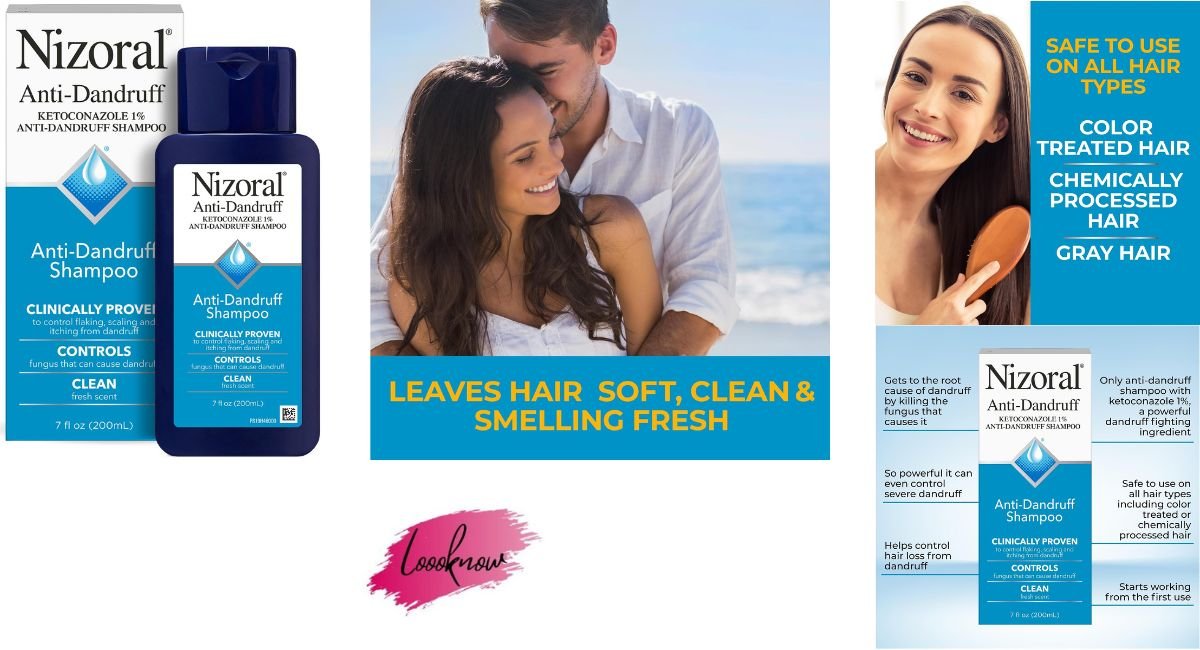
👉Check Price on Amazon “See how we review products”
Quick Verdict
Rating-style takeaway: 4.2 out of 5 for people with ordinary, fungus-related dandruff.
Nizoral is a strong choice when regular dandruff shampoos have not been enough. Its main strength is the active ingredient. Ketoconazole 1% targets the yeast-like fungus often associated with dandruff, and the label directs you to use it only about twice a week, which keeps ongoing cost and scalp stress reasonable.
What it does well:
- Controls flaking, scaling, and itching associated with dandruff, per the label
- Works on a twice-weekly schedule, so the bottle lasts
- Lathers richly and rinses clean
- Has a mild, fresh scent that most reviewers find acceptable
Where it falls short:
- Costs more per ounce than many drugstore dandruff shampoos
- Can leave hair feeling dry or less soft, especially with curly or dry hair
- Is not designed for broken or inflamed skin
- Won’t fix dandruff caused by something other than fungus, such as dry skin or a skin condition that needs a doctor
Bottom line: If you have tried a basic shampoo and still flake, Nizoral is a sensible next step. If your scalp is red, painful, or crusted, see a doctor instead of guessing.
[Check Price on Amazon](AFFILIATE LINK)
What Is Nizoral Anti-Dandruff Shampoo?
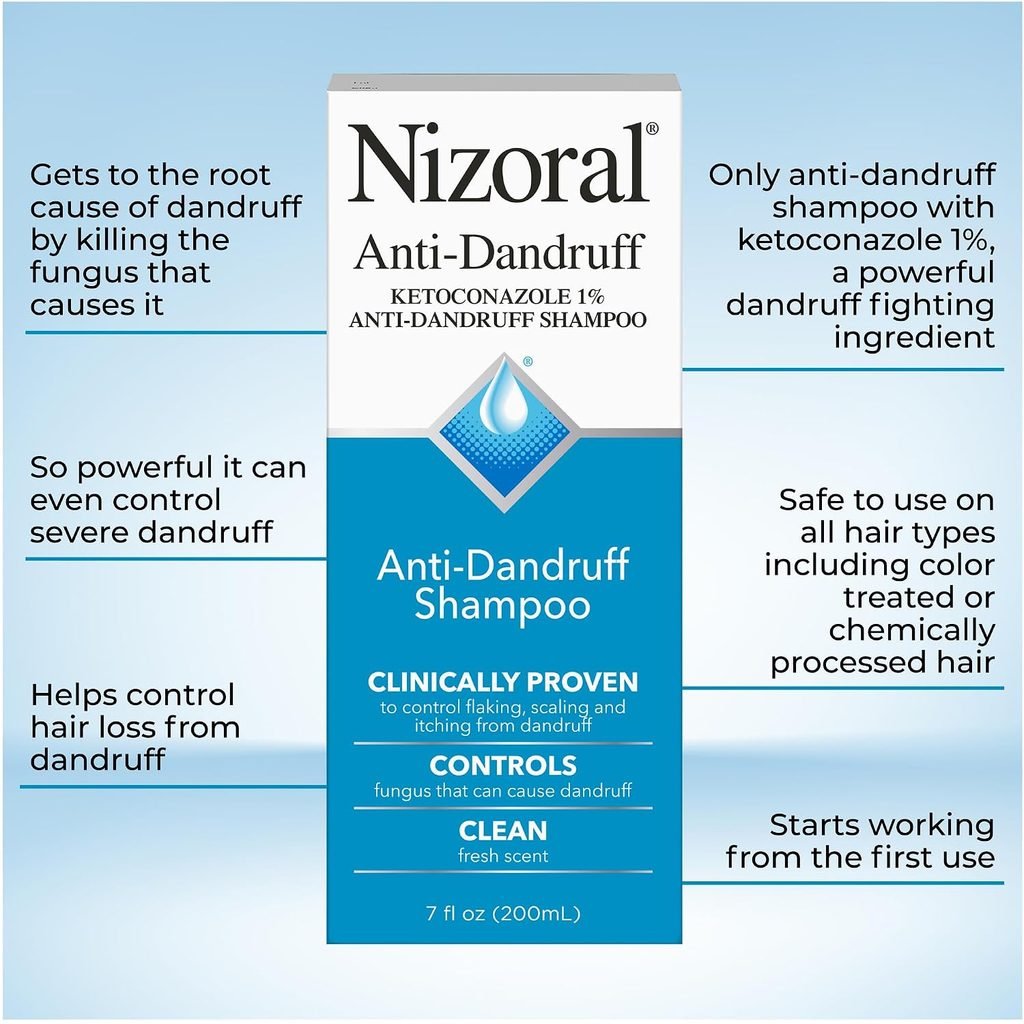
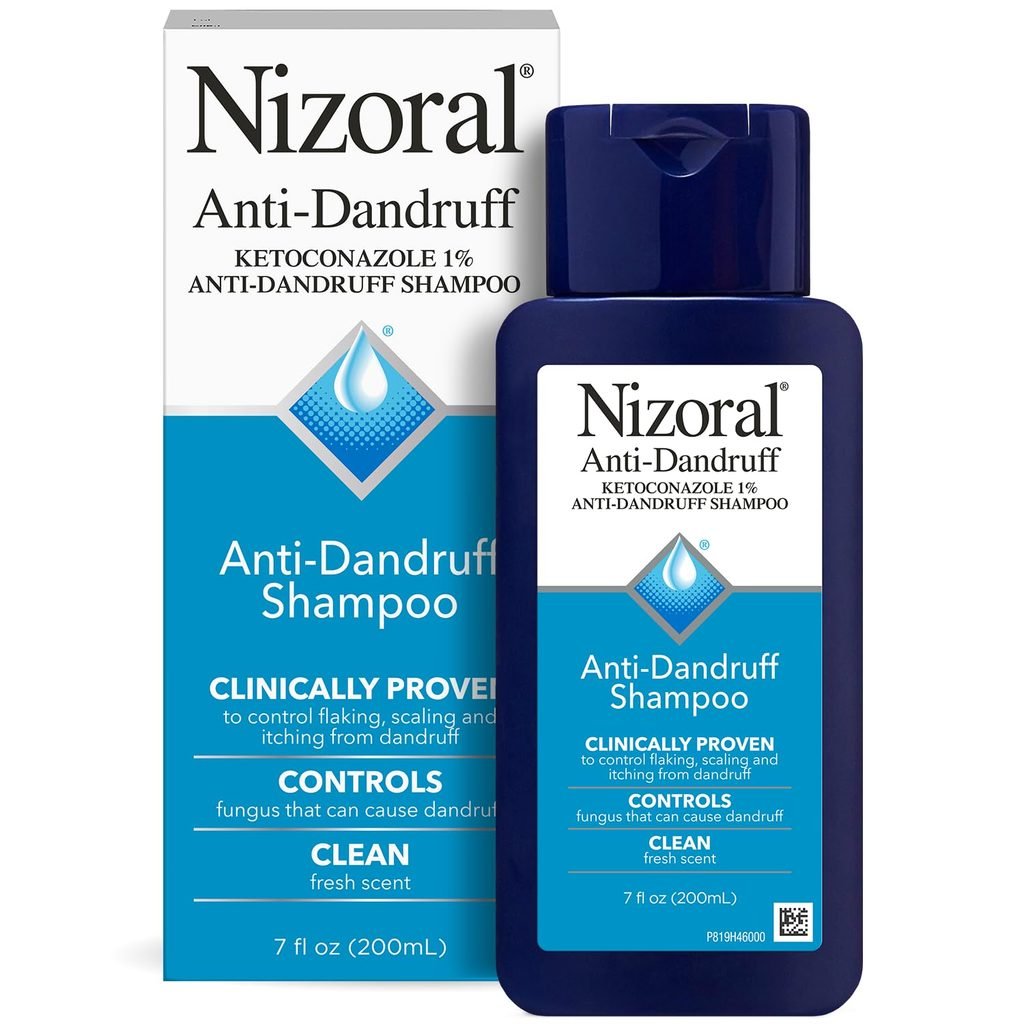
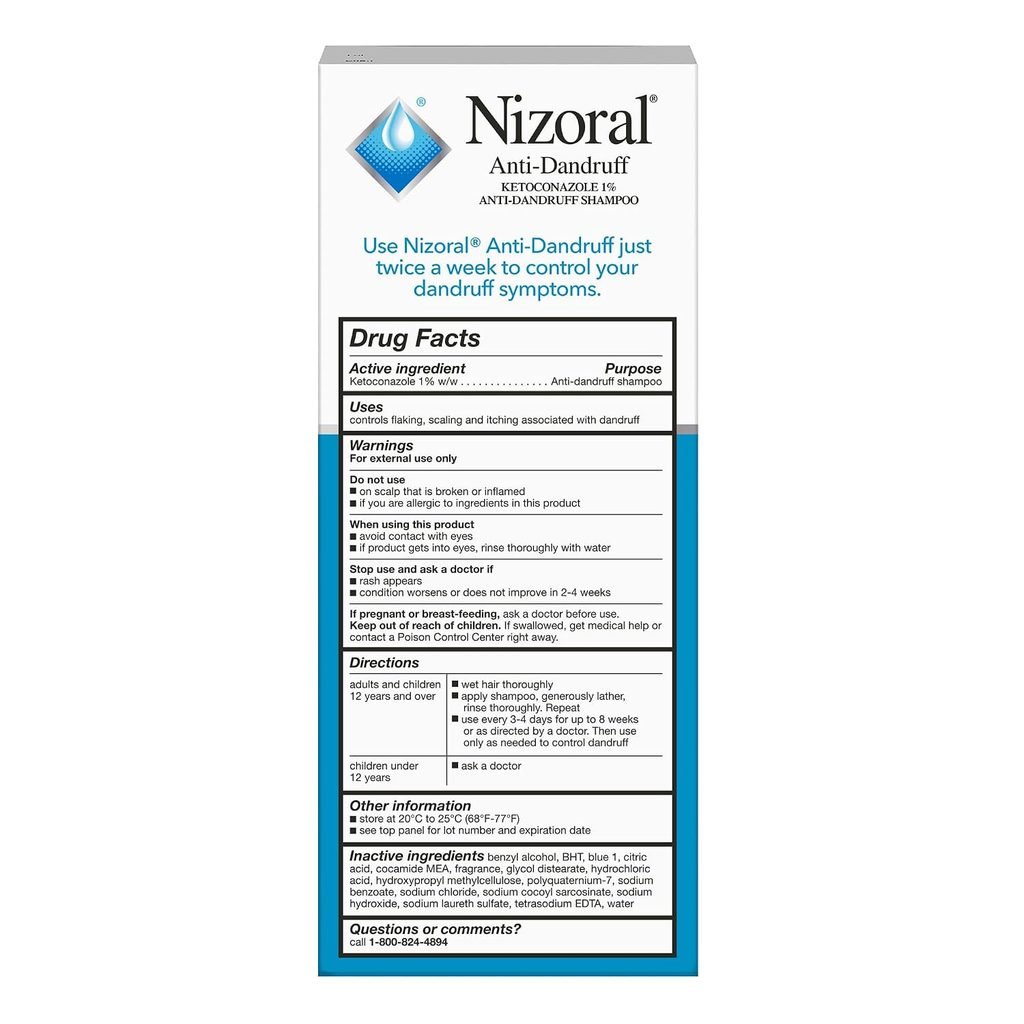
Nizoral Anti-Dandruff Shampoo is an over-the-counter medicated shampoo whose active ingredient is 1% ketoconazole, an azole antifungal. It is sold in the United States for controlling flaking, scaling, and itching associated with dandruff. The product reviewed here is the 7 fl oz bottle in the Fresh scent.
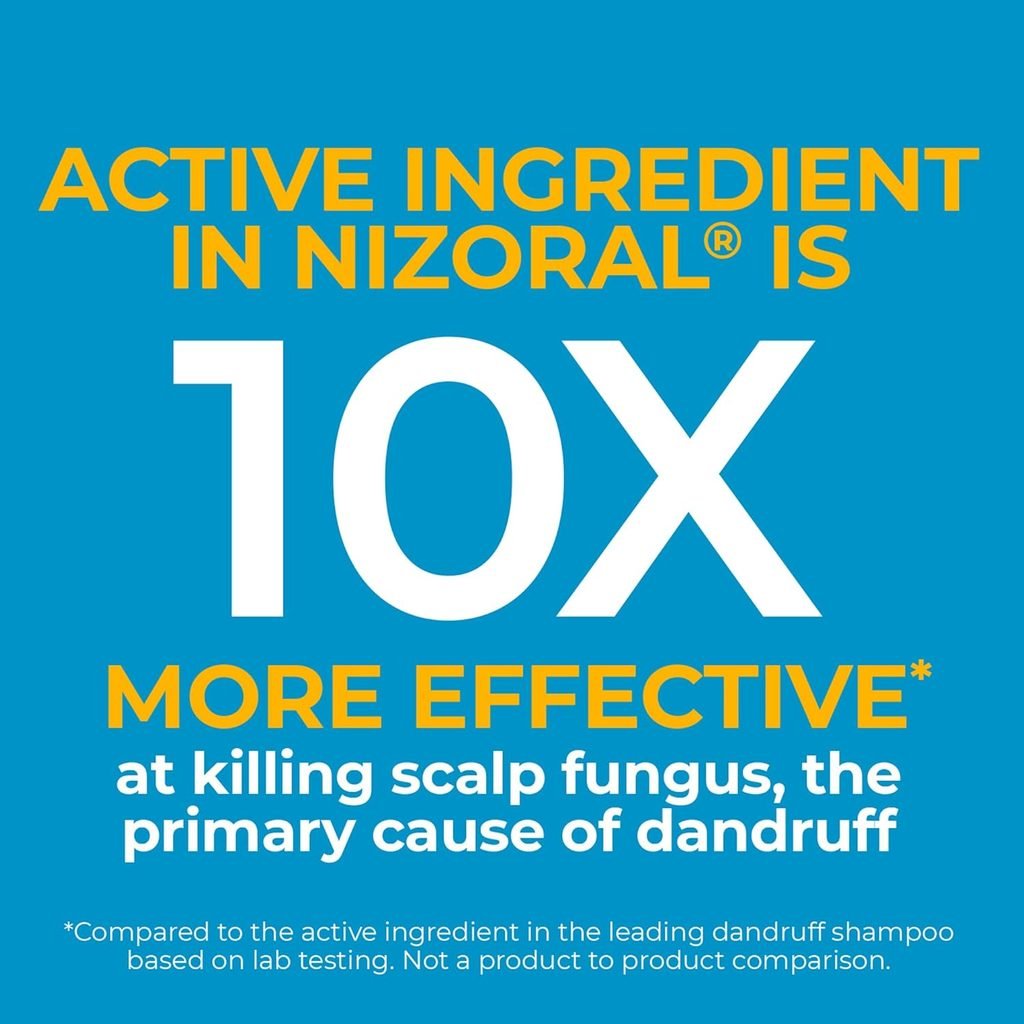
Ketoconazole is the key difference. Many people searching for a dandruff fix are really dealing with a scalp yeast called Malassezia, which lives on almost every adult scalp. For some people the yeast triggers irritation and extra skin shedding, which shows up as flakes. Antifungal shampoos aim at that cause rather than just washing flakes away or loosening scale.
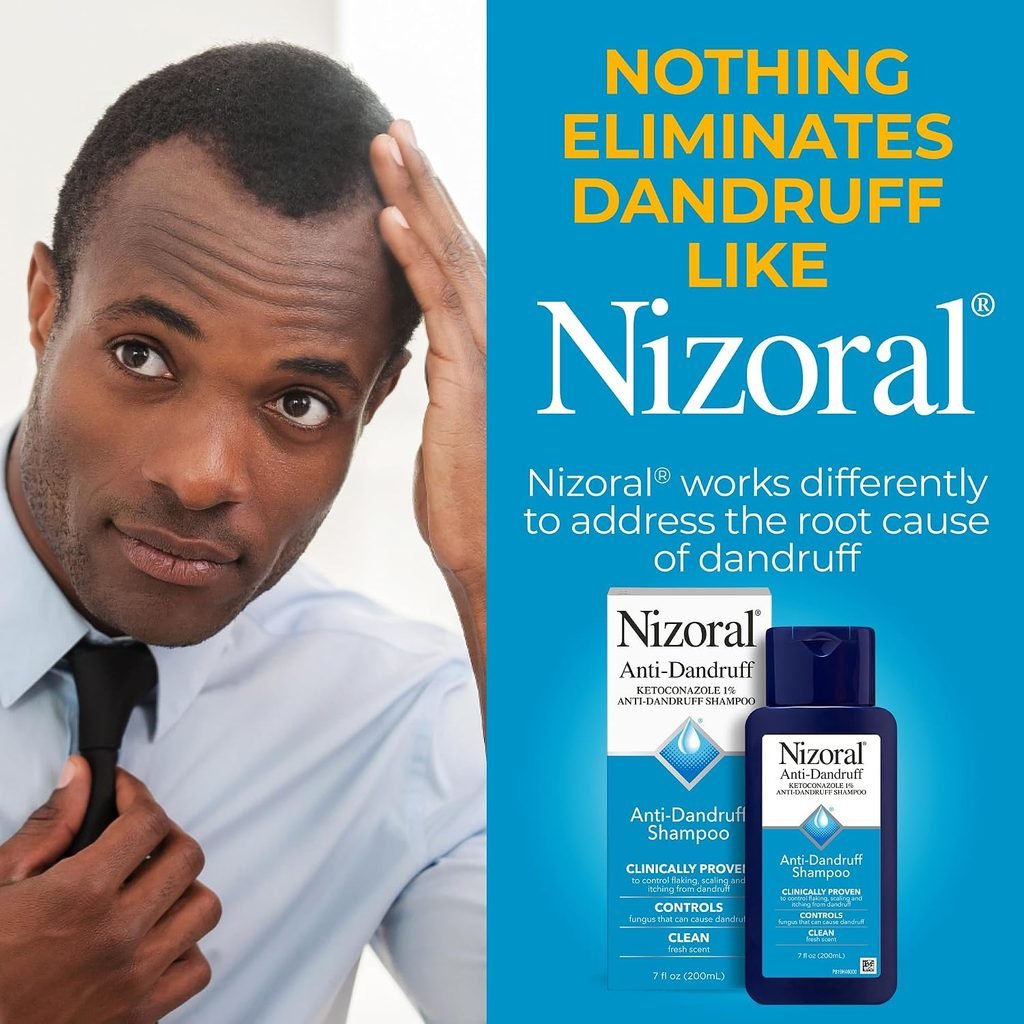
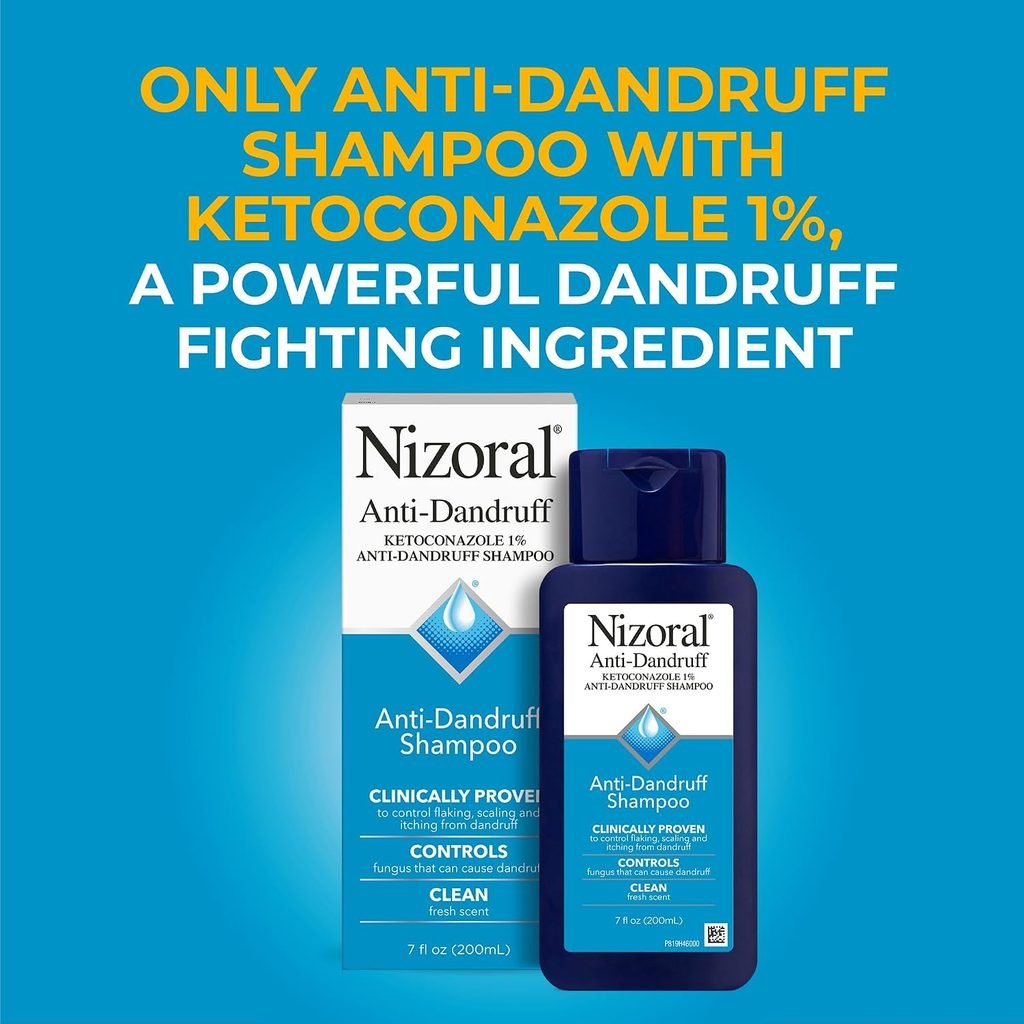
Nizoral also has a clear position in the market. According to the product’s own listing, it is the only over-the-counter dandruff shampoo that contains ketoconazole. Prescription shampoos sometimes use 2% ketoconazole, and a doctor may prescribe that for more serious cases. The 1% version here is the strength sold without a prescription.
In practice, Nizoral sits between basic dandruff shampoos and prescription care. It is more targeted than most store-brand options, but it is still a shampoo you can buy at a pharmacy, a big-box store, or online.
Key Features Breakdown
Here is what stands out on the label and product page, and what each feature means for you.
1% Ketoconazole Active Ingredient
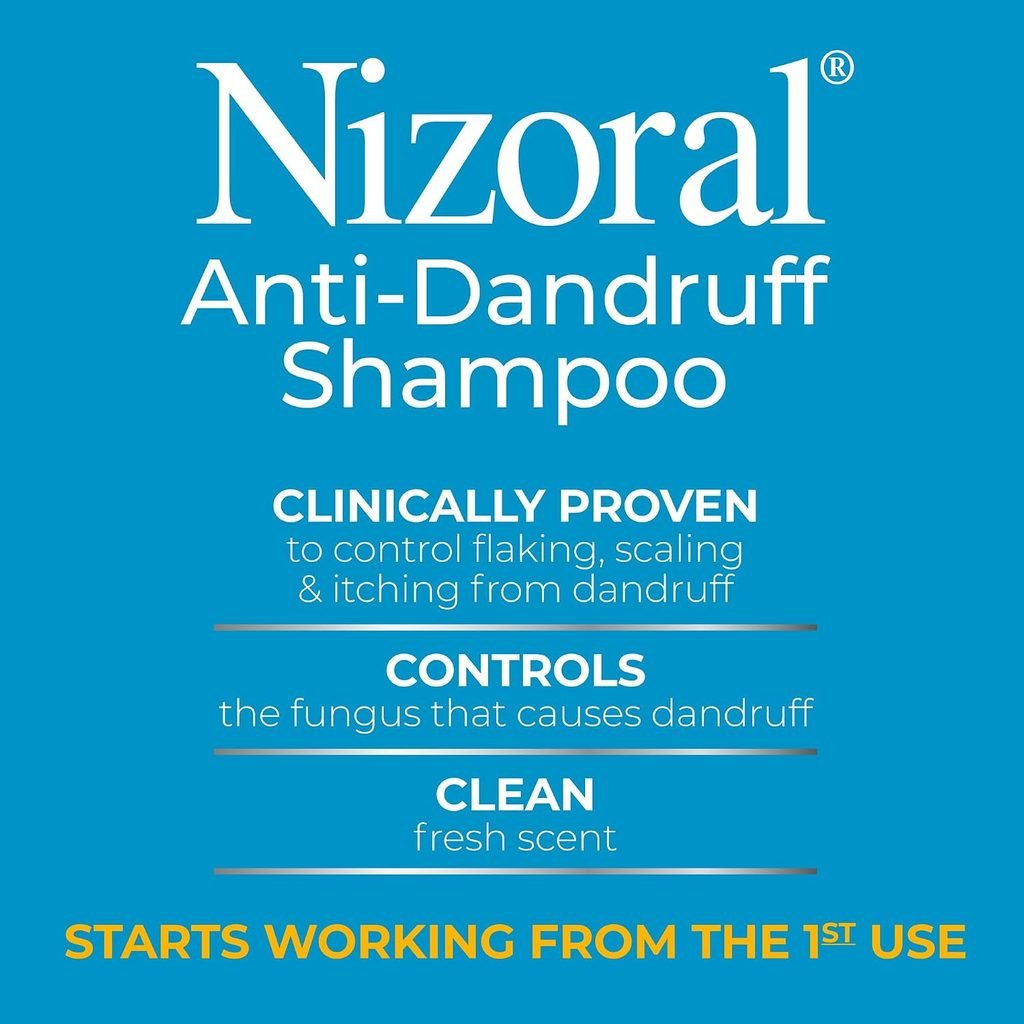
This is the main reason to buy it. Ketoconazole works by limiting fungal growth on the scalp. Because yeast overgrowth is commonly linked to dandruff, that mechanism makes sense for many people. The label states the product controls flaking, scaling, and itching associated with dandruff.
Key takeaway: The active ingredient is different from most competitors, so it can help when others have not.
Twice-a-Week Use Schedule
The label for adults and children 12 and over says to wet the hair, apply the shampoo, lather generously, rinse thoroughly, and repeat. You use it every 3 to 4 days for up to 8 weeks or as directed by a doctor. After that, you use it only as needed.
That schedule matters for cost and comfort. You are not using it every day, so a 7 fl oz bottle can last a while. You also give your hair a break from medicated shampoo, which helps with dryness.
Fresh Scent
The scent is a standard clean shampoo fragrance. Fragrance is listed among the inactive ingredients. That is fine for most people, but it is worth knowing if you react to fragrance.
Thick, Pearly Lather
Ketoconazole shampoos are known for a visible, pearlescent blue formula. The lather is described on retailer pages as thick and rich. That helps spread the product across the scalp, where it needs to reach.
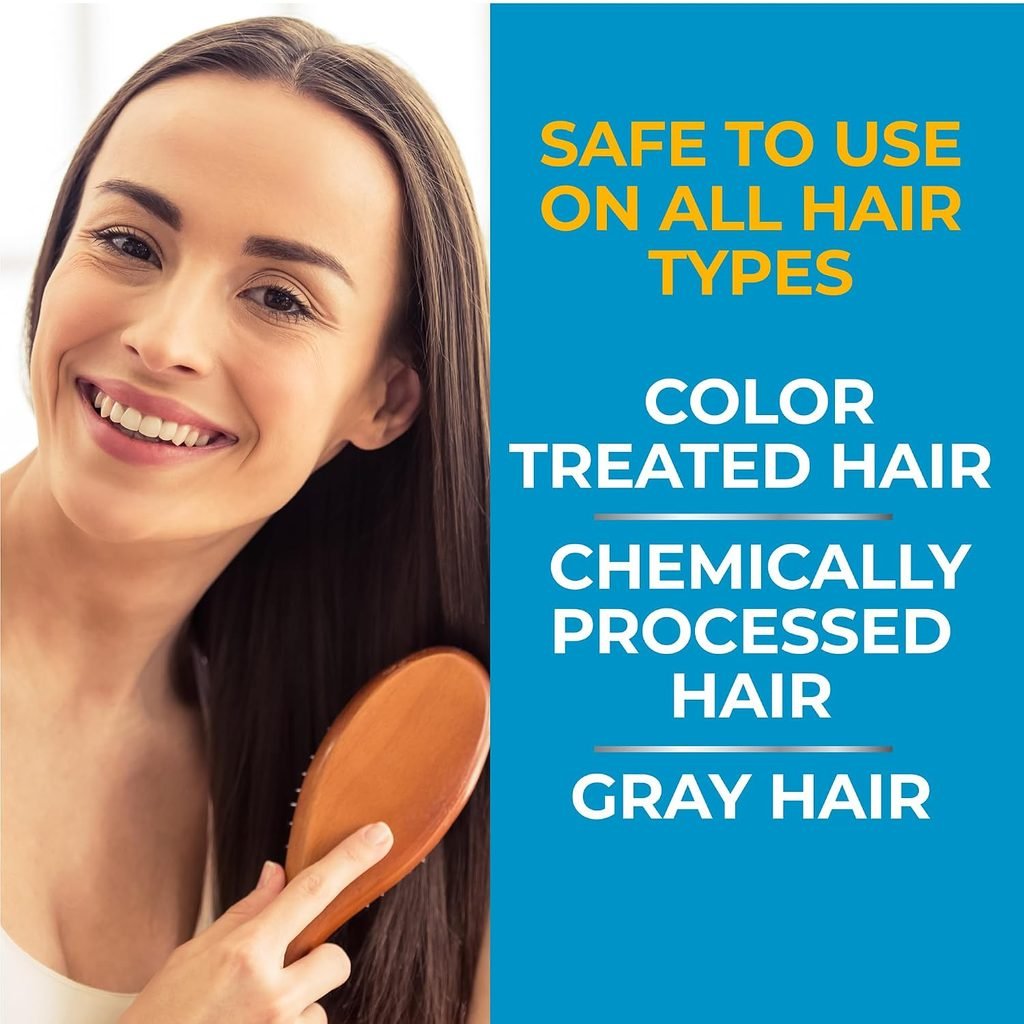
Safe for Color-Treated Hair, According to Retailer Descriptions
Several retailer listings describe the formula as gentle enough for color-treated, chemically processed, and gray hair. That is a marketing claim, not a guarantee. One health reference notes that ketoconazole shampoo may remove curl from a permanent wave, so if you have a perm, use caution.
7 fl oz Size
The 7 fl oz bottle is a practical trial size. There is also a larger 14 fl oz value size at some retailers, which can lower the cost per ounce. If you are not sure it works for you, the smaller bottle is the safer first buy.
Over-the-Counter Availability
No prescription is needed for the 1% strength. You can find it in pharmacies, in big-box stores, and online. That convenience is a real advantage, since waiting for a doctor’s appointment is not always practical for mild dandruff.
What the Label Warns About
The label says it is for external use only. Do not use it on broken or inflamed scalp, or if you are allergic to the ingredients. Avoid the eyes. Stop use and ask a doctor if a rash appears or if the condition worsens or does not improve in 2 to 4 weeks. If you are pregnant or breast-feeding, ask a doctor first. Children under 12 should only use it after asking a doctor.
Key takeaway: The features are simple and focused. Nizoral does one job, and the label is clear about how to do it safely.
Ingredients & Hair Type Compatibility Analysis
The Active Ingredient
Ketoconazole 1% is the only active ingredient. It is an antifungal in the azole family. In a dandruff shampoo, its job is to reduce the fungus often associated with flaking and itching.
The Cleansing Base
According to the ingredient list filed with the FDA, the inactive ingredients include sodium laureth sulfate, sodium cocoyl sarcosinate, and cocamide MEA. These are the cleansing and foaming agents. Sodium laureth sulfate is a common surfactant. It cleans well, but it can feel stripping on dry or damaged hair.
Conditioning and Texture Ingredients
The formula also includes polyquaternium-7, which helps reduce tangles and makes hair feel smoother after washing. Glycol distearate gives the pearly look. Hydroxypropyl methylcellulose helps thicken the formula.
Preservatives and Other Additions
Benzyl alcohol, sodium benzoate, BHT, and tetrasodium EDTA keep the product stable. Blue 1 gives it color. Fragrance gives it scent. People with fragrance sensitivity or known allergies to any of these should read the full label before buying.
How It Fits Different Hair Types
Oily or normal hair: This is the easiest match. The cleansing base suits oilier scalps, and the lather is generous. Many people with oily scalp dandruff report that this is where Nizoral feels most comfortable.
Dry or brittle hair: Use caution. The formula can leave hair feeling less soft. Applying it mainly to the scalp, and conditioning the lengths afterward, is a common approach.
Curly and coily hair: These hair types tend to be drier, so dryness is the main concern. Spacing out washes, focusing the product on the scalp, and following with a moisturizing conditioner can help. Some people with textured hair prefer a lower-frequency routine.
Color-treated hair: Retailer descriptions say it is safe, but any medicated shampoo can fade color a bit faster than a gentle one. Watch how your color holds up over the first few weeks.
Permed hair: A health reference says ketoconazole shampoo may remove curl from a permanent wave. If you have a fresh perm, ask your stylist.
Sensitive scalp: Since the label warns against use on broken or inflamed scalp, anyone with open sores, severe redness, or significant irritation should talk to a doctor first.
Key takeaway: Nizoral suits oily and normal hair best. Drier hair types can use it, but they should pair it with conditioner and a lighter schedule.
Scent, Lather & Rinse Experience
Scent
The Fresh scent is clean and fairly neutral. It is not meant to be a luxury fragrance. User feedback commonly describes it as mild, with a slight medicated edge that fades after rinsing. People who dislike strong perfumes tend to find it acceptable.
Because fragrance is a listed ingredient, people who are sensitive to it should patch test or choose a fragrance-free dandruff shampoo.
Lather
The lather is thick and rich, which fits the retailer descriptions and the formula’s sulfate-based cleansing system. Because the label tells you to lather generously, you should expect plenty of foam. A little goes a long way on wet hair.
Practical tip: Wet your hair thoroughly first. A well-soaked scalp spreads the shampoo more evenly, and you will likely need less product.
Spreading the Product
Because the formula is thick, it stays where you put it. That helps you work it into the scalp rather than letting it run down your face. Take care near the eyes. The label says to avoid eye contact and to rinse thoroughly with water if it gets in.
Rinse
The rinse is typically described as clean, without a heavy film. The label tells you to rinse thoroughly, and that matters. Leftover shampoo on the scalp can cause itching that feels like dandruff.
Hair can feel a little squeaky after rinsing, which is normal for a sulfate-based cleanser. If it feels too dry, a conditioner on the mid-lengths and ends usually helps.
Smell After Drying
Most users describe little to no lingering smell once hair is dry. The mild fragrance fades, and there is no strong medicinal odor reported in typical feedback.
Overall Sensory Impression
It is a functional, pleasant-enough experience. You are buying it for results, not for a spa moment. For most people, the lather and rinse are good enough to make a twice-weekly routine easy to keep.
Usage Experience
This section is based on the label directions, ingredient information, and the patterns that show up in available user feedback and dermatology-style guidance. It is not a first-person diary.
The First Wash
New users often notice the pearly blue color first. It looks different from a clear or white shampoo, which makes it easy to see where you have applied it. The texture is thick, and it spreads well across a wet scalp.
According to the label, you wet your hair thoroughly, apply the shampoo, lather generously, rinse thoroughly, and then repeat. That second application is easy to skip, but the directions include it.
Many people find the first wash feels like a normal shampoo with a slightly stronger clean feeling. The itch, if you have one, rarely vanishes on day one. This is an important expectation to set.
The First Two Weeks
Feedback commonly describes a gradual improvement rather than an overnight change. The label itself says to stop use and ask a doctor if the condition worsens or does not improve in 2 to 4 weeks. That timeframe is a useful benchmark. If you see no change after a month of correct use, it is a sign to look for another cause.
During the early weeks, people often report:
- Less visible flaking on shoulders
- Reduced itching between washes
- Hair that feels cleaner for longer
Some people also report dryness. That is why the twice-a-week schedule matters.
Weeks Three to Eight
The label directs use every 3 to 4 days for up to 8 weeks, or as directed by a doctor. This is the control phase. The goal is to bring dandruff under control and keep it there.
People who respond well often describe stable results by this stage. They flake less, itch less, and stop thinking about their shoulders. Those who do not respond are usually clear about it by now.
After the Control Phase
After the 8-week period, the label says to use it only as needed to control dandruff. This is where Nizoral becomes a maintenance product. Many users settle into a routine of using it once a week, once every two weeks, or when flaking returns.
Dandruff is often a recurring condition. That means stopping completely can lead to flaking coming back. Plan for maintenance, not a one-time cure.
Handling Dryness
Dryness is the most common complaint pattern. To manage it:
- Use the shampoo mainly on the scalp, not the lengths
- Apply conditioner to the mid-lengths and ends after rinsing
- Alternate with a gentle shampoo on non-Nizoral days
- Avoid very hot water, which dries both scalp and hair
Fitting It Into a Routine
Because you only use it a couple of times a week, it slots easily into an existing routine. A simple pattern is Nizoral on one fixed day and a gentle shampoo on the others. Pairing it with a consistent schedule helps you notice whether it is working.
Notable Observations About Texture and Residue
The formula rinses clean, which is important for dandruff. Product left on the scalp can cause itching or flaking that is easy to mistake for dandruff. A thorough rinse, longer than you think you need, is a good habit.
Common Mistakes Reported
- Not leaving enough time to lather and work it in. Rushing means less contact with the scalp.
- Skipping the second application. The label includes it.
- Using it every day. That is more than the label directs and can increase dryness.
- Quitting too early. Some people stop at day five and decide it does not work.
- Using it on irritated or broken skin. The label specifically warns against this.
Consistency Matters
Dandruff shampoos tend to work best when used consistently over several weeks. Missing washes, using it irregularly, or switching products too often makes it hard to judge. If you are going to test it, give it a fair run following the label.
When the Experience Is Not Good
Some users report no improvement. Others report dryness, increased irritation, or a rash. The label says to stop use and ask a doctor if a rash appears. If you notice worsening redness, burning, or swelling, stop and get advice.
Who Tends to Be Happy
Feedback patterns suggest the happiest users are people with persistent, itchy dandruff who have already tried other shampoos. People with mild, occasional flaking may be satisfied with a cheaper option.
The Realistic Takeaway
Nizoral is not magic. It is a well-targeted tool that works for many people when used as directed, and it deserves a fair four-week trial.
Benefits
Targets a Likely Cause of Dandruff
Many dandruff shampoos mostly loosen or remove flakes. Ketoconazole goes after the yeast linked to dandruff. For people whose flaking is fungus-related, that is a more direct approach.
Controls Flaking, Scaling, and Itching
The label states that it controls flaking, scaling, and itching associated with dandruff. Those are the three symptoms people care about most. Itching especially drives people to keep scratching, which can make things worse.
Low-Frequency Use
Using it about twice a week is a real advantage. It cuts down on product use, reduces dryness, and makes the bottle last longer. It also means you can keep your usual shampoo for the rest of the week.
Widely Available Without a Prescription
You do not need a doctor’s visit to try it. For mild to moderate dandruff, that convenience matters. It is available at pharmacies, big-box stores, and online retailers.
Useful Option When Others Have Failed
Many people turn to Nizoral after trying pyrithione zinc or selenium sulfide shampoos without lasting results. Because it uses a different active ingredient, it gives you a different approach to test.
Suitable Lather and Rinse
A good lather helps you cover the scalp. A clean rinse helps avoid residue. Together, they make the product easier to use correctly.
Works as Maintenance
After the initial control phase, you can drop to as-needed use. That flexibility helps people who get flare-ups seasonally, such as in cold, dry months.
Clear Label Guidance
The label is specific about directions and warnings. That makes it easier to use safely, and it gives you a clear point at which to stop and see a doctor.
Fits Many Routines
Because it is not a daily product, it fits alongside hair masks, styling products, or other routines. You do not need to rebuild your whole hair care approach.
Key takeaway: The biggest benefits are the targeted active ingredient, the low-frequency schedule, and the easy availability.
Downsides & Limitations
Can Be Drying
The cleansing base is effective, and for some hair types it is too effective. Dry, curly, coily, or color-treated hair may feel rougher or less soft. This is the most common complaint pattern in user feedback.
Higher Price per Ounce
Compared with many store-brand dandruff shampoos, Nizoral costs more per ounce. The 14 fl oz value size can improve that, but it is still a premium dandruff option. Since you use it only twice a week, the real cost per wash is lower than it looks.
Not Right for Every Scalp Problem
If your flaking is caused by something other than dandruff, such as dry skin, psoriasis, contact dermatitis, or another condition, Nizoral may not help. Thick, crusty, or painful patches need a doctor’s evaluation.
Results Take Time
You may not see a difference for a couple of weeks. People expecting overnight results may quit too soon. The label’s 2 to 4 week benchmark is a reminder that patience is part of the process.
Not for Broken or Inflamed Skin
The label says not to use it on broken or inflamed scalp. That excludes people with open sores, severe irritation, or a flare-up that has caused raw skin.
May Affect Perms
Ketoconazole shampoo may remove curl from a permanent wave. That is a niche issue, but it matters if you recently permed your hair.
Possible Reactions
A rash is a reason to stop and ask a doctor. Fragrance and other ingredients can bother sensitive skin. Allergic reactions are uncommon but possible.
Fragrance Is Present
People who avoid fragrance for skin reasons will not find a fragrance-free option in this version.
Dandruff May Return
Like most dandruff treatments, Nizoral controls the condition rather than curing it. When you stop, flakes may come back. That is not a flaw unique to this product, but it is worth knowing.
Counterfeit and Third-Party Seller Concerns
With any popular personal care product sold online, there is a risk of buying from an unreliable third-party seller. Check the seller, check the packaging, and check the expiration date.
Key takeaway: The main limits are dryness, price, and the fact that it only helps when fungus-related dandruff is the actual problem.
Who Should Buy This?
Nizoral is likely a good fit if you match one or more of these:
- You have persistent, itchy dandruff that regular shampoos have not controlled
- You have an oily or normal scalp and want a medicated option that cleans well
- You want a non-prescription antifungal before deciding whether to see a doctor
- You like a low-frequency routine and do not want to use medicated shampoo daily
- You get seasonal flare-ups and want something to keep on hand for as-needed use
- You are willing to give it a fair trial of several weeks using the label directions
It also suits people who prefer a straightforward product. There is no complicated routine, and the label tells you exactly how to use it.
If you are comparing options and wondering which is the best ketoconazole shampoo for dandruff in the over-the-counter space, Nizoral is the main option sold in US stores, which makes this review’s answer fairly direct. Prescription versions exist, but those require a doctor.
Who Should Avoid This?
Skip Nizoral, or talk to a doctor first, if any of these apply:
- Your scalp is broken, inflamed, or oozing. The label says not to use it in that case.
- You are allergic to any ingredient in the formula, including fragrance or preservatives.
- You are pregnant or breast-feeding. The label says to ask a doctor before use.
- The user is under 12. The label says to ask a doctor.
- Your scalp is painful, crusted, or has thick scaly patches. Those signs can point to conditions that need diagnosis.
- You have extremely dry or damaged hair and are not willing to adjust your routine with conditioner.
- You recently got a perm and want to keep the curl.
- You prefer fragrance-free products for skin reasons.
If you tried it and your condition got worse, or a rash appeared, stop and speak with a doctor. That advice comes straight from the label.
How to Use for Best Results
These steps follow the label directions for adults and children 12 and over.
- Wet your hair thoroughly. A soaked scalp helps the shampoo spread.
- Apply the shampoo to your scalp, working through the hair as needed.
- Lather generously. Massage gently with your fingertips, not your nails.
- Rinse thoroughly. Take your time. Residue can cause itching.
- Repeat the application, per the label.
- Use every 3 to 4 days for up to 8 weeks, or as directed by a doctor.
- Then use only as needed to control dandruff.
Extra tips:
- Keep it out of your eyes. If it gets in, rinse thoroughly with water.
- Condition the lengths of your hair if you notice dryness.
- Use lukewarm water rather than very hot water.
- Track your results over 2 to 4 weeks. If nothing improves, see a doctor.
- Wash your hands after application.
How often to use Nizoral 1% ketoconazole shampoo is the most common question, and the label answer is simple: every 3 to 4 days for up to 8 weeks, then only as needed.
Pros & Cons
Pros
- Contains 1% ketoconazole, an antifungal not found in most other OTC dandruff shampoos
- Controls flaking, scaling, and itching associated with dandruff, per the label
- Low-frequency schedule (every 3 to 4 days at first) helps the bottle last
- Thick lather that rinses clean
- Mild fresh scent that fades after rinsing
- No prescription needed
- Easy to find at major US retailers
- Clear label directions and warnings
- Can be used as maintenance after the first 8 weeks
- Offers a different option when other dandruff shampoos have failed
Cons
- Can leave hair dry or less soft, especially curly or color-treated hair
- Costs more per ounce than many store-brand options
- Results take a few weeks, not days
- Not for broken or inflamed scalp
- Contains fragrance and other ingredients that can bother sensitive skin
- May remove curl from a permanent wave
- Does not cure dandruff, and flakes can return
- Requires a doctor’s input for children under 12 and during pregnancy or breast-feeding
- Third-party sellers online can be unreliable
Product Comparisons
Nizoral vs Head & Shoulders for Dandruff
This is the most common matchup, and the Nizoral vs Head & Shoulders for dandruff question comes down to the active ingredient. Classic Head & Shoulders uses pyrithione zinc, an antimicrobial that is gentle enough for frequent use, and some versions in the line use other actives such as selenium sulfide. Nizoral uses ketoconazole.
Head & Shoulders is cheaper, easier to find, and designed for more frequent use. Many people find it enough for mild dandruff. Nizoral is typically the step-up option when mild products fail, though it costs more and is used less often.
Comparison Table: Nizoral vs Other Dandruff Shampoos
| Product | Main Active Ingredient | Typical Use Pattern | Best For | Main Trade-Off |
|---|---|---|---|---|
| Nizoral Anti-Dandruff (1% Ketoconazole) | Ketoconazole 1% | Every 3 to 4 days for up to 8 weeks, then as needed | Persistent, itchy dandruff | Higher price, can dry hair |
| Head & Shoulders (classic) | Pyrithione zinc | Frequent use, check label | Mild to moderate dandruff, easy access | May not be enough for stubborn cases |
| Selsun Blue | Selenium sulfide | Check label | Moderate dandruff, oily scalp | Scent and dryness for some users |
| Neutrogena T/Gel | Coal tar | Check label | Heavier flaking and scaling | Strong smell, can stain light hair |
| Neutrogena T/Sal | Salicylic acid | Check label | Thick scale buildup | Can be drying, focuses on scale |
Active ingredients are based on product labeling and can vary by product line. Always check the current label.
Walmart vs Amazon: Where to Buy
If you are asking where to buy Nizoral anti-dandruff shampoo 7 oz, both Walmart and Amazon carry it, and both are mainstream options.
| Factor | Walmart | Amazon |
|---|---|---|
| Availability | Online and in many stores | Online, with fast shipping options |
| Price | Often competitive, check current listing | Often competitive, can vary by seller |
| Sizes | 7 fl oz and larger value size often listed | 7 fl oz and larger options, depending on seller |
| Pickup or delivery | In-store pickup and delivery options in many areas | Delivery options, including fast shipping for eligible items |
| Seller risk | Lower when sold by Walmart | Check that the seller is Amazon or the brand |
| Returns | Store or online return options | Online return process for eligible items |
| Best for | Quick pickup and checking shelf stock | Convenience, comparing sizes, and ordering from home |
Prices, stock, and policies change often, so confirm details on the listing before buying.
How to choose: If you want it today, a Walmart store may be easiest. If you prefer ordering from home or comparing sizes and sellers in one place, Amazon is convenient. In either case, look for the item sold and shipped by the retailer or the brand, check the expiration date, and compare the price per fluid ounce.
Nizoral 7 fl oz vs the Larger Value Size
Some retailers list a 14 fl oz value size at a lower cost per ounce. If you know Nizoral works for you and you plan to use it for months, the larger bottle may save money. If you are still testing, the 7 fl oz bottle is the safer first purchase.
Nizoral vs Prescription Ketoconazole
Prescription ketoconazole shampoo is sometimes available at 2%. A doctor may suggest it for more severe or stubborn cases. If the 1% version does not help after 2 to 4 weeks, a doctor can decide whether another approach makes sense.
Buying Guide
Choosing a dandruff shampoo is easier when you know what to look for.
1. Match the Active Ingredient to Your Situation
- Pyrithione zinc: a common first-line option for mild dandruff
- Selenium sulfide: often used for moderate dandruff
- Ketoconazole: an antifungal, useful for persistent cases
- Salicylic acid: helps loosen scale and buildup
- Coal tar: slows skin cell turnover, used for heavier flaking
If a basic option has not worked after a fair trial, trying a different active ingredient is reasonable.
2. Read the Directions
Frequency matters. Some shampoos are daily products. Others, like Nizoral, are used a couple of times a week. Using a product more often than directed does not usually speed up results.
3. Consider Your Hair Type
Dry, curly, or color-treated hair needs extra care with medicated shampoos. Plan to pair it with conditioner and a gentler shampoo on other days.
4. Check the Ingredient List for Sensitivities
If you react to fragrance, preservatives, or specific surfactants, read the full list. Patch testing on a small area of skin is a cautious step if you are unsure.
5. Compare Price per Fluid Ounce
A bigger bottle is only a better deal if you will use it. Compare the cost per ounce, then think about how often you will actually wash with it.
6. Choose Trusted Sellers
Buy from the retailer directly or from the brand’s official storefront where possible. Check the packaging, the seal, and the expiration date.
7. Set a Realistic Timeline
Give any dandruff shampoo a fair test of several weeks. Use the label’s guidance, which for Nizoral says to stop use and ask a doctor if the condition worsens or does not improve in 2 to 4 weeks.
8. Know When to See a Doctor
See a doctor if you have:
- Red, painful, or crusted patches
- Sudden or severe hair loss
- Oozing or bleeding skin
- No improvement after a fair trial
- A rash after using a product
9. Think About Maintenance
Dandruff often returns. Pick a product you can use long term at a sensible cost, not just one for a quick fix.
Key takeaway: The best dandruff shampoo is the one that matches your scalp, fits your hair type, and that you can use consistently.
Immediate & Cumulative Hair Results
What to Expect Right After a Wash
After one wash, most people notice hair that feels clean and a scalp that feels refreshed. Flaking may look a little better, but a single wash rarely changes the picture much. Itching may ease slightly, though it often takes longer.
Hair can feel a bit squeaky or dry right after rinsing. Conditioner usually fixes that.
After Two to Four Weeks
This is the label’s key window. If the shampoo is working for you, you may see less flaking and less itching by then. Feedback commonly describes a steady improvement, not a dramatic change.
If nothing improves, the label says to stop and ask a doctor.
After About Eight Weeks
By the end of the label’s initial use period, many people reach a stable point where dandruff is under control. Then you move to as-needed use.
Long-Term Hair and Scalp Condition
When dandruff is controlled, hair often looks and feels better simply because the scalp is calmer. There is less scratching, fewer visible flakes, and less irritation. Whether it makes hair grow thicker is a different question. Nizoral is labeled for dandruff, not for hair growth.
Long-Term Dryness Watch
Over time, dryness can build for some hair types. If you notice rough ends or more breakage, reduce frequency and increase conditioning.
Maintenance Reality
Most people need to keep using it occasionally. Dandruff is a long-term condition for many. A light maintenance schedule is common after the initial phase.
Key takeaway: Results build over weeks, not days. Judge the shampoo after a fair trial, and stop if the label’s warning signs appear.
FAQ
Does Nizoral anti-dandruff shampoo really work?
For many people with fungus-related dandruff, yes. The label states it controls flaking, scaling, and itching associated with dandruff. Results vary, and it may not help if the flaking has another cause. Give it a fair trial of 2 to 4 weeks.
What is Nizoral shampoo used for?
It is used to control flaking, scaling, and itching associated with dandruff. The active ingredient is 1% ketoconazole.
How often should I use Nizoral 1% ketoconazole shampoo?
For adults and children 12 and over, the label says to use it every 3 to 4 days for up to 8 weeks or as directed by a doctor. After that, use it only as needed.
Can I use Nizoral every day?
The label does not direct daily use. Using it more often than directed can increase dryness and irritation. Follow the label or ask a doctor.
How long does Nizoral take to work?
Many people see gradual improvement over a few weeks. The label says to stop use and ask a doctor if the condition worsens or does not improve in 2 to 4 weeks.
Is Nizoral better than Head & Shoulders for dandruff?
It depends. Nizoral uses ketoconazole, while classic Head & Shoulders uses pyrithione zinc. Nizoral is often tried for stubborn dandruff, while Head & Shoulders is a common first option for milder cases.
What is the best ketoconazole shampoo for dandruff?
Nizoral is the main over-the-counter ketoconazole shampoo sold in US stores. Prescription ketoconazole shampoo, sometimes at 2%, is available through a doctor.
Is Nizoral safe for color-treated hair?
Retailer descriptions say it is gentle enough for color-treated hair. Still, any medicated shampoo can affect color over time, so watch how your color holds up.
Can Nizoral cause hair to dry out?
It can. The cleansing base is effective, and some hair types feel drier. Use conditioner on the lengths and keep to the label schedule.
Does Nizoral remove perm curl?
A health reference notes that ketoconazole shampoo may remove the curl from a permanent wave. Ask your stylist if you have a recent perm.
Can children use Nizoral?
The label says children under 12 should only use it after asking a doctor.
Can I use Nizoral while pregnant or breast-feeding?
The label says to ask a doctor before use if you are pregnant or breast-feeding.
Where can I buy Nizoral anti-dandruff shampoo 7 oz?
It is sold at major US retailers, including Walmart and Amazon, as well as pharmacies. Compare price per ounce, check the seller, and confirm the expiration date.
What should I do if Nizoral irritates my scalp?
Stop using it. The label says to stop use and ask a doctor if a rash appears or if the condition worsens.
Does Nizoral cure dandruff?
It controls dandruff for many people, but it does not permanently cure it. Dandruff often returns, so some people use it periodically for maintenance.
Final Verdict
After weighing the label, the ingredients, the usage pattern, user feedback trends, and the competition, this Nizoral shampoo review for dandruff lands on a clear conclusion: Nizoral is one of the most sensible next steps for people whose dandruff survives ordinary shampoos.
Its strength is focus. Ketoconazole 1% targets a likely cause of dandruff, the directions are simple, and the twice-a-week style schedule keeps the bottle lasting and the routine easy. The lather and rinse are good, the scent is mild, and the product is easy to find at both Walmart and Amazon.
It is not perfect. The formula can dry out hair, especially curly, coily, or color-treated types. It costs more per ounce than basic options. Results take weeks, and the label is firm about stopping if there is a rash or no improvement after 2 to 4 weeks. It also will not fix problems that are not dandruff.
Who it suits best: people with persistent, itchy flaking, especially with an oily or normal scalp, who are willing to follow the directions and give it a fair trial.
Who should look elsewhere: people with broken or inflamed skin, ingredient allergies, very dry hair they are unwilling to condition, or scalp symptoms that look more serious than ordinary dandruff.
If you are weighing it against Head & Shoulders, a simple rule works: start with the cheaper option for mild flaking, and move to Nizoral if that does not help. If Nizoral does not help either, a doctor is the right next stop, not a fourth shampoo.
For most people dealing with real, persistent dandruff, this Nizoral shampoo review for dandruff points to a product worth trying. Buy the 7 fl oz size first, follow the label, and judge it after a few weeks.
Affiliate CTA
If you have decided to try it, you can compare the current listing and price here:
Prefer to pick it up locally? Walmart also stocks the 7 fl oz bottle, so check their current price and pickup options before you decide.
This article is for general information only and is not medical advice. If you have a persistent scalp condition, pain, or a rash, talk to a doctor or pharmacist.

Who Is Behind Loooknow
Loooknow is founded, written, and managed by Muhammad Owais Khan. I am the founder, author, and site administrator, so every review, guide, and comparison you read here goes through me personally.You can reach me at [owaisu99sony@gmail.com] or through the Contact page. And Review Methodology