

Heads up: If you buy through links in this review, I may earn a small commission at no extra cost to you. This doesn’t affect my ratings.
Introduction
You’ve probably seen it on a dark sweater: a light dusting of flakes on the shoulders, right after you thought you’d had a good hair day. Dandruff is common, rarely serious, and still one of those problems that can make you feel self-conscious for no good reason. The fix usually starts in the shampoo aisle, and one bottle there has been a go-to for decades: Head & Shoulders.
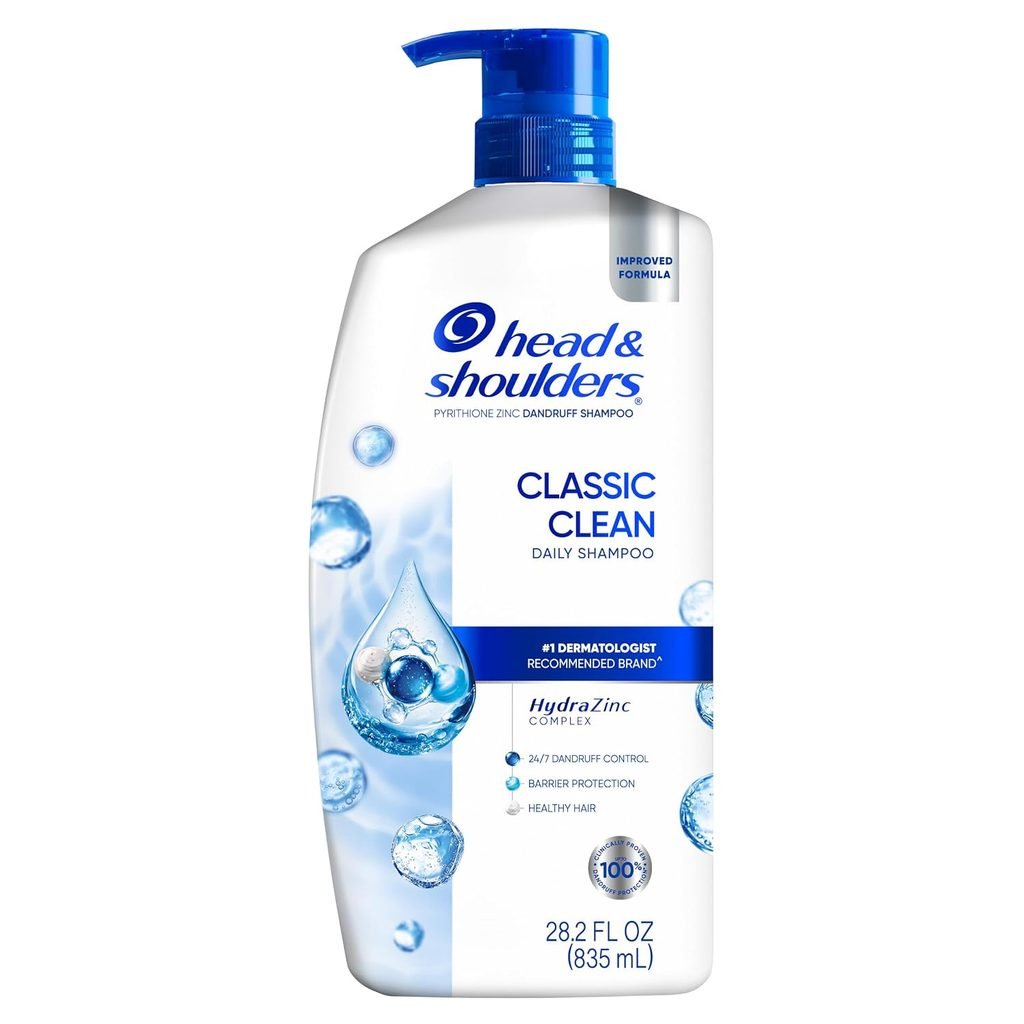
But choosing a familiar brand and choosing the right bottle are two different things. That’s why this head and shoulders classic clean shampoo review looks closely at one specific product: the Classic Clean Anti-Dandruff head and shoulders Shampoo in the 28.2 fl oz size. It contains 1% pyrithione zinc, and the label promises 72-hour dandruff protection. Those are strong claims, so they deserve a careful read instead of a quick nod.
Before we go further, here is how this review was put together. It is based on the product specifications, label directions, available user feedback, and comparisons with competing anti-dandruff shampoos. I’m not claiming months of personal testing. I’d rather be clear about where the information comes from so you can judge it fairly.
Here is what you’ll find in this article:
- What Classic Clean is, and how it differs from other Head & Shoulders formulas
- How 1% pyrithione zinc works, and which scalps and hair types it suits best
- What the scent, lather, and rinse are likely to feel like
- Honest downsides, including who may want to skip it
- A side-by-side look at Selsun Blue, Nizoral, and T/Gel
- Whether the large 28.2 oz bottle is a smart buy, and how Amazon and Walmart compare
A lot of dandruff advice online falls into two camps. One says a drugstore head and shoulders shampoo will fix everything. The other says you need an expensive specialty treatment. The truth usually sits in the middle. Many people with ordinary flaking do well with a reliable OTC shampoo used consistently. Others need a different active ingredient, a gentler routine, or a doctor’s help. This review aims to help you figure out which group you’re in.
It also helps to know what dandruff actually is. In many cases, it’s linked to a yeast-like fungus called Malassezia that lives on most scalps, along with scalp oil and individual sensitivity. That’s why dandruff head and shoulders shampoos rely on active ingredients, not just cleansing. Pyrithione zinc is one of the most common, and it’s the one Classic Clean uses.
So does this big bottle live up to its reputation? In short, it looks like a dependable, mainstream choice for mild to moderate dandruff, especially on oily or normal scalps. It has real trade-offs, though: the fragrance, the cleansing strength on dry or color-treated hair, and the fact that “72-hour protection” is a best-case benchmark, not a promise.
If you want the quick answer, skip ahead to the Quick Verdict. If you’re still weighing your options, keep reading. The details below, from ingredients to how it stacks up against rivals, will help you decide with confidence.
👉 Check Price on Amazon “See how we review products”
Head and Shoulders Classic Clean Shampoo Review: Quick Verdict
Overall rating: 4 out of 5 for people with ordinary dandruff who want an easy, affordable, widely available head and shoulders shampoo.
Best for: Mild to moderate flaking, an oily or normal scalp, households that share a head and shoulders shampoo, and anyone who wants a large bottle with a reliable active ingredient.
Not ideal for: Very dry or color-treated hair that already feels fragile, people sensitive to fragrance, and anyone dealing with severe or stubborn scalp conditions that need medical care.
What it does well:
- Contains 1% pyrithione zinc, a well-established OTC dandruff active
- Large 28.2 fl oz bottle that lasts a long time for most households
- Easy to find at major US retailers and online
- Simple routine: wash, lather, rinse
Where it falls short:
- Fragrance may bother sensitive scalps or people who dislike a clean, slightly medicinal smell
- Cleansing can feel strong on dry hair or ends
- “72-hour protection” is a label claim that depends on your scalp and how often you wash
- No treatment of root causes beyond managing symptoms
The takeaway: this is a dependable, mainstream choice, not a miracle. If your dandruff is typical, it has a good chance of helping. If your scalp is irritated or your flaking doesn’t improve, a different active ingredient may work better. You can check the current price on Amazon in the final section.
What Is Head & Shoulders Classic Clean Anti-Dandruff Shampoo?
Head & Shoulders Classic Clean is a daily-use anti-dandruff shampoo that uses 1% pyrithione zinc to reduce flaking, itching, and scalp irritation caused by dandruff.
It is the brand’s core, no-frills formula. Head & Shoulders sells many versions, including moisturizing, 2-in-1, dry scalp, and men’s-focused lines. Classic Clean is the straightforward original, aimed at people who want dandruff control without extra styling claims.
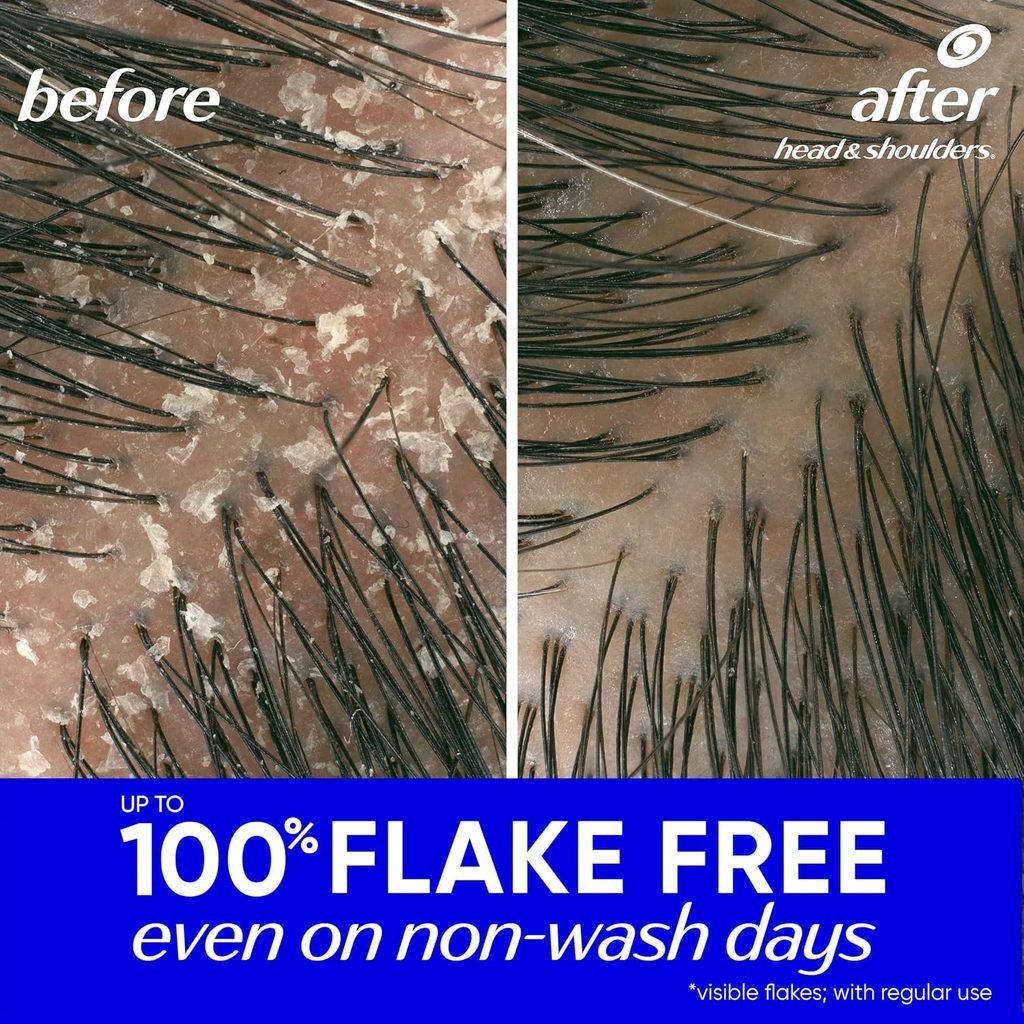
The positioning is clear. It is not a luxury head and shoulders shampoo, and it is not a specialty treatment. It sits in the middle: stronger than a basic head and shoulders shampoo, gentler than prescription options. The “72-hour dandruff protection” language is part of the brand’s marketing, and it refers to flake protection between washes when used as directed.
The 28.2 fl oz size is the big-bottle option. That matters because dandruff head and shoulders shampoo is usually a repeat purchase. If the formula works for you, a larger bottle can be a practical way to stock up.
What makes it different from many competitors:
- Brand familiarity: it is one of the most recognizable anti-dandruff names in the US
- Pyrithione zinc rather than selenium sulfide, ketoconazole, or coal tar
- Everyday-friendly positioning: it is meant for regular use, not just occasional treatment
- Wide availability: you can find it at grocery stores, drugstores, and online
For many readers, that combination of familiarity and accessibility is the main selling point.
Key Features Breakdown
Here is what the product offers on paper, and what each feature means for you.
1% Pyrithione Zinc
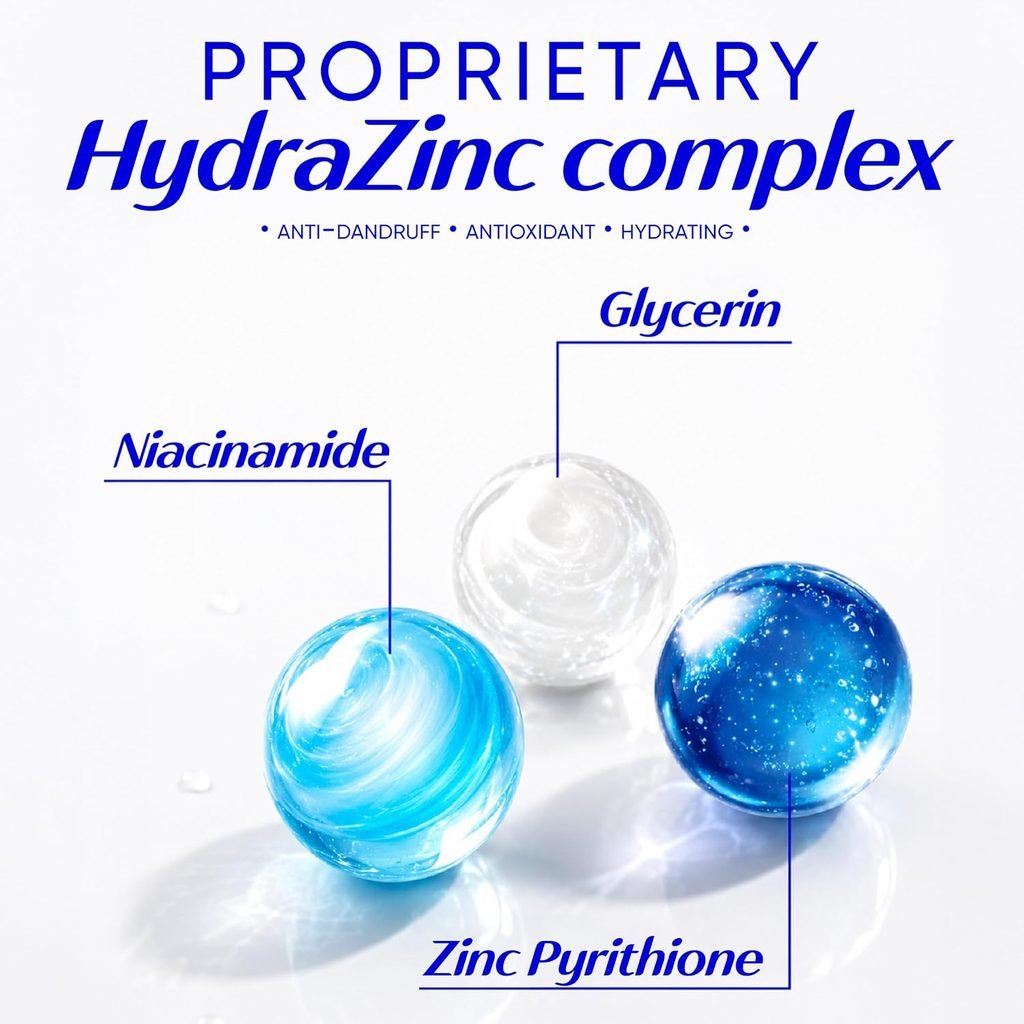
Pyrithione zinc is the active ingredient. It is recognized by the FDA as an OTC dandruff active and is widely used in anti-dandruff head and shoulders shampoos. It works by helping control the yeast-like fungus Malassezia, which lives on most people’s scalps and is linked to dandruff in many cases.
The “1%” strength is a common concentration in this category. It sits within the range allowed for OTC dandruff products. Higher isn’t automatically better, because irritation can also rise.
72-Hour Dandruff Protection Claim
The label says 72-hour protection. I read this as a flake-control claim tied to regular use, not a promise that one wash cures dandruff for three days. Results depend on your scalp, how oily your hair gets, and how often you wash. Treat it as a best-case benchmark, not a guarantee.
28.2 fl oz Size and Value
The big bottle is where the 28.2 oz value argument comes in. Larger bottles generally lower the cost per ounce compared with the standard size. If you wash a few times a week and use a coin-sized amount, this bottle can last a long while. Prices vary by retailer and change often, so compare the cost per ounce rather than the sticker price.
Classic Clean Positioning
“Classic Clean” signals a fresh, simple feel. This is not a conditioning or hydrating formula. It focuses on cleansing and flake control. If you want added moisture, plan on a separate conditioner.
Everyday Use Directions
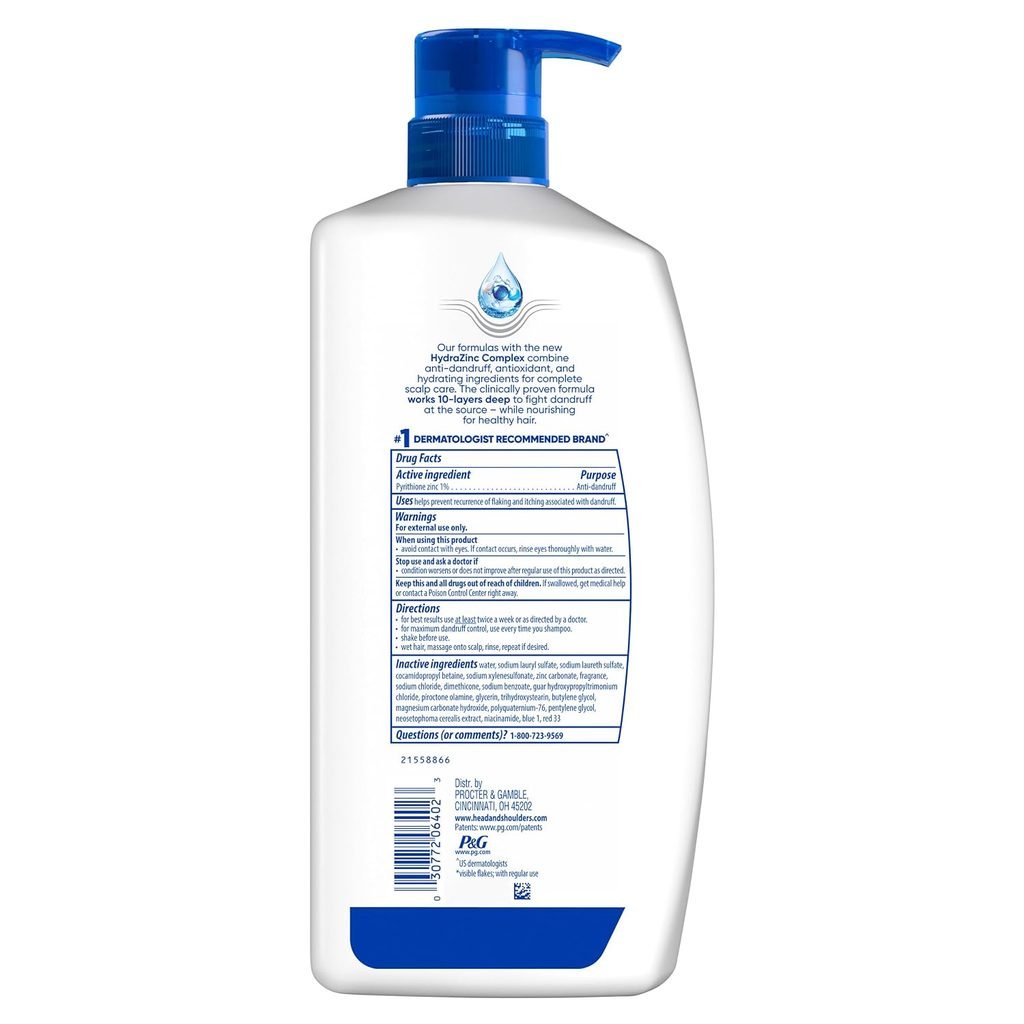
Most dandruff head and shoulders shampoos in this category suggest using them at least twice a week, or as directed by a doctor. Many people use them more often at first, then taper once the flaking improves. Follow your bottle’s label for exact directions.
Package and Dispensing
The large bottle typically comes with a pump or flip cap, depending on the retailer’s version. A heavy bottle can be awkward in a shower. Some people pour a smaller amount into a travel bottle or a shower-friendly container.
Suitable for Most Hair Types
The formula is aimed at all hair types, and it is most often used by people with normal to oily scalps. That said, “suitable for all” is marketing language. The next section looks closer.
Ingredients & Hair Type Compatibility Analysis
The active ingredient is 1% pyrithione zinc. The rest of the formula is built around cleansing agents, conditioning agents, and fragrance.
How Pyrithione Zinc Works
Pyrithione zinc has antifungal and antibacterial properties. In dandruff care, the idea is to reduce the yeast on the scalp that can trigger irritation and faster skin cell shedding. Less irritation usually means fewer visible flakes and less itching.
It is a well-studied OTC ingredient. That does not make it right for everyone, but it does mean you are not trying an unproven additive.
The Base Formula
Based on the ingredient list as commonly published for this product, the formula uses standard head and shoulders shampoo cleansing agents, which are typically sulfate-based, along with conditioning silicones and fragrance. Ingredient lists can change by batch or retailer version, so check the label on the bottle you receive.
What this means in practice:
- Strong lather: sulfate-based cleansers tend to foam well
- Effective oil removal: good for oily scalps
- Possible dryness: can be harsh on dry, curly, or color-treated hair
- Fragrance: may trigger sensitivity in some people
Hair Type Fit
Oily and normal hair: Likely the best fit. Cleansing strength matches scalp oil, and flake control is the main need.
Fine hair: Usually fine, though some fine-haired users report that the formula can feel a little flat. A light conditioner on the ends helps.
Dry or coarse hair: Use caution. The cleansing action can make dry hair feel straw-like. Consider using the head and shoulders shampoo on the scalp only and following with a moisturizing conditioner.
Curly or textured hair: Dandruff is common here, but frequent sulfate head and shoulders shampooing can add dryness. Many people with curly hair use dandruff shampoo once or twice a week and a gentler shampoo on other days.
Color-treated hair: Sulfate-based formulas can fade color faster. If you color your hair often, ask your stylist whether a dandruff head and shoulders shampoo fits your routine.
Sensitive scalp: Fragrance and strong cleansers can irritate some scalps. If your scalp stings, burns, or turns red, stop using it.
Scent, Lather & Rinse Experience
Scent is one of the most personal parts of any head and shoulders shampoo. For an anti-dandruff formula, it matters even more because you may use it several times a week.
Scent
Classic Clean is generally described as a fresh, clean, slightly medicinal-soapy scent. It isn’t floral or sweet. For many people, that “clean” smell is the reason they like it. For others, it reads as dated or too sharp.
The scent tends to fade after drying. Some users find it lingers lightly in the shower and disappears from the hair within hours. If you dislike fragrance, this is not an unscented product, so it may not suit you.
Lather
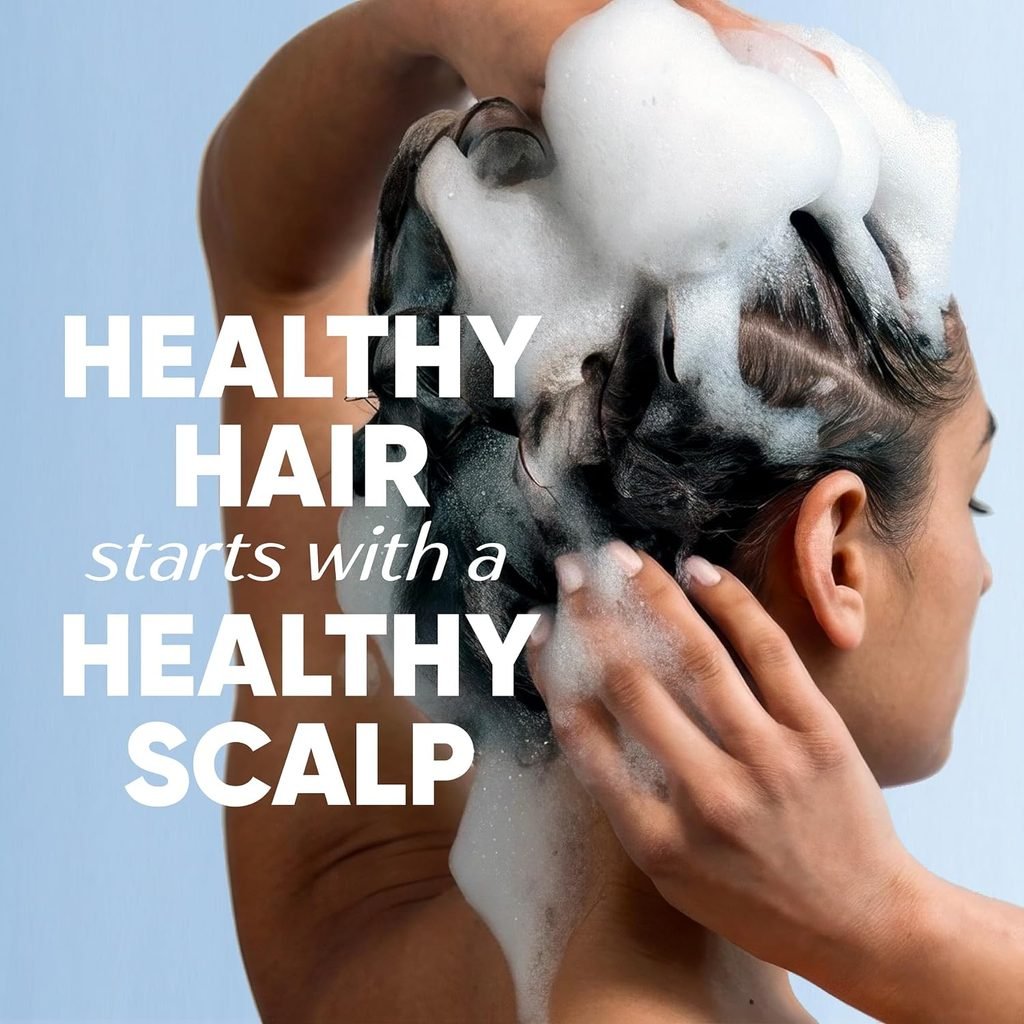
The formula is built to lather well. A small amount can cover the scalp, and you will typically get a thick, white foam. Most people find a coin-sized amount enough for short to medium hair.
A rich lather doesn’t mean the head and shoulders shampoo is working better. It simply reflects the cleansing system. Using too much only raises the chance of dryness.
Texture and Application
The head and shoulders shampoo has a fairly standard, slightly thick consistency. It spreads easily across the scalp. Because the active ingredient needs contact time, the technique matters more than the feel.
Rinse
It generally rinses cleanly. Some people with thick or long hair need extra time to rinse thoroughly. Leftover product can leave residue and may contribute to itchiness, so give it a full rinse.
Hair often feels clean, a little squeaky, and lightweight right after drying. Conditioner helps restore softness, especially on mid-lengths and ends.
Bottom Line on Sensory Experience
If you like a classic clean scent and strong foam, you will probably enjoy it. If you prefer gentle, unscented, or creamy washes, you might find it too much. This section is based on common user feedback and product descriptions, so your experience may differ.

Head and Shoulders Classic Clean Shampoo Review: Usage Experience
This section describes what a typical routine looks like, based on label directions, user feedback patterns, and how similar anti-dandruff head and shoulders shampoos behave. It is not a diary of personal use.
Week One: Getting Started
Most people start by using the head and shoulders shampoo several times in the first week. The goal is to bring flaking down to a manageable level. Many users report that itching eases first, with visible flakes decreasing a bit later.
A few things to expect:
- Itch relief can show up within a few washes for some people
- Flaking often takes longer to improve than itching
- Your hair may feel different as your scalp adjusts to a stronger cleanser
- Scalp tightness can happen if you head and shoulders shampoo too often without conditioning
Weeks Two to Four: Finding a Rhythm
After the first couple of weeks, many users find a pattern. Some keep using it every other day. Others drop to two or three times weekly. The label’s suggestion of at least twice a week gives you a baseline. Adjust from there based on how your scalp responds.
If flakes return between washes, you may need to increase frequency slightly. If your scalp feels dry or tight, reduce it or add a gentle head and shoulders shampoo to the rotation.
Does the 72-Hour Claim Hold Up?
The 72-hour claim is plausible as a rough benchmark for flake control with consistent use. But it is not universal. A few things affect it:
- Scalp oil level: Oily scalps may see flakes return sooner
- Washing schedule: Washing every day vs. every three days changes the picture
- Weather: Dry winter air can worsen flaking regardless of head and shoulders shampoo
- Product build-up: Styling products can mimic or worsen flakes
- Stress and diet: Both can influence scalp conditions for some people
A fair way to read the claim: with regular use, many people can expect noticeable flake control between washes, but it depends on the individual.
Day-to-Day Convenience
The routine is simple. There is no waiting five minutes with a mask, no multi-step treatment. You lather, leave it for the time the label suggests, rinse, and condition. That simplicity is part of why people stick with it.
The large bottle is convenient for households. You don’t need to restock often. The downside is weight and storage space in small showers.
Hair Feel Over Time
Hair feel varies. People with oily hair often like the clean result. People with dry hair may notice extra frizz or roughness unless they condition. Over several weeks, those who add a conditioner to mid-lengths and ends typically report better comfort.
Common Real-World Issues
- Flake confusion: Dry scalp flakes and dandruff flakes can look alike. Dandruff flakes are often larger and oilier, while dry scalp flakes tend to be smaller and drier. This matters because a dry scalp may not respond the same way.
- Overwashing: Some people wash daily hoping to speed results, then deal with dryness.
- Switching too soon: Giving a head and shoulders shampoo a fair trial, often two to four weeks, helps you judge it.
- Residue: Using too much product can leave residue that feels itchy.
Who Tends to Be Happiest
People with typical dandruff, an oily scalp, and straightforward hair care habits tend to be the most satisfied. People looking for a gentle, scalp-soothing formula, or those with sensitive skin, are more likely to need a different approach.
Overall, the usage experience is predictable and low-effort. That is a strength for a daily-use product.

Is Head and Shoulders Classic Clean Shampoo Worth It? Benefits
So, is head and shoulders classic clean shampoo worth it? Here are the benefits that matter most.
Established Active Ingredient
Pyrithione zinc has a long record in dandruff care. You are not buying a trend. For people with standard dandruff, that reliability counts.
Simple Routine
You don’t need special tools or extra steps. If you can wash your hair, you can use it. That lowers the chance of giving up.
Good Value in the Large Size
The 28.2 oz bottle often brings down the cost per ounce. If you use it regularly, that can add up to meaningful savings over a few months. Compare the unit price at Amazon and Walmart to be sure.
Wide Availability
You can usually find it at both big retailers and local stores. If you run out, you don’t have to wait on a special order.
Helps With Itch and Visible Flakes
Many users buy anti-dandruff head and shoulders shampoo for two things: less itching and fewer flakes. Pyrithione zinc is designed to address both. For typical cases, that is a practical, noticeable benefit.
Family-Friendly Size
A big bottle works well for households where more than one person uses the same head and shoulders shampoo. Just check that everyone’s scalp tolerates the formula.
Clean Feel
People with oily hair often like the clean, fresh feel after washing. It can also help remove light styling product build-up.
Balanced Takeaway
None of these benefits is dramatic, and that is okay. The value of Classic Clean is dependable basics, not special effects. If you want a no-nonsense dandruff head and shoulders shampoo that is easy to buy, it earns its place.

Downsides & Limitations
No product is right for everyone. These are the main drawbacks to consider.
It Can Be Drying
The cleansing system can strip oils. People with dry, curly, or color-treated hair may find it harsh without a good conditioner.
Fragrance Isn’t for Everyone
The scent is noticeable. If you are fragrance-sensitive or prefer unscented products, this may not be your best match.
It Manages Symptoms, Not Causes
Dandruff is often a chronic or recurring condition. The head and shoulders shampoo helps control it, but it doesn’t remove the underlying tendency. If you stop using it, flakes may return.
Results Vary
Some people see improvement quickly. Others notice little change. Pyrithione zinc doesn’t work equally for everyone, and some people respond better to selenium sulfide or ketoconazole.
The 72-Hour Claim Is Not a Promise
Marketing claims are rarely the full story. Your scalp, climate, and washing habits shape what you actually get.
Not for Medical Conditions Needing Treatment
Severe dandruff, seborrheic dermatitis that spreads, psoriasis, or infections need medical guidance. An OTC head and shoulders shampoo may help mild cases but may not be enough.
Big Bottle, Big Commitment
If you try it and dislike it, you are stuck with a large bottle. For first-time buyers, a smaller size might be a safer test, even if the cost per ounce is higher.
Possible Irritation
Like any active ingredient, pyrithione zinc can irritate some people. Stop use if you notice redness, burning, or worsening itch.

Who Should Buy This?
Classic Clean is a good match if you:
- Have mild to moderate dandruff and want a mainstream, proven option
- Have an oily or normal scalp that handles stronger cleansers well
- Want a large bottle that is cost-effective for regular use
- Like a fresh, clean scent
- Share a head and shoulders shampoo with family members who also deal with flakes
- Prefer a simple routine with minimal steps
- Want something available in most US stores
It is also a sensible first try if you have never used an anti-dandruff head and shoulders shampoo. It is a standard starting point, and if it works, you may not need anything more complicated.

Who Should Avoid This?
Consider skipping or checking with a professional if you:
- Have a very dry, sensitive, or irritated scalp
- Are sensitive to fragrance
- Have fragile, damaged, or heavily color-treated hair and don’t want extra dryness
- Have severe or persistent symptoms, such as thick scaling, redness, oozing, or hair loss
- Notice burning or worsening itch after use
- Are looking for an unscented or “gentle” formula
If you aren’t sure whether you have dandruff or another scalp condition, a dermatologist can help. That matters more than picking the perfect head and shoulders shampoo.
How to Use for Best Results
Follow the label first. These general steps align with typical anti-dandruff head and shoulders shampoo directions.
- Wet your hair thoroughly. Warm water, not hot, is gentler on the scalp.
- Use a coin-sized amount. Use more only if you have very thick or long hair.
- Massage into the scalp, not just the hair. The active ingredient needs scalp contact.
- Leave it on for the time the label suggests. A short pause, often around a minute or two, gives the formula time to work.
- Rinse thoroughly. Leftover product can irritate.
- Follow with conditioner on mid-lengths and ends. Keep conditioner off the scalp if you have an oily scalp.
- Use at least twice a week, or as directed. Adjust based on how your scalp responds.
Extra tips:
- Avoid contact with eyes. If it gets in, rinse well with water.
- Don’t overuse. More isn’t better.
- Be patient. Give it a couple of weeks before judging.
- Clean your brushes and pillowcases regularly. Build-up can add to scalp irritation.

Pros & Cons
Pros
- Contains 1% pyrithione zinc, an established dandruff active
- Large 28.2 fl oz bottle offers good potential value
- Easy to find at major US retailers
- Simple, low-effort routine
- Rich lather and clean feel
- Suitable for many households
Cons
- Fragrance may bother sensitive users
- Can feel drying on dry, curly, or color-treated hair
- Results vary by person
- “72-hour protection” depends on your scalp and routine
- Large size is a bigger commitment if it doesn’t suit you
- Not enough for severe scalp conditions
Product Comparisons: Classic Clean vs. Selsun Blue and Other Options
Here is how Classic Clean compares with other popular anti-dandruff choices. Active ingredients and strengths are based on commonly listed OTC formulas. Always verify the label on the product you buy.
Comparison Table
| Feature | Head & Shoulders Classic Clean | Selsun Blue (Medicated) | Nizoral A-D (Ketoconazole) | Neutrogena T/Gel (Coal Tar) |
|---|---|---|---|---|
| Active ingredient | 1% pyrithione zinc | Selenium sulfide (commonly 1%) | 1% ketoconazole | Coal tar (commonly 0.5%) |
| Best for | Everyday dandruff control | Moderate dandruff, itch | Stubborn dandruff | Heavy flaking, scaling |
| Typical use | Several times weekly | Often twice weekly | Often twice weekly | Varies by label |
| Scent | Fresh, clean | Medicinal | Mild to medicinal | Distinct tar odor |
| Large size available | Yes (28.2 fl oz) | Varies | Usually smaller | Varies |
| Color-treated hair | Use caution | Use caution | Use caution | Use caution |
| Ease of finding | Very easy | Easy | Easy | Easy |
Head and Shoulders Classic Clean vs. Selsun Blue for Dandruff
This is the head and shoulders classic clean vs selsun blue for dandruff question many buyers ask.
Active ingredient: Classic Clean uses pyrithione zinc. Selsun Blue uses selenium sulfide. Both are recognized OTC dandruff actives, but they work a little differently.
Strength and feel: Some people find selenium sulfide stronger for stubborn flakes. It can also come with a more medicinal smell and a higher chance of dryness or scalp discoloration of light hair if not rinsed well.
Everyday use: Classic Clean is often seen as more of an everyday choice. Selsun Blue is often used when pyrithione zinc isn’t enough.
Verdict: If you are starting out, Classic Clean is a gentle entry point. If you have tried pyrithione zinc without luck, Selsun Blue may be worth testing.
Classic Clean vs. Nizoral
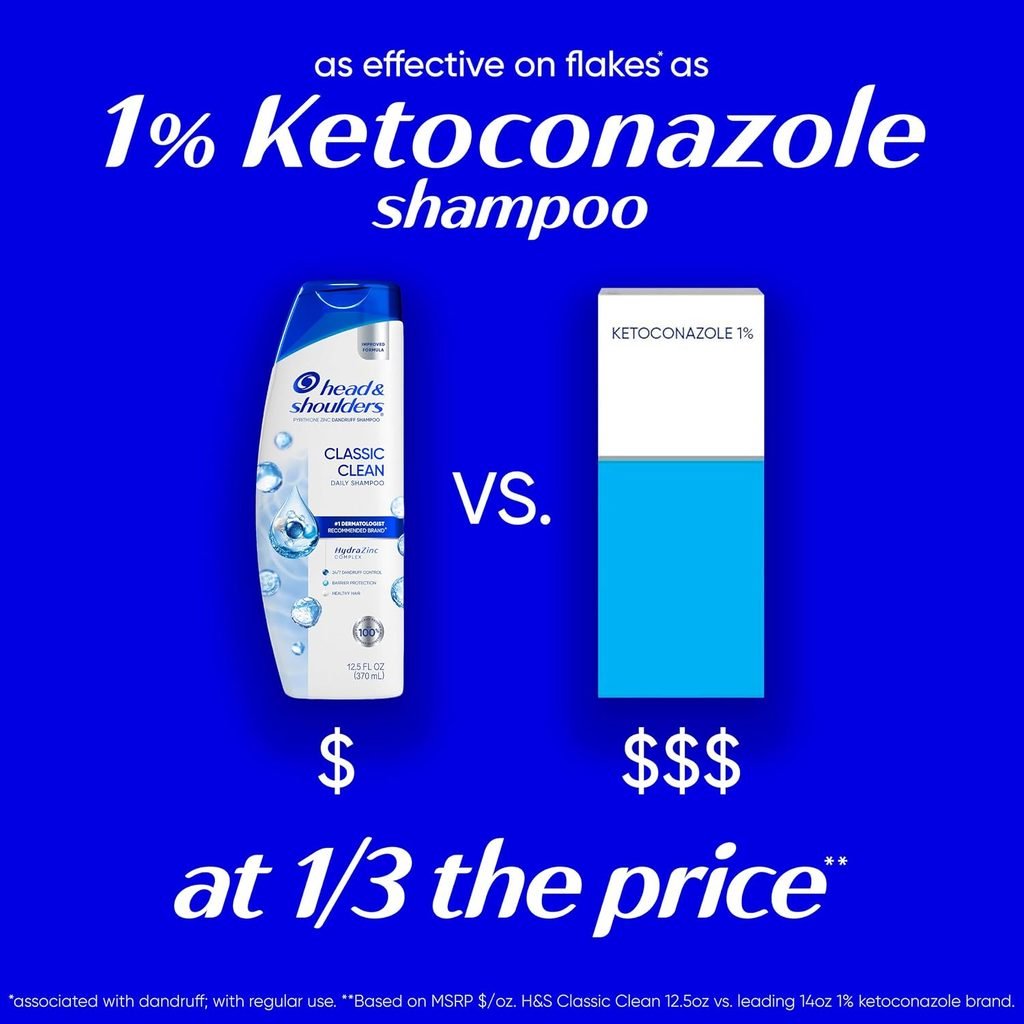
Nizoral uses ketoconazole, an antifungal that many people find helpful for stubborn dandruff. It is often used a couple of times per week rather than daily. It usually comes in smaller bottles, which can raise the cost per ounce. If Classic Clean isn’t working, Nizoral is a common next step.
Classic Clean vs. T/Gel
T/Gel uses coal tar and is typically chosen for heavier scaling. It has a stronger smell and can be less pleasant to use. It suits tougher cases rather than everyday dandruff.
Walmart vs. Amazon: Where to Buy the 28.2 fl oz Bottle
If you are wondering where to buy head and shoulders classic clean shampoo 28.2 fl oz, both Amazon and Walmart are common options.
Amazon
- Often offers delivery to your door and may include subscription discounts on regular orders
- Easy to compare sizes and multipacks
- Prices can change frequently
- Third-party sellers vary, so check who is selling the item
Walmart
- Often offers in-store shopping, pickup, or delivery options
- You can inspect the bottle before buying in a store
- Prices may differ between online and in-store
- Stock levels can vary by location
How to choose: Compare the price per fluid ounce at both stores on the day you shop. Check seller details, expiration or batch information if shown, and return policies. Prices and availability change, so the better deal today may not be the better deal next month.

Buying Guide: How to Choose the Best Pyrithione Zinc Shampoo for Dandruff
If you are searching for the best pyrithione zinc head and shoulders shampoo for dandruff, these criteria will help you decide.
1. Confirm the Active Ingredient and Strength
Look for pyrithione zinc listed under “Drug Facts.” Most products in this category use around 1% to 2%. Don’t assume that a higher number is always better.
2. Match the Formula to Your Hair Type
Oily hair often handles stronger cleansers well. Dry, curly, or color-treated hair may need a gentler formula, or a conditioning version of an anti-dandruff head and shoulders shampoo.
3. Consider Fragrance Sensitivity
If you react to scents, look for fragrance-free options within the same active ingredient category.
4. Think About Bottle Size
Large bottles lower cost per ounce, but they are a bigger commitment. If you haven’t used the brand before, a smaller trial size can reduce waste.
5. Compare Unit Price
Don’t compare sticker prices alone. Divide the price by the fluid ounces to see what you actually pay.
6. Check for Added Features
Some formulas include conditioners, moisturizers, or “2-in-1” benefits. These can help dry hair, but they may change how the head and shoulders shampoo feels.
7. Read the Directions
Directions on frequency and leave-on time vary by product. Follow them.
8. Be Realistic About Results
Give a head and shoulders shampoo two to four weeks. If it hasn’t helped by then, try a different active ingredient rather than increasing use beyond the label.
9. Know When to See a Professional
If you have thick scaling, redness, hair loss, or no improvement after several weeks, talk to a doctor or dermatologist.
10. Buy From Trusted Sellers
For online purchases, check that the seller is reputable. This protects you from old stock or counterfeit products.
Immediate & Cumulative Hair Results
Immediate Results (First Few Washes)
After the first wash, hair typically feels clean and fresh. Many users notice that scalp itching eases within a few uses. Visible flakes may start to decrease, though this varies.
Immediate downsides can include slight dryness or a tight scalp feeling, especially if your hair is dry or you head and shoulders shampoo daily.
Cumulative Results (Two to Four Weeks and Beyond)
With consistent use, many people see steadier flake control. The scalp may feel calmer, and flakes on shoulders may become less noticeable. Regular use helps maintain results, and many users keep using the head and shoulders shampoo once or twice a week as maintenance.
If you stop, flakes may return. That is normal for a condition that tends to come and go.
What Cumulative Results Don’t Include
This head and shoulders shampoo isn’t designed to grow hair, thicken hair, or repair damage. If you see claims like that elsewhere, treat them with caution. Its job is to help manage dandruff.
When Results Stall
If your flakes don’t improve after a fair trial, consider that your scalp may need a different active ingredient, or that the flaking may be something other than dandruff. A professional can help sort that out.
Frequently Asked Questions
What is Head & Shoulders Classic Clean shampoo used for?
It is used to control dandruff symptoms like flaking and itching. The active ingredient is 1% pyrithione zinc.
Is head and shoulders classic clean shampoo worth it?
For people with ordinary dandruff who want an affordable, widely available option, it is generally a reasonable choice. The large 28.2 oz size can add value. Results vary, so it isn’t guaranteed to work for everyone.
How often should I use it?
Most anti-dandruff head and shoulders shampoos suggest using them at least twice a week, or as directed by a doctor. Follow the label on your bottle.
Does the 72-hour protection claim mean I only need to wash every three days?
Not necessarily. The claim describes flake protection between washes with regular use. How often you need to wash depends on your hair and scalp.
How long does it take to work?
Some people notice less itching within a few washes. Visible flake reduction often takes a couple of weeks of consistent use.
Is it safe for daily use?
Many people use it several times a week, and some use it more often. If your scalp feels dry or irritated, reduce the frequency. Follow label directions.
Can I use it on color-treated hair?
You can, but sulfate-based cleansers can fade color faster. Ask your stylist if you color your hair often, and use a conditioner.
Does it work for dry scalp?
Dandruff and dry scalp aren’t the same. Dandruff head and shoulders shampoo may not fix a dry scalp, and the cleansing can sometimes make dryness worse. Consider a gentler routine if your scalp is dry.
How does it compare with Selsun Blue?
Both are OTC dandruff head and shoulders shampoos, but they use different actives. Classic Clean uses pyrithione zinc, and Selsun Blue uses selenium sulfide. Some people find one works better than the other.
Is it better than Nizoral?
Nizoral uses ketoconazole and is often chosen for stubborn dandruff. Classic Clean is more of an everyday option. Neither is universally better.
Should I use conditioner after?
Usually yes, especially on mid-lengths and ends. Keep conditioner off the scalp if your scalp is oily.
Can it cause irritation?
It can in some people, particularly those sensitive to fragrance or active ingredients. Stop using it if you notice burning, redness, or worsening itch.
Where can I buy the 28.2 fl oz bottle?
It is commonly available through major online retailers like Amazon and Walmart, and in many stores. Compare price per ounce before you buy.
When should I see a doctor?
See a doctor if you have severe scaling, redness, oozing, hair loss, or no improvement after several weeks of use.
Final Verdict: Head and Shoulders Classic Clean Shampoo Review
This head and shoulders classic clean shampoo review comes down to one idea: it is a dependable, mainstream dandruff shampoo that does the basics well.
What it gets right:
- A proven active ingredient in 1% pyrithione zinc
- A simple routine with minimal effort
- Good potential value in the 28.2 fl oz size
- Wide availability
What to watch for:
- Possible dryness on dry or color-treated hair
- Fragrance that may not suit everyone
- Results that vary from person to person
- A marketing claim, the 72-hour protection, that works best as a rough guide
If you have mild to moderate dandruff and an oily or normal scalp, Classic Clean is a sensible place to start. If you have sensitive skin, dry hair, or stubborn flakes, you may need to adjust your routine or try a different active ingredient. And if your symptoms are severe, see a professional.
My rating: 4 out of 5. It isn’t flashy, but it is practical, and for many people that is exactly what a dandruff head and shoulders shampoo should be.
A reasonable plan: use it consistently for two to four weeks, condition your ends, and judge the results honestly. If it works, the big bottle can be a smart way to keep your supply steady.
Check the Current Price
Ready to try it? Prices and availability change, so compare the current price per ounce before you buy.
You can also compare it against Walmart’s current listing to see which is the better deal today.
This article is for general information and isn’t medical advice. If you have a persistent or severe scalp condition, talk to a doctor or dermatologist.

Who Is Behind Loooknow
Loooknow is founded, written, and managed by Muhammad Owais Khan. I am the founder, author, and site administrator, so every review, guide, and comparison you read here goes through me personally.You can reach me at [owaisu99sony@gmail.com] or through the Contact page. And Review Methodology