
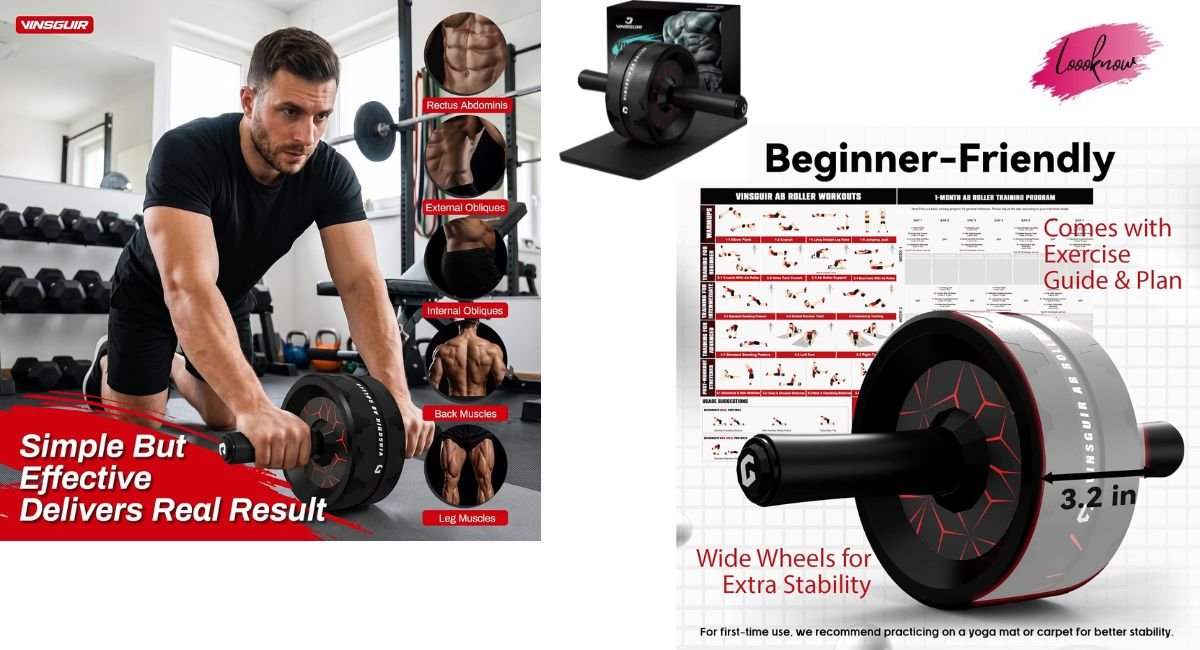
Heads up: If you buy through links in this review, I may earn a small commission at no extra cost to you. This doesn’t affect my ratings.
Introduction
Not every core workout needs a gym membership or a stack of expensive equipment. Sometimes all it takes is a simple wheel and a few minutes of focused rolling to feel your abs working harder than they have in months. That’s the promise behind the VINSGUIR Ab Roller Wheel, a budget-friendly core trainer that’s picked up a loyal following among home fitness fans in 2026.
With its wide dual-wheel design, sturdy steel shaft, and cushioned EVA handles, the VINSGUIR aims to make ab rolling safer and more stable for beginners while still delivering a serious burn for anyone chasing a stronger core. It comes with a kneeling pad for comfort and a weight capacity that rivals pricier models on the market.
But does it actually hold up to daily use, and is it worth adding to your home gym? In this review, we’ll break down the VINSGUIR Ab Roller Wheel’s build quality, comfort, stability, and overall value, so you can decide if this compact core trainer deserves a spot on your workout floor.
Quick Verdict
Best for: beginners and casual home exercisers who want a low-cost way to add core work to bodyweight routines, and who train mostly on carpet, foam mats, or rubber gym flooring.
Not ideal for: advanced lifters doing heavy weighted rollouts multiple times a week, or anyone planning to use the wheel on bare hardwood or concrete without a mat.
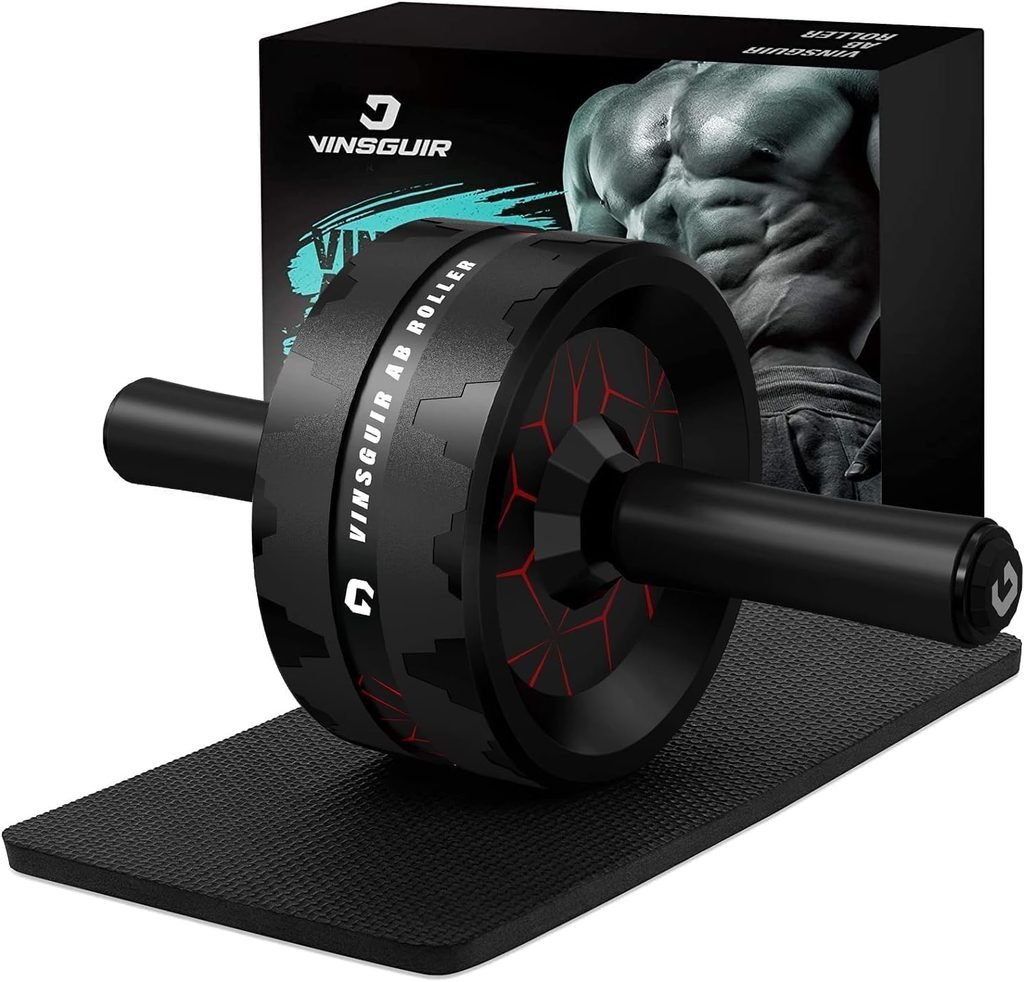
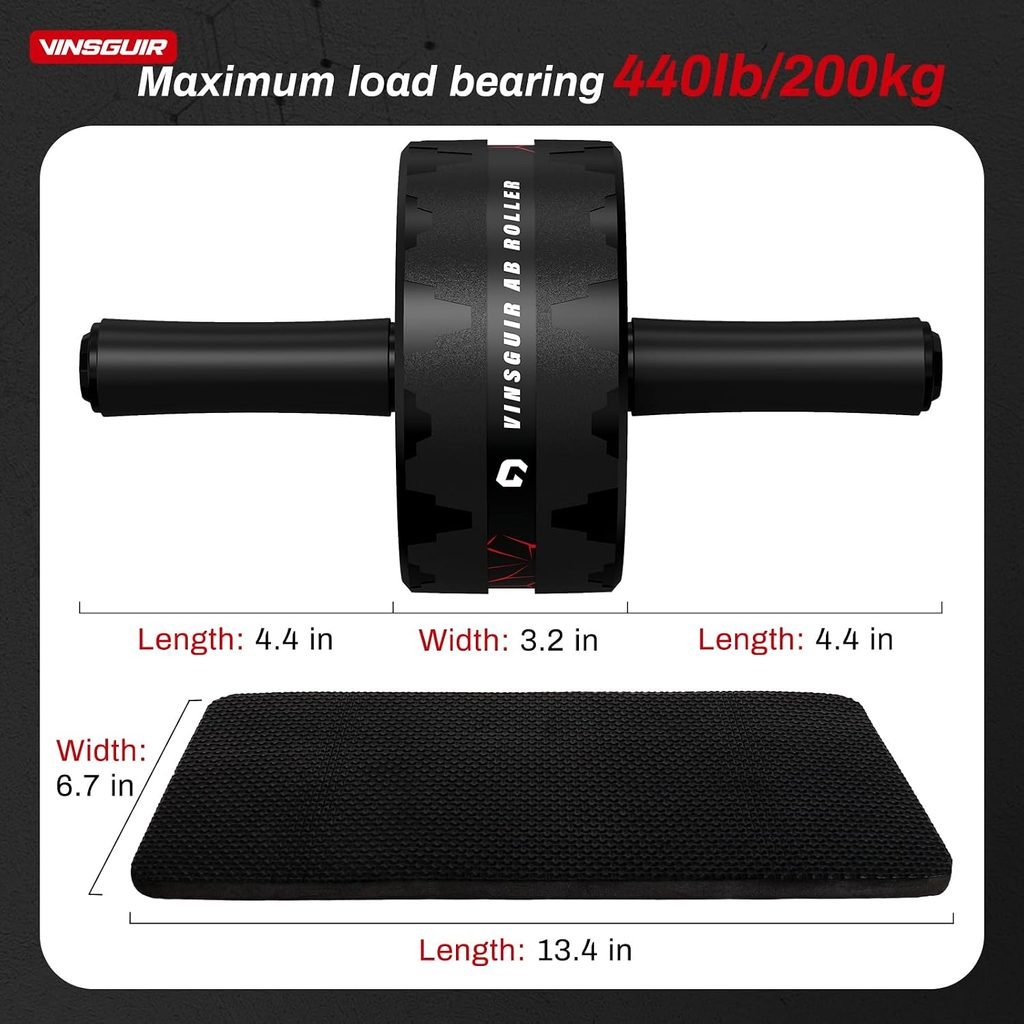
At a glance, the VINSGUIR ab roller wheel is a dual-wheel design (most listings show a 3.2-inch wide dual-wheel version, with a narrower single-wheel variant also sold under the same brand) built around a stainless steel center shaft, EVA rubber cotton handle padding, and a foam knee pad included in the box. Manufacturer listings put the weight capacity between 440 and 500 pounds depending on the specific model, though that figure describes the shaft’s static load rating, not a recommendation to train at that load.
What stands out:
- Genuinely low price point, typically in the $15–$30 range depending on retailer and bundle
- Wide dual-wheel track that reduces side-to-side wobble for beginners compared to single-wheel rollers
- Comes with a padded knee pad, which some competitors sell separately
- Compact enough to store in a closet or under a bed
What holds it back:
- Reported wear where the steel rod contacts the plastic wheel hub, which some buyers describe as squeaking after extended use
- Not recommended for hardwood or concrete floors without a mat, due to limited wheel tread
- Some flex reported in the hollow steel shaft under heavier or more aggressive use
- No official warranty documentation as detailed as some higher-priced competitors
If you want the fast take: for the money, it’s a reasonable ab roller wheel with knee pad for home workouts, particularly for someone just starting core training. If you already have a serious core routine and lift heavy elsewhere, you’ll likely outgrow it faster.
What Is the VINSGUIR Ab Roller Wheel?
The VINSGUIR ab roller wheel is a core-training tool sold under the VINSGUIR brand, a budget fitness equipment label that also sells kettlebells, resistance bands, and related home gym accessories, primarily through online marketplaces. The full product listing name is: VINSGUIR Ab Roller Wheel, Abs & Core Workout Equipment for Home Gym with Knee Pad Accessories, Abdominal Wheel for Full-body Strength Training.
Functionally, it works like any ab roller: you grip two handles connected by a shaft running through a central wheel (or two wheels, in the dual-wheel version), kneel or stand, then roll the wheel forward and pull it back using your core. The category itself is not new or unique to VINSGUIR — the same basic mechanism has existed for decades under dozens of brand names.
What differentiates the VINSGUIR abdominal wheel vs standard ab roller designs on the market comes down to three things: the dual 3.2-inch wheel track (versus the common single-wheel layout), the included knee pad bundled at no extra cost, and the aggressively low price point relative to competitors like SKLZ or Lifeline. VINSGUIR positions the product for home users and beginners rather than gym-grade commercial use, and the materials and price point reflect that positioning throughout.
It’s worth noting VINSGUIR sells several versions of this product — a single-wheel model marketed toward more advanced users who want a harder balance challenge, and a dual-wheel model (the one covered in most of this review) marketed as more stable and beginner-friendly. Some bundles also add a jump rope and push-up bars. Always check the specific listing before buying, since “VINSGUIR ab roller” on a marketplace search can return several different configurations.
Key Features Breakdown
Dual 3.2-Inch Wheel Design
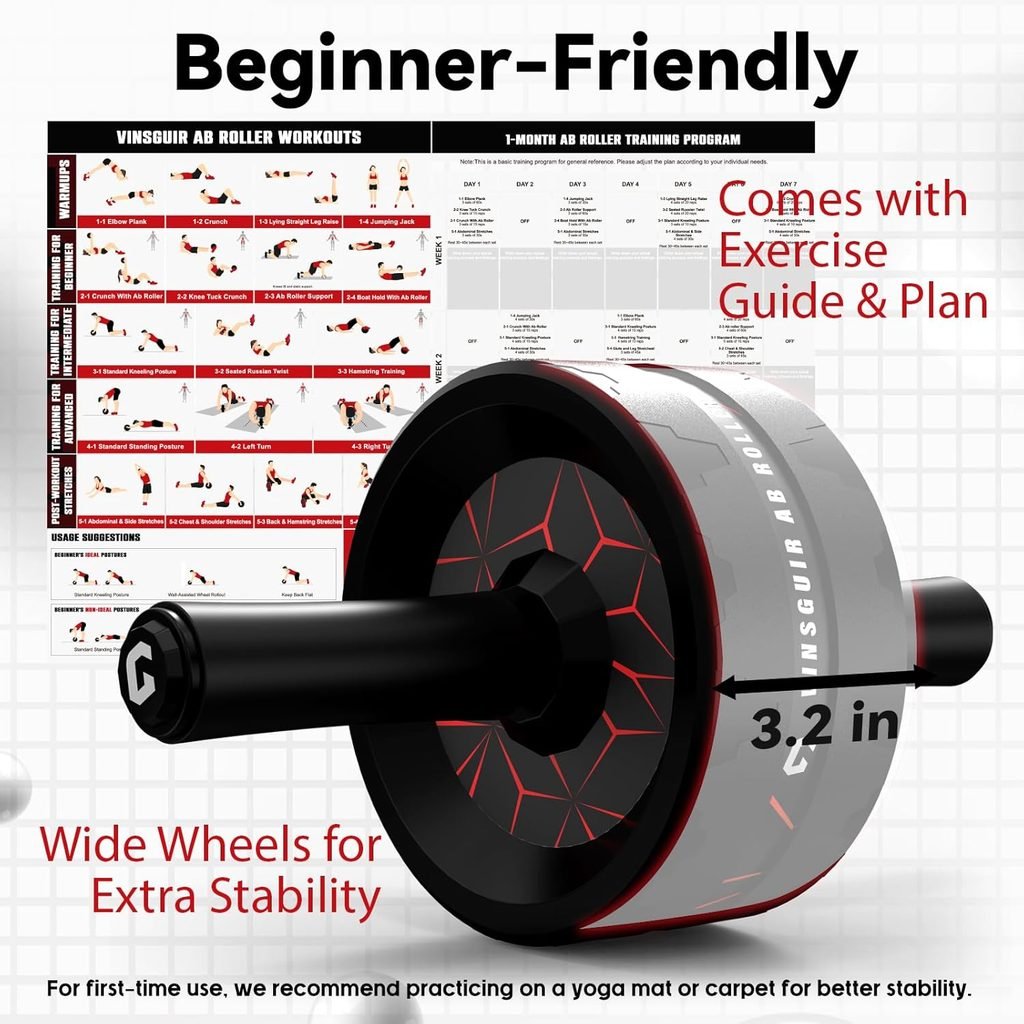
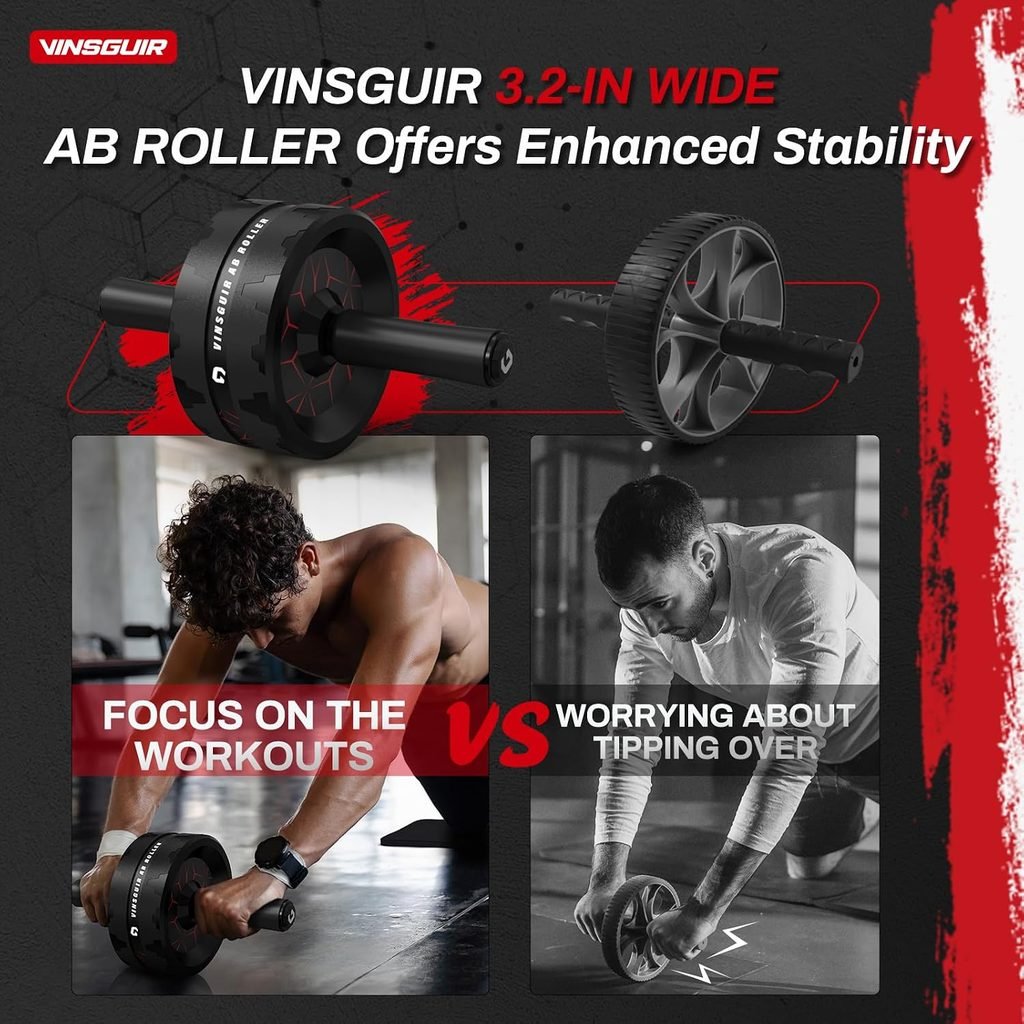
The core feature of this model is its dual-wheel layout. Rather than a single central wheel, two 3.2-inch wheels sit side by side on the shaft. According to the product specifications, this is meant to reduce the side-to-side wobble that trips up a lot of ab roller beginners, since a wider wheelbase naturally resists tipping compared to a narrow single-wheel design. For someone new to ab rollouts, that stability difference can be the deciding factor in whether the exercise feels manageable or genuinely intimidating.
Stainless Steel Shaft
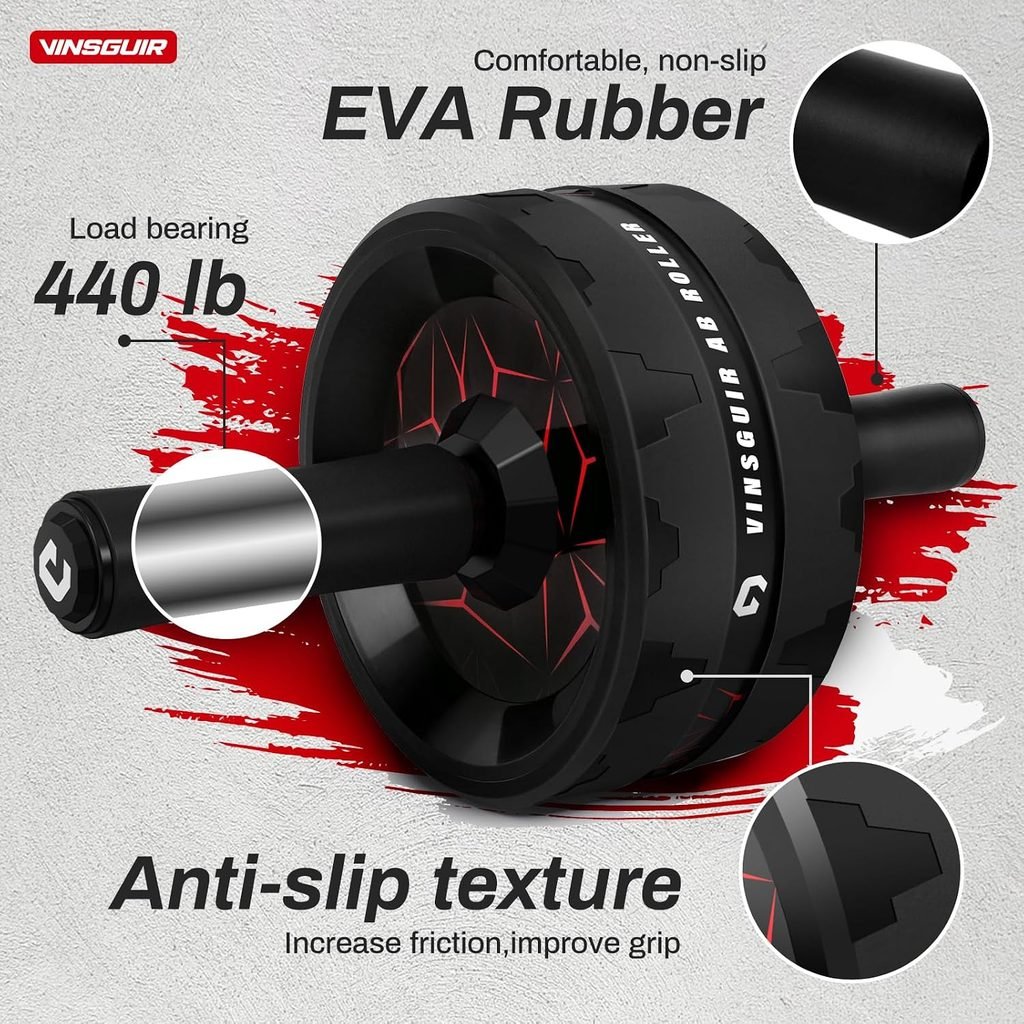
The handle bar running through the wheel is described as high-strength stainless steel in the manufacturer’s specifications, with weight capacity claims ranging from 440 to 500 pounds depending on the specific listing and model variant. That figure refers to the static load the shaft is rated to bear, not a suggested training load — for context, most people doing ab rollouts are putting a fraction of their body weight through the shaft at any given moment.
EVA Rubber Cotton Handles
The grips are padded with EVA rubber cotton material, a common choice in budget fitness gear because it’s inexpensive, lightweight, and provides reasonable grip without the cost of molded rubber compounds used on premium equipment. The padding is there to reduce pressure on the palms during rollouts, particularly useful since ab roller form puts real weight through the wrists and hands.
Included Foam Knee Pad
Unlike some ab rollers that sell the knee pad as a separate accessory, VINSGUIR bundles one in. This is a meaningful inclusion for anyone training on hard flooring, since kneeling rollouts put direct, repeated pressure on the kneecaps. The ab wheel roller with knee pad accessories for home gym combination is one of the more practical value-adds in this price bracket, since a decent standalone knee pad can otherwise add $10–$15 to your total cost.
Compact, Portable Footprint
Product dimensions for this model run roughly 6.5 x 12 x 6.5 inches, with a shipping weight around 1.4 pounds. That’s small enough to store in a drawer, gym bag, or under furniture — a real advantage over bulkier core equipment like ab benches or cable machines for anyone working with limited space.
Non-Slip Wheel Surface (Claimed)
Manufacturer listings describe the wheel surface as textured for grip on flat, hard surfaces. Based on the pattern of user feedback across retailers, this claim holds up reasonably well on smooth tile, laminate, and gym mats, but multiple reviewers specifically flag reduced grip and stability on bare hardwood or polished concrete — worth planning around before your first session.
Build Quality, Materials & Stability Analysis
Construction-wise, the VINSGUIR ab roller wheel uses a mix of stainless steel (the shaft), plastic (the wheel body), rubber (wheel tread and handle padding), and foam (knee pad). This is a standard materials mix for budget ab rollers — you won’t find forged aluminum or reinforced polymer wheels at this price point from any brand.
The stainless steel shaft is generally reported as solid for its intended use, but a recurring theme in buyer feedback is some flex in the rod under more aggressive rollouts, particularly for taller or heavier users pushing the wheel to a full extended position. This isn’t unique to VINSGUIR — hollow steel shafts are common across budget ab rollers, and some flex under load is a known trade-off for keeping the product light and affordable. It becomes a bigger concern if you’re using significant added resistance (like a weighted vest) during rollouts, which isn’t really what this category of equipment is designed for anyway.
The wheel-to-shaft interface is where a portion of durability complaints originate. Because the steel rod runs directly through the plastic wheel hub, repeated use can create friction wear over time, which some buyers describe as a squeak or grinding sound developing after weeks or months of regular use. This is a common failure point across cheap ab rollers generally, not something specific to VINSGUIR’s engineering, though it’s worth knowing about before you buy.
Stability-wise, the dual-wheel design does its job. Compared to single-wheel rollers, the wider track meaningfully reduces the side-to-side tipping that makes ab rollouts scary for first-timers. If lateral stability during your first few weeks of training is your priority, that’s a genuine point in this product’s favor — it’s part of why VINSGUIR’s dual-wheel version tends to get recommended over the single-wheel variant for people brand new to the exercise.
Setup, Noise Level & Space Requirements
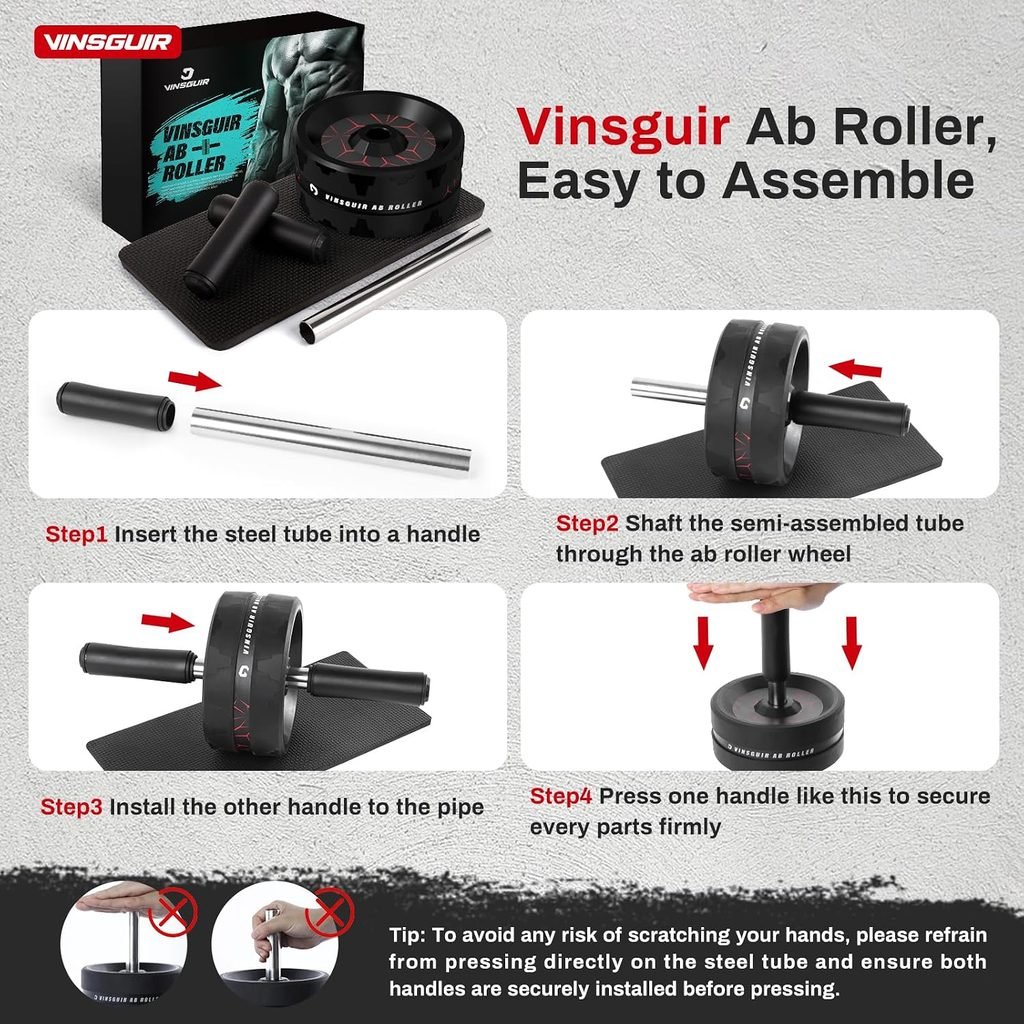
Setup is minimal to none for most listings — the roller typically ships fully or mostly assembled, sometimes requiring you to slide the foam handle grips onto the shaft ends. There’s no tool assembly required, and most buyers report being ready to use it within a minute or two of unboxing.
Noise level depends heavily on your flooring. On carpet or a foam exercise mat, the wheel is close to silent. On hardwood, tile, or concrete, the plastic wheel can produce a noticeable rolling sound, and as the wheel-to-shaft interface wears over time, some buyers report a squeak developing that’s audible even on softer surfaces. If you’re training in an apartment or near a shared wall, doing rollouts on a thick mat will cut down both the noise and the vibration transferred to the floor below.
Space requirements are genuinely minimal compared to most home gym equipment. A full rollout — extending from kneeling to nearly flat — needs roughly 4 to 6 feet of clear floor space in front of you, depending on your height and how far you extend. Storage is trivial: the whole unit is light and compact enough to lean against a wall, slide under a bed, or toss in a gym bag.
One practical setup note that doesn’t show up in the marketing copy: because the wheel isn’t heavily treaded, doing rollouts directly on hardwood or polished concrete without a mat increases the chance of the wheel skidding sideways mid-rep, which is both a stability risk and a flooring risk (scuff marks are a realistic possibility on some hard flooring finishes). A basic exercise mat solves both problems and is worth budgeting for if you don’t already own one.
Usage Experience
Based on the pattern of feedback across verified buyers and the manufacturer’s own usage guidance, here’s what a realistic first few weeks with this ab roller tends to look like.
Getting started (weeks 1–2): Most beginners start kneeling on the included knee pad, gripping both handles, and rolling forward a short distance — often just 6 to 12 inches — before pulling back using the abs rather than the arms or lower back. The dual-wheel stability genuinely helps here; reviewers who’d previously struggled with single-wheel rollers report the wider track feels noticeably more forgiving while they build the coordination and core strength the movement requires.
The most common early mistake, and one worth flagging explicitly, is letting the lower back sag as you extend forward. This shifts load away from the abs and onto the lumbar spine, which is how people end up with lower back soreness from ab roller work rather than ab soreness. Keeping the hips tucked slightly and the core braced throughout the movement is the difference between an effective rep and a risky one — this applies to every ab roller on the market, not just this one, but it’s worth repeating because it’s the single biggest factor in whether this tool helps or hurts you.
Building range of motion (weeks 3–6): As core strength improves, users typically extend further before pulling back, working toward a fuller rollout. The stainless steel shaft and dual-wheel base handle this progression without notable issues in most reported use cases — this is really where the product is doing what it’s designed to do.
Extended or heavier use: This is where the durability pattern mentioned earlier tends to surface. Buyers using the roller multiple times per week over several months more frequently report the wheel-hub friction noise developing, and occasionally mention the handle grips loosening or shifting slightly on the shaft. Neither issue is universal, and plenty of reviews describe months of regular use without major complaints, but it’s a real enough pattern across feedback that it’s worth setting expectations: this is a budget tool, and budget tools typically show wear sooner than premium equivalents.
Surface performance: Consistent with the noise and stability notes above, usage experience is meaningfully better on carpet, foam tile, or a dedicated exercise mat than on bare hardwood, tile, or concrete. If your workout space is entirely hard flooring, plan on using a mat from day one rather than treating it as optional.
Standing rollouts: More advanced users progress from kneeling to standing rollouts, a significantly harder variation that puts more load through the shaft and wheel. The product handles this within its rated capacity, but the earlier note about shaft flex under aggressive use is most relevant here — this is not the ideal tool for someone training standing rollouts with added resistance or explosive tempo multiple times a week long-term.
Benefits
Genuinely low cost of entry. At roughly $15–$30 depending on retailer, this is one of the cheapest ways to add dedicated core training equipment to a home gym, especially once you factor in that a knee pad is included rather than sold separately.
Beginner-friendly stability. The dual 3.2-inch wheel design measurably reduces the wobble and tipping risk that makes single-wheel ab rollers intimidating for first-timers. This lowers the barrier to actually using the equipment consistently, which matters more for results than almost any other factor.
Included knee pad. Bundling a padded knee cushion removes a common point of friction (literally) for anyone training on hard flooring, and it’s a cost a lot of competing budget ab rollers push onto the buyer as a separate purchase.
Compact storage and portability. At around 1.4 pounds and roughly the size of a large book, it doesn’t demand dedicated storage space the way most home gym equipment does. It’s realistic to keep it somewhere fully accessible, which supports consistency.
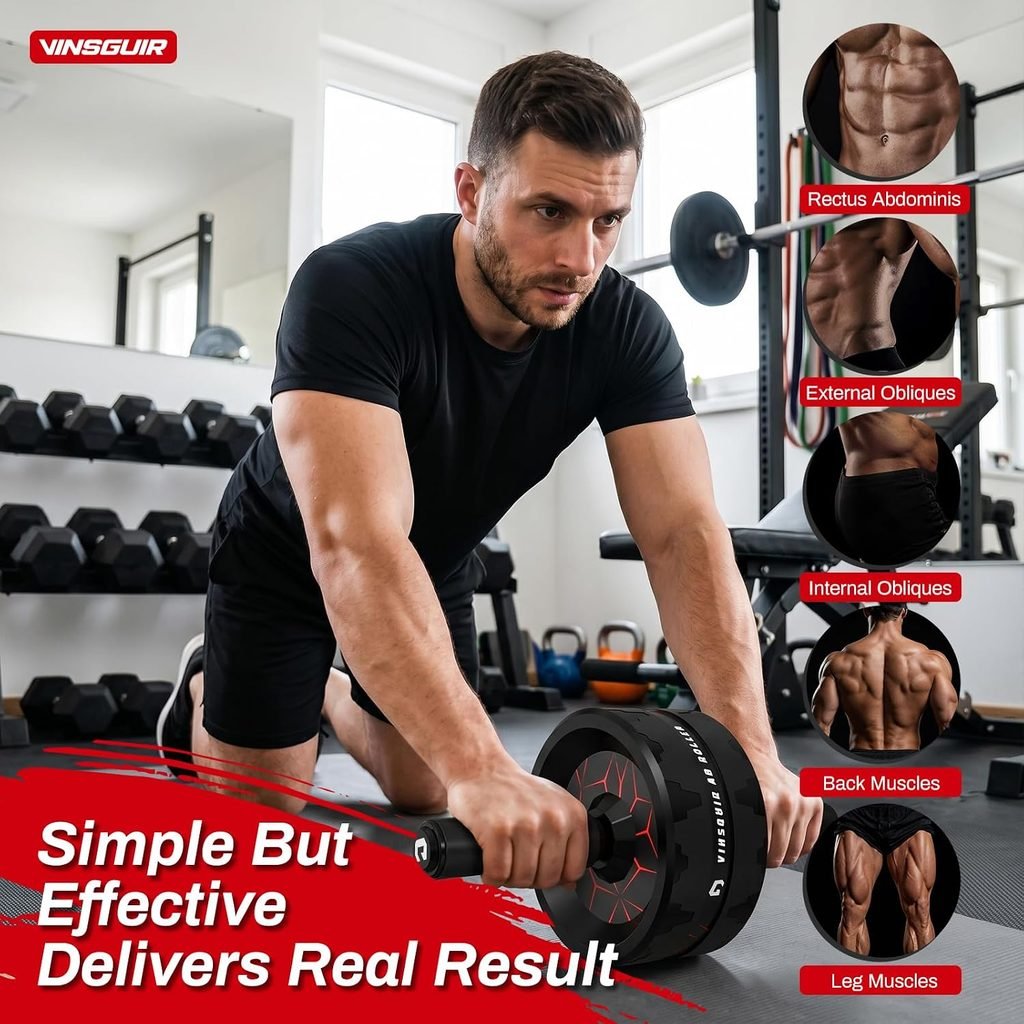
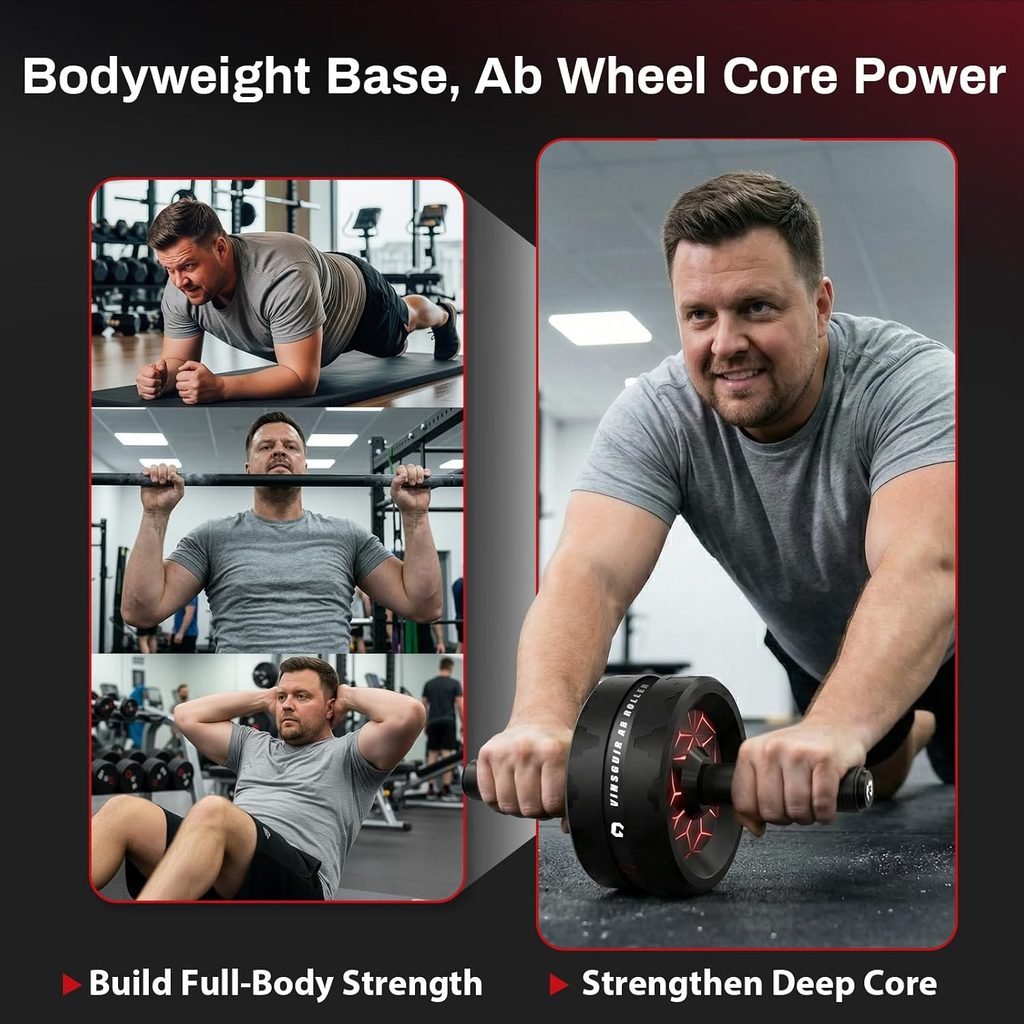
Full-core engagement. Like any properly used ab roller, the movement recruits the rectus abdominis, obliques, and to a real degree the lower back and shoulder stabilizers, offering more functional core engagement than isolation moves like crunches. This is a property of the exercise category generally rather than something unique to this specific product, but it’s worth noting for anyone comparing ab rollers to other core equipment.
Reasonable weight capacity. A shaft rated between 440 and 500 pounds comfortably covers the vast majority of home users, including anyone using the tool for standing rollouts.
No assembly friction. Minimal to no setup means there’s no barrier between buying it and actually starting to use it, which matters for a piece of equipment that only delivers results with consistent use.
Downsides & Limitations
Surface sensitivity. The clearest limitation across buyer feedback is reduced performance on hardwood and concrete without a mat — reduced grip, more noise, and a higher chance of sideways skidding mid-rep. If your only training surface is hard flooring, factor a mat into your total cost.
Reported wear at the wheel-shaft interface. A recurring complaint pattern involves developing squeaking or grinding as the steel rod wears against the plastic wheel hub over weeks or months of regular use. This doesn’t appear to be a universal issue, but it shows up often enough in feedback to be a genuine consideration for anyone planning heavy, frequent use.
Some shaft flex under aggressive load. The hollow steel construction that keeps the product light and cheap also means some flex is reported under more forceful or advanced rollouts, which could be a durability concern for serious, long-term daily training rather than casual or beginner use.
Materials don’t fully match marketing tone in some buyer reports. A portion of feedback describes the overall material quality as feeling more basic than the product photography and copy suggest — not broken or unsafe, but noticeably budget-grade rather than premium.
Limited long-term durability for advanced training. Buyers using the equipment intensively over an extended period more often report needing to eventually replace or upgrade it, suggesting this is better suited to short-to-medium-term use or lighter, less frequent training than to years of daily heavy rollouts.
No prominent extended warranty documentation. Unlike some established fitness brands, VINSGUIR’s warranty terms aren’t heavily documented on major retail listings, which is worth confirming directly with the seller before buying if that matters to you.
Who Should Buy This?
This ab roller wheel is a solid fit for:
- Complete beginners to ab rollouts who want the added lateral stability of a dual-wheel design while they build core strength and coordination
- Budget-conscious home gym owners who want core equipment that costs less than a single gym class without giving up basic functionality
- Apartment or small-space dwellers who need compact equipment that stores easily and doesn’t require a dedicated area
- People testing whether ab rollouts work for them before committing to a pricier, more durable model
- Casual or moderate users training core 2–3 times a week rather than daily high-intensity sessions
- Anyone specifically wanting a knee pad included rather than needing to buy one separately
If you fall into most of these categories, this is a reasonable version of the best ab roller wheel with knee pad for home workouts in the sub-$30 range.
Who Should Avoid This?
This product is probably not the right fit for:
- Serious or advanced trainees doing frequent, high-intensity standing rollouts as a core part of their programming, where durability under sustained heavy use matters more
- Anyone training exclusively on hardwood or polished concrete without willingness to also buy a mat
- People who prioritize premium materials and build quality over price, and would rather pay more upfront for something rated for years of daily commercial-style use
- Buyers who need documented, robust warranty coverage as a purchase requirement
- Anyone who has previously had wrist, shoulder, or lower back issues without first clearing ab roller-style movements with a physical therapist or doctor, since the exercise does place real load through those areas regardless of which ab roller you use
How to Use for Best Results
- Start kneeling, not standing. Even if you’re reasonably fit, standing rollouts on day one dramatically increase both difficulty and injury risk. Build the foundational strength kneeling first.
- Brace your core before you move. Tighten your abs as if bracing for a light punch to the stomach, and keep that tension throughout the entire rep — this is what protects your lower back.
- Limit your range of motion initially. Roll out only as far as you can maintain a flat, neutral spine. A shorter rollout with good form beats a longer one where your back sags.
- Use a mat, especially on hard flooring. This protects your knees even with the included pad, reduces noise, and improves the wheel’s grip and stability.
- Pull back using your abs, not your arms. The return phase is where most of the actual ab engagement happens — resist the urge to just yank yourself back with your shoulders.
- Progress gradually over weeks, not days. Add range of motion or move toward standing rollouts only once the current level feels genuinely controlled, not just possible.
- Watch and listen for wear over time. If you start noticing new squeaking from the wheel or looseness in the handles, it’s worth inspecting the unit before continuing heavier use.
- Rest the movement 48 hours between sessions when starting out, since the core muscles recruited need recovery time like any other muscle group.
Pros & Cons
Pros:
- Low price point relative to the category
- Dual-wheel design adds real beginner-friendly stability
- Knee pad included at no extra cost
- Compact and lightweight for easy storage
- Minimal to no assembly required
- Reasonable weight capacity for the vast majority of home users
- Engages abs, obliques, lower back, and shoulders in one movement
Cons:
- Reduced grip and stability on hardwood or concrete without a mat
- Some reports of wheel-shaft friction wear and squeaking over extended use
- Reported shaft flex under more aggressive or advanced use
- Material quality feels basic to some buyers relative to the marketing copy
- Better suited to short-to-medium-term or moderate use than years of daily heavy training
- Limited documented warranty information
Product Comparisons
The VINSGUIR ab roller wheel review picture gets clearer when you see it next to comparable options at the retailers where it’s actually sold. Below is a comparison against a couple of similarly priced dual-wheel ab rollers commonly found alongside it on Walmart and Amazon.
| Feature | VINSGUIR Ab Roller Wheel | Generic Budget Dual-Wheel Roller (Walmart) | Mid-Tier Ab Roller with Resistance Bands (Amazon) |
|---|---|---|---|
| Typical Price | ~$15–$30 | ~$15–$25 | ~$25–$40 |
| Wheel Design | Dual 3.2-inch wheels | Dual wheel, similar width | Single or dual wheel, varies by listing |
| Shaft Material | Stainless steel | Steel, often unspecified grade | Steel or reinforced polymer |
| Weight Capacity | 440–500 lbs (model dependent) | Typically 300–350 lbs | Typically 250–400 lbs |
| Knee Pad Included | Yes | Sometimes | Usually yes |
| Extra Accessories | None on base model; bundles add jump rope/push-up bars | Rarely | Often includes resistance bands |
| Reported Durability Concerns | Wheel-shaft wear over extended use | Similar wear patterns common at this price tier | Generally fewer complaints, higher price reflects it |
| Best For | Beginners, budget buyers, small spaces | Budget buyers prioritizing lowest price | Buyers wanting more accessories bundled in |
A few things stand out from this comparison. First, VINSGUIR’s weight capacity claims are genuinely higher than a lot of same-priced Walmart competitors, though that’s a static shaft rating rather than a meaningful performance difference for most home users. Second, the included knee pad puts VINSGUIR ahead of some bargain-bin alternatives that skip it. Third, if bundled accessories like resistance bands matter to you, some Amazon-listed competitors in the $25–$40 range offer more for a moderate price increase — worth considering if you want a more complete home core-training kit rather than just the roller itself.
Check Price on Amazon for the most current listing, bundle options, and buyer photos, which can help confirm you’re looking at the specific model (single vs. dual wheel) you intend to buy.
Buying Guide
If you’re shopping the ab roller wheel category broadly — not just this VINSGUIR model — here’s what actually matters when comparing options.
Wheel design (single vs. dual). Single-wheel rollers demand more balance and core control, making them more challenging but riskier for beginners. Dual-wheel designs, like this VINSGUIR model, trade some of that challenge for meaningfully better lateral stability, which is usually the right call for anyone in their first several months of ab roller training.
Weight capacity. Look for a shaft rating that comfortably exceeds your body weight with margin, particularly if you plan to progress to standing rollouts, which put more dynamic load through the equipment than kneeling variations.
Included accessories. A knee pad is close to essential for kneeling rollouts on hard flooring, so factor its inclusion (or absence) into the real total cost of any listing you’re comparing.
Wheel surface and tread. Textured, higher-grip wheel surfaces perform better across a range of flooring types. If a listing doesn’t specify tread type, check buyer photos and reviews for real-world grip feedback on hardwood specifically, since that’s where budget wheels most often struggle.
Handle material and comfort. EVA rubber, foam, and molded rubber grips all show up at different price points. For extended sessions, thicker, more cushioned padding reduces hand fatigue and pressure points.
Shaft construction. Solid steel shafts generally resist flex better than hollow ones, though hollow shafts keep weight and cost down. If you’re planning frequent, aggressive use, a solid or reinforced shaft is worth the price difference if you can find one.
Retailer and return policy. Given the frequency of minor manufacturing variance in this price category, buying from a retailer with a straightforward return policy (rather than a third-party marketplace seller with limited return terms) reduces your risk if the specific unit you receive has an issue.
Realistic expectations for the price tier. Sub-$30 ab rollers, across every brand, are generally built for moderate, consistent home use rather than years of daily commercial-intensity training. Buying with that expectation in mind avoids most of the disappointment reflected in negative reviews across the category.
Workout Experience, Performance & Durability
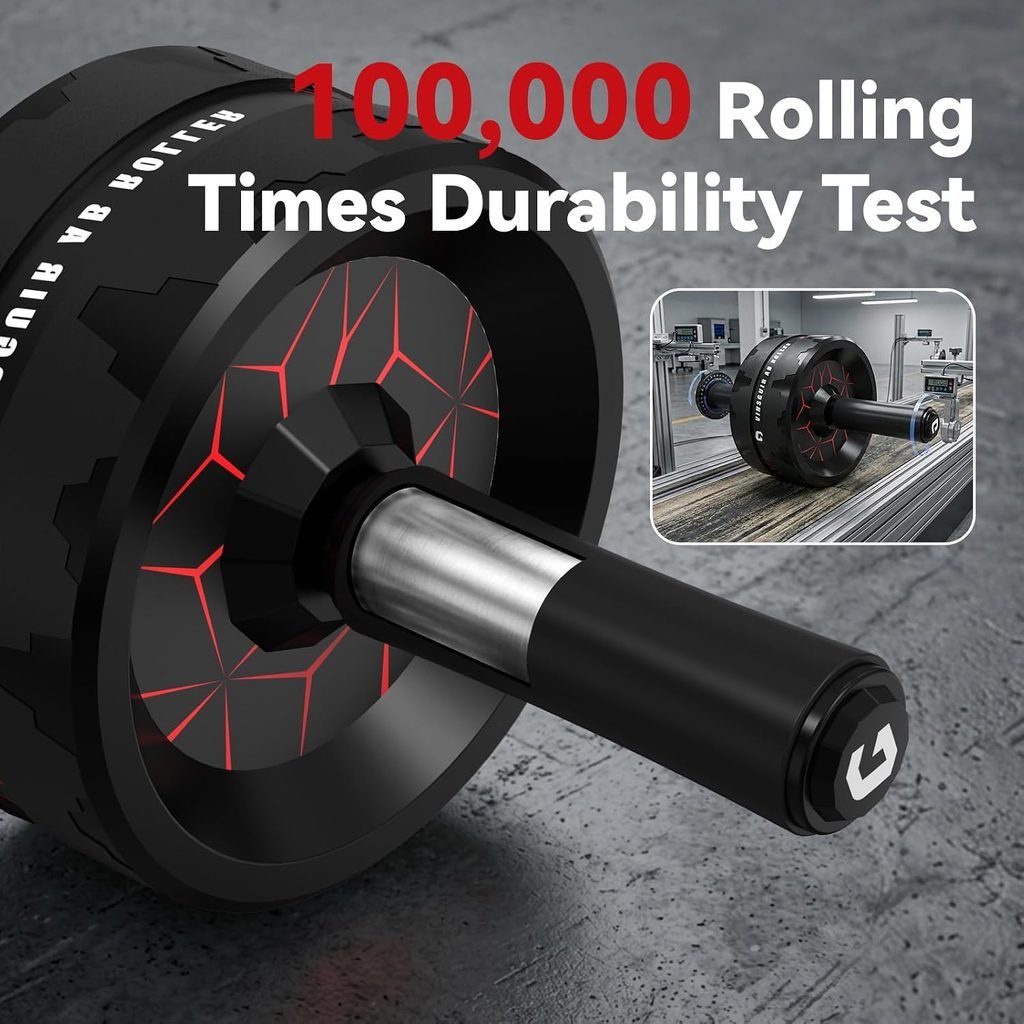
Pulling together the pattern of usage data and buyer feedback, the honest summary on performance and durability is this: for its intended use case — moderate, beginner-to-intermediate home core training a few times a week — the VINSGUIR ab roller wheel performs consistently with what’s advertised. The dual-wheel stability and included knee pad deliver real, usable value at this price point.
Durability is where expectations need calibrating. The wheel-shaft wear pattern and some reported shaft flex under heavier use suggest this isn’t equipment built for years of daily, aggressive training. For that use case, a higher-priced option with a solid (not hollow) shaft and more robust wheel bearings would likely hold up better over time. But judged against its actual price bracket and intended beginner-to-intermediate audience, performance and durability are broadly in line with — and in some respects (weight capacity, included knee pad) ahead of — comparably priced competitors.
Frequently Asked Questions
Is the VINSGUIR ab roller wheel worth it? For beginners and casual home exercisers on a tight budget, yes — it delivers functional core training equipment with a stability-friendly dual-wheel design and an included knee pad for a genuinely low price. For advanced users training heavily and daily, a pricier, more durable option is likely a better long-term investment.
Does the VINSGUIR ab roller wheel come with a knee pad? Yes, a foam knee pad is included with most listings of this product, which is a notable value-add compared to competitors that sell the pad separately.
What is the weight capacity of the VINSGUIR ab roller wheel? Manufacturer listings show weight capacity ranging from 440 to 500 pounds depending on the specific model variant, referring to the shaft’s static load rating.
Can I use an ab roller wheel on hardwood floors? Based on available user feedback, this specific product is not well suited to bare hardwood or concrete without a mat, due to limited wheel tread and a higher risk of skidding. A basic exercise mat resolves this for most flooring types.
Is the VINSGUIR ab roller wheel good for beginners? The dual-wheel design is specifically well suited to beginners, since the wider wheelbase reduces the side-to-side tipping that makes single-wheel rollers intimidating for first-time users.
How do I avoid hurting my back with an ab roller? Keep your core braced and your hips slightly tucked throughout the movement, and limit your rollout range to whatever distance you can maintain a flat, neutral spine. Letting your lower back sag during extension is the most common cause of ab roller-related back strain, regardless of which brand of roller you’re using.
How is the VINSGUIR abdominal wheel different from a standard ab roller? The main differentiator is the dual 3.2-inch wheel track versus the single-wheel layout common on many standard ab rollers, plus the bundled knee pad and a notably lower price point than several established competitors.
Does the VINSGUIR ab roller wheel make noise? On carpet or a mat, it’s close to silent. On hard flooring, it produces more rolling noise, and some buyers report squeaking developing at the wheel-shaft interface after extended regular use.
How often should beginners use an ab roller? Most guidance suggests starting with 2–3 sessions per week, allowing roughly 48 hours of recovery between sessions while your core adapts to the movement.
Is the VINSGUIR ab roller wheel durable for long-term use? For moderate, casual use, feedback suggests reasonable durability. For frequent, heavy, or advanced daily training, buyer reports more often mention wear at the wheel-shaft interface and some flex in the shaft, suggesting it’s better suited to short-to-medium-term or lighter use.
Where can I buy the VINSGUIR ab roller wheel? It’s most commonly available through Amazon, with additional availability through Walmart, eBay, and the VINSGUIR brand website, at prices that vary by retailer and bundle configuration.
What muscles does an ab roller work? Ab rollouts primarily engage the rectus abdominis and obliques, while also recruiting the lower back and shoulder stabilizers to control the extension and return phases of the movement.
Is a single-wheel or dual-wheel ab roller better? Dual-wheel rollers, including this VINSGUIR model, generally offer better lateral stability and are more beginner-friendly. Single-wheel rollers are more challenging and typically better suited to more advanced users seeking a harder balance component.
Does the VINSGUIR ab roller wheel require assembly? Little to none — most units ship ready to use or need only the foam handle grips slid onto the shaft ends.
Can heavier or taller users safely use this ab roller? The rated weight capacity (440–500 lbs depending on model) comfortably covers most users, though taller or heavier individuals doing more aggressive rollouts should be aware of the reported shaft flex under higher-intensity use.
Final Verdict
After weighing the specifications, manufacturer claims, and the consistent patterns in buyer feedback, this VINSGUIR ab roller wheel review lands on a straightforward conclusion: it’s a genuinely useful, low-cost entry point into core training, particularly well suited to beginners thanks to its stability-focused dual-wheel design and included knee pad. It does what a budget ab roller is supposed to do — it gets you rolling.
MarCoolTrip MZ ABS Stimulator Review 2026
Where it falls short is durability under sustained, heavy, advanced use, with a real (if not universal) pattern of wheel-shaft wear and some shaft flex reported by buyers pushing it hard and often. That’s a fair trade-off at this price point, but it’s worth going in with accurate expectations rather than assuming budget pricing and premium longevity both come standard.
If you’re a beginner, working with a tight budget, or just want to test whether ab rollouts fit your routine before spending more, the VINSGUIR ab roller wheel is a reasonable, defensible pick. If you’re already an advanced trainee doing frequent heavy rollouts, or you specifically want equipment built to withstand years of daily intense use, it’s worth looking at a pricier option with a solid (non-hollow) shaft and more robust wheel bearings instead.

I’m an SEO content writer and product researcher with experience creating well-researched product reviews, comparisons, buying guides, affiliate articles, and helpful website content. At LoookNow, I focus on researching products, comparing features and value, and creating clear, engaging, search-optimized content to help readers make more informed purchasing decisions. My goal is to provide useful, trustworthy, and easy-to-understand information that saves readers time and reduces confusion when choosing products online.